Cuisine Niçoise
sun-kissed cooking from the French Riviera
Digital Edition 1.0
Text © 2013 Hillary Davis
Photographs © 2013 Steven Rothfeld
All rights reserved. No part of this book may be reproduced by any means whatsoever without written permission from the publisher, except brief portions quoted for purpose of review.
Gibbs Smith
P.O. Box 667
Layton, Utah 84041
Orders: 1.800.835.4993
www.gibbs-smith.com
ISBN: 978-1-4236-3295-5
Table of Contents
Why had I never heard of cuisine Niçoise?
Why had I never heard of socca, or la trouchia, tout-nus or tourte de blettes?
By the time I moved to France, to the village of Bar-sur-Loup in the nearby hills behind Nice, I had spent years cooking my way through dozens and dozens of French cookbooks, learning the styles of cooking — from Normandy, Alsace, Provence, the Basque country, Bordeaux and Lyon. I had lived in Paris. I had vacationed every year in France. I had eaten my way through the French Michelin stars. Yet I had never come across the term cuisine Niçoise.
It wasn’t until I moved to my village, dined with neighbors, and took food-shopping excursions to Nice that it became clear I had missed something very big. I discovered a way of cooking that was so much more than Salade Niçoise. It was not only a cuisine but also a way of life defined by the sea, the garden, the sun, and the proximity of this corner of France to Italy.
My wonder at finding something so intriguing soon grew into a quest to learn this unsung cuisine, to see if it was worth singing. It all began when we decided to move to the South of France and started looking for a village to call home. I will never forget seeing it for the first time. At a turn in the road, a medieval honey-colored stone village with a chateau appeared at the very top of a hill, high above the surrounding countryside. A sign indicated it was the village of Bar-sur-Loup. We drove up the winding, steep road and got out to walk.
I was home. I could feel it. It was that simple.
This was where I would eventually learn to cook cuisine Niçoise. This was where I would learn to forage, till a garden, harvest olives, buy fresh every day from the local farmers and in the open-air markets, spend my Sundays cooking and sharing meals with friends, and buy locally made pottery to serve it on and locally made wine to serve with it.
Bar-sur-Loup is in the pays Niçois, that area around Nice where they cook “in the style of Nice.” The area extends from Grasse, all the way across to Sospel, and from Cannes to Nice and over to Menton. The coastal portion is the Côte d’Azur.
Bar-sur-Loup, a small, perched town with cobblestone alleys, an ancient parish church and panoramic views, is known as the “city of oranges.” It holds an annual orange festival, the Fête de l’Oranger, because the orange tree loves our village. The bigarade, or bitter orange, grows with abandon all over the wide, grassy terraces cut into the steep hills that climb up to the village. As the day warms, they bask in the Mediterranean sun, perfuming the air.
Rosemary grows like a weed all over the countryside. So do tangles of uncultivated roses, fertile fig trees, olive trees, rambling grape vines, and fragrant mimosa trees hanging heavy with bright yellow flowers. Wild lavender and thyme cover the scrubby hills; wild mushrooms sprout in the forests in the fall; and tiny violets intermingle with new grass and wildflowers in the open fields. Herbs blossom madly along paths, at the sides of mountain roads, and in the crooks and crannies of ancient stone walls.
Fruit trees, including bigarade orange, lemon, cherry, olive, and fig, surrounded the house we bought just below the village. Set on four acres, with ancient terraces holding gnarly vines, stone fences, and untamed bushes, the house had a breathtaking view of the dramatic limestone cliffs of the Gorges du Loup, the waterfall cascading down into the canyon of the Gorges, and the even more highly perched village of Gourdon, which in the black night sky seemed to hover like a well-lit flying saucer above our village.
I learned over time that the orange trees around my house bore the fruit that I bought candied in the open-air markets; that their blossoms would go into making the fragrances being produced a few miles away in Grasse, where they extracted essential oil from the flowers and called it “neroli”; that the dried peel is used in bouquet garni; and that its oil is used to flavor France’s most famous orange liqueurs, Cointreau and Grand Marnier. A new friend in the next village also informed me one day that the bigarade orange provides the top notes for Miss Dior Cherie perfume!
Those orange trees, that house, the village, and the wild boar that were frequently herded down the road just outside my gate colored my life and changed it forever.
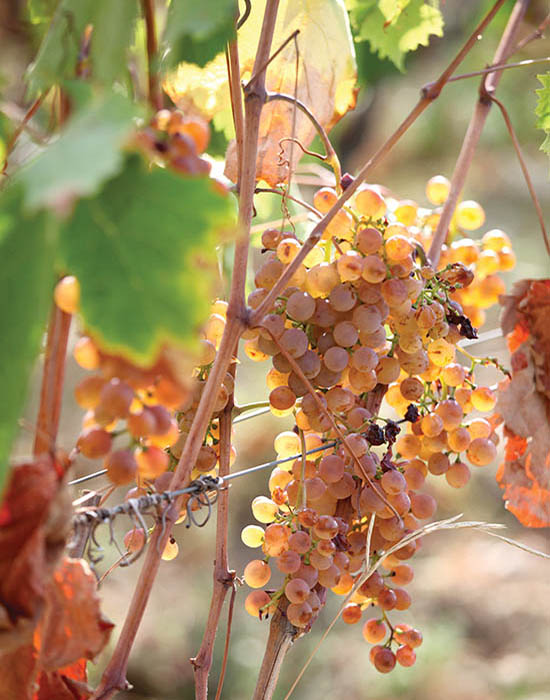
Cuisine Niçoise is the style of cooking found in Nice, in the countryside around Nice, and for the most part in our village. It comes from humble origins, with most of the recipes having been inherited from grandmothers who prepared farmhouse cuisine from produce grown in their kitchen gardens using recipes that were handed down for generations — and often served to three of them sitting at the kitchen table for Sunday dinner.
Many of those grandmothers were either Italian or French influenced by Italian cuisine, because the entire area along the coast from Cannes towards Monaco had been part of Italy until 1860, when it was ceded to France. So the cuisines of those two countries are entwined and intermingled in the most ideal culinary match of Italian and French traditions. The resulting cuisine Niçoise springs from that marriage — with a strong dash of its own unique dishes not found anywhere else in France.
This area of France fits snugly close to Genoa, so subtle changes were made to typically Italian dishes on a daily basis, thereby creating the evolution of a new blend of French and Italian cooking. French Niçoise cooks make gnocchi, but they fold in chopped Swiss chard; they make ravioli but stuff it with orange-scented beef stew or fry it. A favorite meal of pizza at a restaurant for lunch might be followed by a stew at home for dinner, made with an inexpensive cut of meat that has been marinated overnight in wine. The meat is enhanced with vegetables from the garden at the back of the house and herbs harvested wild from the side of the road during an afternoon walk. The daube, or French stew, is most likely served with homemade Italian tagliatelle.
Cuisine Niçoise is as unique a way of cooking as that of Lyon or Alsace; however, you can find the cooking of Lyon and Alsace in restaurants throughout France, whereas much of cuisine Niçoise is found only in the region around Nice. It would be hard to find socca, a traditional Niçoise pancake or crêpe made of chickpea flour, once you leave Nice.
Niçoise cooking is vibrant and healthy, with an emphasis on vegetables and fish. It is honest, simple and frugal, based on what is available from the surrounding land and the sea. It is designed with olive oil rather than butter and cream; it is light rather than bathed in rich sauces. Because there is little room for cattle to roam in this region, there is less beef and more lamb, pork, rabbit, wild game, duck and chicken. And cuisine Niçoise depends on fresh, locally sourced produce, either wild or tamed by farmers. You can’t speak about it without mentioning the local farmer or fisherman.
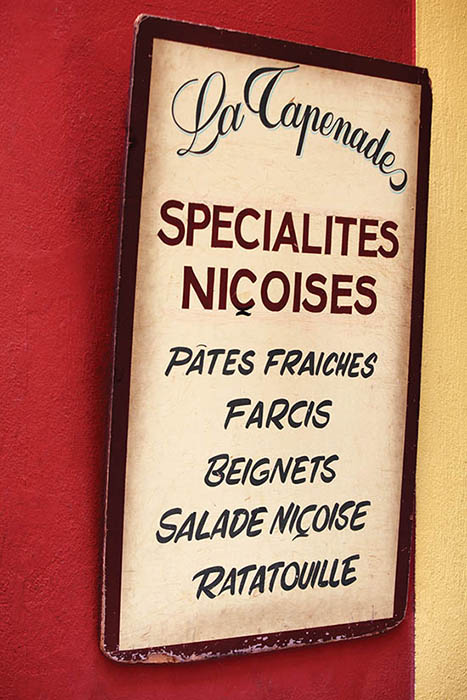
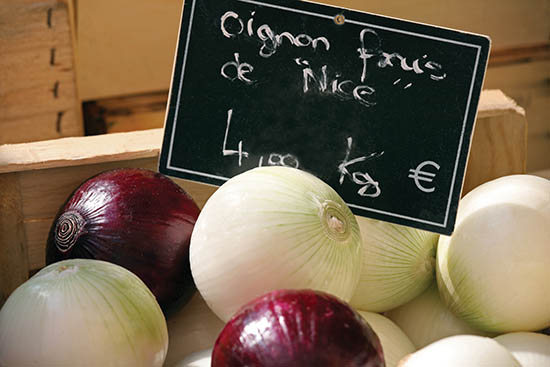
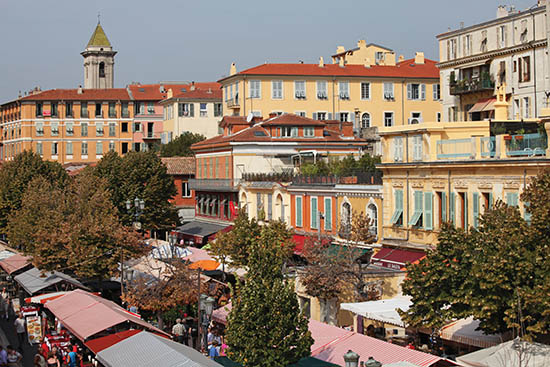
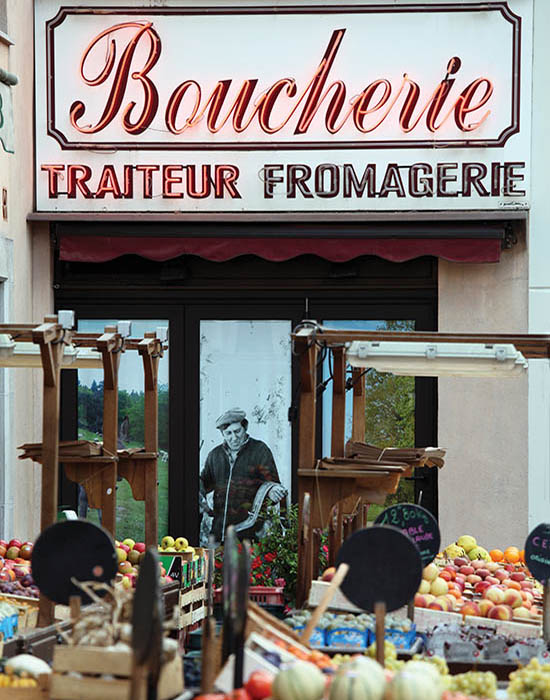
In the open-air market in Nice and in small family shops in the area, you will find wild asparagus; wild mushrooms; mesclun; zucchini flowers; Mara des Bois — tiny strawberries; red, green, and black fresh figs; fresh green walnuts; lamb from the nearby Alpes-de-Haute Provence; and lean sheep and goat cheeses as well as a vast array of brilliantly colored fruits and vegetables. As much as imaginable, everything at the market is local.
The olive oil that dressed my salads was from the old stone press in Opio, a village down the hill; like my neighbors, I scooped up the olives beneath my trees and drove them down to the olive mill in exchange for a bottle of oil. Bread came from the village baker. Our house wine, Belette rosé, came from the hills behind Nice. Our salad bowl in the summer was filled from my garden and in the winter still filled from my garden but with sturdier varieties of greens. Much of the fish I bought was line caught from local waters, and the cheese that I coveted was from shepherd farmers who descended from the mountains behind Nice to bring their small quantities of handcrafted cheeses to our markets. Neighboring beekeepers, as well, stocked us with golden goodness from the hives in their gardens.
The countryside around Nice is ideal for growing, as the temperature rarely reaches beyond the typical 68- to 86-degree Fahrenheit range. In the hills behind Nice and the Côte d’Azur, in the arrière-pays, or backcountry, many sunny microclimates exist, providing superb growing conditions for various types of produce. Bar-sur-Loup’s is perfect for growing oranges, while Menton’s, down the coast, is ideal for lemons. A drive through the arrière-pays yields a delightful variety of culinary treats and specialties. You could begin in Grasse, which is not as conducive to growing food as it is to growing roses, tuberoses, jasmine, gardenias, and honeysuckle; but a couple of miles farther is Opio, where the climate is ideal for olive trees. A short drive east brings you to Bar-sur-Loup, where you experience the microclimate so heavenly for oranges. Farther along, violets thrive in the fields of Tourettes-sur-Loup. Grapes, apricots, and herbs rejoice in the alpine climate of Saint-Jeannet. And the hills surrounding Nice are conducive to cultivating amazing tomatoes and grapes.
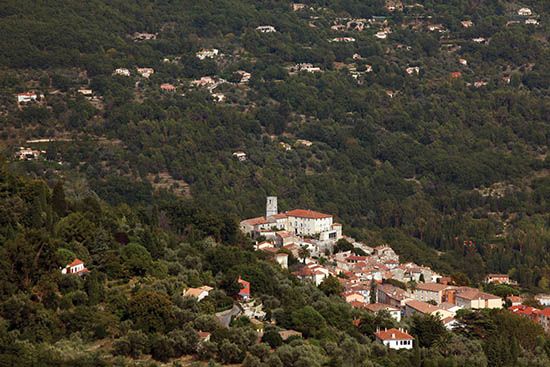
As time went on, I became an expert on where to find the best produce, which were the best open-air markets, where to find the best bread, fish, cheese, and honey. The map in my mind soon became populated with croissants, markets, cheese shops, and confiture (jam) makers rather than highways and street signs. Everything revolved around food for me, even the geography: hilltop villages were marked on my mind’s map with jam and honey shops, while the larger towns were represented by vast open-air markets. The map was decorated with olive branches and colorful fields of lavender.
Soon after moving to Bar-sur-Loup, I yearned to learn what to do with all the produce I found in the markets and shops. Luckily, I found guardian angels of the culinary sort living in and around my village, who taught me traditional cuisine Niçoise that they had learned from their mothers and friends and grandmothers. I took their tutoring seriously, mastered their authentic Niçoise dishes, then updated them for my taste and streamlined them for my busy life. I also tried to find cookbooks to learn cuisine Niçoise and only found one at the time, which had been published in 1972 by the ex-mayor of Nice, Jacques Médecin. This became my bible. Médecin, my neighbors, and friendly local chefs became my guides and mentors. The younger up-and-coming chefs continue to be my inspiration, always using ingredients that are local and fresh, exulting in the possibilities of what can be done with them. Their style of cooking is more modern but always within the way of living and cooking so beloved in this region.
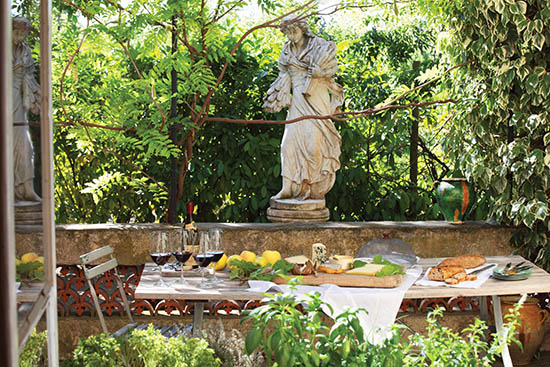
At home, cuisine Niçoise is casual, served on mismatched pottery rather than fine china. It has the cozy familiarity of a grandmother’s kitchen, where food was prepared in well-loved vintage pots and served on a long wooden table. Although its allure is a nostalgic one, it fits very much into our times and lifestyles. Simple and homey, using local ingredients or what you have on hand, cuisine Niçoise is an inexpensive and healthy way of cooking that I am thrilled to share with you — because I learned that this unsung cuisine is indeed worth singing.
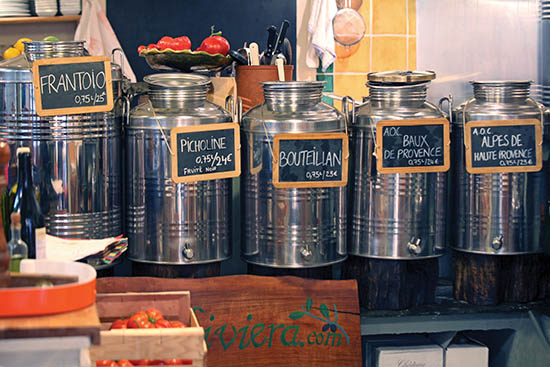
Niçoise cuisine is different from the rest of French cuisine due to the fact that its history and location are unique. Having been part of the Kingdom of Sardinia until 1860, its culinary heritage is just as much Italian as it is French.
As the capital of the southern area of the Alpes called the Alpes-Maritimes, Nice and its style of cooking reigns over the entire area along the French Riviera (or Côte d’Azur) from Cannes all the way to Menton and up to include the hill towns just below the mountains that plunge right down to the Mediterranean sea.
These are the ingredients used most in Niçoise cuisine — the key being to use the very highest quality ingredients you can find. If you have these ingredients on hand, you can easily create the flavors, smells, and pleasures of the cooking from this sun-kissed corner of France.
You would be surprised at how many recipes in this book use anchovies, because in Niçoise cooking they are used to add a subtle salty flavor that you can’t quite identify, as well as a pungent one. Niçoise chefs would recommend using salt-cured anchovies, but if you can’t find them, use flat or rolled canned ones. If you buy salt-cured anchovies, hold them under running water to clean off the salt, fillet them, and then pat them dry. Anchovy paste is my secret ingredient in many dishes and is an essential item in my pantry.
Marinated fresh anchovies have a silvery color and are sold in gourmet stores. They look and taste quite different from canned anchovies, having a firmer texture and less salt. They make a good topping for pizza and tartines and add interest in dips or chopped into sauces and salad dressings.
Small, purple-tipped artichokes grow easily around Nice and are served raw in salads, marinated, or stuffed. For the recipes in this book, use any fresh artichokes available locally. Otherwise, use canned quartered artichokes or artichoke hearts.
The intoxicating aroma of fresh basil and garlic being pounded in a mortar and pestle or puréed in a food processor reflects the uplifting quality of a well-made pistou — one where plenty of fresh basil leaves are the star ingredients. Pistou, the vibrant green paste made with basil, garlic, olive oil, and Parmesan, is dropped into soups, blended into vinaigrettes, painted over fish, and tossed into pastas. Over the border in Genoa, where it is called pesto, it is ritually pounded in a marble mortar, the ingredients called for being basil, extra virgin olive oil, pine nuts, salt, Parmigiano-Reggiano and Pecorino. Over time, as the recipe for pesto migrated to Nice, the pine nuts were dropped.
Basil aids digestion, is a natural anti-inflammatory, and is high in antioxidants. Combined with raw garlic’s anti-bacterial qualities, pistou can be considered to have positive medicinal effects on the body as well as soul-nourishing ones.
If it can be stuffed, the Niçoise do it, absolutely deliciously. The essential ingredient for many of their stuffed dishes, as well as a topping for tians (shallow casseroles), is freshly made breadcrumbs.
Homemade breadcrumbs are a breeze to make if you have a food processor or blender. Simply take your favorite bread, slice off the crusts, tear the bread into pieces, put it in the food processor or blender, and pulse or blend until you get the consistency you want. I like to stop when I still have some larger tender pieces in the mix. Don’t toss day-old bread. Use it to make breadcrumbs, and store them in a plastic bag in the freezer.
Candied fruits, fruits confit, are very popular along the Côte d’Azur. Local oranges, clementines, lemons, melons, cherries, apricots, and more are preserved in sugar and displayed like jewels in precious settings. They are considered a special treat, given as gifts, offered on holiday tables, and taken home to dice and use in pastries, cakes, and ice cream. When candied fruits are called for, there are fresh candied fruits that you can order online, or you can look in your local health food store for the ones used to make trail mix and dice them at home.
Canned tuna fish in olive oil is a staple on the shelves of most pantries, as it is a required ingredient in traditional Salade Niçoise. Buy the very best quality you can find packed in olive oil from Sicily, Spain, Italy, or Portugal. Always use tuna packed in olive oil, not in water.
Small flower buds from the caper bush that have been preserved in salt and vinegar, capers perk up a dish and add a distinctly salty note. Rinse them well and pat dry before using.
The Niçoise region is not known for its cheeses but rather for loving to use cheese in almost everything. Grated Parmigiano-Reggiano and Emmental are found topping soups, salads, pastas, and main courses. Cheese should always be freshly grated. Pre-grated cheese has little flavor and is a far cry from the original. Buy a large piece; you can keep it wrapped in the refrigerator and then either grate it or use a vegetable peeler to shave off paper-thin slices to garnish salads and pastas as needed.
Fresh goat cheese is the most widely produced cheese in the region and is sold from farms posting signs along village roads, in open-air markets, and in cheese shops. Two other fresh cheeses — fromage blanc, a very soft creamy cheese, and la brousse, a creamy goat’s-milk cheese — are sold in most cheese shops and used in a variety of dishes, both savory and sweet.
Dried chickpeas (garbanzo beans) can be soaked then used in recipes; but for the most part, I use canned chickpeas, which are time-saving and easy. They are excellent in salads, soups, and stews, besides being high in protein and fiber.
Many Niçoise dishes call for chickpea flour, which is yet another reason why this style of cooking is so healthy. Chickpea flour, made from garbanzo beans, is gluten free and packed with protein. It has a slightly nutty flavor that makes socca, panisses, and batters so memorable as being uniquely Niçoise.
Fish markets in the region often add dried fennel stalks to packages of fish so the cook can use it to either stuff the fish or lay it down on a barbeque or baking pan for the fish to cook on. Dried fennel seeds are used in many dishes, warmed in a skillet first to release their aroma. And fresh fennel accents many regional recipes; its feathery fronds are a delightful addition to any chopped herb blend. Fennel’s popularity in Niçoise cuisine comes full circle when you consider that the favorite anise-flavored drinks, Pernod and Pastis, have wild fennel as one of their ingredients.
For pastry, pasta, or bread I use organic unbleached all-purpose flour. Chickpea flour is the favorite flour of the Niçoise, turning up in a myriad of dishes from socca to batter. Look for garbanzo (chickpea) flour in gourmet shops, health food stores, and ethnic groceries.
Basil, sage, thyme, flat leaf parsley, marjoram, and rosemary are used extensively. Réfrescat, a mix unique to Niçoise cuisine, is made from herbs that are not always easy to locate, including borage, purslane, poppy, dandelion, and sow-thistle; but if you can find the seeds you can grow them at home. Although dried herbs are available in the supermarket, the Niçoise style of cooking traditionally uses only fresh herbs. When a recipe calls for a bouquet garni or herbes de Provence, it means using fresh herbs, not dried.
Always fresh! Garlic is one of the main ingredients used in this style of cooking, for its flavor as well as its health benefits. So much garlic is used that many homes have a large bowl of fresh garlic on the counter near the stove or a whole wreath of it hung in a cool place, ready to use.
Menton, just down the road from Nice, is known for its glorious citrus fruits, which thrive in its protected subtropical microclimate. The famous fat, juicy Menton lemons are in everyone’s basket when shopping in open-air markets, so many Niçoise recipes incorporate lemons. Try to buy only organic and non-treated lemons, especially if you are going to use the zest.
The tiny lentilles de Puy from the Auvergne region of France are the only lentils I use and the ones you see most often in dishes from this region. I love their taste, texture, and ability to hold their own in any dish. Keeping them on hand means you can easily whip up a quick lentil salad or soup, as they cook very quickly.
Invented in Nice by farmers above the city who came up with this idea to differentiate their greens from others being sold, mesclun is traditionally meant to be miscellaneous young greens barely dressed with olive oil, lemon juice, and salt. Jacques Médecin, the ex-mayor of Nice who codified a great deal of Niçoise recipes, describes mesclun as being a mixture of baby dandelion leaves, young lettuce, and arugula.
There is a long tradition of foraging for mushrooms in the Niçoise countryside. Most villages, restaurants, and the open-air markets in larger towns are the beneficiaries of an abundance of wild mushrooms brought to them by individuals who have picked them that morning. The most popular are the meaty cèpes, or porcini. Use chanterelles, cèpes, portobellos, or morels; otherwise, the lovely white button mushrooms, champignons de Paris, found in most markets work well in almost any recipe that calls for mushrooms, cooked or raw.
If you can’t find the small purplish-brownish-black Niçoise olives from the cailletier olive trees, which are grown in the region around Nice, use oil-cured black olives or even canned pitted black olives, depending on the recipe. Canned pitted black olives can lack in flavor and texture, so making the extra effort to buy whole black olives and pitting them yourself will make a huge flavor difference. Buy and keep jars of Niçoise, Calabrese, Kalamata, and Gaeta olives on your shelf when you find them in specialty or gourmet stores.
Olive oil is to Niçoise cooking what butter is to cooking in northern France. Golden-colored extra virgin Niçoise olive oil is excellent for most cooking as well as for frying, because it makes everything taste better and seems to do fine at high frying temperatures. For everyday cooking, look for an extra virgin olive oil from Spain, Italy, or France from big brand-name companies.
When I want to dress a salad or finish a dish and am looking for a stronger, fruitier flavor, I use either extra virgin Spanish or Sicilian olive oils. I’ve learned over time to bring home bottles of olive oil from different small olive growers when I travel through Italy and France, as olives take on the characteristics of their terroir, and a variety of oils in the pantry with different flavors makes cooking and dressing salads more fun. These single-estate olive oils, produced in small batches with a great deal of attention to the final taste and quality, are more expensive and rare. Olive oil aficionados are as passionate as wine connoisseurs about their favorite olive growers, harvests, type of olive, year, and terroir. Following their suggestions has led me to many a memorable olive oil.
The bigarade orange, which Bar-sur-Loup is famous for, is similar to the Seville orange. Oranges grow so well in the Niçoise countryside that they have become an integral ingredient in many dishes, both savory and sweet.
Angel hair, spaghetti, wide egg noodles, and ravioli cradle the sauces born from the marriage of Genovese Italian cuisine and southern French cuisine in this region of France. Having on hand a stock of the best durum flour dried pastas is necessary to prepare many regional dishes. Always cook pasta in plenty of salted boiling water, without oil, allowing at least 4 ounces per person. Drain the pasta, then immediately put it in a skillet or saucepan with the sauce and toss to coat over medium heat for a minute before serving.
Fresh pasta is quicker than ever to make with a food processor. It cooks more quickly than dried pasta and adds a certain tenderness that can truly elevate a dish. It can be made ahead and frozen until ready to use.
Do you know where they come from? They are kernels taken from pinecones! So you can imagine why they are expensive — painstaking labor is involved to extract every one. Pine nuts are an essential ingredient in making tourte de blettes, la trouchia, and other typical dishes and pastries. Buy them in small amounts and keep them in the refrigerator.
You can use any fine cornmeal to make polenta, or look for packages labeled polenta. Ideally, organic stone-ground cornmeal would be the best choice.
Raisins are part of the sweet and salty combination that I love so much about Niçoise cuisine. You’ll often see raisins in savory dishes, adding that little bite of sweetness that is so intriguing. Containers of both dark and blond raisins are an essential ingredient in a Niçoise pantry.
I have six salt boxes lined up by my stove. One holds fine sea salt for general cooking; one for coarse French gray salt; one for Malden flaked sea salt, which I love to use as a finishing salt or over sweet butter for crunch; one for Himalayan pink salt; and two boxes for salt blends that I make.
Next to the salt boxes I have three peppercorn boxes for Tellicherry black, pink, and white. I keep a small mortar and pestle nearby and a spice grinder to quickly grind up impromptu blends of coarse salt, peppercorns, and herbs designed for specific dishes. I serve these in individual salt bowls on the table or in a small mound at the end of each plate. Though salt is not unique to Niçoise cooking, it has become an integral part of the way I cook at home.
Fresh sardines are stuffed, sliced, added to the tops of pizzas, rolled and baked, mashed into spreads, and put between slices of bread with a slice of onion. Try to find fresh sardines or ask your fish market to order them for you. They are light little fish with a firm flesh. Do not use canned sardines; they’re not at all the same.
Preserved to the point of being stiff as a board, stockfish is air-dried cod, used to make a Niçoise fish stew called estocaficada, with potatoes and olives. I use salt cod as a substitute to save time, and I prefer the lighter flavor.
The queen of Niçoise vegetables, Swiss chard appears in a wide variety of recipes, both sweet and savory. When it is out of season, the Niçoise substitute spinach.
Luscious plump tomatoes are grown on hillsides, in kitchen gardens, trellised over twig gates, and nurtured in luminous white indoor growing sheds. The rosy glow of a vendor’s cheeks in the market comes from trying to keep up with bagging tomatoes for enthusiastic early shoppers. You know where the best are by quickly scanning down the aisles, looking for lines three deep. Tomatoes come in a tantalizing variety: dark green, zebra striped, purple-brown, cherry size, and some with deep swirls of ridges.
The little round zucchini found in the open-air markets are perfect for stuffing Niçoise style. The longer ones are stuffed as well, and the zucchini flowers are stuffed, fried, and used in soups.