
PRAISE FOR
CODE NAME: GRAND GUIGNOL
“One of the better suspense novels . . . high-flying . . . Melchior has plenty of authenticity to back up his theater troupe and the German superweapon, which also really existed.”
“A completely suspenseful novel which captivates from beginning to end. Absolutely first class reading. But take care: don’t begin the novel on an evening when you want to go to sleep early, for it is all but impossible to put the book aside once one has begun to read it!”
“Fascinating . . . all in all, it is a fine book.”
“Melchior’s previous thrillers owe their authenticity to his experiences in the OSS during WWII. So does his new novel. The story ranks high in suspense, atmosphere and heartwarming moments as the band proves the value of the old adage: all for one, one for all . . . a fine entertainment.”
“There is plenty of blood spilled in CODE NAME: GRAND GUIGNOL which is based on a little-known Nazi scheme during World War II to develop a secret weapon that could destroy the Allied invasion operation. Melchior provides plenty of action and lots of gore.”
“Grand Guignol was no ordinary theatre. It specialized in horror and blood-soaked realism . . . the name still lingers on as a synonym for horror fiction. (CODE NAME: GRAND GUIGNOL) is an ingenious novel.”

All rights reserved, including without limitation the right to reproduce this ebook or any portion thereof in any form or by any means, whether electronic or mechanical, now known or hereinafter invented, without the express written permission of the publisher.
This is a work of fiction. Names, characters, places, events, and incidents either are the product of the author’s imagination or are used fictitiously. Any resemblance to actual persons, living or dead, businesses, companies, events, or locales is entirely coincidental.
Copyright © 1987 by Ib Melchior
ISBN 978-1-4976-4259-1
This edition published in 2014 by Open Road Integrated Media, Inc.
345 Hudson Street
New York, NY 10014
www.openroadmedia.com

To Cleo — whose contribution is
greater than she knows
CODE NAME: GRAND GUIGNOL is a work of fiction. Any similarities to any person, living or dead, is purely coincidental.
GRAND GUIGNOL: Term for a type of short gothic play emphasizing violence, horror, and terror. This macabre form of theater became popular in Parisian cabarets and theaters in the nineteenth century, especially at the Theatre du Grand Guignol. The gory tales of mayhem and carnage probably were named Grand Guignol because the violent plots of the bloody one-act plays, performed by actors on a legitimate stage, resembled those of the Punch-and-Judy-like puppet shows that featured a popular puppet named Guignol, whose name became synonymous with the kind of miniature theater commonplace in France at the time. Thus, Grand Guignol was a horror show for grown-ups instead of a rowdy puppet theater for tots. Webster’s gives the phrase “grand-guignolism” as a synonym for horror.
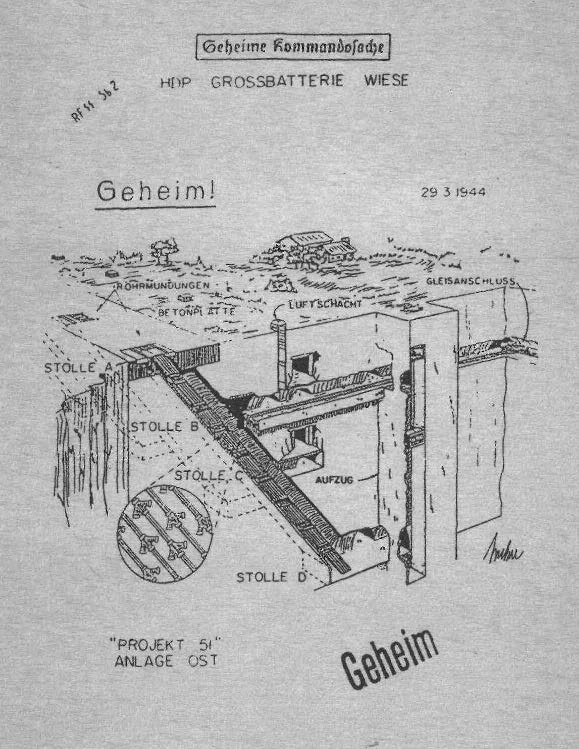
CODE NAME: GRAND GUIGNOL is based on a fantastic, little-known scheme of the Nazis during World War II just before D-Day — a scheme that has been “forgotten” in the dramatic events that followed the invasion, but a scheme that, had it been successful, might drastically have altered those events.
Acknowledgments
The author wishes to express his appreciation for the valuable assistance given him in the research for this book by:
Militärarchiv, Bundesarchiv, Freiburg i. Br. West Germany
National Archives, Modern Military Headquarters Branch, Military Archives Division, Washington, D.C.
Directorate of History, National Defence Headquarters, Ottawa, Ontario, Canada
Public Archives, Canada, State & Military Records, Ottawa, Ontario, Canada
PROLOGUE
Berlin, December 1942
Reichsminister Albert Speer, Armament and Munitions Minister of Adolf Hitler’s Third Reich, stared at the sketches and plans, graphs and computations spread out on his desk before him. He knew he was looking at the work of a genius.
Or a madman.
He lifted his eyes to meet the steady, steel-blue gaze of the young SS officer who sat in stiff self-assurance before him. Standartenführer Dieter Haupt. He knew the colonel’s reputation: a top-flight engineer, audacious and imaginative, who worked directly under August Cönders, the inventive Chief Engineer at the Röchling Stahlwerke (one of Germany’s most important armament plants), where the effective Röchling fin-stabilized anti-concrete shell had been developed.
“Impressive,” he acknowledged. “Fast unglaublich — almost unbelievable.”
“But it will work, Herr Reichsminister,” Dieter Haupt said earnestly. “It will.”
Unconsciously he leaned forward in his chair, as if closeness would lend convincement to his words. Attentively he watched the expressionless face of the man sitting across from him. Despite himself, he felt awed. Speer was only thirty-seven — two years older than he, himself — and already he occupied the all-important position of Minister of Armament for the entire Reich and was a trusted friend of the Führer himself. And the man had been a mere thirty-six when the Führer had appointed him to the post. His predecessor, the brilliant engineer SS General Fritz Todt, head of the Organisation Todt that was in charge of constructing all the Reich’s fortifications, had been killed when his plane crashed in taking off from the Führer’s headquarters in Rastenburg. Speer was a man to be reckoned with. Exactly the kind of Bonze — big wheel — he wanted.
And needed.
Speer leaned back in his chair. Did it indicate disinterest? Haupt felt himself go tense.
“Why are you bringing this to me, Haupt?” Speer asked pointedly. “You have direct superiors — in your work at the Steelworks, in the SS. Why me?”
“Because, Herr Reichsminister, in your capacity of armament minister you are accountable only to the Führer directly. Doctor Cönders is, of course, involved in the development of the project, but he — procrastinates,” the young officer said, his voice clipped with disdain. Like brittle ice crystals, his eyes fixed the older man. “There is no time for polite formalities, Herr Speer. No time for interdepartmental squabbles and jealousies. This project must go forward. Now.”
“If your superiors learn you have violated demanded procedures so flagrantly,” Speer warned, “you may well regret your actions.”
“They will not learn,” Haupt snapped. “Not from me.” The hint of a smile stretched his lips. “And — will all due respect, Herr Reichsminister — I do not believe you will denounce me either.”
“Why shouldn’t I? You are supposed to be a loyal party member, Standartenführer Haupt. You are under orders to go through proper channels.”
“Of course,” Haupt acknowledged, impatience sharpening his voice. Brazenly he locked his disturbingly cold eyes on Speer. “I am deliberately going over the heads of my superiors — Doctor Cönders at Röehling, the SS hierarchy, Reichsführer Heinrich Himmler himself. Yes.” The studied monotone of his voice bordered on insolence. “You are, as you point out, Herr Reichsminister,” he continued, “fully aware of that fact. Yet you have consented to see me and to examine and discuss the project.” He paused ever so briefly. “That, too, could be interpreted as, may I say, infringing upon the authority of others.” Again the slight pause. “As it is, however, a priority order needs only come down from the Führer, through you, Herr Reichsminister, to proceed with the project. You will then place me in charge. You can allocate the necessary funds and provide a sufficient number of laborers. It will, needless to point out, take thousands. And they will, of course, have to be — expendable.”
Speer stared at the young officer. The man’s reputation for audacity had certainly not been exaggerated, he thought. There was a cold strength about him. He would be a difficult man to have as an ally. Far worse as an enemy. Speer was intrigued — both with the man and his incredible project.
“Why now, Haupt?” he asked softly. “Why is the urgency now so great that you elect to take such grave personal risks?”
For a brief moment Dieter Haupt sat silent, his face grim, his eyes hard. . . .
“Herr Reichsminister,” he said finally. “It is now December 1942. Late December. The war is a little over a year old. We have had triumphs, unequaled triumphs, under the leadership of the Führer. But — that will not last. Our armies are even now being defeated in Russia. Stalingrad will not fall to us. Von Manstein and von Paulus are being beaten on the eastern front. The Sixth Army may well be lost. And, Herr Reichsminister, the Americans are not yet committed to the battlefields on the western front.” He paused for emphasis. ‘Once they are, we shall not be able to prevail against the flood of men and matériel they will be able to hurl against us. Unless. Unless we have secured an undisputed, irreversible hold on the entire Continent. And on the British Isles. Unless we have made it impossible for the enemy to invade our territory.” Without taking his eyes off Speer, he placed his hand on the papers on the desk. “With this!” he finished.
He sat back.
Speer contemplated him gravely. “You are playing with fire, Haupt,” he observed quietly. “Dangerous fire. That is defeatist talk.”
“But true, nevertheless, Herr Reichsminister.”
“You know how the Führer deals with defeatism — and those who dare voice it.”
“I am confident my remarks will remain in this office, Herr Reichsminister,” Haupt said tautly. “But I stand by my words. I am willing to take the risk.” His eyes were hard on Speer. “I have taken it.”
Speer sat silent. There were risks. For him as well. But the young SS officer, with all his brash presumptuousness, had voiced what was in his own mind. Unless there was a drastic swing of power to the Third Reich, the war could not be won. Perhaps Standartenführer Haupt’s project was the answer.
“One more thing to be considered, Herr Reichsminister,” the officer broke in on his silence. “Unlike other superweapons, poison gases for instance, this weapon will in no possible way be able to inflict any kind of damage on the Reich or the German people. Only on the enemy.” He smiled a strangely predatory smile, as if daring anyone to contest it. “That is another virtue of Lizzie.”
Speer looked up questioningly.
“That is what I call the project, Herr Reichsminister,” Haupt grinned. “Fleissiges Lieschen — Busy Lizzie.”
“I admire your belief in your — Busy Lizzie, Haupt,” Speer said, a caustic chill in his voice. “But — there apparently are several problems still to be dealt with before your project can become operational.” He indicated the papers on the desk.
“Minor problems, Herr Reichsminister,” Haupt said with a wave of his hand in dismissal. “They will be taken care of.”
“How long will you need to do it?”
“Six months. By next summer Lizzie will be ready for the construction stage.”
Speer stood up. “Report to me at that time;” he said. He looked directly at the officer, who had risen when he did. “And Haupt,” he said. “This conversation never took place. Understood?”
Dieter Haupt drew himself up smartly. He exulted. He was on his way. He — and Lizzie. “Understood, Herr Reichsminister.” He threw his arm up in a stiff Nazi salute. “Heil Hitler!”
“Heil Hitler,” Speer answered.
The young officer left.
Albert Speer stood for a moment in frowning thought. Perhaps. . . .
He walked to the window in his office in the imposing New Reich Chancellery — one of the great buildings he, himself, as the Führer’s chief architect, had designed. Completed in 1939, it was part of the Führer’s plan to rebuild Berlin in the image of the thousand-year Third Reich. He remembered well how proud he’d been when the Führer had appointed him Design/Architect in Chief for the Third Reich. He had been twenty-eight.
He sighed. Architecture. That was his life. Not armament. Not fortifications. Not the management of slave labor. But the Führer had appointed him to his present post. The Führer believed in him. And he would do everything in his power to carry out what the Führer demanded of him.
He gazed out the window. The hectic wartime traffic ground by on Wilhelmstrasse below.
Standartenführer Dieter Haupt had been correct, he thought. The war was going badly in Russia. But it was a temporary setback. He was certain of it. The Führer’s leadership would bring ultimate victory. Haupt’s Project Busy Lizzie might never have to be used — even if the young engineer and his co-workers could perfect it. Germany would still become the ruling nation in all of Europe. Perhaps in all of the world.
But as he briskly walked back to his desk, disburbing doubts rippled beneath the surface of confidence in his mind.
Busy Lizzie. An incredible, an astounding, and deadly weapon.
Perhaps she might after all be called upon to play a decisive role in the triumph of Adolf Hitler’s Third Reich.
From all indications, she might well be equal to the task.
CONTENTS
Acknowledgement
Prologue
PART ONE
PART TWO
PART THREE
Epilogue
Author’s Notes
Biblography
About the Author