
This ebook is copyright material and must not be copied, reproduced, transferred, distributed, leased, licensed or publicly performed or used in any way except as specifically permitted in writing by the publishers, as allowed under the terms and conditions under which it was purchased or as strictly permitted by applicable copyright law. Any unauthorised distribution or use of this text may be a direct infringement of the author’s and publisher’s rights and those responsible may be liable in law accordingly.
Epub ISBN: 9781409085201
Version 1.0
www.randomhouse.co.uk

Published by Time Out Guides Ltd, a wholly owned subsidiary of Time Out Group Ltd.
Time Out and the Time Out logo are trademarks of Time Out Group Ltd.
© Time Out Group Ltd 2009
10 9 8 7 6 5 4 3 2 1
This edition first published in Great Britain in 2009 by Ebury Publishing
A Random House Group Company
20 Vauxhall Bridge Road, London SW1V 2SA
Random House Australia Pty Limited 20 Alfred Street, Milsons Point, Sydney, New South Wales 2061, Australia
Random House New Zealand Limited 18 Poland Road, Glenfield, Auckland 10, New Zealand
Random House South Africa (Pty) Limited Isle of Houghton, Corner Boundary Road & Carse O’Gowrie, Houghton 2198, South Africa
Random House UK Limited Reg. No. 954009
Distributed in USA by Publishers Group West
1700 Fourth Street, Berkeley, California 94710
Distributed in Canada by Publishers Group Canada
250A Carlton Street, Toronto, Ontario M5A 2L1
For further distribution details, see www.timeout.com
ISBN: 978-1-84670-090-3
A CIP catalogue record for this book is available from the British Library
All rights reserved. No part of this publication may be reproduced, stored in a retrieval system, or transmitted in any form or by any means, electronic, mechanical, photocopying, recording or otherwise, without prior permission from the copyright owners.
Time Out Guides Limited
Universal House
251 Tottenham Court Road
London W1T 7AB
Tel + 44 (0)20 7813 3000
Fax + 44 (0)20 7813 6001
Email guides@timeout.com
www.timeout.com
Editorial
Editor Sarah Thorowgood
Copy Editors Simon Coppock, Patrick Welch
Listings Checkers Alex Brown, Cathy Limb
Toby Pearce, Kohinoor Sahota
Proofreader Mandy Martinez
Indexer Dominic Thomas
Managing Director Peter Fiennes
Editorial Director Sarah Guy
Series Editor Cath Phillips
Business Manager Dan Allen
Editorial Manager Holly Pick
Assistant Management Accountant Ija Krasnikova
Design
Art Director Scott Moore
Art Editor Pinelope Kourmouzoglou
Senior Designer Henry Elphick
Graphic Designers Kei Ishimaru, Nicola Wilson
Ad Designer Jodi Sher
Picture Desk
Picture Editor Jael Marschner
Deputy Picture Editor Lynn Chambers
Picture Researcher Gemma Walters
Picture Desk Assistant Marzena Zoladz
Picture Librarian Christina Theisen
Advertising
Commercial Director Mark Phillips
Sales Manager Alison Wallen
Advertising Sales Ben Holt, Philippa Johnson, Jason Trotman
Copy Controller Alison Bourke
Marketing
Marketing Manager Yvonne Poon
Sales & Marketing Director, North America & Latin America Lisa Levinson
Senior Publishing Brand Manager Luthfa Begum
Marketing Designer Anthony Huggins
Production
Group Production Director Mark Lamond
Production Manager Brendan McKeown
Production Controller Damian Bennett
Production Coordinator Kelly Fenlon
Time Out Group
Chairman Tony Elliott
Chief Executive Officer David King
Group General Manager/Director Nichola Coulthard
Time Out Communications Ltd MD David Pepper
Time Out International Ltd MD Cathy Runciman
Time Out Magazine Ltd Publisher/Managing Director Mark Elliott
Group IT Director Simon Chappell
Head of Marketing Catherine Demajo
Contributors Jessica Ablitt Sudbury, Dominic Addison, Sharif Ahmed, Edoardo Albert, Simone Baird, Alex Barlow, Paul Burston, Rachael Claye, Simon Coppock, Annie Dare, Amy Ellis, Anna Faherty, Mike Flynn, Grant Gillespie, Charlie Godfrey-Faussett, Hugh Graham, Sarah Guy, Derek Hammond, Ronnie Haydon, Kate Hutchinson, Serena Kutchinsky, Ben Lerwill, Jon Levene, Cathy Limb, Megha Mohan, Jenni Muir, Julie Pallot, Toby Pearce, Cath Phillips, Natasha Polyviou, Kate Riordan, Alan Rutter, Robin Saikia, Cyrus Shahrad, Andrew Shields, Bella Todd, Helen Walasek, Peter Watts, Patrick Welch, Sonia Zhuravlyova.
Interviews Nuala Calvi, Bella Todd, Sarah Thorowgood.
The Editor would like to thank Katerina Botsari, Simon Coppock, Grant Gillespie, Vincent White.
Maps London Underground map supplied by Transport for London.
Front and back cover by Heloise Bergman, Andrew Brackenbury, Tricia de Courcy Ling, Guy Hills, Jitka Hynkova, Britta Jaschinski, Olivia Rutherford, Ming Tang-Evans, Alys Tomlinson, Jonathan Perugia, Anthony Webb, Marzena Zoladz.
The following page numbers refer to the printed
edition from which this ebook was created:
Photography by pages 3, 5 (bottom left), 7 (bottom right), 205, 208, 209 (middle & bottom left) Britta Jaschinski; pages 5 (top left), 35, 89, 124, 177, 236, 237, 309 Jonathan Perugia; pages 5 (top right), 28/29, 30/31, 37, 38, 90, 91, 123, 130/131, 134, 135, 194, 195, 201, 211 Olivia Rutherford; pages 5 (top & bottom middle), 9 (top), 53, 81, 106, 107, 143, 216, 230, 231, 233 Jitka Hynkova; pages 5 (bottom right), 7 (left), 105 ( right), 141 (right) Haris Artimis; pages 7 (top right), 73 (bottom), 120, 175, 249 Andrew Brackenbury; pages 9 (middle), 164 Michelle Grant; page 9 (bottom) Scott Wishart; pages 10/11, 26, 148, 150/151, 169, 185, 190/191 Alamy; page 13 Wellcome Images; page 18 Londonstills.com; page 19 newsteam.co.uk; page 33 National Maritime Museum, London; page 42 Neil Wissink; pages 48, 67, 77 Rob Greig; page 50/51 Alistair Muir; page 61 Libby Mor; pages 62, 63, 239 Tove K Breitstein; pages 70, 71, 264, 265, 303 Marzena Zoladz; page 73 (top) Abigail Lelliot; page 79 (top) Kate Peters; pages 79 (bottom right), 129, 167, 277 Alys Tomlinson; page 93 (left) WWT London Wetland Selena Sherid; page 93 (right) Werner Certh/ardea.com; page 95 Sarah Thorowgood; page 97 The Royal Parks; page 99 Tim Spicer; pages 100, 144, 157, 158, 159, 170/171, 197, 198 Elisabeth Blanchet; pages 105 (left), 108, 127, 209 (top left) 246 Ming Tang-Evans; page 109 Michael Franke; pages 110/111, 254, 290/291 Getty Images; page 133 Jon Furniss; page 147 www.gorminator.com; page 173 (top) Peter Garner; page 173 (middle) Sophie Lee; page 173 (bottom) Fung Wah-Man; page 193 www.britainonview.com; page 203 Adrian Pancucci; page 204 David Axelbank; page 209 (top left & bottom right) Rogan MacDonald; page 214 Richard Bryant/arcaid.co.uk; page 218 Stephen Dobbie; page 220 Tristram Kenton; page 221 Esme Appleton; page 227 Michael Cockerham; page 240 Heloise Bergman; page 242 Hayley Madden; page 245 Bernardo Doral; page 257 londonstills.com; page 268 Nick Ballon; page 269 Anthony Webb; page 276 (top & bottom right) Gemma Day; pages 294, 295 Tricia de Courcy Ling; page 306 Thomas Skovsende.
The following images were provided by the featured establishments/artists: pages 15, 42, 43, 47, 57, 69, 83, 87, 113, 122, 152, 153, 178, 187, 188, 206, 218, 221, 243, 248, 293, 297, 298.
Illustrations Ian Keltie, www.keltiecochrane.com.
© Copyright Time Out Group Ltd
All rights reserved
About the guide
Introduction
1000 things
Features
Path to glory
A different league
Crunch clubbing
Deal or no deal?
Take a stand
Going underground
Take it to the bridges
’Crash course
Carry on cabaret
Brought to books
Fringe benefits
Family fortunes
Cheap chills
Transports of delight
Art for art’s sake
A few of my favourite things
Russell Kane
Scroobius Pip
Dominic Cooke
Leslie Grantham
Johnny Vaughan
Patrick Wolf
Lesley Lewis
Victoria Thornton
Fabien Riggall
Emmy the Great
Anna Robertson
Tube map
Copyright
Inspirational ideas for what to do in the capital, all of them costing £10 or less – with many of them costing nothing at all. Enjoy big club nights or little-known river walks; try martial arts or hula hooping; play bike polo or hunt for classic vintage couture; drink quality champagne or hear world-class music. From once-in-a-lifetime experiences to everyday pleasures, there’s always more to be discovered, without breaking the bank.
Telephone numbers
All phone numbers listed in this guide assume that you are calling from within London. From elsewhere within the UK, prefix each number with 020. From abroad, dial your international access code, then 44 for the UK, and then 20 for London.
Disclaimer
While every effort has been made to ensure the accuracy of information within this guide, the publishers cannot accept responsibility for any errors it may contain. Businesses can change their arrangements at any time so, before you go out of your way, we strongly advise you to phone ahead to check opening times, prices and other particulars.
Advertisers
The recommendations in 1000 Things to do in London for under £10 are based on the experiences of Time Out journalists. No payment or PR invitation of any kind has secured inclusion or influenced content. The editors select which venues and activities are listed in this guide, and the list of 1,000 was compiled before any advertising space was sold. Advertising has no effect on editorial content.
Let us know what you think
Did we miss anything? We welcome tips for ‘things’ you consider we should include in future editions and take note of your criticism of our choices. You can email us at guides@timeout.com.
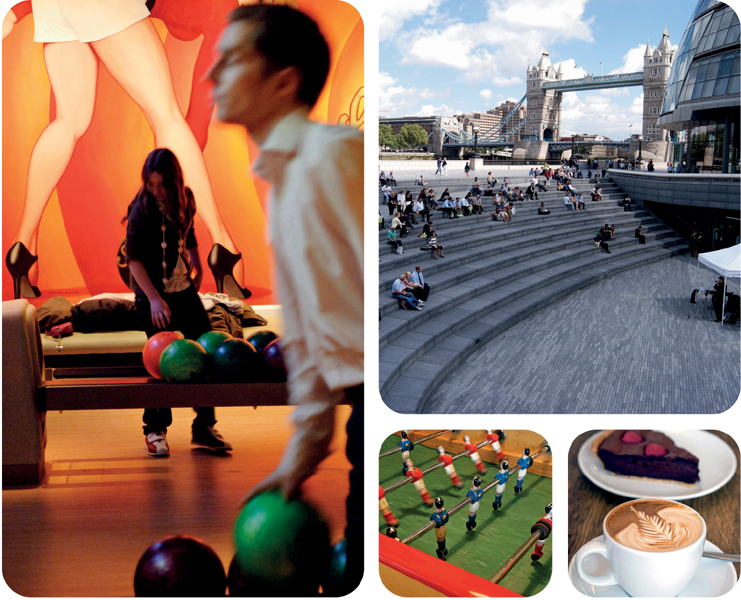
London is a famously – some might even say reassuringly – expensive city. A place that consistently tops highest cost of living charts and which people from out of town save up to visit. There’s no denying the fact that a martini at Claridge’s or a box at the Royal Opera House will set you back considerably more than ten pounds – and that’s probably the way it should be. Some things are worth paying a lot for. Yet despite the high rents and other costly living expenses, there is also a wealth of entertainment on offer in the city that’s free – or at least attainable for less than a tenner.
When we set about compiling a list of ideas, it soon became clear that we were not going to be short of suggestions. For starters, since the great national museums threw open their doors for free after the millennium, it’s been possible to spend days wandering the capital soaking up culture without paying a penny – once you’ve bought your travelcard. But even travelling through the city can be part of the floor show – head upstairs on a double decker bus with Peter Watts and you’ll see what we mean, and happy is the child that bags the front seat on a driverless DLR train. Then there are the hundreds of other art galleries and museums to visit, walks to take, performances to see (including opera in Covent Garden), bargains to buy, food to eat and even cocktails to sip – all for less than £10.
It’s true that sometimes a little ingenuity is required to keep things ticking along for less than a tenner – we’re not above a well-placed blag in the interests of research – and there are some things in this book that would not be here if it weren’t for the generosity of the people that run them (for some special deals). But, as you’ll quickly discover with the help of this book, London’s full to bursting with gloriously cheap thrills. Grab a crisp ten pound note and start exploring.
Sarah Thorowgood, Editor
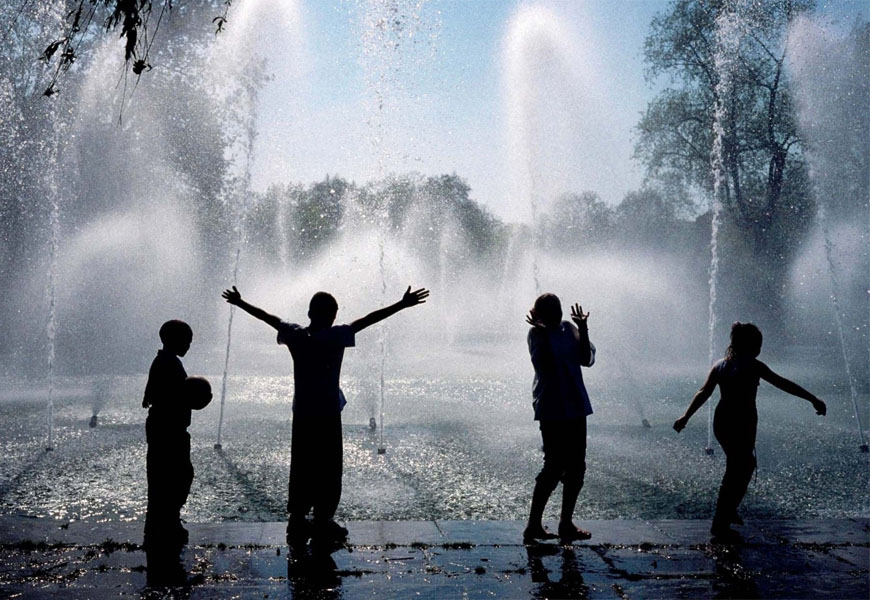
Here’s hoping for a repeat of summer 2006 when the mercury hit 36° centigrade and London’s fountains became more than just decorative attractions. If the heatwave comes, you’ll be relieved to know that the fountains in Battersea Park – the largest of any London park – spring into life at least once every hour.
You could have a cuppa in one of the museum’s various cafés, but if you have some spare time why not enjoy the free ‘Way of Tea’ session instead? This demonstration of the Japanese tea ceremony takes place in Room 92 roughly once a fortnight. There’s also a terrific programme of free gallery talks, which are often focussed around the current blockbuster exhibition. Many of them are also timed just right (at 45 minutes) for a lunch break. Check the website for specific dates and details of all events.
British Museum Great Russell Street, WC1B 3DG (7323 8000/www.britishmuseum.org).
Head to New Loon Moon (9 Gerrard Street, W1D 5PL, 7734 3887) – a labyrinth of pan-Asian delights – for an unrivalled range of products from different countries including China, Thailand, Vietnam, Korea, India, Japan, Indonesia, the Philippines, Malaysia and even Burma. Try fresh gai lan (crystal pears), Thai pea aubergines or huge, spiky jackfruit sold by the slice. Loon Fung (42-44 Gerrard Street, W1D 5QG, 7437 7332, www.loonfung.com) is one of the only oriental supermarkets in this part of town to have a butcher’s counter – pork shin bones and chicken feet are offered alongside more traditional cuts. See Woon Hong (18-20 Lisle Street, WC2H 7BA, 7439 8325, www.seewoo.com) is good for fresh vegetables and cured Chinese meats, while the Good Harvest Fish Market (65 Shaftesbury Avenue, W1D 6LH, 7734 4900) is London’s (only) answer to the Chinese ‘wet market’ and is best for live seafood – crabs, lobsters and razor clams, for instance – as well as sashimi-grade salmon, tuna and seabass.
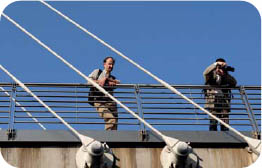
The Royal Society for the Protection of Birds (RSPB) isn’t all about red kites, golden eagles and puffins – high profile species living in remote sanctuaries. From July to September, you’ll find Society volunteers toting telescopes next to the Millennium Bridge just outside Tate Modern. The RSPB’s Richard Bashford told us that their plan is ‘to approach people and say “would you like to see a falcon”, then give them binoculars and information and point them up to where they’re perched up on top of the Tate Modern chimney, post breeding.’ Find out more at www.rspb.org.uk/brilliant/sites/tate.
… at friendly monthly tombola bash Something for Nothing held at Dream Bags/Jaguar Shoes (34-36 Kingsland Road, E2 8DA, 7729 5830, www.jaguarshoes.com). Amid the playful indie-electro tunes of local DJs, free fashion swag from labels like American Apparel, Lee, Dr Martens and Cheap Monday are given away to grateful drinkers. Arrive at 7pm, take a ticket and wait for your number to be called out – then claim your loot.
Situated in the south-west corner of Trafalgar Square, the Trafalgar Hotel’s small rooftop bar (2 Spring Gardens, Trafalgar Square, SW1A 2TS, 7870 2900) overlooks the lions, the fountains, the general melée – and Nelson on his column. Up here you get pretty much the same view of the city as the great Admiral standing 170 feet up in the air. The bar serves a range of drinks (many of which cost less than a tenner), but is only open in the summer months and may be closed for private parties – phone ahead to check before you visit.
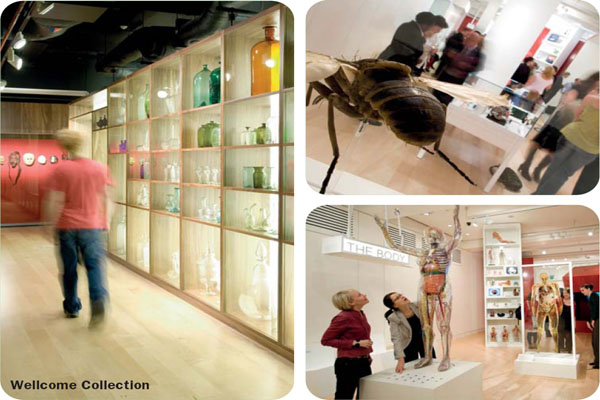
The Wellcome Collection explores the connections between medicine and art through its three spaces. Upstairs, exhibits drawn from 19th-century explorer Sir Henry Wellcome’s findings include a 14th-century Peruvian mummy, a used guillotine blade, Napoleon’s toothbrush and a wickedly bladed torture chair. Next door, is ‘Medicine Now’, which contains some startling modern art on medical themes (a realistic sculpture of a man disappearing into the folds of his own obese stomach, for example). Downstairs, the series of temporary exhibitions get better and better: Skeletons – a forensic analysis of ancient bones from the Museum of London storerooms – was one of our favourite recent shows.
Wellcome Collection 183 Euston Road, NW1 2BE (7611 2222/www.wellcomecollection.org).
This lively West End boozer first secured its reputation as a literary salon in the 1920s when it provided a bolt- and watering-hole for Fitzrovia’s more outré residents, including Augustus John, Jacob Epstein and Aleister Crowley. Queen of Bohemia Nina Hamnett could also be found sprawled over the bar here, trading anecdotes of her numerous adventures with Picasso in exchange for drinks. In the ’50s, regulars included Dylan Thomas, George Orwell, Soho raconteur Julian McLaren-Ross and there was even the occasional visit from Lawrence Durrell when he was in the country. The Sam Smith pub still wears its history with pride – head downstairs to the Writers’ and Artists’ Bar, find yourself a cosy wooden booth and toast London’s former literary glories.
Fitzroy Tavern 16A Charlotte Street, W1T 2LY (7580 3714)

If you want to see some good comedy on the cheap, the best place to go is the Greenwich venue Up The Creek (302 Creek Road, SE10 9SW, 8858 4581, www.up-the-creek.com) on a Sunday night. It’s just a little local place, but the standard of comedy is always high and it’ll only cost you a fiver to get in. Another favourite of mine is the Fat Tuesdays Comedy Night at the Salmon and Compass (58 Penton Street, N1 9PZ, 7837 3891, www.salmonandcompass.com). If you are lucky you’ll sometimes see people like Frank Skinner and Eddie Izzard popping in to try out their new material.
You can’t do much better than walk the half mile or so through the centre of Covent Garden to look at the jugglers, human statues and street performers – it’s like a constant free theatre show out there. The other day when I was there, I saw some people having a paella cook-off. If you get a drink at the Punch and Judy pub (40 The Market, The Piazza, WC2E 8RF) you can look down on proceedings from the upper level and have a laugh at the City types getting drunk and falling over.
Something that I really love doing is going on what I call a ‘human safari’. You have to head out at about 11pm, having drunk no more than one bottle of wine – you need to be lubricated but relatively sober for this – then take a tuk tuk along Great Newport Street and through Chinatown and Leicester Square. I can guarantee that you will never see such a brilliant snapshot of humanity. Every stage of inebriation and emotion will be on display – from first love right the way through to animosity and violence.
There are lots of cool places to go to see films in London, but I think that the Ritzy (Brixton Oval, Coldharbour Lane, SW2 1JG, 0871 704 2065, www.picturehouses.co.uk) is really something special. As well as having tickets for £6.50 and live music for free in the café upstairs, it’s also in a beautiful old building, all the movie timetables are written up on chalkboards and the staff really know their stuff. Plus it’s in the heart of Brixton so it has a really great atmosphere.
I love food, and because I’m a bit hyperactive I can eat massive quantities of it without penalty. At the Stockpot (18 Old Compton Street, W1D 4TN, 7287 1066) you can get two courses, like sausage and mash and apple pie and ice-cream, for example, plus a drink, for under a tenner. It’s the perfect place to go if you love British cooking – and if you feel like gorging yourself.
As recently as the 1960s, the Bishop of Winchester’s Palace on Bankside was little more than a rumour, hidden away behind Victorian warehouse walls. But now its tumbledown walls and high rose window once again add some spiritual frisson, as well as some 13th-century gravitas, to Clink Street. In the 15th and 16th centuries, Bankside was the focal point for fun in London – and who better to control the theatrical shenanigans, the dog-tossers, bear-baiters and prostitutes (aka ‘Winchester geese’,) than the right honourable Bishop himself? Oh for the days when this ‘private retreat from the pressures of medieval governance’ featured not only ‘a prison, a brewhouse and a butchery’ but also the more wholesome delights of a ‘tennis court, bowling alley and pleasure gardens’. No wonder the area was known as the ‘Liberty of the Clink’.
Winchester Palace (www.english-heritage.org.uk).
Cath Phillips packs some plasters and walks the Thames Path – all the way from the Thames Barrier to Hampton Court Palace.
The pain set in just past County Hall. The sunlight was bouncing off the water, the Houses of Parliament resplendent in the afternoon sun, and the riverside café did a mean cappuccino. But my feet were suffering: the blisters on my ankles had started to bleed, my toes were red and raw, and a strange puffy swelling had appeared on the underside of one foot. Perhaps we could call it a day, nip round the corner to Waterloo station and get the tube home? Fat chance. We were on a mission: to walk the Thames Path through London, all 36 miles of it from the Thames Barrier to Hampton Court Palace, over one weekend, and no way was the little matter of bleeding blisters going to stop us. At least I’d got some plasters and a spare pair of socks. And it was only another 23 miles to go.
It was a bright Saturday morning at the beginning of October. We’d started at 9am, meeting at North Greenwich tube station at the top of the desolate Greenwich Peninsula, next to the 02 Centre. From there it was a bus ride to the Thames Barrier, the official ‘end’ of the Thames Path, which starts 184 miles away at the river’s source in the Cotswolds. For us it was the beginning, however, because we were walking east to west. You can do it in either direction, of course, but we had an overnight stop in Barnes and anyway it somehow seemed more appropriate to walk west – away from the city into the countryside, the sunset and the glories of a splendid palace.
Few people walk great distances in London. Walks tend to be short and practical: to and from the tube station or bus stop, to the shops, perhaps a Sunday stroll around a park if you’re lucky. There are other long-distance paths within the capital (the Capital Ring, the London Loop, the Green Chain Walk), but the Thames Path takes you through the heart of London, not the outskirts; it reveals the ever-changing nature of the city, from the industrial east through the seats of power in the built up centre to the increasingly rural west; and it’s a brilliant way to reclaim the Thames, that great thoroughfare that defines the city yet is often ignored by its inhabitants.
You don’t need a map as there are are signposts all along the route, but it’s worth taking the three (free) mini guides to the London stretch of the Thames Path National Trail. You can download them from the publications section of www.nationaltrail.co.uk/thamespath or order them from Managers of the Thames Path National Trails Office (Environment & Economy, Holton, Oxford OX33 1QQ, 01865 810224). The brochures are written west to east, but they’re just as useful in the opposite direction if you want sights pointed out to you, historical information and, crucially, for helping you decide which side of the river to walk on. You have no choice at the extremities, but from Greenwich to Teddington Lock the path straddles both sides of the river and it’s possible to zigzag via the numerous bridges. Swapping sides gives a different perspective, but there are also lengthy and irritating detours that are best avoided, when the path is forced away from the water’s edge and goes all round the houses (literally, in some instances) before getting back on course. Other essential equipment should include proper hiking boots and thick socks for cushioning, plasters, water and raingear. Binoculars are useful too.
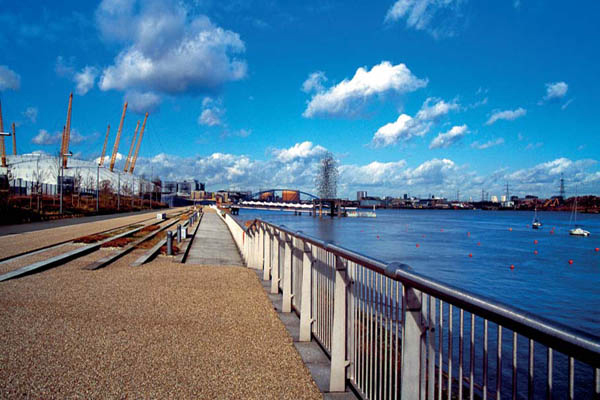
The first ten miles, to Tower Bridge, were easy. From the shiny silver pods of the Thames Barrier to genteel Greenwich, it’s a bleak but thrilling landscape of industrial decay, the path hugging the shoreline past scrapyards, derelict wharves, heaps of aggregate and mysterious metal structures dangling over the water. Rusting shopping trolleys are visible in the mud at low tide, and signs of life are few, bar the solitary Anchor & Hope pub and the occasional dog walker. In the 17th century pirates’ corpses were hung in cages at the tip of the peninsula as a deterrent to other pirates; later it became an industrial stronghold, dominated by works for guns, ships, steel, metal, cement and gas, and therefore heavily polluted. Nowadays, the Greenwich Ecology Park, rows of colourful new apartment blocks and the David Beckham Football Academy signal the area’s transformation – but it’s still got a long way to go.
Just past the O2 Centre is Antony Gormley’s sculpture Quantum Cloud, a tangle of metal rods that gradually reveals the outline of a human figure. A sweet, heavy stench hangs in the air: Tate & Lyle’s refinery still processes a million tonnes of sugar a year here. The brick towers of the Greenwich Power Station loom dramatically over the diminutive Trinity Hospital almshouses, founded in 1613; beyond lies the stately Royal Naval College and tourist shops of Greenwich, an ideal place for a coffee break.
At Greenwich, you can continue along the south bank, through Deptford and Rotherhithe, or traverse the Thames via the Greenwich Foot Tunnel and walk through the Isle of Dogs and Wapping. It’s one or the other; there’s no alternative river crossing until you reach Tower Bridge. We chose the southern route, ducking and diving around historic Rotherhithe, with changing views of the higgledy-piggledy apartment blocks and gleaming high-rises of Canary Wharf opposite as the river bends around the Isle of Dogs.
There’s an awkward detour at Pepys Park in Deptford (look out for the Thames Path signs or you’ll get lost). Then comes Deptford Strand, site of Henry VIII’s Royal Dockyards – Drake’s Steps mark the point where Francis Drake was knighted by Elizabeth after his circumnavigation of the globe in the Golden Hind. The docks here, once the heart of Britain’s seafaring ambitions – whalers left for the Arctic from Greenland Dock – are now used by watersports enthusiasts and yachting types. Occasional danger signs warn of ‘Slippery Steps. Sudden Drop. Deep Water.’ Surrey Docks Farm, a ramshackle oasis with its goats, pigs, donkeys and café, is another handy refreshments stop. As the river bends to the west, you get the first glimpse of Tower Bridge.
Perhaps surprisingly, the section from Tower Bridge through the heart of the city and the tourist hotspots of the Tower of London, HMS Belfast, Shakespeare’s Globe, Tate Modern, the South Bank Centre and the London Eye is the least interesting for the purposes of this mission. Inevitably, this is the most crowded part of the walk and it was hard to retain a sense of purpose and an air of adventure as we struggled through hordes of sightseers and office workers on their lunch break. (The northern bank, along the edge of the City, Victoria Embankment and Charing Cross, is quieter.) Eventually the throngs petered out beyond Westminster Bridge.
We crossed to the north at Lambeth Bridge (to avoid lengthy detours in Vauxhall and around the dilapidated hulk of Battersea Power Station), then crossed back again at Chelsea Bridge to take in leafy Battersea Park. We then yo-yoed once more to the north over Albert Bridge and wandered past assorted houseboats and gleaming yachts at Chelsea Harbour, followed by a seemingly endless array of swanky new riverside apartment blocks to get to Wandsworth Bridge. By now it was getting dark and we were dog-tired; perhaps the reason that we made the mistake of continuing on the north side and had to endure a tedious longcut around the grounds of Fulham’s private Hurlingham Club, before hitting Putney Bridge. We crossed the Thames once more.
From here, the most direct route to Barnes was a couple of miles, but we were walking next to the river and at this point it does one of its great meandering loops up to Hammersmith Bridge and then south again. At least the hard, foot grinding tarmac turned to gravel after the boathouses of Putney, and the tree-lined path was tranquil and increasingly pretty at we headed behind the London Wetland Centre, past playing fields and the Leg o’ Mutton nature reserve. Finally, the humps of Barnes Bridge signalled the end of day one. A stiff drink, a hot bath and an early night swiftly followed. We weren’t up early the following morning.
Day two started well. The stretch from Barnes to Richmond on the south bank is particularly idyllic. (It also avoids a rambling detour through the backstreets of uninteresting Brentford and, if you’re counting miles – which of course we were – the southern route is more than two miles shorter than the northern one.) Trees line the gravel path, which hugs the water’s edge, curving past cottages, various pubs, the Budweiser brewery at Mortlake (the smell of hops in the west countering the sugar in the east) and a glitzy, glassy housing development just before Kew Pier and Bridge.
The weather was bright and sunny and ducks and swans paddled by on the water, keeping out of the way of the heaving rowers. Then a lovely green vista opened up as the path skirted the edge of the Royal Botanic Gardens and the Old Deer Park. It was low tide, and foxes were playing on the foreshore opposite; beyond we could see lion-topped Syon House amid the grassy expanse of Syon Park. Then came pretty Richmond Lock, Twickenham Bridge and, shortly afterwards, the White Cross pub and the smart riverside frontage of Richmond. We stopped for coffee, cake and a breather at the café nestled under the bridge.
Just after Richmond lies one of the most picturesque parts of the Thames. The buildings disappear and there’s the long sweep of Petersham Meadows (where cows still graze) and a little island midstream. Handsome 17th-century Ham House on the south bank faces off against 18th-century Marble Hill House on the north (a foot ferry runs between the two). Himalayan balsam has colonised the riverbank here; it’s an invasive exotic, but it’s hard to resist squeezing the seedcases – which pop satisfyingly, as if alive – thus spreading it further. Then comes a series of playing fields, nature reserves and, finally, Teddington Lock.
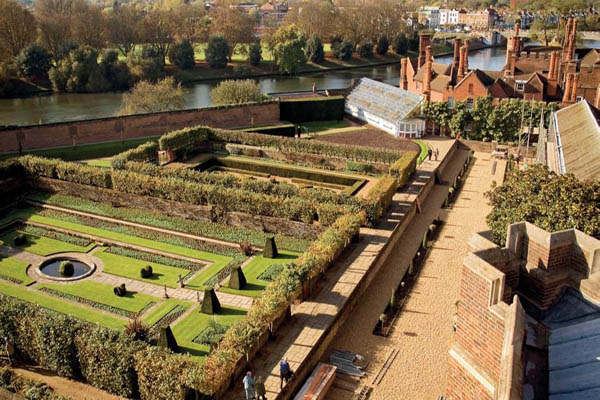
As well as the lock (which is crammed with pleasure boats in summer), there’s a weir, a summer café and footbridges to Teddington proper. The lock marks the end of the tidal Thames; from this point the river takes on a placid and unhurried air, very different from the turbulent highs and lows Londoners are used to. This is also where the path loses its double-sided character. It runs on the south bank through a grassy hinterland as far as Kingston, then you have to cross to the northern bank, following the sweeping edge of Hampton Court Park to Henry VIII’s glorious Tudor palace.
Just three miles to go. Trees and bushes dangled in the water, swans floated gently past a marina; the houses of Thames Ditton across the water the only reminder that we weren’t in the heart of the country. But the light was fading, and an autumnal chill had descended making our legs feel heavy and stiff. Even the gravel towpath was getting too hard underfoot, so we hobbled, staggered and stumbled on the grassy verge until the long brick wall and ornate gates of Hampton Court Palace came into view. The sense of achievement was profound and – not capable of much more – we fell into the nearest pub for a celebratory pint.
On the train home (Hampton Court station is 30 minutes from Waterloo), despite aching limbs and bleeding feet, we were already planning to do it all again, this time from west to east, filling in the gaps we’d missed this time.
‘In London lies a knight a Pope interred…’ reads the clue in Dan Brown’s The Da Vinci Code which leads our heroes to the ‘Pantheonically pagan’ round nave at the 12th-century Temple Church off Fleet Street (Temple, EC4Y 7BB). There are spooky, lifelike memorial effigies of Knights arrayed in the Round, where the order once held their secret initiation rites. But the hunt swiftly moves on to Westminster Abbey (20 Dean’s Yard, SW1P 3NY), where fans will find Isaac Newton’s tomb complete with the orb mentioned in the next part of the clue, although on a quiet day the Chapter House may feature a distinct lack of flying cryptex cylinders, gunplay and/or damsels in distress. It turns out that Alexander Pope (‘A Pope’, geddit?) read Newton’s funeral eulogy.
Code devotees will also enjoy the crucifixion mural by Jean Cocteau (like Da Vinci, allegedly Grand Master of the Priory of Sion) in the Notre Dame de France church off Leicester Square (5 Leicester Place, WC2H 7BX). The surreal 1950s mural features much occult symbolism, from disguised pentagrams through John the Baptist handsigns to a black sun casting black rays into the sky.
But top of the hit list has to be the hulking art deco Freemasons Hall (60 Great Queen Street, WC2B 5AZ, www.ugle.org.uk), in Covent Garden – especially as it isn’t common knowledge that tours are freely available. Highlights at the hall include a wealth of magickal, inexplicable regalia, walls and paraphernalia strewn with Egyptian, Hebrew and esoteric symbolism – and the 2,000-seater Grand Temple. It’s stacked with Zodiacal signs, a depiction of Solomon’s architect Hiram, symbols for Faith, Hope, Charity and Jacob’s Ladder. There are also celestial and terrestrial globes, all-seeing eyes, charioteers and ‘five-pointed stars’. Other items in the collection include the various belongings of other notable masons such as Winston Churchill and Edward VII.
London Transport Museum has a secret horde at its depot in Acton. Normally this is closed to the public but the treasure trove of unused exhibits opens occasionally for a s themed weekend so that the public can have a peek – a treat that includes its working model layouts of London’s transport network. You can ride on the depot’s miniature railway – there are steam as well as electric trains – or take a trip on full-size heritage vehicles, including the 1950s prototype of the Routemaster bus (the RM1).
London Transport Museum Depot 2 Museum Way, 118-120 Gunnersbury Lane, W3 8BQ (7565 7298/www.ltmuseum.co.uk). £10.00, under-16s free.
Ever innovative, the ICA holds various themed nights in its bar as well as a rolling programme of contemporary art exhibitions. One such night is Heavy Pencil, a once-a-month event (check website for dates) that invites some of the UK’s best illustrators to draw live just for the pleasure and fascination of the drinkers in the bar. Inspired, and accompanied by their favourite music, the artists’ doodles are projected onto the bar’s walls.
Institute of Contemporary Arts The Mall, SW1Y 5AH (7930 3647/www.ica.org.uk).
Block out the third weekend of September and spend it visiting some of the more than 700 places – buildings of every conceivable size and type – that you can’t visit the rest of the year. And, what’s more, they are all free. See www.openhouse.org.uk for details.
Alexandra Palace, N22
Alexandra Palace is famous for its splendid Victorian architecture and ice skating rink, but the view is a similarly big draw. Framed by a low brick wall and ornamental railings, and dotted with pay-per-view machines, the vista encompasses everything from the leafy Victorian terraces of Crouch End and Wood Green to the City glitter of the Gherkin. The view from below, looking back at the flamboyant ‘Ally Pally’, is equally majestic.
Brockwell Park, SW2
A short walk from the mean streets of Brixton, leafy Brockwell Park is worlds away in feel. Wandering amid the ancient trees, postcard lakes and gentle hills, you may feel like you’re in the shires, but turn northwards and take in the vista – the Gherkin, the London Eye, Tower 42 – and suddenly the city meets the country.
Denmark Hill, SE5
Formerly Dulwich Hill, Denmark Hill was rechristened in honour of Queen Anne, wife of Prince George of Denmark, who lived on the east side. The Fox on the Hill pub stands on the site of the ‘Fox under the Hill’, the only building in the area shown on John Cary’s 1786 map.
Forest Hill, SE23
This sleepy southern suburb is best-known for the eccentric Horniman Museum. It’s a gem, to be sure, but the view from the park behind will leave an equally lasting impression – the City shimmering in the distance, rising above a canopy of leafy green.
Greenwich Park, SE10
It’s quite a steep hike up to the summit of Greenwich Park from the river but the sweat is well worth it. As well as the genteel views of the Royal Park spread out before you, there’s a host of graceful structures to take in on the way: from Wren and Hawksmoor’s baroque Old Royal Naval College through to Inigo Jones’s Queen’s House and on up to the Royal Observatory. The view from the top looking back across the river is breathtaking.
Muswell Hill, N10
The site of a spring that was thought to have healing properties and named ‘Mossy Well’, Muswell Hill was a place of medieval pilgrimage. Later on, its impressive views over the Thames and Lea Valleys made it a popular rural retreat until – back in 1896 – key estates were bought by developer James Edmondson. He built new houses and shopping arcades, effectively creating a London suburb from scratch.
Parliament Hill, NW3
At the top of the wild and woody Hampstead Heath, you are a long way from the urban grit, but Parliament Hill offers a true natural high within the city. The extraordinary vista provides a medley of London’s greatest landmarks – the Gherkin, the London Eye, the Houses of Parliament, St Paul’s – and many harder-to-spot highlights.
Primrose Hill, NW3
The name sounds incredibly romantic, and the view from the top of Primrose Hill is just that. On a warm summer evening, this spot is a mecca for loved-up couples – it’s the perfect cheap date in a neighbourhood of millionaires. London is laid out before you and its buildings are helpfully identified on a plaque. Visual highlights include Regent’s Park and its zoo, the London Eye, and a couple of modernist icons: the BT Tower and Centrepoint.
Shooters Hill, SE18
At 433 feet, Shooters Hill is the highest point in south London. During the Middle Ages the lofty position was a favourite with archers and highwaymen took it to their hearts in the 17th century (because it was on the route of the mail coaches that ran between London and Dover). There was a gallows at the bottom of the hill, and the bodies of the hanged were displayed on a gibbet at the summit, close to where the Victorian gothic water tower now stands.
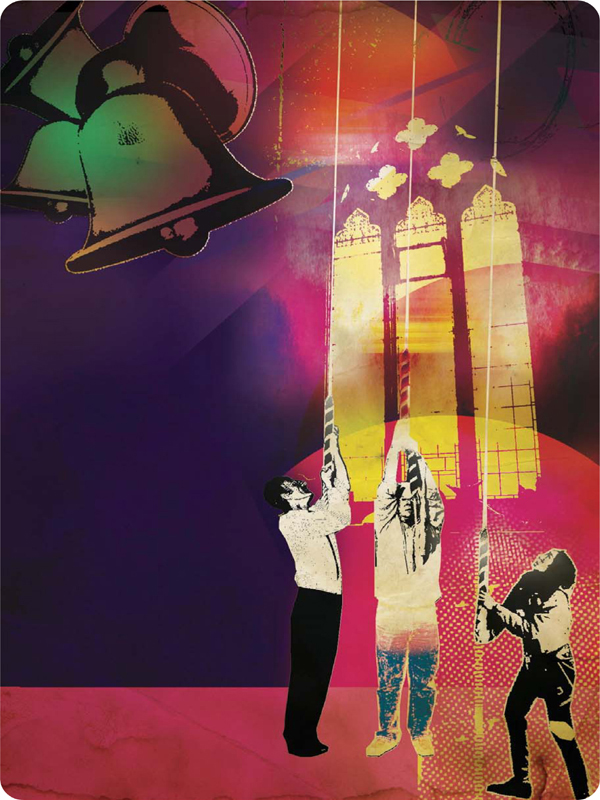
If you thought bellringing was just a simple matter of pulling on a rope, think again. It’s an art form, one that requires precision, a degree of physical exertion and team work. The current technique, known as change ringing, was developed in the 17th century. Don’t expect to be able to ring perfectly straight away; there are plenty of practice sessions around London that welcome beginners. For more details, check out www.mcaldg.org.uk. We particularly recommend St John at Hackney (Lower Clapton Road, E5 0PD, www.stjohn-athackneychurch.org.uk, Mondays) and St Mary Abbots Kensington (Kensington High Street, W8 4HN, www.stmaryabbotschurch.org, Thurdays).
For some, there are few retail joys more unalloyed than an afternoon spent in a bookshop. And, with many now offering seating, and in some cases, cafés, it’s become one of the capital’s classic budget activities. Here are just a few of our favourite browsing haunts.
Borders
Borders may be the enemy of independent bookshops but forgive us: the big, bad American chain deserves an honourable mention for its browsing potential. Not only does it have a vast selection of books and magazines, you can also snuggle up on a sofa or armchair, read to your heart’s content and staff won’t bat an eyelid. There’s a Starbucks franchise on the first floor of this branch.
120 Charing Cross Road, WC2H 0JR (7379 8877).
Biblion
Biblion is the literary equivalent of Portobello Road. Comprising 50 to 60 booksellers, who congregate during the week in Grays Antiques Market, near Bond Street, it stocks around 20,000 rare, second-hand and antiquarian books – a permanent bookfair. Specialities include illustrated works, children’s and travel books, titles on glass, modern first editions and finely bound volumes. And if that doesn’t keep you occupied, there’s a free gallery dedicated to book-related art.
1-7 Davies Mews, W1K 5AB (7629 1374/www.biblion.co.uk).
Bolingbroke
After more then 27 years in business, Bolingbroke is now as much a local communications hub as it is a bookshop. Stock is varied and includes interesting titles from publishers such as Eland and Persephone. Oh, and there’s also a steam engine installation.
147 Northcote Road, SW11 6QB (7223 9344/www.bolingbrokebookskop.co.uk).
Crockatt and Powell
The bookshop on Lower Marsh near Waterloo now has a new branch in Chelsea where there’s a dedicated children’s room (which means that it should be quieter in the rest of the shop). You can take any of the relatively small but well chosen selection of books (mainly history, biography, philosophy and literary fiction) into the garden to read at your leisure.
345 Fulham Road, SW10 9TW (7351 3468/www.crackattandpowell.com).
Daunt Books
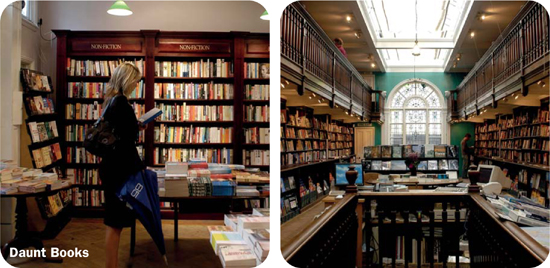
A wonderful place to while away a few hours, Daunt Books is housed in a beautiful Edwardian building, complete with oak balconies, viridian walls, conservatory ceiling and a stained-glass window. The back room boasts a travel section extraordinaire but Daunt is also a good all-round bookshop: staff are well-read and dedicated, and their carefully curated picks – the best literary fiction, biography, children, design and cookery books – are dotted throughout the rest of the store.
83-84 Marylebone High Street, W1U 4QW (7224 2295/www.dauntbooks.co.uk).
Foyles
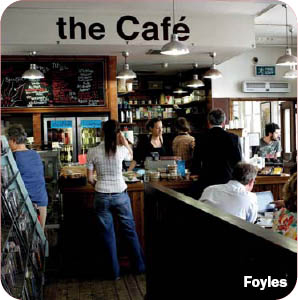
The big daddy of independent bookshops, Foyles is a London legend and a browsers’ best friend. Size does matter here: 56 specialist subjects are spread across five floors. Fiction is a forte, as are music, sport, film and gay interest. Enhancing the contemplative mood is Ray’s Jazz Café, on the first floor.
113-119 Charing Cross Road, WC2H OEB (7437 5660/www.foyles.co.uk).
Hatchards
London’s oldest bookshop has a refined air, but it’s not too stuffy for browsing. On the contrary, the old-school charm is particularly conducive to drifting off into a literary reverie. Biography, politics, travel and fiction are strengths, and keep your eyes peeled for famous authors – the shop regularly gets in bigwigs for signings.
187 Piccadilly, W1J 9LE (7439 9921/www.hatchards.co.uk).
London Review Bookshop
In the heart of Bloomsbury, the London Review Bookshop oozes intellectual gravitas, as you’d expect from a shop owned by the esteemed periodical. If you need inspiration, you’ll find it here: the impeccable selection includes politics, current affairs, history, philosophy and poetry. Walk through an archway into the adjoining London Review Cake Shop, a charming café adorned with original art.
14 Bury Place, WC1A 2JL (7269 9030/www.lrbshop.co.uk).
Magma
In some ways, design books are the ideal genre for browsing – lots of eye candy and minimal reading required. Magma is the motherlode of look-at-me coffee table books and glossy style magazines, featuring cutting-edge design, architecture and graphics. In fact, the shop’s objective is to blur the boundary between bookshop and exhibition space, so quiet contemplation is highly appropriate.
117-119 Clerkenwell Road, EC1R 5BY (7242 9503/www.magmabooks.com).
Skoob
At Skoob you’ll stumble across out-of-print gems, cult classics, obscure biographies and forgotten best-sellers. There are some 60,000 titles spread across 2,500 square feet and every subject under the sun is represented: from philosophy, biography, maths and science to languages, literature and criticism, art, history, economics and politics.
Unit 66, the Brunswick, WC1N 1AE (7278 8760/www.skoob.com).
Stanfords
If Daunt whets your appetite for travel, Stanfords will trigger a case of full-blown wanderlust. The shelves are bursting with books on every country, city, highway and byway. Pick up a book, a map and a latte and get planning your dream trip in the small ground floor café.
12-14 Long Acre, WC2E 9LP (7836 1321/www.stanfords.co.uk).
One of Britain’s greatest and most innovative architects, Sir John Soane (1753-1837) was a national treasure by the time of his death and his wonderfully idiosyncratic home, now the Sir John Soane’s Museum (13 Lincoln’s Inn Fields, WC2A 3BP, 7405 2107, www.soane.org), was bequeathed to the nation by Act of Parliament.
Soane believed in ‘the poetry of architecture’ and used his house as a testing ground for his ideas on light and space. He was a great collector, so the house is full of ingenious space-saving touches – like the panels hung with paintings that unfold from the walls. The downstairs is packed with antiquities, architectural models and art; above ground, in airy contrast, light streams through top-lit ceilings and is reflected off mirrored inserts.
But there’s more to Soane than his museum – London is still full of his architectural influences. His most important commission (and the building he was most proud of) was the Bank of England. An established architectural masterpiece, it’s all the more shocking that most of it was torn down after World War I. But Soane’s powerful perimeter wall remains and his first major work, the Bank Stock Office, has been reconstructed inside the Bank’s Museum (Threadneedle Street, EC2R 8AH, 7601 5545, www.bankofengland.co.uk).
Purchased as Soane’s country retreat in 1800, Pitzhanger Manor (Walpole Park, Mattock Lane, W5 5EQ, 8567 1227) was soon remodelled according to the architect’s ideas of design and decoration and features his trademark curved ceilings and inset mirrors. Acquired by Ealing Council in 1900, the house became a library. Today the library has gone and the building has been restored to showcase Soane’s work. Set in lovely Walpole Park, an extension houses a contemporary art gallery.
Dulwich Picture Gallery (Gallery Road, Dulwich, SE21 7AD, 8693 5254, www.dulwichpicturegallery.org.uk) was an unlikely outcome of 18th-century European politics. Art dealers François Bourgeois and Noel Desenfans spent years gathering a spectacular assemblage of art for the King of Poland. But by 1795 Poland was partitioned, the King was kingdomless and so had no need of a royal collection. With no takers for the pictures, Bourgeois willed them to Dulwich College in 1811, stipulating that his friend Sir John Soane design a building to display them and that it be open to the public. What Soane built has been described as the most beautiful art gallery in the world and was an inspiration for countless later architects.
Set in a little Regency enclave, St Peter’s Walworth (76 Tatum Road, SE17 1QR 7703 3139) is the best preserved of Soane’s three London churches, with its slim dome-topped tower, austere brick façade and Ionic portico. Its crypt is a masterful example of 19th-century brickwork. At his Holy Trinity Church opposite Great Portland Street Station (Marylebone Road, NW1 4DU), you’ll have to attend a church service to see the interiors; St John’s Bethnal Green (Cambridge Heath Road, E2 6NB) has been remodelled following damage in 1870 and World War II, but for Soane groupies, it’s still worth a visit.
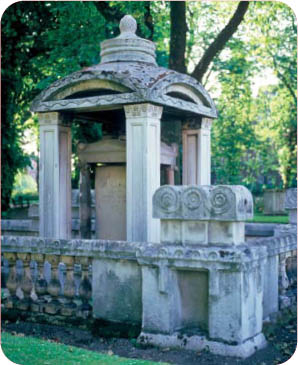
A final must-see is Soane’s tomb in the atmospheric setting of St Pancras Gardens, behind St Pancras Station. Originally erected by Soane for his wife, the monument inspired the design of one of Britain’s most iconic structures: Giles Gilbert Scott’s K6 series of red telephone boxes.
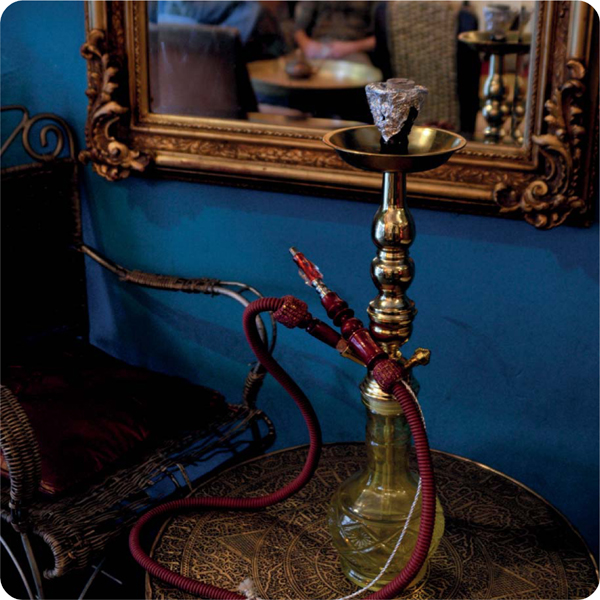
Shisha, hubbly bubbly, hookah, nargileh… the names vary but the waterpipe itself is pretty much the same throughout the Middle East. London’s weather may not be so congenial but there are many places where you can still sit with a friend and watch the world drift by while savouring some apple tobacco and perhaps a mint tea. The Hookah Lounge on Brick Lane is one such place; a shisha of apple tobacco here costs just £6.95.
Hookah Lounge 133 Brick Lane, E1 6SB (7033 9072).
Meanwhile, downstairs in the confines of basement cabaret venue CellarDoor in the West End, they thoughtfully offer nicotine addicts a variety of flavours of snuff so that they don’t have to go outside for a cigarette. As they put it, it’s ‘immeasurably less anti-social than smoking and, if only someone had the foresight to ban it, infinitely cooler than coke’.
CellarDoor Zero Aldwych WC2E 7DN (7240 8848/www.cellardoor.biz).