Table of Contents
Praise for Jon Wells
“Jon Wells is the best true crime writer in Canada. His books are without rival—from the gritty detail to the human tragedy. He is a star in the genre. His books read like novels but are rich in true crime details, and his intimate look at horrific crimes are woven with a human touch that hooks the reader from page one.”
—Sue Sgambati, Veteran TV crime reporter/producer
“An excellent, true-crime page-turner.”—Chuck Howitt, The Guelph Mercury, on Sniper
This is for Pete Reintjes: Soldier, cop, friend—and a character worthy of his own book.
PREFACE
I was exploring cases to investigate for my next serial mystery in the Hamilton Spectator, when I floated an email to Warren Korol. He is now an inspector with the Hamilton Police Service in Ontario, Canada, but had been a homicide detective when featured in my book Poison. Were there any recent cases that Korol felt might lend themselves to my extended treatment? “Take a look at the Budram case—there are some interesting issues,” was all he wrote in reply. Typical cop understatement, but I’m glad he suggested it. Once into my research, I discovered that the disturbing and sad case of the Yvette Budram homicide was also as fascinating a true forensic crime story as one is likely to find. No doubt that is the reason I have been called by television network producers who read my original “Post-mortem” series in the Spectator and used it as a guide for their own documentary treatment.
As with my other books to date, Post-Mortem is written in a novelistic style, but every detail in the story is true, based entirely on reportage—first-hand observation, plus the study of hundreds of pages of court and police documents, and a suspect interrogation videotape. I conducted repeated interviews with sources such as police officers, lawyers, a forensic pathologist, family and friends of the victim, and even the killer himself. Of all the crime stories I’ve covered, Post-Mortem presented the greatest riches an investigative journalist could mine, in part because forensics was such a big part of the Yvette Budram case, and also because all of the officials who worked it were so open with me. In addition, my eye-witness research took me to the spot where the body had been discovered, and I observed detectives at work in two police forensic labs. I witnessed the magic of luminol illuminating blood droplets in the pitch dark, and I held a cold, rigid, severed digit from the victim’s hand, then copied a procedure on the finger (explained in detail in the story) that had been a critical step towards police cracking the case.
Post-Mortem has been billed as a “true CSI story,” and that it is. The CSI dramas on television are of course hugely popular, but also riddled with fiction. Real-life forensic detectives either enjoy the shows as pure entertainment or avoid them altogether, while some police officers and prosecutors bitterly rue their existence. As I touch upon in this story, the “CSI effect” on jurors at murder trials can even make it more difficult to convict killers. In this book I wanted to show the real thing, take readers into the true world of forensic investigation, where clues are painstakingly hunted over weeks and months, and where “X” rarely marks the spot. Learning how police and other experts—including a forensic anthropologist and forensic entomologist (“the Bug Lady”) —worked to find justice for a woman who had been bludgeoned and her body left to rot, I hit upon a phrase that to me captured the essence of the case: Sometimes the mystery isn’t just finding the killer, it’s finding the victim.
ACKNOWLEDGMENTS
As with all of my serial narratives for the Hamilton Spectator, I wrote the “Post-mortem” series in my own mind as a book, with the hope that someday it would find its way between covers. It was Don Loney, the warm and engaging Executive Editor with John Wiley & Sons, who did so much to finally make that happen. We met at a journalism gala in Toronto a couple of years ago, and not long after that we had lunch at a café along Hamilton’s beautifully restored waterfront. It was here that Don sketched out his vision for a series of books by Jon Wells. I was both impressed and dubious that it would happen. And here we are, on book number three and counting. Thanks so much, Don.
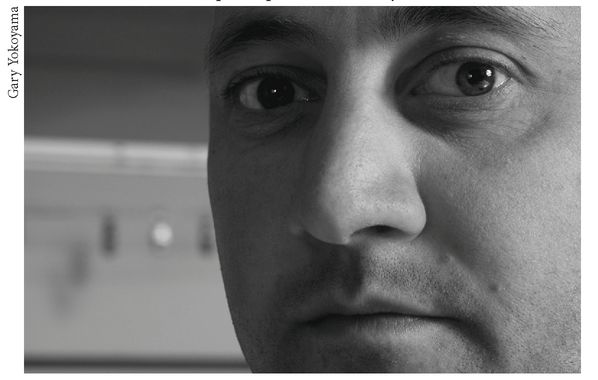
I want to thank everyone at Wiley, in fact, the public relations and design people and editors, great professionals all. And I want to express gratitude towards those who had a role in the original “Post-mortem” series at the Spectator. These colleagues included editor Douglas Haggo and designer Bob Hutton; senior editors Dana Robbins and Roger Gillespie encouraged me to run with the story and contributed suggestions and motivation along the way. Carmelina Prete offered feedback on early drafts and, as always, was a valuable friend. Photographer Gary Yokoyama’s images, many of which appear in this book, were spectacular. Gary has a knack for drawing out his subjects and hitting precisely the right tone to match the story. I am a huge admirer of his talent and professionalism.
Most of all I thank the characters in the story whose candor and assistance allowed me to write the narrative with the detail and pace that I had imagined. Homicide and forensic detectives I interviewed, often repeatedly, with the City of Hamilton, Peel Region, and the NYPD, were all open and helpful, and all of these individuals I interviewed are referenced in this story at various points. I take this opportunity to single out extensive assistance from Hamilton Detective Paul Lahaie. (And I don’t hold it against him that he ran me into the ground during his regular jog in baking heat, which is referenced in the book, although the reader will note that the author is carefully left out of the scene by name.) Detectives Mike Thomas and Gary Zwicker were enormously helpful, and thanks as well to Crown prosecutor Kevin McKenna and defense lawyer Tom Carey for their participation, and to Lisa Budram, who had the strength to meet and talk to me about an unimaginably painful chapter in her life. And finally, though I will never thank him, I simply note that I’m pleased the killer in this story saw fit to grant me an audience for an interview.
CHAPTER 1 ~ “DEATH IN THE FAMILY”
The images and sounds did not invade his dreams, the snakes coiled in his conscience were kept at bay. At least, that’s what he claimed. No flashes of red. No sickening crack. Yvette. White satin. The blood. The rope. Why? Why the rope? He loved Yvette. That much, he was sure. A beautiful woman, he thought the first time he met her. Olive skin, dark eyes. He would do anything for her. No, she did not always reciprocate his love, did not always speak to him in the most kindly manner. But that was just her way.
A horrible thing, what happened, he reflected. He believed karma would determine the man’s ultimate punishment, because you never escape it—it follows you.
One thing was certain: the killer had shown calculation and composure when it was over. Tried to erase it all, leave no trace at the scene, or, perhaps, on his soul. Run from it. Run, do not look back, and deny, deny until the past is erased. In this, his attention to detail was imperfect, but his goal clear and cold. Only someone with a moral hollowness could go there. Or perhaps someone who has murdered before.
A man approached the travel agent behind the counter, urgency in his voice. Need an air ticket for departure out of Pearson International Airport down the highway in Toronto. Flying out of the country. Tonight. One-way. The travel agent glanced at the schedule. British West Indian Airlines had flights to the customer’s requested destination. He checked the time. It was 1:30 p.m.
“There’s no flight tonight,” the agent said. “BWIA flies out at 2:45 p.m., you won’t be able to catch it.”
“What would be tomorrow’s flight?” the customer asked.
“There’s no seat on the special fare, it will cost you more. The next flight on the special fare is in four days.”
“No. This is an emergency,” he said, and pulled out his MasterCard.
On short notice, for tomorrow’s flight, a one-way ticket would cost $1,060. Departs at 11:40 p.m. One stop in Antigua en route.
“Have to be there immediately,” the man said. “Death in the family.”
8th Concession, West Flamborough, Ontario
October 4, 2000, 6:20 a.m.
If the dark eyes could see, if the face could turn up to the sky, the view would offer a peek through tall grass, weeds, leaves of an old basswood, and the morning’s first light filtered through rain clouds. It is quiet beside the rolling cornfield, the only sound that of wind brushing leaves, the buzz of insects. A rumble of thunder. Rain ticks the cornfield, trees. Drops perhaps find their way to that very spot, through the brush, and dot the cold skin of the neck where the crescent-moon pendant rests. It had been a bad astrological period. A Saturn phase. The iron pendant would bring luck.
Summer had never really arrived that year, it was the kind of summer in which the sky seems a perpetual dead gray, rain is never far away, and the cool air always seems to betray an end rather than a beginning.
In the early evening, clouds break, the sun shoots rays of light between the tree branches. The clarity lasts just an hour. Then darkness bleeds into the blue sky.
8th Concession, West Flamborough
Clop-clop, clop-clop, clop-clop.
A fall morning, Luke stepping along the country road for his daily walk. He was white with brown spots, a 10-year-old jack—a male donkey not gelded, and so constantly in search of a female. Catherine got him out as often as she could for walks that fall so he could burn off energy. She smiled. Poor guy. Typical male.
Three months earlier, Catherine and her husband, Adam, moved to the house on a farm lot out in rural Hamilton, 20 minutes outside the city, just down a bit along Cooper Road from the popular African Lion Safari tourist attraction. They had always dreamt of living in the country. The area was called the Town of Flamborough before amalgamation made it part of Hamilton. An odd duck of a place. Great wads of open space, hamlets, a mobile-home community called Beverly Hills. Some local rebels, unimpressed with the thought of joining Steeltown, put up a creaky display sign on the side of Highway 8 that read, “Free Flamboro.”
On occasion visitors passing through the place with something to hide treated it like one giant rural alleyway, a place to sweep things under the rug. Stolen purses and wallets littered ditches near where Catherine and Adam lived. That fireball they saw one night just down the street from their house was a stolen car somebody had dumped and lit up. Their own home had been broken into once already, but they weren’t planning on leaving.
Clop-clop, clop-clop, clop-clop.
Catherine and Luke turned left off Cooper Road and walked up the 8th Concession. That’s when the smell hit. You live in the country, you get used to strong odors. But this was overpowering, rancid. Luke, he didn’t care, the jack’s mind was elsewhere. It was coming from over there, the other side of the ditch, somewhere in the thick roadside brush at the end of a cornfield. Couldn’t see anything unusual, though. Had to be a dead animal somewhere. Maybe a deer. They headed for home.
Clop-clop, clop-clop, clop-clop.
Most days that fall Catherine walked Luke and couldn’t help but pass that same spot along the road. The smell eventually faded. Nothing lasts. Days grew short, leaves, drained of life turned and dropped in the fall winds, returning to the soil. The rain fell cold and hard. Catherine and Adam’s house got burglarized a second time. Nobody was caught.
That winter, the winter of 2001, was a nasty one. Unrelenting bitter cold for weeks on end, allowing unusually heavy snow to build, blanketing the country fields and the leaves and other broken remains that had once lived and shone with color.
Hamilton Detective Paul Lahaie.
Hamilton, Ontario
The homicide detective’s dark eyes stared pensively through the windshield at the nondescript building, as though a clue would miraculously show itself. Twenty-six-year-old male, beaten to a pulp, left to bleed to death right there, in Unit 6. Marijuana grow operation inside. Paul Lahaie thought about the Damian cold case at least once a day. In conversation he usually referred to it by the first name of the victim, rather than wrestle with pronouncing the last name (Dim-eet-rash...) of Damian Dymitraszczuk. Even if he wasn’t working the case, he would sometimes come here, pull off Rymal Road onto Lancing Drive for a look, in the part of south Hamilton that sat atop the modest elevation of the Niagara Escarpment—which locals had always called, without irony, “the Mountain.”
Lahaie did not follow the axiom that you should never look back. On the job, at least, working for the Major Crime Unit with Hamilton Police, he lived in the past most every day. There had been leads in the Damian case, but mostly dead ends. Some in the grow subculture who knew the victim had been hesitant to talk. “The guy lived by the sword, died by the sword,” some said. And those were his friends saying that, reflected Lahaie. That kind of sentiment always offended him. Everyone deserves justice.
Lahaie liked to think of the Major Crime detectives as thoroughbreds, chasing every case full bore. He felt that some police services went after some cases harder than others, influenced by the status of the victim, public interest in the crime, political optics. Not Hamilton. Should never matter who the victim is. Ever.
His unmarked car descended the Mountain, Lake Ontario along Steeltown’s north shore as still and blue as a painting in the distance, and the skyline of Toronto 45 minutes to the east so clear it looked like you could reach out and touch it. Downtown, in the lower city, Lahaie arrived at Central Station on King William Street, mounted the stairs to the second floor and strode into the Major Crime Unit, past the sign on the door that read: No Witnesses, Lawyers, Media. Lahaie was 6-foot-1, 190 pounds, lifted weights in the gym and ran to stay in shape. He had short dark hair and his skin bore a faint tanned cast. The surname was French and he looked Italian, he joked. One old-school senior officer seemed to delight in barking out his name pronounced as Lay-hee rather than the proper La-hay. Maybe an anti-French thing, Lahaie grinned.
He loved talking about his roots. His great-grandfather had come to Hamilton from Quebec in the 1890s, a cigar rolling crafts-man who worked for Tuckett Tobacco Company and married an English woman. Policing did not run in the family bloodline, quite the contrary. In the basement of his boyhood home in a part of Hamilton called Saltfleet, next to a large crucifix figurine, sat a black wicker basket. It was a gift, the story went, years ago to his grandfather Jack Lahaie, from legendary Hamilton mobster Rocco Perri. Jack was a bootlegger who helped Rocco run liquor, even once installed an airplane engine for Rocco in a cigar boat to give it a little extra kick for the task.
Lahaie figured perhaps his desire to be a cop had roots in his Catholic upbringing. Wasn’t helping people what being a Christian was all about? Not that everyone in Steeltown appreciated the help the way he’d like every time. Once he was at Jackson Square Mall downtown, Christmastime, and there’s a teenager outside sitting up on a concrete ledge, high above the sidewalk. The kid had wrapped his belt around his neck and attached it to a railing, threatened to jump, even as the crowd moved back and forth below. Lahaie, in the cerebral way he had of thinking about things, paused to reflect that it was something of an Orwellian moment, this tunnel-vision glazed look on the faces of shoppers, who either were oblivious to the kid’s predicament or didn’t care. So Lahaie gingerly snuck up behind, trying not to make the ice under his feet crack aloud, and lunged and grabbed the teen before he could do himself in. And then, later, he gets a call from the kid’s mother. Thanking him? Not quite. She accused him of stealing her son’s wallet.
Back when he graduated from McMaster University in Hamilton, Lahaie couldn’t find a job. He had simply felt lucky to even have a shot at university; it always seemed to him that for guys like him, it was in their genes to go straight from high school to a job in the steel mills down on the lake. Instead he graduated from Mac, where he’d studied economics, geography, and politics. Didn’t help him land a job, though. Applied at place after place, walking door to door. Collected all the rejection letters and made a collage out of them, which he framed and hung in his parents’ basement. Got a job with the National Film Board screening movies at a warehouse down on Dundurn Street. Exposed him to some high-brow thinking, felt like he was soaking up wisdom like a sponge each day. The job hunt experience gave him a bit of a chip on his shoulder, though. Maybe that also came from his childhood, when he got called his share of names growing up in Saltfleet, in part because of the olive cast to his skin. Hershey. Nigger. You name it. Or maybe he got the chip from Ma. She was a feminist, quick as a whip, did not suffer fools gladly. She once wrote a letter to Harold Ballard, the bombastic owner of the Hamilton Ticats football team, after Ballard was quoted in the media saying that women were “only good for lying on their backs.” In her letter, Ma wrote that, given Ballard’s comment, she couldn’t very well sit upright enough to attend a football game. She demanded the club cancel her season tickets. His dad, meanwhile, was a simple man, a straight-ahead nice guy, career Stelco steel man. But after the war, Dad also had the nerve to scab for Stelco during a particularly nasty strike in the strongest union town in Canada.
As a young man Lahaie landed an interview down at Central Station. He was turned down. He turned instead to the Mounties, the RCMP, landing a job that sent him out west. And then, in 1987, at 29, he returned to Hamilton and a position with the city police, a confident experienced officer. At that first, unsuccessful, job interview with the Hamilton force, the chip had still been there, the rejection letters fresh in his mind. The interview had not gone well and Lahaie was so ticked-off he stood up to leave and pointed his finger at the senior officer who had sat across the desk from him.
“Someday I’ll be the one sitting on the other side of the table wearing sergeant’s stripes,” Lahaie said. “I guarantee it.”
His personality was one of contrasts. The pewter-rimmed glasses he came to wear masked the hangdog weariness that characterized the shape of his eyes. Subtle specks of gray in his hair, conservative dark suits, and the quiet, grave tone of voice he used around those who were neither friends nor colleagues gave him a serious air, belied the manic laugh and offbeat sense of humor that ran just below the surface. During his seven years working on the Hamilton Police tactical unit, Lahaie got tagged with the menacing nickname Ninja. But then, too, he would howl telling a story from his first day working for the RCMP out in B.C., when he forgot to bring ammunition for his gun. Called it his Barney Fife story, a reference to the bumbling sheriff ’s deputy from the old Andy Griffith TV show. Still broke him up.
His first case with Major Crime was in 1997 when he got seconded from the child abuse branch in the middle of what had been a fruitless police hunt for a rapist striking in the Hamilton suburb of Stoney Creek. The case had made big headlines in the Hamilton Spectator, which dubbed the predator The Ravine Rapist. He was suspected of having terrorized women off and on for more than a decade, preying in the middle of the night on victims who lived along ravines in that area. One victim died from an assault, another suffered permanent disabilities after being stabbed in the head with a screwdriver, eight other women suffered from attacks and death threats. He also spied through windows of homes and burglarized several of them, where he had stolen pieces of lingerie and other personal items of women. Police had handed out composite sketches of the rapist to more than 2,000 homes in the area. They were feeling the heat on the case. One columnist in the Spectator wondered if “lackadaisical police work, underfunding or simple police screwups” had stunted the hunt for the rapist from the start.
“So, Lay-hee,” a senior officer growled at the detective. “You arrest my serial rapist yet?”
“Sir,” Lahaie replied, “I promise you he will be arrested in 21 days.”
Why 21? Lahaie wasn’t sure, the bold prediction just popped out. As it happened, James (Ted) Wren was arrested in 19 days, and Lahaie played a prominent role, helping develop the profile of the rapist, and uncovering an important piece of evidence, a collage of photos of the victims hidden behind a ceiling panel. Wren was a big-time sexual deviant, Lahaie reflected. He thought the guy had the look of a predator, a cold, bloodless focus to the eyes resembling that of a shark. Felt great to get him off the street.
Losses and unsolved cases stick with detectives more than successes, though. Paul Lahaie often thought of a line from a book called A Terrible Love of War: it’s harder to kill the dead than the living, because memories live forever. He thought it applied to the job: I am the keeper of the memories. They don’t go away, not until the case is closed.
“Pauly,” one of the detectives greeted Lahaie as he approached his desk in Central Station. Lahaie cracked a cold can of soda water, opened a black binder, and walked the corridors of murders past. Every once in a while when he had spare time, he would look through the department’s historical homicide index, listing every case over the years, who investigated, the outcome. He flipped the pages. One of the entries always caught his eye, the question mark jumping out at the eye, a painful reminder of an unsolved case. It read:
Cindy Williams/unsolved
murder-abduction?
July 26, 1974
He turned to the corresponding case file folder. Page 1 was a photo of a little blond girl staring back at him. Four years old. The victim. Cindy. The case had been long before his time, but Lahaie felt his throat tighten. That kind of stuff got to him. The last notes were made in 1996. “So who speaks for Cindy Williams?” Lahaie wondered. She had disappeared one summer day from her family’s Fennell Avenue East apartment near Upper Ottawa on the east Mountain. Kids from her neighborhood were haunted by her disappearance for years; some grew up in the same area, had families, and never stopped wondering whatever happened to her. Back then, in the 1970s, police had fewer forensic investigative tools for a case like that. Most notably, they didn’t have DNA to work with. But cops were resourceful in the old days, too. Today? Better technology, but the cases got complicated, killers covered their tracks better.
Cases like Damian and Cindy Williams were tough nuts to crack. And yet, as difficult as those unsolved cases are, at least police had a general sense of what might have happened—and to whom. Detective Paul Lahaie was about to learn that there are occasions, however, when the mystery is not just finding the killer. It is finding the victim.
8th Concession West, Flamborough
Tuesday, April 17, 2001
3:40 p.m.
The jogger’s shoes rhythmically scuffed along the 8th Concession. Steve Dmytrus was a firefighter but off-duty that afternoon. His wife was a high school science teacher, and so on his runs he always kept his eyes open for anything interesting for her to bring in to class for show-and-tell. He was a few minutes along the road from his home.
It had snowed on and off that morning. Everything gray—the sky, the lifeless vegetation. This early in the season, the brush did not yet sport fresh growth, although in a few weeks it would be filled in again. Flesh color. It crossed his line of vision, off to the left in the brush. Dmytrus stopped. It was the spot where Catherine and her donkey Luke had smelled something seven months earlier, where even a family doctor had passed on foot earlier in the spring and noticed something, but figured it was a dead deer in the brush.
Dmytrus stopped and wondered. Was it a dead animal? It looked like a deer hide, he thought. He moved closer, just off the edge of the road, standing on the gravel shoulder, just a couple of meters away from it. The firefighter knew anatomy. He could see bones. Leg bones. But it was what was connected to the bones that made his heart jump. They looked like feet. And they were definitely human. And was that black hair? A shirt? Don’t get any closer, he thought. He turned and started back for home, his gait quickening.
The phone rang at 5:05 p.m. in the Major Crime Unit at Central Station. Sitting among the cluster of desks in the office, Detective Sergeant Mike Thomas, the senior man on duty, answered. It was a superintendent on the line. Not a good sign, Thomas reflected. Thomas turned to Detective Paul Lahaie. A body had been found out in Flamborough. Major Crime is required to attend at the scene. The detectives stood and slipped on suit jackets over top of their Glock semiautomatic pistols, then their overcoats, and headed downstairs to the carpool garage. It was just about quitting time. And no one was going home.
The spot along the 8th Concession where the body was discovered.
CHAPTER 2 ~ SHALLOW GRAVE
8th Concession West, Flamborough
Tuesday, April 17, 2001
6 p.m.
The video camera lens panned out. Ditch. Brush. Cornfield. Trees. Yellow tape surrounding the possible crime scene. Now narrowing the focus: a body, lying among short brush, about four meters from the edge of the country road. The body was partly submerged in the dirt, though not apparently from any attempt to dig a shallow grave, but simply from sinking into the soil over time. And in fact this was not the place to try burying much of anything. The entire area was bedrock. Call a guy to come and dig a hole to install a post in that part of Flamborough, and he won’t do it.
After the uniforms, Ident was on the scene first—forensic identification. The eye looking through the lens belonged to Gary Zwicker, forensic investigator with Hamilton Police. As usual, Zwicker, who had a lean, compact frame, was armed at the scene with both a camera and a Glock, combination of a cop and a scientist. First rule, always record the scene as you find it. Don’t walk in and start handling potential evidence, not until after you photograph and videotape everything. Walk over a crime scene and, one day—if you’re fortunate enough to get the case through the system to court—a defense lawyer will try to expose you on the stand. Zwicker knew that’s the way the system goes. Police work is put on trial, not just the accused, the O.J. Simpson case being the highest-profile example. Forensics officers take pride in work that requires minute attention to the smallest detail. Some find it disconcerting to be cross-examined with an eye towards discrediting the job you felt was done thoroughly.
They are known by different names. In the United States they are often called crime scene investigators. In Hamilton, the old title was identification officer (“ident officer”), and it has stuck, even though the modern title is forensic detective or forensic investigator. Zwicker, who was an easy-going guy with a dry sense of humor, had been a uniformed cop first, got into forensics later. Some of the forensics types were cut from different cloth than typical cops.
Years back, in a classroom at the Ontario Police College in Aylmer, Zwicker heard the excited voice. “Hey, you gotta come over here!”
Zwicker looked across the room and saw a group of forensic investigators huddled together. What, he thought playfully, is there golf involved? Zwicker was attending an investigation course on forensic entomology—the study of insects and their behavior to help crack crimes. An interesting field. Insects are sometimes the first ones on the scene of a homicide. Know their behavior, and they might provide a lead. Anyway, somebody in the class was pretty excited about something. Zwick walked over to the table. Maggots. In the course they had learned that blowflies lay their eggs on a corpse in any available moist, warm opening—the mouth, a wound. Over time, maggots hatching from the eggs migrate across the dead body, searching for another warm orifice. They leave a trail as they move. You can determine when the maggots started the migration—which can pinpoint the time of death and other timeline details about the wounds, and therefore the crime, even the type of location where the murder took place. One of the guys in class was observing a maggot trail on a pig carcass.
“There it is, there’s the trail!” one officer said.
Zwicker’s eyes expanded in mock excitement. O-kay. This was interesting stuff, very useful to know, but there were a few things in life that elicited unrestrained excitement from him. His baby daughter. Golf. Maggots weren’t high up on the list.
Zwicker had never thought he would gravitate to forensics. Took first-year biology at university, but that didn’t spark anything. In his previous life as a uniformed cop, Zwicker made the newspaper for his bravery, received two citations at fire scene rescues, once put his foot through a door trying to save a child inside a burning house, another time carried a man down a fire escape to safety. But when he attended a crime scene investigation course in 1995, he was hooked. This was what he wanted to do.
Forensic detectives need patience, a sharp mind, an eye for detail. And a strong stomach. Cops are a tough breed, but the ident guys see things that most cops would rather not. See rookie ident man Zwicker collecting bagged pieces of a woman’s mutilated corpse in a suburban home. A dismemberment case. Zwicker is not just staring into a dark abyss somewhere in the human soul—he’s climbing right in and walking around inside. Back then, in 1999, he had been in the forensic department less than a year. He was on the scene with two senior officers, hadn’t even taken the basic ident course. Zwick was not yet married back then, did not have a little girl at home. Maybe that was a good thing. No one should have to experience stuff like this, Zwicker thought.
If anybody thought he got enjoyment out of handling body parts, they were nuts. But he knew it was an important job. Has to be done. Take photos. Gather the evidence. Get it done. Zwicker took more than 2,000 photos in that house, macabre snapshots burned into film and, perhaps, his memory.
Forensic Detective Gary Zwicker.

Science and technology used in criminal investigation is nothing new—the first conviction based on fingerprint evidence dates back to 1911. What is new is the focus on forensic science in the culture as the ace card in fighting crime; on men and women who chase criminals not down dark alleys but under fluorescent lights in a lab, detecting microscopic residues of foul play, outwitting the “perps” by technology and force of reason. On television dramas these new heroes do not merely complement traditional police work, they are the star players. Popular culture academic Tim Blackmore wrote that, in part, the celebration of the “rationalist scientist hero” or the “scientist-as-priest” comes from society’s faith in the scientific method. “We like the idea,” Blackmore wrote, “that horrific problems that are initially so bad they seem to be insoluble, can be taken apart and explained at least enough so that the mystery is erased, and in doing so, banish our worries.”
So the culture turns to researchers (Tom Clancy’s Jack Ryan character), technicians (TV’s CSI shows), behavioral psychologists, and even math whizzes (on the show Numb3rs) who can, through use of pure reason married to some indefinable, almost magical, instinct, see their way to the truth. That means that a hero is never further away than the local university laboratory—although brainy forensic heroes on shows like Criminal Minds and CSI shows also improbably swoop to crime scenes and run roughshod over the uniformed cops and homicide detectives, barking orders and—even more improbably—making arrests. The fascination with cracking the criminal mind perhaps came full circle with TV’s Dexter, where the forensic investigator/hero is himself a serial killer, as though the only way law enforcement can really get down and dirty with evil is to use evil to understand and combat it.
Real-life forensic detectives laugh off the forensic TV shows. They know that some of the techniques are real, but Hollywood also takes it a few steps further into fiction. No investigator has the technology at their fingertips to sit at a computer, scan in a fingerprint and instantly see a match pop on the screen complete with photo and geographic location, all in less than ten seconds. Forensic detective Gary Zwicker gave talks to students: Sorry to burst your bubble, folks, but in real life CSIs do not interrogate suspects, much less tell uniformed cops to arrest anybody. Police rue the impact of the shows. For one thing, criminals watch TV, too, learn how to better cover their tracks. Hide the body, clean up the scene, bleach to kill the DNA, wear rubber gloves to conceal fingerprints. (Prints can be lifted from the gloves themselves, however.) Forensic detectives constantly upgrade their education to stay ahead of the game, take courses in bloodstain pattern recognition, DNA sample collection, advanced friction ridge analysis—how to use new technology to identify ridges in fingerprints by thickness and shape. There is even a course in footwear identification. Someone boots a door in, it leaves a print. Ceramic is good, too, for leaving an identifiable mark. The key, of course, is having a real shoe to match the print. Shoe prints can have “accidental characteristics,” different wear patterns, maybe a piece of glass has nicked a piece out of the tread. Same goes for tire marks: you can make a mold of the print, study it for characteristics to match it to a vehicle.
Another impact of the shows has been to raise the bar in court for prosecutors seeking to convict, to impress juries with evidence, because TV elevates expectations of regular people. Given the technology and brainpower available, shouldn’t every crime be cracked? Sharp defense lawyers are well aware of the trend and play on it. There was the time Gary Zwicker was on the stand for an assault case, a drug-deal hit. Someone had used an aluminum baseball bat to attack another person in a parking lot. Zwicker had lifted the accused’s fingerprints from a car in the lot, which put the accused at the crime scene.
“Detective Zwicker,” the defense lawyer asked, “why didn’t you get a print from the handle of the baseball bat as well? If the bat was used in the offense, obviously the prints would also show up on the bat, where he had been holding it”—for effect, before the jury, he now motioned as though clutching a bat with both hands, squeezing tight.
No, thought Zwicker, not obvious at all. Lifting a quality print depends on several factors, among them the type of surface and hand pressure. Squeezing a bat hard, as you would in an attack, smudges prints. Moreover, rubber (used to make the grip portion of an aluminum baseball bat) is not the ideal surface, either.
“The deposition pressure on the bat would be heavy, which causes distortion,” Zwicker replied. “And other surfaces are more conducive to the deposition of prints.”
It got so prosecutors would remind the jury of the difference between fiction and the real world, right in their opening remarks: I note, members of the jury, there is no miracle fiber in this case, so don’t think we’re going to spring it on you at the end. Police and prosecutors had a phrase for this influence on juries hurting their cases. They called it “the CSI effect.”
Gary Zwicker continued filming just off the 8th Concession. The question hung out there. Was he documenting a crime scene? Even that wasn’t certain. Body has obviously been here a long time. But could be someone who simply collapsed one day long ago. Old hit-and-run accident? No. Homicide? You’re in forensics long enough, you feel when something isn’t right. His instinct off the top was to think foul play.
Detectives say the first couple of hours after a possible homicide are the most crucial in an investigation. That’s when traces of human evidence are freshest, memories are sharpest among witnesses, and the killer might still be in the area. But if the corpse near the 8th Concession had a story to tell Gary Zwicker, it was probably many months old. Forensic cops are internally wired to be optimistic, their mindset is one that combines scientific probabilities and on-the-job experience. The laws of physical evidence suggest that something should be there. A fiber. Blood. An impression. Zwicker had faith in his training but also faith in the criminal, faith that a killer, no matter how devious or careful, will slip up, somehow. He has broken the rules, violently, brutally. Somehow, some way, he will show weakness, he will leave something, he will be caught.
The area where the body lay was among the worst kind of crime scenes, he reflected. Talk about looking for needles in haystacks; in this one, there were a whole bunch of needles. It was a dumping ground for stolen items, wallets, purses. Everything could be a potential clue. The cime scene is the starting point for most homicide investigations. Comb through the refuse, look for traces of the victim, the killer, look for ghosts, reassemble the story. Zwicker believed that there are always clues left behind at a scene. Always. Maybe, he thought, it’s one needle in a whole bunch of haystacks. But it’s there, somewhere. The question is can you find it?
Now he could see it through the camera lens, the exposed bones of the remains, skin stretched over part of the skeleton like a tawny sheet. “Who are you?” Zwicker asked himself. “And how did you get here?” He knew identity was going to be the starting point. But was identification of the victim even possible?
Forensic anthropologist Shelley Saunders.
“Shelley, it’s Warren.”
The anthropologist heard the familiar police baritone, informal yet polite, on her voice mail at home. There must be a case. Shelley Saunders was tall and slim—sandy blond hair, green eyes, a gentle calm to her face and manner. Tonight, the eyes met light thrown from her home computer, focused on her work. Dr. Saunders, a professor of anthropology at McMaster University, had developed an interesting expertise on the side, related to her work studying the ancient dead: forensic anthropology.
Science ran in the family. In the 1950s her father had worked on Canada’s secretive Avro Arrow fighter jet project and, when the initiative was scrapped in a storm of controversy, he took his family to Ohio where he continued in the field, for North American Aviation. Shelley was drawn to biological anthropology from the first time she heard the lectures as an undergraduate, had a fascination with learning who and what people had been, the biological variability, particularly in the recent past—meaning 10,000 years ago in anthropological history, fitting the pieces together. Saunders elected to spend her career focusing on fossil remains. She was not one of the glamor seekers, the Indiana Jones crowd, as she called them, whose main goal was to make a name for themselves by finding the ultimate-earliest-human-fossil!
She built a lofty reputation in the field and was known for innovative teaching techniques. Once, when teaching a course in human evolution, she had students in her class drip their feet in black paint, then run down a hallway, so they could measure gait and stride length. Her research sometimes meant devoting hundreds of hours focusing, for example, on microscopic striations on part of a tooth that had once belonged to an ancient Roman child. Teeth preserve well over the centuries, do not break down, they are perfect for study, capturing a moment in time. Each striation shows a different health stress point in a person’s life.
Forensic anthropology, though, that was a different game. These were the occasions when she was asked by police to help unravel mysteries of the past—but quickly, just like the fictional character Temperance Brennan, the hero forensic anthropologist of the novel series by Kathy Reichs, an author and real-life scientist Saunders knew personally. (The series sold briskly, but Saunders was not a fan.) The novels eventually led to a TV series called Bones. The show looked pretty bad, from what little of it Saunders had seen, although she joked that everybody in her department wanted to get their hands on one of those magical—and fictional—holographic reconstruction machines seen on the show.
It was in 1987 that she first became involved in this new practical application for her expertise. She got a call from forensic pathologist Dr. Chitra Rao at Hamilton General Hospital, asking if she would help determine the age of a mummified corpse found in a boxcar down near the steel mills. The body had been inside the car for about a year. It was a homeless man who used to panhandle in front of the liquor store on Dundurn Street. One winter day he had sought refuge from the cold in the boxcar, and spent his final moments there. Saunders reported to the hospital morgue, examined the skeleton, cleaned and studied the bones to determine age. Interesting. Her morphological examination suggested the man might be in his late 40s. But using the histological method—examining cell development—he looked significantly older. Heavy drinking over the course of his life had damaged tissue, causing greater turnover in the cells, creating open spaces in the bone. Final answer: he was 58.
Another of her early cases was in the Niagara region, where divers had recovered the remains of bodies after a plane crash and found just a few bones. Saunders studied parts of femurs, a tooth, a hip-bone fragment. She estimated one of the men was 30 to 34 years old, the other 25 to 29. From the femur, or thigh bone, she offered a height estimate for each man. Her findings matched the conjecture of detectives. She had confirmed the identity of the victims.
The message from Warren, on Saunders’s voice mail, had continued: “Shelley, we’ve got a situation here. Got some remains in Flamborough and we’re hoping you can help us out.” The voice belonged to Hamilton Detective Sergeant Warren Korol. He had first met Saunders in the Hamilton General morgue when he worked the Sheryl Sheppard case. Sheppard, a 29-year-old former exotic dancer and doughnut shop worker, had gone missing in January 1998 and was presumed murdered. Some bones had been found at the bottom of a hydro dam in Niagara. Saunders offered an opinion on the nature of the bones, in case there was some connection to Sheppard. Korol thought Shelley was a dynamic lady, extremely intelligent. Turned out that the bones were not Sheppard’s, and her body was never found.
After hearing Korol’s message, Saunders knew she would need to drive to McMaster University, where her office was tucked into the end of a narrow hallway on the fifth floor of Chester New Hall. Her office was not much bigger than a walk-in closet, with models of skulls decorating a packed bookshelf. Her kit for attending crime scenes was like a large fishing tackle box, containing trowels and brushes. For this new case, Saunders knew, she would need to take the blue box out into the country. Might need to do an excavation. Her academic work focused on examining clues, meticulously, over years, to gradually unearth answers about those who had died long ago. The death of the person in this new case would not be so ancient.
CHAPTER 3 ~ JANE DOE
8th Concession, Flamborough
6:10 p.m.
It was an hour before sunset, the April sky cold and gray, temperature just above freezing, the light dusting of snow from the morning still on the ground. Paul Lahaie felt the crisp air on his face, pulled out his pen, the eyes taking mental pictures. The homicide detective wrote in his white soft-cover exercise-style Homicide Case Book. He noted police tape at both ends of 8th Concession West, guarded by uniform officers who protected the scene and documented times of entry for all investigators. Lahaie saw Gary Zwicker and wrote: “Ident on scene taking photographs and video.”
When Lahaie was with the RCMP in western Canada, they would take rough notes in the field, then transcribe them as finished notes later. No such luxury in Hamilton. You don’t have time to transcribe. Take notes by hand on the fly, at the scene, and that’s it. Be accurate, it might end up under the microscope in court, the notes must be unimpeachable, the bible of the investigation. He was a stickler for detail, drew diagrams, attached small documents, made notes on legal points.
Interesting. He could tell the brush where the remains lay had been trimmed recently, all along that side of the country road, down to a height of 12 to 15 centimeters. Probably that’s why the body had been spotted.
Lahaie spoke with the uniforms who were first at the scene, learned about the firefighter’s discovery while jogging. Soon the other Major Crime Unit detectives working his shift had arrived: Mike Thomas, Dave Place, Donnie Forgan, and the most senior officer, Warren Korol.
18:12. Det./Sgt. Thomas and Det. Forgan arrive.
18:25. Det./Sgt. Korol arrives.
Detectives Paul Lahaie (left) and Gary Zwicker at the scene.
They all noticed the sign up the road a bit, marking the boundary of a city northwest of Hamilton, called Cambridge. If their scene had been just a couple of hundred meters farther down the road, it would have belonged to neighboring Waterloo Regional Police.
“Maybe we should move the sign,” quipped Dave Place.
None of them would trade their positions in Major Crime, the most prestigious investigative office in the service. But it was also the most time-consuming. You were never really off the clock. They were ready to engage the new case, but in a perfect world they would all be home for dinner, not on a barren country road staring at a decomposed body. As the senior man, Warren Korol was technically in charge of the crime scene, but he knew his command would not last. He was less than four weeks away from getting locked down as the lead investigator in the first trial for serial poisoner Sukhwinder Dhillon.
Paul Lahaie moved in closer towards the body.
Observations made from the roadway. The body is on the south side of the road off of 8th Concession W. Trees along the road, stone shoulder, ditch. Behind the brush line is an open field for farmers.
The sky darkened as Dr. David King arrived on the scene at 7:20 p.m. There was still a hint of natural light as King walked with the detectives to within three meters of the body lying in the brush. The renowned forensic pathologist from Hamilton General Hospital was slim, had silver hair, and spoke softly and with traces of a British accent, an echo of his childhood in the United Kingdom, where his father had been a family doctor and, for a time, worked as a policeman. No pathologist can say anything for certain by taking a cursory look at a decomposed corpse, but King, who had 30 years of experience in his field, had seen almost everything. The detectives were hungry for any observations he could make.
King saw that the left arm was down alongside the body, while the right arm was bent under the chest. Had the body been rolled or thrown in order to assume that position, he wondered? It certainly did not look like the person had just collapsed and died on the spot.
Forensic pathologist Dr. David King.
“The remains appear face down,” he said. “Some flesh on the back and on one arm but the legs are exposed to the bone. The body remains appear to be mummified.” There wasn’t much left of the body, but he knew it could have been worse. All that snow from the winter, low temperatures, probably protected the remains from animals, and thus complete decomposition.
“At first glance,” King said, “it appears to be a young female.”
After dark, the detectives gathered in a Hamilton police command van that had arrived on the scene. Warren Korol looked at the other detectives.
“So what are the possibilities here?” he asked.
Pooling their experience, brainstorming, this was what they did in the early hours at a murder scene. None of them had been thrilled to get a suspicious death call at quitting time, come all the way out here, but now the adrenalin was flowing. A new scene, a new puzzle to put together. Missing persons was the first consideration. If there’s someone out there who cares about this dead woman, they will have reported her missing. Phone Waterloo police, get them to check their missing persons files as well. If David King was correct, and the body was female, one hypothetical instantly leapt to the top of the list.
“There could be a nervous boyfriend out there somewhere,” said Detective Mike Thomas.