Introduction
The early years
The military life
The hours of destiny
Opposing commanders
Inside the mind
When war is done
A life in words
Bibliography
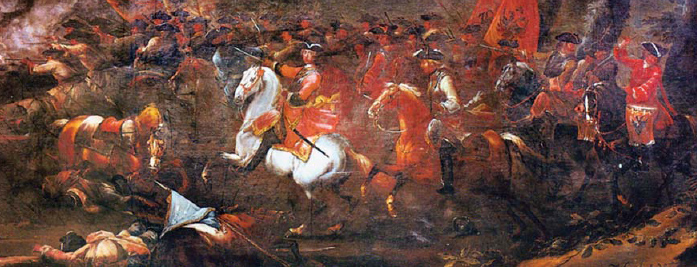
In the first decade of the 18th century John Churchill, Duke of Marlborough, led an Allied army into battle. His opponents were the French troops of Louis XIV, whose military prowess had made France the superpower of the age. A decade before, a similar Allied army had suffered a string of ignominious defeats at the hands of Louis XIV’s French marshals. This time though, there would be no defeat – only a string of spectacular victories. Marlborough’s battlefield triumphs at Blenheim (1704), Ramillies (1707), Oudenarde (1708) and Malplaquet (1709) were all the more remarkable because they were won at the head of a polyglot army, with contingents from over two dozen European states, the largest of which were Holland, Britain, Prussia and Denmark. It wasn’t just the battles – he also conquered a string of Flemish and French cities through siegecraft, the most spectacular of which was the capture of Lille in 1708. In all respects he was a master of his art.
These great victories were certainly important, but if the Duke of Marlborough was merely a successful military commander then he would never have achieved what he did. He had to be a diplomat too, constantly pleading with these various states to send him troops and supplies, to reject overtures of peace from France and to agree to fight under a single Allied command. He became the archetypal coalition commander, a man whose skills in diplomacy, language, court etiquette and politics were almost as important as his undeniable genius on the battlefield. The result was that Marlborough almost single-handedly brought Louis XIV’s France to its knees – a remarkable achievement for a soldier who had once served the French king as a lowly young captain.
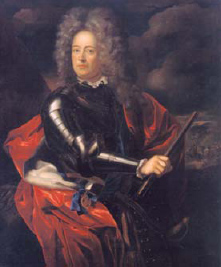
John Churchill, Duke of Marlborough (1650–1722), dressed for battle, in a painting by Adriaen Van der Werff. In fact, by Marlborough’s time, armour of this kind was reserved for heroic portraiture rather than worn while on campaign. (Bavarian Schlösserverwaltung, Höchstädt)
For much of his career, success was a double-edged sword. He gained his first commission through courtly patronage, and subsequent advancements were as much the result of favouritism as martial prowess. He became the friend and confidant of King James II of England and VII of Scotland, who helped move him up the social and military ladder. Marlborough then betrayed James’ trust at the crucial moment. Similarly, the friendship between Queen Anne and Marlborough’s wife Sarah meant that he enjoyed a similar trusting relationship with another monarch, which lasted until Sarah and the Queen fell out. Political and military rivals were always jealous of the ease with which the charming, handsome and intelligent officer won the trust and support of these two monarchs. Twice in his career – once under King William and again under Queen Anne – Marlborough was abandoned by his royal patrons, and his enemies took great delight in assisting his fall from grace. On both occasions he survived his downfall, and outlived the monarchs who rejected him to be restored to good grace by their successors.
Today, Marlborough is remembered as Britain’s greatest soldier – arguably more successful even than the Duke of Wellington. For six years, from 1704 until 1709, he fought four major battles, and defeated the very best commanders King Louis XIV of France had to offer. For the most part his campaigns were conducted in Flanders, but one of his greatest military achievements came in the summer of 1704 when he outfoxed his French rivals and led his polyglot army deep into Germany. There he succeeded in effectively knocking France’s leading German ally – Bavaria – out of the war. This was achieved through two spectacular victories at the Schellenberg and at Blenheim. As a result the military prestige of France was shattered, and Marlborough’s military reputation was assured.
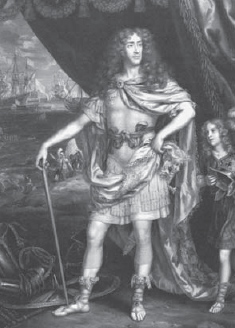
King James II and VI (r. 1685–88) supported the young John Churchill, but a combination of the King’s divisive policies and his religion forced Churchill to switch his allegiance to James’ Protestant rival William of Orange. (Stratford Archive)
Very few military figures lend their name to an age of warfare. Historians talk about the ‘Napoleonic’ Wars, or the age of Alexander. The Duke of Marlborough is one of few great commanders of history who put such a firm stamp on warfare that their very name became an identifiable era in military history. As the leading military practitioner of the ‘Marlburian period’, John Churchill, First Duke of Marlborough, was not only the foremost soldier of his generation, but one of the greatest commanders in history. He was certainly worthy of this fulsome accolade.
John Churchill may have ended his days living in one of the finest stately homes in England, but he was born into a family that lacked both wealth and status. His father was Winston Churchill, who had backed the wrong side during the English Civil War. Churchill had fought for the King, and as a former Royalist he was viewed with suspicion by the victorious Parliamentarians. When John was born on 5 June 1650, the young Churchill family were living in Ash House – the war-ravaged home of Eleanor, Lady Drake, Winston’s mother-in-law. Lady Eleanor had been a staunch supporter of Parliament, and as her son-in-law had little money, she provided her daughter’s family with a home. If relying on the charity of in-laws wasn’t bad enough, in 1651 the 31-year-old ex-soldier was fined £480 by the Parliamentarian authorities for ‘delinquency’ – a legal euphemism for being an unrepentant supporter of the late king.
John Churchill was one of five children, not all of whom survived infancy. We know little of his early childhood, but the fortunes of the family improved after the death of Oliver Cromwell, the Lord Protector, in September 1658. The son of the executed King Charles I returned to Britain in the summer of 1660, and in May 1661 he was proclaimed King Charles II. The joint realms of England and Scotland were kingdoms once more, and the Churchill family enjoyed a swift reversal of fortune. Winston Churchill became a Member of Parliament, a royal administrator, and was knighted in 1664. For his part young John was educated in Dublin, and then St Paul’s School in London. His elder sister Arabella became a maid of honour to the Duchess of York, the wife of the King’s brother James – the future King James II and VII. Arabella soon become the Duke of York’s mistress, and the 15-year-old John became a page in the ducal household.
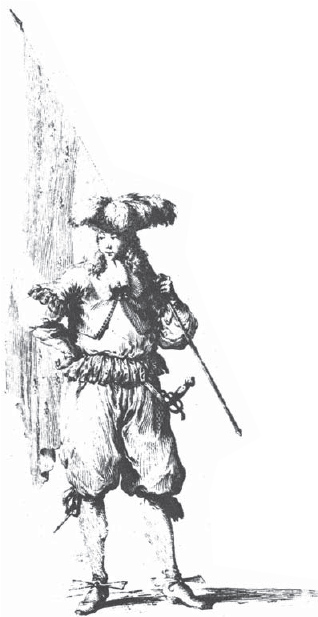
John Churchill, pictured in the uniform of a French junior officer. In 1674 the 24-year-old Churchill was named a colonel in the French Army, and he went on to distinguish himself on the French side at the battle of Ensheim. (Stratford Archive)
In September 1667 John Churchill asked his patron for a favour – the gift of a commission in the English Army. It was duly granted, and he became an ensign in Colonel John Russell’s Regiment of Foot Guards. The regiment was sent to Tangier in 1668, and young Churchill almost certainly went with them. Tangier on the Barbary Coast of North Africa had been bequeathed to Charles II in a dowry, and it remained a British colony until it was abandoned in 1683. At any rate John Churchill was back in London by 1671, and as a handsome and tanned 21-year-old officer he began to be noticed. As Lord Chesterfield put it, ‘His manner was irresistible [to] either man or woman’. John’s first known admirer was Barbara Villiers, Lady Castlemaine, a royal mistress and an influential figure in court.
Ensign Churchill became the lover of ‘the lewdest as well as the fairest of King Charles’ concubines’. Barbara Villiers, of course, was still the King’s principal mistress. Court gossip had it that one day the King paid an unexpected visit to Lady Castlemaine’s rooms, and Ensign Churchill escaped through the window to avoid a scandal. Another version had the pair caught by the King, who responded by forgiving Churchill, saying: ‘Go – you are a rascal, but I forgive you because you do it for your bread.’ Soon afterwards, Lady Castlemaine presented her young lover with a gift of £5,000, a present which may have been a reward for his discretion and quick thinking.
Fortunately John Churchill’s reputation was saved by a war against the Dutch, and he went to sea on board the Duke of York’s flagship HMS Prince. He displayed considerable bravery during the battle of Sole Bay in June 1672, and was rewarded by another commission – this time a captaincy in the Duke of York’s (Lord High Admiral’s) regiment. He was also removed from the temptations of court by being named part of a small contingent sent to fight alongside the French in their own war against the Dutch Republic. The force was led by the dashing James, Duke of Monmouth, who was the King’s first-born but illegitimate son, and the 23-year-old commander of Charles II’s army.
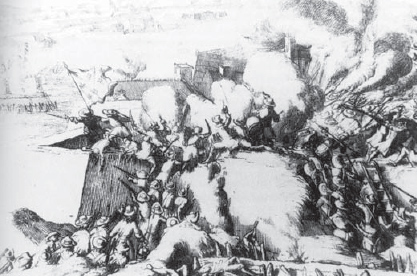
In 1673 Captain Churchill fought alongside the Duke of Monmouth in a storming of the defences during the siege of Maastricht. The illegitimate Duke later presented Churchill to his father Charles II, declaring that the young captain had saved his life. (Stratford Archive)
In June 1673 the English contingent joined the French Army besieging the Dutch city of Maastricht, and it was there that John Churchill won the admiration of Englishmen and Frenchmen alike. During the final stages of the siege the Dutch launched a night-time sortie and recaptured an important redan. It was there that Count d’Artagnan of the King’s Musketeers was killed – a French officer who became the inspiration for Alexandre Dumas’ hero in The Three Musketeers. The Duke of Monmouth joined d’Artagnan’s counter-attack, with Churchill fighting at his side. Eventually the Dutch were repulsed, and the city fell a week later. On their return to court, Monmouth presented Churchill to the King, saying: ‘Here is the brave man who saved my life.’ It seemed the dashing young officer could do no wrong.
In 1674 he returned to France, and in October led a regiment into action against the Austrians at Enzheim in Bavaria. The French were delighted by his performance – Marshal Turenne praised his military ability, and described him as ‘my handsome Englishman’. He returned to court with the honorary title of colonel in the French service; it would be another three years before he received an English commission. It was there that he first saw Sarah Jennings, the headstrong teenage daughter of Frances Jennings, a widowed courtier. By that time Churchill had become the Duke of York’s gentleman of the bedchamber, and while Sir Winston Churchill disapproved of the liaison, the Duke and Duchess of York encouraged it, and so, during the winter of 1677–78, the couple wed in secret, probably holding the ceremony in the Duke’s London residence.
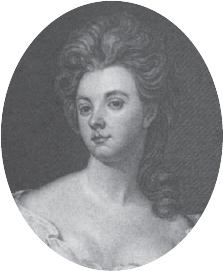
Sarah Churchill (1660–1744), Duchess of Marlborough, was high-spirited and outspoken, but she and her husband enjoyed a close relationship. For many years Sarah was the close confidante of Queen Anne, but her fall from favour was politically damaging to Marlborough. (Stratford Archive)
In February 1678 John Churchill became the colonel of an infantry regiment, and was sent to Holland to open secret negotiations with Prince William of Orange. Colonel Churchill was accompanied by Sidney Godolphin MP, and together they offered the stadholder of the Dutch Republic a diplomatic realignment. Peace between the United Kingdom and the Dutch had been agreed in early 1674. Charles II was now considering a volte-face – allying himself with the Dutch in a new war against the French. Before this, John Churchill had been forging a growing reputation as a soldier. Now he was displaying that he had great diplomatic skills as well. It seems appropriate that the first moves towards an Anglo-Dutch military alliance were proposed by a soldier who would later lead the joint Anglo-Dutch armies into battle.
In the summer of 1678 it seemed as if England and Scotland would go to war with France. As part of the military preparations – and as a reward for his recent diplomatic efforts in the Netherlands – John Churchill was made a brigadier of foot, his first real step on the ladder of military command. Weeks later he was back in Holland again, this time at the head of his brigade of five battalions of infantry, which included two battalions of the Foot Guards. It was a prestigious command – the advance guard of an English contingent that was preparing to fight alongside the Dutch. As it happened, the troops never fired a shot. Louis XIV of France made peace with the Dutch, encouraged in part by the prospect of an impending Anglo-Dutch alliance. The resulting Treaty of Nijmegen was signed in August, before Brigadier Churchill could join Prince William’s army.
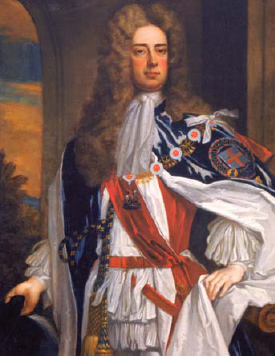
John Churchill, Duke of Marlborough, dressed in his court regalia, which is dominated by the necklace carrying the emblem of St George slaying the dragon, the image of the Order of the Bath. Painting by Sir Geoffrey Kneller, c.1702. (Bavarian Schlösserverwaltung, Höchstädt)
When John returned home he found the country in turmoil. Rumours of a popish plot against the Government led to an explosion of anti-Catholic sentiment. As a Catholic, James, Duke of York, became a target of this, and so King Charles sent his brother to Brussels until the agitation died down. The Churchills accompanied him, but the couple returned to London late in 1679, and while Sarah remained in their house in London – she was expecting their first baby – John travelled to Scotland as the Duke of York’s representative. There he helped re-establish James, Duke of York, as a viable successor to his ailing brother, despite his religious handicap. He remained a diplomat for the next two years. The Duke himself visited Scotland, and in early 1682 he was almost drowned when the frigate HMS Gloucester foundered off the Norfolk coast. Churchill helped save the Duke by commandeering the only boat and keeping the crew at bay with his sword while James clambered to safety. For this Churchill was rewarded with a Scottish title, becoming Baron Churchill of Aymouth in December 1682.
On John’s return to London the young couple continued to live in their own town house in Jermyn Street, but they also bought Holywell House near St Albans, which was Sarah’s old family home. Their first child – Harriet – was born in late 1679, but she died soon afterwards. Fortunately other children would follow – Henrietta (1681), Anne (1684), John (1686), Elizabeth (1687) and Mary (1689). Another son – Charles (1690) – died in infancy. Despite this growing family the couple were still needed at court. In 1683 Lady Sarah became the lady of the bedchamber to Princess Anne, the second daughter of the Duke of York, after her marriage to Prince George, brother to the Danish king. The two women – princess and commoner – formed a strong bond, a relationship that would play an important part in the life of Sarah’s husband in the years to come.