Contents
Preface to fourth edition
Acknowledgements
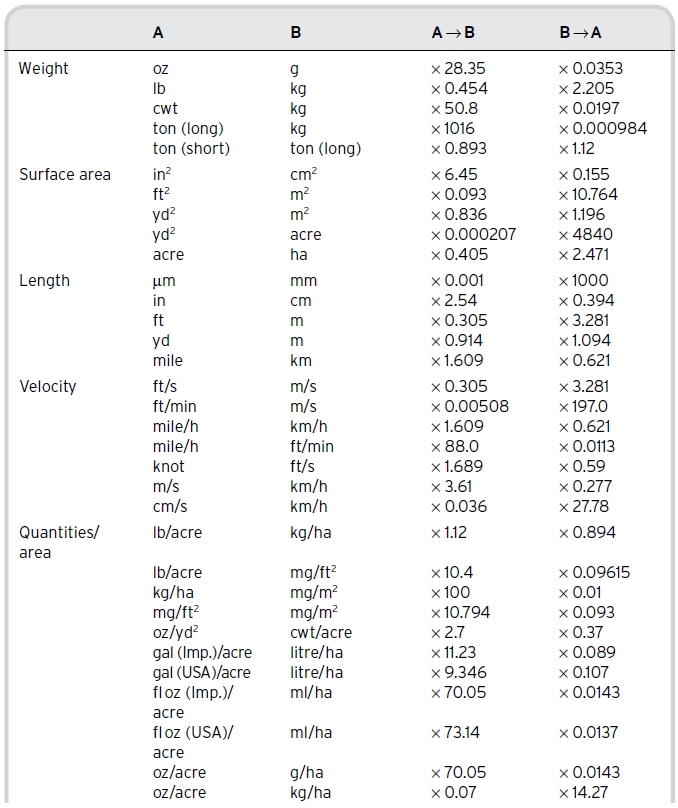
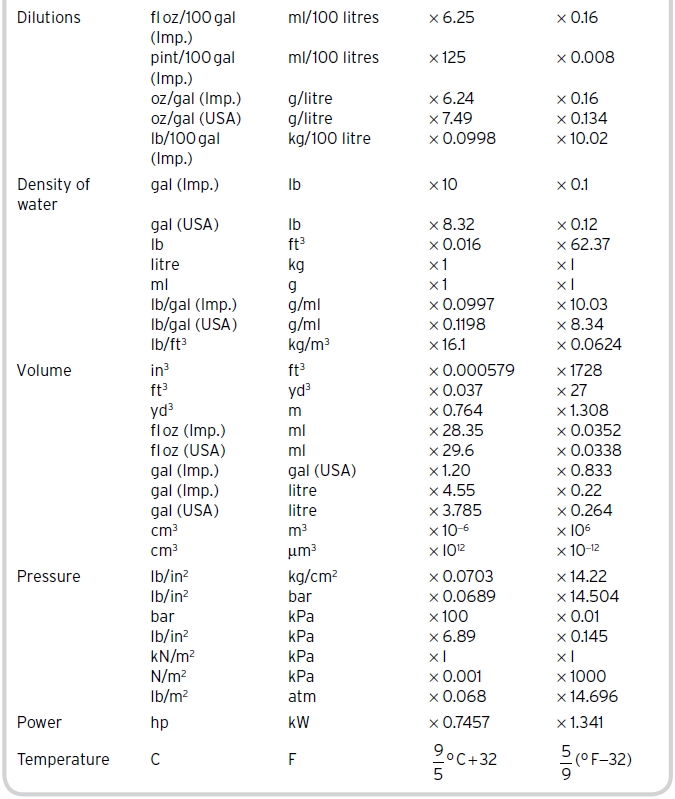
Conversion tables
Pesticide calculation
Units, abbreviations and symbols
Chapter 1: Chemical control in integrated pest management
Introduction
Pesticides
Integrated crop management
Area-wide integrated pest management
Resistance to pesticides
Timing of spray application
Economic thresholds
Application sites and placement
References
Chapter 2: Targets for pesticide deposition
Insect control
Using an attractant
Disease control
Weed control
Collection of droplets on targets
Spray coverage
What volume of spray liquid is required?
References
Chapter 3: Formulation of pesticides
Types of formulation
Formulations for application as sprays
Fog formulations
Smokes
Dry formulations
Other formulations
Adjuvants
Choice of formulation
References
Chapter 4: Spray droplets
Importance of droplet size in pest management
Movement of droplets
Determination of spray droplet size
References
Chapter 5: Hydraulic nozzles
Types of hydraulic nozzle
Intermittent operation of hydraulic nozzles
Gaseous energy nozzle (‘twin-fluid’)
Kinetic energy nozzle
Checking the performance of hydraulic nozzles
References
Chapter 6: Manually carried hydraulic sprayers
Sprayers with hydraulic pumps
Compression sprayers
Calibration of knapsack sprayers
Disposable container dispenser
Peristaltic pump
References
Chapter 7: Power-operated hydraulic sprayers
Tractor-mounted sprayers
Portable line sprayers
Incorporating herbicides
Animal-drawn sprayers
References
Chapter 8: Air-assisted sprayers
Fans
Pumps
Motorised knapsack mistblowers
Tractor-operated equipment
References
Chapter 9: Controlled droplet application
Practical definitions of controlled droplet application
Centrifugal-energy nozzle (e.g. spinning discs)
Hand-carried, battery-operated spinning-disc sprayers
Formulations for ultra low volume and very low volume spraying
Spraying procedures
Portable air-assisted spinning-disc sprayers
Vehicle-mounted sprayers with centrifugal-energy nozzles
Conclusion
References
Chapter 10: Electrostatically charged sprays
Induction charging
Ionised field charging
Direct contact charging
Electrostatically charged nozzles
Deposition studies
Factors affecting deposition
Air-assisted spraying
Commercial development of electrostatic spraying
References
Chapter 11: Aerial application
Types of aircraft
Spray gear
Aerial application of dry materials
Flight planning
Airstrips
Aircraft operations
Aircraft regulations
References
Chapter 12: Spray drift
Forms of spray drift
Processes that lead to spray drift
Methods of measuring spray drift
Factors influencing the risk of drift
Strategies for spray drift management
References
Chapter 13: Seed treatment, dust and granule application
Seed treatment
Dust and granule application
Features of dust and granule applicators
Dusters
Examples of equipment
References
Chapter 14: Space treatment by fogging
Thermal fogging machines
Cold foggers
Other fogging machines
References
Chapter 15: Specialist application techniques (injection, fumigation and other techniques)
Chemigation
Other dispensers into water
Weedwipers: rope wick applicator
Soil injection
Tree injection
Fumigation
References
Chapter 16: Application of biopesticides
Bacillus thuringiensis
Spray tank mixtures of microbial control agents
Formulation: part of the ‘delivery system’
Application equipment and microbial control agent delivery: the importance of numbers
Biopesticide application to forests
Application of Metarhizium acridum to locusts and other spray examples
Other application techniques
Summary
References
Chapter 17: Maintenance of equipment
Cleaning sprayers
Problems with the spray system
Problems with motorised equipment: two-stroke engines
Fault finding
Maintenance in the field
Storage of equipment
References
Chapter 18: Safety precautions
Classification of pesticides
Protective clothing
Symptoms of poisoning
First aid
Combination of chemicals
Pesticide packaging and labelling
Container and washings disposal
Noise
Code of conduct
References
Chapter 19: Equipment for laboratory and field trials
Laboratory evaluation
Field trials
Summary
References
Chapter 20: Selection of application equipment for chemical and biological pesticides
Environmental factors
Operational safety factors
Tractor sprayers
Knapsack and manually carried sprayers
Aerial application
General factors
References
Appendix: Standards relating to pesticide application
Supplemental Images
Index
This edition first published 2014 © 2014 by John Wiley & Sons, Ltd.
Previous editions © 2000, 1992, 1979 by Blackwell Publishing Ltd.
Registered Office
John Wiley & Sons, Ltd, The Atrium, Southern Gate, Chichester, West Sussex, PO19 8SQ, UK
Editorial Offices
9600 Garsington Road, Oxford, OX4 2DQ, UK
The Atrium, Southern Gate, Chichester, West Sussex, PO19 8SQ, UK
111 River Street, Hoboken, NJ 07030–5774, USA
For details of our global editorial offices, for customer services and for information about how to apply for permission to reuse the copyright material in this book please see our website at www.wiley.com/wiley-blackwell.
The right of the author to be identified as the author of this work has been asserted in accordance with the UK Copyright, Designs and Patents Act 1988.
All rights reserved. No part of this publication may be reproduced, stored in a retrieval system, or transmitted, in any form or by any means, electronic, mechanical, photocopying, recording or otherwise, except as permitted by the UK Copyright, Designs and Patents Act 1988, without the prior permission of the publisher.
Designations used by companies to distinguish their products are often claimed as trademarks. All brand names and product names used in this book are trade names, service marks, trademarks or registered trademarks of their respective owners. The publisher is not associated with any product or vendor mentioned in this book.
Limit of Liability/Disclaimer of Warranty: While the publisher and author(s) have used their best efforts in preparing this book, they make no representations or warranties with respect to the accuracy or completeness of the contents of this book and specifically disclaim any implied warranties of merchantability or fitness for a particular purpose. It is sold on the understanding that the publisher is not engaged in rendering professional services and neither the publisher nor the author shall be liable for damages arising herefrom. If professional advice or other expert assistance is required, the services of a competent professional should be sought.
Library of Congress Cataloging-in-Publication Data
Matthews, G. A.
Pesticide application methods / G. A. Matthews ; in collaboration with
Roy Bateman and Paul Miller. – 4th ed.
p. cm.
Includes bibliographical references and index.
ISBN 978-1-118-35124-6 (epub) – ISBN 978-1-118-35125-3 (emobi) –
ISBN 978-1-118-35126-0 (epdf) – ISBN 978-1-118-35128-4 (ebook) –
ISBN 978-1-118-35130-7 (cloth : alk. paper) 1. Pesticides–Application.
2. Spraying and dusting in agriculture. 3. Spraying equipment. I. Title.
–SB953.M37 2013
–628.1′6842–dc23
2013029870
A catalogue record for this book is available from the British Library.
Wiley also publishes its books in a variety of electronic formats. Some content that appears in print may not be available in electronic books.
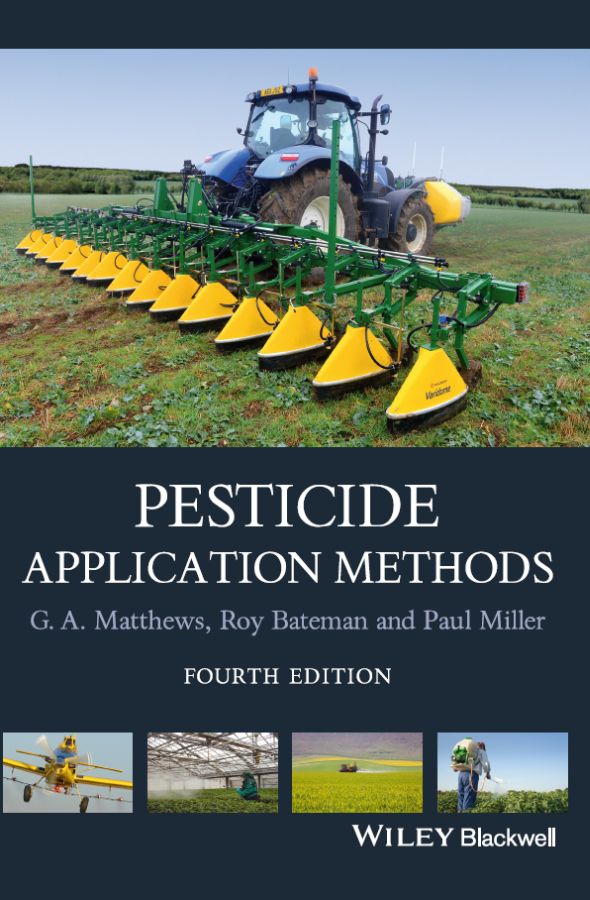
Cover image: Main front cover image of a Varidome sprayer, reproduced withpermission from Micron Sprayers Ltd. Smaller front cover images, from left to right: Aircraft spraying, reproduced with permission from Micron Sprayers Ltd; spreading of insecticides in a greenhouse, © iStockphoto/alohaspirit; a tractor sprays a field of crops, © iStockphoto/antb; man spraying vegetables in the garden, © iStockphoto/ fotokostic. Back cover images from left to right: Poppy, reproduced with permission from Alan Dewar, Dewar Crop Protection; diseased cocoa pod, reproduced with permission from Roy Bateman; mosquito, c iStockphoto/abadonian; cotton plant with jassid damage, reproduced with permission from G. A. Matthews.
Cover design by Steve Thompson
Since the start of the new millennium, the public debate about genetically modified crops and demands for organic food have continued, as the global human population has now exceeded 7 billion (Bloom, 2011). ‘Organic’ food is usually more expensive to buy, but a vocal proportion of the population continue to prefer it as they perceive that residues of commercially manufactured pesticides in food are harmful. Where residues do occur, they are well below the maximum residue level (MRL), the limit set by the regulatory authorities that could occur with good agricultural practice. This contrasts with the possibility of more natural pesticides in crops left unprotected as these plants produce chemicals naturally (i.e. natural pesticides) to provide some protection against pests (Mattsson, 2007; Shorrocks, 2013). Furthermore, research in the UK by the Food Standards Agency and in the USA (Smith-Spangler et al., 2012) has shown that organic food is not more nutritious than conventionally grown farm produce. Over the last six decades with widespread pesticide use, food quality has been vastly improved and life expectancy has increased from an average of 48 to 68 years. At the same time, considerable attention has been given to environmental protection, especially to minimise pesticides polluting water, with emphasis on minimising spray drift from treated areas.
The world’s human population continues to increase with greater demands for food of high quality so there can be no return to growing crops without artificial fertilisers and some pesticide use. Genetically modified crops can provide a means of improving the quality of some crops by enhancing vitamin content or disease resistance. Globally, the two types of GM crops most widely used initially have been those expressing the Bacillus thuringiensis (Bt) toxin gene to check predominantly lepidopterous pests and those with resistance to the herbicide glyphosate. While adoption of Bt crops has generally reduced the number of pesticide applications, they still require spray treatments to control other types of pests, notably sucking pests such as aphids. Some pests are becoming resistant to the Bt toxin, indicating the requirement for ‘refuge crops’ to minimise resistance selection, but these have not always been adopted sufficiently to minimise these problems, associated with GM technology.
The herbicide-tolerant crops, such as ‘Roundup Ready’ crops, have depended on using one particular herbicide, which over time has led to serious weed problems, where herbicide-resistant weeds occur. This trend will continue with crops tolerant of other herbicides, stimulating research on herbicides with different modes of action. Thus one approach has been to develop crops tolerant of an old herbicide, 2,4-D (Green, 2012), which has caused concerns, as spray drift of this herbicide had adversely affected sensitive crops. However, a new formulation of 2,4-D and spray technology is being promoted to avoid this being repeated.
Biological and cultural controls are undoubtedly of great importance, but neither can respond rapidly to sudden outbreaks of pests, so pesticide use must form a key component of integrated crop management. Unfortunately, in many parts of the world the lack of infrastructure and trained personnel has resulted in misuse of pesticides. The challenge now is to spread the knowledge on safe use and correct application of pesticides beyond its present frontiers so that higher yields of crops can be obtained in the developing countries. Pesticides are only one of the tools and can only protect crops with a high yield potential to justify the expense of their use. We know more about more precise application with less pesticide lost in the environment, but more research is needed so that new technologies can be incorporated to minimise pesticide use and improve the timing of applications. Since the last edition of this book, development of hydraulic nozzles has provided droplet spectra less prone to drift beyond field boundaries, but care is needed to maintain biological efficacy within fields.
In Europe, new legislation (EC Regulation 1107/2009) replaced the earlier Directive 91/414/EEC and came into force in June 2011. EU countries must comply as it is a Regulation and not a Directive. In general, the aim has been to minimise risks of environmental pollution based on data obtained from manufacturers and to exclude the most hazardous compounds. It has also required greater safety in pesticide packaging with more emphasis on recycling of cleaned pesticide containers and has established rules to maintain equipment and minimise pollution. An amendment to the machinery, Directive 2006/42/EC, enables standards to be set for new pesticide application equipment being marketed.
This legislation has led to a significant reduction in pesticides that can be marketed, especially in Europe, but it also affects countries exporting crops to Europe as these must also comply with regulations on maximum residue levels (MRL). In one example, the pre-emergence herbicide simazine was submitted by manufacturers for inclusion in Annex 1 which lists all pesticides approved for use within Europe, but the Committee did not accept the calculations of the environmental concentrations in groundwater and considered that concentrations of simazine or its breakdown products would exceed 0.1 µg/L in groundwater. Simazine was therefore not included in Annex 1. One concern about the reduction of pesticides is that it is likely to limit the choice of products needed to maintain resistance management strategies.
Similar changes in the USA have resulted in the Clean Water Act requiring a National Pollutant Discharge Elimination System (NPDES) Permit when applications are made to control aquatic weeds, flying insects above water, for example aerial mosquito control programmes, and pests on plants near water, unless there is no point discharge of pesticide into the water. Thus general pesticide applications on farms do not need a NPDES permit. Legislation thus presents a distinct challenge to improve the precision of pesticide application, both in terms of placement and when an application is needed to minimise the amount of pesticide used in the environment..
A new Directive, 2009/128/EC, aims to achieve greater harmonisation on pesticide regulation throughout the EU and in effect bring standards up to levels similar to those which already apply in the UK. The Directive also requires Member States to develop national action plans to reduce further the risks associated with the use of pesticides and promote the use of low-input systems.
Funding for pesticide application, a multidisciplinary subject, has declined as research on genomics has expanded to develop new varieties of crops. Expansion of biopesticide use has been limited as insufficient attention has been given to the careful integration of formulation and application technology research to ensure that what is effective under laboratory conditions is also successful in the field. With major agrochemical companies now becoming more closely involved with biotechnology, no doubt use of biopesticides will increase.
In this edition, with the assistance of co-authors, a new chapter discusses the drift of spray beyond the treated areas and ways of mitigating drift. All the chapters have been revised to reflect changes that have occurred as a result of new developments and legislation. The aim has been to provide a text to assist with training and improve the safety and efficiency of application.
Bloom, D.E. (2011) 7 billion and counting. Science 333, 562–569.
Green, J.M. (2012) The benefits of herbicide-resistant crops. Pest Management Science 68, 1323–1331.
Mattsson, J.L. (2007) Mixtures in the real world: the importance of plant self-defence toxicants, mycotoxins and the human diet. Toxicology and Applied Pharmacology 223, 125–132.
Shorrocks, V.M. (2013) Fighting the fear of pesticides. Outlooks on Pest Management 24, 39–44.
Smith-Spangler, C., Brandeau, M.L., Hunter, G.E., et al. (2012) Are organic foods safer or healthier than conventional alternatives? A systematic review. Annals of Internal Medicine 157, 348–366.
When asked to revise the third edition, I initially thought that with the commercialisation of genetically modified crops and less funding for pesticide application research, at least in the United Kingdom, there was less need to revise the book. However, in the 12 years since the last edition, major legislative changes in Europe have reduced the range of pesticides now available and concerns about protecting the environment have increased. With this in mind, I asked Professor Paul Miller and Dr Roy Bateman to assist with specific chapters as they have been more closely involved in research on mitigating spray drift and the development of biopesticides respectively. Later, Professor Edward Law agreed to add his long experience to update the chapter on electrostatic spraying. I am indebted to all these specialists who have made a considerable contribution to this edition. I must also thank Graham Basil and Tim Neat for their help on granular application.
I would also like to thank the following for their contributions with supplying information and new illustrations for the fourth edition: Martin Baxter (TeeJet), John Clayton (Micron), Moira Hart (BCPC), Gillian Callaghan (GATE), Samuel Gan-Mor, Paul Hoyes (Kilgerm), Edward Law, Paul Miller (NIAB-TAG), Herb Nyberg (New Mountain Innovations), Tom Robinson (Syngenta), Tim Sander (Micronair), Graham Sanderson (Syngenta), Anugrah Shaw, Bill Taylor, Evan Thornhill, Robert Willey and Mick Hill (Househam). Most of the illustrations from the third edition have been retained, so I thank all those who supplied them.
I have been supported by Moira to whom I owe very special thanks.





A | ampere |
atm | atmospheric pressure |
bar | barometric pressure |
cd | candela |
cm | centimetre |
dB | decibel |
fl oz | fluid ounce* |
g | gram |
g | acceleration due to gravity (9.8 m/sec2) |
gal | gallon* |
h | hour |
ha | hectare |
hp | horsepower |
kg | kilogram |
km | kilometre |
kN | kilonewton |
kPa | kilopascal |
kW | kilowatt |
L | litre |
m | metre |
mg | milligram |
mL | millilitre |
mm | millimetre |
mm | micrometre |
N | newton |
μP | micropoise |
P | poise |
p.s.i. | pounds per square inch |
pt | pint |
s | second |
V | volt |
A | area |
a | average distance between airstrip or water supply to fields |
a.c. | alternating current |
ADV | average droplet volume |
AGL | above ground level |
a.i. | active ingredient |
AN | Antanov aircraft |
BPMC | fenobucarb |
C | average distance between fields |
CDA | controlled droplet application |
CFD | computional fluid dynamics |
CU | coefficient of uniformity |
D | diameter of centrifugal energy nozzle of opening of nozzle |
d | droplet diameter |
DCD | disposable container dispenser |
‘D’ | a standard size dry battery |
d.c. | direct current |
DMI | demethylation inhibitor |
DUE | deposit per unit emission |
EC | emulsifiable concentrate |
EDX | energy dispersive X-ray |
EPA | Environmental Protection Agency (USA) |
F | average size of field |
FAO | Food and Agriculture Organization of the United |
FN | flow number |
FP | fluorescent particle |
GCPF | Global Crop Protection Federation |
GIFAP | Fabricants de Produits Agrochimiques (International Group of National Associations of Manufacturers of Agrochemical Products) |
GIS | geographical information system |
GPS | global positioning system |
GRP | glass-reinforced plastic |
H | height |
HAN | heavy aromatic naphtha |
HCN | hydrogen cyanide |
HLB | hydrophile-lipophile balance |
HP | high power battery |
HV | high volume |
Hz | hertz |
ICM | integrated crop management |
ID | internal diameter |
IGR | insect growth regulator |
IPM | integrated pest management |
IRM | insecticide resistance management |
ISA | International Standard atmosphere |
K, k | constant |
kV | kilovolt |
L | length |
LAI | leaf area index |
LD50 | median lethal dose |
LERAP | local environmental risk assessment for pesticides |
LIDAR | light detection and range |
LOK | lever-operated knapsack (sprayer) |
LV | low volume |
MCPA | 4-chloro-o-tolyloxyacetic acid |
MRL | maximum residue level |
MV | medium volume |
N, n | number of droplets |
NMD | number median diameter |
NPV | nuclear polyhedrosis virus |
OES | occupational exposure standard |
P | particle parameter |
PDS | pesticide dose simulator |
PIC | prior informed consent |
PMS | particle measuring system |
PPE | personal protection equipment |
PRV | pressure-regulating valve |
PTFE | polytetrafluoroethylene |
p.t.o | power take-off (tractor) |
PVC | polyvinyl chloride |
Q | application rate (litre/ha) |
q | application rate (litre/m2) |
Qa | volume of air |
Qf | quantity of spray per load |
qn | throughput of nozzle |
Qt | volume applied per minute |
rev | revolution |
r.p.m. | revolutions per minute |
S | swath |
s | distance droplet travels |
SC | suspension concentrate |
SP | single power battery |
SMV | spray management values |
SR | stability ratio |
T | temperature |
Tr | time per loading and turning |
Tw | turn time at end of row |
TDR | turndown ratio |
TER | toxicity exposure ratio |
U, u | wind speed |
UBZ | unsprayed buffer zone |
UCR | unit canopy row |
ULV | ultra low volume |
UR | unsulfonated residue |
UV | ultraviolet light |
V | velocity |
Vf | velocity of sprayer while ferrying |
Vs | velocity of sprayer while spraying |
VAD | volume average diameter |
VLV | very low volume |
VMD | volume median diameter |
VRU | variable restrictor unit |
W | width |
w | angular velocity |
WG | water-dispersible granule |
WHO | World Health Organization |
WP | wettable powder |
γ | surface tension |
η | viscosity of air |
ρa | density of air |
ρd | density of droplet |
< | is less than |
> | is greater than |
*Volume measurements may be in Imperial or American units as indicated by (Imp.) or (USA).

The human population continues to grow, especially in Asia and Africa, and the demand for food and other agricultural produce will continue to increase so it is not surprising that the market for pesticides continues to grow, despite innovative developments of genetically modified (GM) crops (Figure 1.1). In Europe, changes in legislation have significantly reduced the number of pesticides that can be marketed and their use must now form part of the EU Thematic Strategy on Pesticides (Stark, 2012). The restrictions have been in response to public perception of the risks associated with pesticide use in terms of residues in food and adverse effects on the environment. The perception is based erroneously on three false premises (van Emden and Peakall, 1996): that good crops were obtained in an ideal prepesticide era, that chemicals like pesticides never occur in nature, and that these unnatural pesticides are causing an increase in cancer. In practice, plants contain many chemicals which are highly toxic. For example, cyanide in cassava has to be removed by careful food preparation.
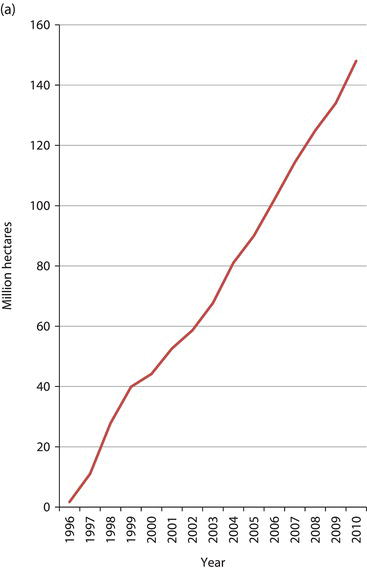
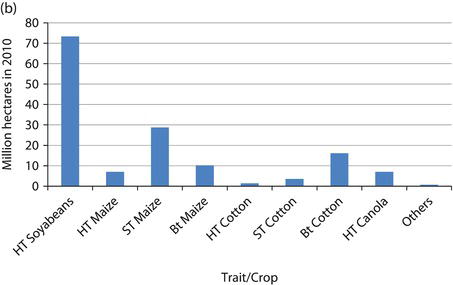
Without modern technology, including the use of pesticides, tripling world crop yields between 1960 and 1992, an additional 25–30 million square kilometres of additional land would have had to be cultivated with low-yield crops to feed the increased human population (Avery, 1997). Clearly, the use of pesticides plays an important role in optimising yields. Modern technology is changing and many pesticides, such as the persistent organochlorine insecticides, are no longer registered for use as newer, more active or selective chemicals take their place. Many chemicals are also being lost as companies are withdrawing support for them due to the cost of providing the additional data now required for registration, especially in Europe. At the same time, the agrochemical industry has invested in biotechnology and seed companies to exploit use of transgenic crops. The total area of transgenic crops has increased in 16 years to over 160 million hectares by 2011, involving over 16 million farmers in 29 countries (James, 2011) (Figure 1.2).
However, the growing of genetically modified crops has also aroused considerable public concern (Hill, 1998) and demands for legislation to control their use. While in many cases the transgenic crop is marketed on the basis that less pesticide will be used, other transgenic crops are associated with the application of particular herbicides, notably glyphosate used with ‘Roundup Ready’ crops. For insect control, insecticidal proteins from the soil bacterium Bacillus thuringiensis (Bt) are used. These toxins are proteins, called Crystal (Cry) and Cytolitic (Cyt), which have to be ingested by the insect pests as they kill by binding to specific target sites in the insect’s gut and disrupting the membrane. A single gene transfer expressing Cry 1 provides resistance to only one type of pest, and the gene has to express the toxin in the plant where the pest feeds and over the required period of crop growth when the pest causes economic damage. By stacking more than one Cry gene and combining with other insecticidal proteins, e.g.Vip toxins, insect control is improved and can extend the protection to a wider range of pests (Gatehouse, 2008), but other insect groups, especially sucking pests, may still have an adverse effect on a crop and require an insecticide treatment (Hilder and Boulter, 1999).
Figure 1.1 (a) Global increase in pesticide use in $billion. (b) Percentage of global pesticide market by type of pesticide.
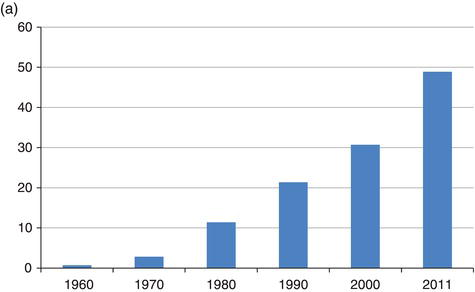
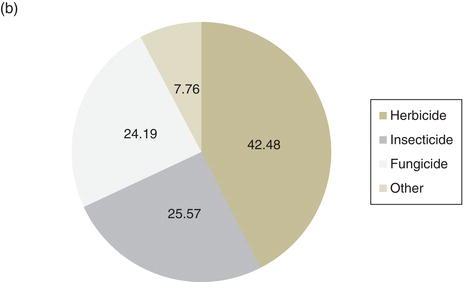
Figure 1.2 (a) Increase in global area of biotech crops. (b) Area of different biotech crops and traits in 2010. HT-Herbicide tolerant; ST-Stacked traits; Bt-GM crop with Bacillus thuringiensis toxin.
One new approach involves enhanced resistance to lepidopteran pests, by developing a transgenic cotton expressing an Australian funnel-web spider venom toxin omega-hexatoxin-Hv1a and this has been claimed to be as effective as pyramided Bollgard II® cotton for controlling major cotton pests (Omar and Ali Chatha, 2012). However, research on several new ideas, such as using genetic engineering to improve natural plant defences to repel aphids away from a crop (Beale et al., 2006) or expression of dsRNA (Huvenne and Smagghe, 2010; Price and Gatehouse, 2008), may provide a new generation of insect-resistant crops.
Furthermore, it has been quickly appreciated that pests resistant to the toxin in transgenic plants can be selected, as occurs with overuse of a chemical pesticide, so the new varieties have been introduced with insecticide resistance management strategies (Merritt, 1998). The planting of genetically modified plants is therefore similar to use of new varieties from traditional plant breeding, and in relation to pest management their availability provides another tool to be integrated in the cropping programme.
Despite the criticisms of pesticide use, farmers will continue to need to apply them as chemical control remains the most cost-effective and rapid way of combatting the effects of weed competition and crop loss due to pathogens and insect pests. Our knowledge of the chemistry and suitability of a increasingly wide range of pesticides can now provide a more rational approach to their use and avoid the adverse outcomes associated with extensive use of the persistent organochlorines and the highly toxic organophosphate insecticides. International efforts have improved registration and pesticides now commercially available have been rigorously evaluated with greater harmonisation of test procedures. Unfortunately, in many countries, especially in less developed areas, farmers have inadequate training and too often use the least expensive pesticide, irrespective of its suitability for the pest situation. It is also frequently highly toxic but the farmers do not have the appropriate protective clothing. In consequence, farmers in some areas have applied too many pesticide treatments and suffered economically and with poor health.
Modern farming practices have more intensive production of relatively few crops over large areas, while more traditional farming in tropical countries has a sequence of crops that provide a continual supply of food for polyphagous pests. Both these farming systems provide environments for pest populations to increase to such an extent that crop losses will occur unless control measures are implemented. Although these losses can be extremely serious and can result in total loss of a crop in some fields, for example the effect of an invasion of locusts or armyworms, the extent of damage is usually far less due to the intervention of natural enemies.
Considerable efforts have been put into training by means of farmer field schools, especially in relation to lowland irrigated rice production in South East Asia in an attempt to get farmers to recognise the importance of natural enemies. The difficulty for the farmer is knowing when a pest population has reached a level at which economic damage will occur so that preventive action can be taken. This decision should take into account the presence of natural enemies but sampling for these can be quite time consuming. Conservation of natural enemies is crucial in minimising the need for any chemical control, especially in the early vegetative stages of crop development. Areas with alfalfa or other fodder crops may provide a refuge for natural enemies; thus in Egypt, berseem clover assists the overwintering survival of lacewings which are important predators of cotton pests. However, the farmer will need a pesticide when quick action must be taken to avoid economic crop loss. Various methods of assessing pest populations are used to assist farmers determine when a pesticide may be applied as part of an integrated pest management programme.
Figure 1.3 IPM/ICM – the need to integrate different techniques.
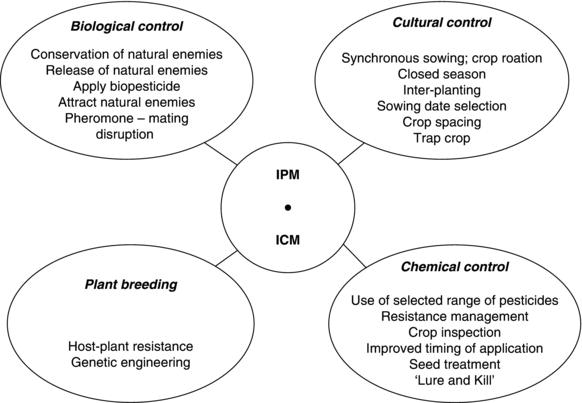
Integrated pest management (IPM) utilises different control tactics (Figure 1.3) in a harmonious manner to avoid as far as possible undeirable side-effects on the environment. To many, this means avoiding the use of any chemical pesticide and growing crops organically but in many cases, such a system is not sustainable where high yields are required. In some situations, the public will pay a premium for organic produce but yields and quality can be lower in comparison with crops receiving minimal intervention with chemical control. In some cases, organic produce is said to taste better and this may be due to the choice of crop variety rather than not using any pesticide.
Weeds are frequently the most important factor during crop establishment at a time when demands for farm labour are high. Traditional hand weeding is very labour intensive and often not very effective, while general disturbance of soil by cultivation can increase erosion of some soils. Virtually weed-free conditions are possible with the range of herbicides now available and on some well-structured soils it is no longer necessary to plough every year as seed can be direct drilled after applying a broad-action herbicide, that is inactivated on contact with the soil. The area with a ‘no-till’ approach has increased as retaining crop residues conserves the soil and many of the beneficial organisms, such as earthworms, that are important in maintaining soil fertility. Their activity also has increased conservation of ground water so that crops suffer less during periods of drought. In Africa, no-till can be combined with growing strips of crops, interspersed with a line of Faidherbia albida trees, the ‘fertiliser tree’, as it sheds its nitrogen-rich leaves and contributes to improving the fertility of the soil (Barnes and Fagg, 2003).
Herbicide use has increased most where labour costs are high, there is a peak labour demand or where mechanical hoeing will cause damage to the young crop. In conjunction with other agronomic practices such as tie ridging and planting along contours, herbicide use can reduce soil erosion by minimising soil disturbance.
Improved row weeding either by hand hoeing or by application of a herbicide increased yields by up to 35% in West Africa (Carson, 1987). With changes to direct seeding of rice and other factors, herbicide usage has increased in many crops in the tropics where traditional labour is no longer readily available for hand weeding or hoeing. In order to minimise use of herbicides, methods of selective application have been developed and used in precision farming.
Wherever possible, farmers will select disease-resistant cultivars to reduce the need for fungicide treatments but in some situations, the farmer will continue to grow varieties which are susceptible to particular pathogens because of other qualities, such as taste and yield. The extensive damage to potato crops due to Phytophthora infestans that led to the Irish famine can be avoided by careful use of fungicides. Until a GM potato has been developed with resistance to Phytophthora, the risk of selecting strains resistant to the fungicide can be reduced if the number of applications is restricted by monitoring climatic conditions so that treatments can be timed to coincide with periods favourable to the pathogen. Field application of fungicide will often improve the quality at harvest and allow longer storage.
The visibility of an insect is in no way related to the amount of damage and economic loss that can occur. Often farmers react to the presence of a low population of insects and may fail to distinguish between pest and beneficial species. The intervention of predators and parasitoids will often suppress a pest population such that economic damage is avoided. Thus precipitate action with insecticides, especially those with a broad spectrum of activity, often disrupts this biological control too early in the crop and in the absence of natural enemies, pest populations can increase dramatically. Furthermore, plants have evolved to withstand considerable damage due to insects by compensatory growth and production of chemicals toxic to the pests. Thus in integrated pest management programmes (Matthews, 1984; van Emden and Peakall, 1996), pesticide use should always be confined to when a pest population has exceeded an economic threshold. The difficulty for the farmer is knowing when that economic threshold has been reached and then being able to take rapid action with minimal disruption of beneficial insects.
The viewpoint expressed more than 40 years ago by Smith (1970), that pesticides remain our most powerful tool in pest management, is still true today, even with the enormous rapid growth in commercial use of GM crops. Pesticides remain crucial when rapid action is needed to prevent major crop losses. Southwood (1977) stressed the need to conserve pesticides as a valuable resource and reduce the amount of chemical applied and the number of applications to decrease the selection pressure for resistance, prolong the useful life of each pesticide and reduce environmental contamination. Pesticides will therefore continue to be an important part of IPM programmes. There is, however, a greater realisation that pest management is only part of the wider requirement of integrated crop management (ICM) as investment in controlling pests can only be economic if there are sufficiently high potential yields. In practice, those marketing the produce, the supermarket and food processing companies, are having a greater influence on pesticide use by insisting on specific management programmes.
Prior to the widespread availability of chemical pesticides, farmers had to rely first and foremost on the selection of cultivars resistant to pests and diseases. Unfortunately, not all resistant cultivars were acceptable in terms of the harvested produce due to bitter taste, poor yield or some other negative factor. Farmers therefore adopted various cultural techniques, including crop rotation, closed seasons with destruction of crop residues, intercropping and other practices to mitigate pest damage. Biological control was also an important factor in suppressing pest populations, but many of these basic techniques were forgotten due to the perceived convenience of applying chemical controls.
Although the use of modern methods of manipulating genes in transgenic crops merely speeds up the process of selection of new crop cultivars, many who question the development of these GM crops have a strong influence on governments who fail to see the scientific importance of the new technology. Part of the problem is that farms in some countries have grown only one of two GM crops over vast areas and neglected the need for crop rotation and closed seasons to break the cycle of pests. Whether GM crops will provide a sustainable system of crop production has yet to be demonstrated. As indicated earlier, the introduction of the Bt toxin gene into plants will increase mortality of certain lepidopterous pests but it will not affect many other important insect pests and its effect on lepidoptera could be short-lived if insects resistant to Bt are selected.
Even partial plant resistance to a pest is important. As van Emden (1972) pointed out, only half the dosage of the selective insecticide pirimicarb was required on plants with slight resistance to the cabbage aphid Brevicoryne brassicae. With the lower dosage of insecticide, the natural enemies were unaffected and controlled any of the pests that survived. In some crops, particularly those in glasshouses, the use of a low dosage of a non-persistent insecticide can be followed by release of natural enemies (GreatRex, 1998). A classic example is the application of resmethrin or the biopesticide containing the fungal pathogen Verticillium lecani to reduce whitefly Trialeurodes vaporariorum populations prior to the release of the parasitoid Encarsia formosa. This is important where light intensity and temperature are unfavourable to Encarsia early in the season (Hussey and Scopes, 1985; Parr et al., 1976).
Individual farmers can adopt an integrated pest management programme, but increasingly, many of the control tactics need to be implemented on a much larger scale. A farmer can choose a resistant cultivar, monitor the pest population and apply pesticides if pest numbers reach economic significance, and subsequently destroy crop residues harbouring pests in the off-season. A good example has been in Central Africa, where cotton farmers grow a pubescent jassid-resistant variety (Parnell et al., 1949), time insecticide applications according to crop monitoring data (Anon, 1998; Matthews and Tunstall, 1968; Tunstall and Matthews, 1961), then uproot and destroy their cotton plants after harvest and bury crop residues by ploughing. Detailed recommendations were provided to farmers via a crop manual updated frequently to reflect the availability of different varieties and changes in insecticides. However, many tactics are only effective if all farmers within a defined area adopt them. A feature of the Central African programme has been a nationally accepted restricted list of recommended insecticides, discussed in the section entitled Resistance to pesticides.
The selection of control techniques and their subsequent regulation throughout a given area or ecosystem, irrespective of county or national boundaries, is regarded as pest management. A distinction is made between the use of integrated control by individuals and pest management implemented co-operatively by everyone within the area. Pest management may emphasise one particular control technique but in general, there will be reliance on its harmonisation with other tactics. Furthermore, it must be a dynamic system requiring continual adjustment as information on the pest complex and control tactics increases. Modern information technology with computer databases, the internet and ‘expert’ systems can provide up-to-date information to farmers and their advisers.
The agrochemical industry has become more concerned about the impact of pesticide resistance and has recognised the role of IPM in reducing selection of resistant populations (Urech et al., 1997). Efforts have been made to devise resistance management strategies, to avoid disasters such as the cessation of cotton growing in parts of Mexico and Australia, due to DDT resistance.
Selection for resistance occurs if a particular chemical or chemical group is applied too frequently over a period to a given pest population. Initially, the impact of resistance was noted in glasshouses with a localised population but resistance of red spider mite to organophosphates was also apparent on outdoor irrigated vegetable crops in the tropics where the same acaricide had been used throughout the year on different crops. Thus resistance develops rapidly if most of a pest population is exposed to a specific pesticide, if the pest can multiply quickly or if there is limited immigration of unexposed individuals. The user is tempted to increase either the dosage or the frequency of application, or both if control measures are unsatisfctory, but this increases the selection for resistance.
Resistance selection is reduced if part of the pest population is on alternative host plants or other crops which are not treated with the same chemical Thus, in introducing transgenic crops with the Bt toxin gene, a proportion of non-Bt crop is required as a refuge. Resistance to insecticides by the cotton bollworm Helicoverpa armigera has not been a serious problem in Africa, where large areas of maize and other host plants are untreated. However, in West Africa resistance to deltamethrin has now been reported and this may be because farmers are using pyrethroids increasingly on vegetable crops in the same locality. Major problems of resistance in H. armigera have occurred in India and China where farmers have applied pyrethroids extensively with knapsack sprayers. Spray directed downwards from above the crop canopy was poorly deposited where the bollworms were feeding on buds, and in consquence lack of control led farmers to repeat treatments at frequent intervals. The continued exposure of larger larvae to pyrethroid deposits without significant mortality quickly led to resistant populations. The situation was made worse by the availability of a range of products with different trade names but often based on the same or similar active ingredient; thus when the farmer thought he had changed to a different pesticide, in reality it was the same. The adoption of Bt cotton while reducing the number of sprays against bollworms did not always reduce spray applications as jassids and other pests were unaffected by the Bt toxin.
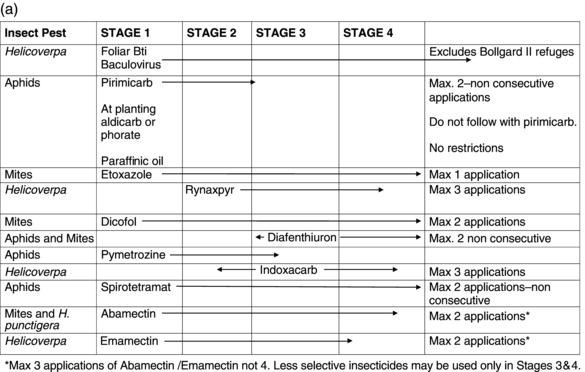
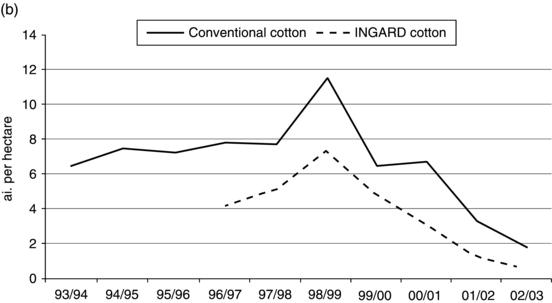
In Australia, the onset of pyrethroid resistance led to the introduction of a pragmatic resistance management strategy, which limited the application of any pyrethroid insecticide to a brief period each year irrespective of the crop. With the introduction of Bt cotton, attention has now focused on assessing resistance to the Cry1Ac, Cry2Ab and Vip3a toxins (Downes and Mahon, 2012; Downes et al., 2007). However, with refuge areas of conventional cotton a more refined resistance management programme is still advised and generally there should be no more than two sequential sprays of any chemical group (Figure 1.4) (Anon, 2009). With Bt cotton, the concern is the need for effective control of sucking pests. Generally, the amount of pesticides used on GM and conventional cotton has decreased (Figure 1.4b) with more farmers implementing integrated pest management.
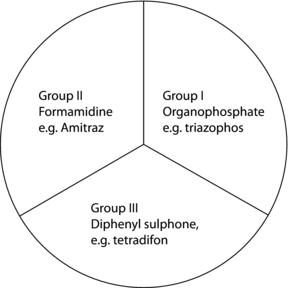
Apart from the temporal control for pyrethroid insecticides, an acaricide resistance management programme has been tested, whereby acaricides with different modes of action were used for only two seasons in one of three zones (Anon, 1998), the acaricides being rotated around the zones over a 6-year period in Zimbabwe (Figure 1.5). In each of these resistance management programmes, the aim was to avoid a pest population being exposed for too long to a particular pesticide. Whatever strategy is adopted, careful monitoring of resistance levels in different localities is required so that appropriate changes can be made to the strategy when needed.
Figure 1.4 (a) Insecticide resistance management programme in Australia. Abbreviated version 2011–2012; recommendations from www.cottoncrc.org.au/industry/Publications/Pests_and_Beneficials. (b) Decline in pesticide usage per hectare in Australian GM (Ingard) and conventional cotton.
Similarly with fungicides, if a chemical with a particular mode of action is used repeatedly, resistant strains of the fungi will be selected. Reduced dosages of fungicides showed significant selection for resistance to demethylation inhibitor (DMI) fungicides (Metcalfe et al., 1998), but the strength of selection varied with fungicide, position of infection in the crop canopy and position on individual leaves. Clearly, with variations in deposits within a canopy and degradation of deposits, fungi will be exposed to low dosages of fungicide. Thus selection needs to be minimised by better disease forecasting so that fewer applications are required and those needed can be timed more accurately. Making sure the optimum dosage reaches where the infection is within the canopy is clearly most important and led to changes in nozzle selection to improve deposition of fungicides more strategically on plants.
Figure 1.5 Idealised acaricide rotation scheme based on a system that was used in Zimbabwe.
New fungicides have been developed, including second-generation succinate dehydrogenase inhibitors (SDHI), but they need to be used in mixtures or in sequence with other fungicides to minimise selection for resistance. In discussing the future of resistance management, Hollomon (2011) is looking for more research on cell biology and modelling protein structures and target sites to find new modes of action that can be delivered not only through new fungicide sprays or seed treatments, but also by new transgenic crops.
Changes in the weed species often follow frequent use of a herbicide in one particular area, as the species tolerant to the chemical can grow without competition. This has resulted in the need for different and often more expensive herbicides or combination of herbicides. Resistance to a particular herbicide has become evident more slowly compared to insecticides or fungicides, as the generations of weeds overlap due to dormant seeds and there are fewer generations each year. Resistance to the trazines, acetolactate synthase or actyl CoA carboxylase inhibitors due to mutated target sites (Schmidt, 1997) has been followed by serious weed problems with glyphosate resistance where ‘Roundup Ready’ GM crops have been grown. One response to the glyphosate resistance is to stack resistance to a 2,4-D herbicide. These GM crops will then be sprayed with a mixture of glyphosate and a 2,4-D choline, the latter being less volatile than traditional formulations of 2,4-D amine or ester (Green, 2012).
Some grass weeds have multiple resistance to herbicides with different modes of action, As an example, resistance of blackgrass (Alopecurus myosuroides) was first detected in 1982 and affected over 700 farms in the UK (Moss et al., 1999), due to many years of continuous winter wheat production (Orson and Harris, 1997). Chauvel et al. (2001) studied cropping systems to decrease blackgrass densities and showed that herbicides were most effective when combined with non-chemical practices. In discussing the role of mixtures and sequences of herbicides to delay the onset and limit the spread of multiple herbicide-resistant populations in winter cereal crops, Bailly et al. (2012) included the use of residual herbicides. Beckie and Tardif (2012) also discussed strategies and showed the potential for stacked herbicide resistance traits to manage weed biotypes. Further information on herbicide resistance in relation to herbicide-tolerant crops is given by Vencill et al. (2012) and suggestions for reducing the risks of herbicide resistance are discussed by Norsworthy et al. (2012).
Figure 1.6