The Autobiography
MICHAEL JOSEPH
an imprint of
PENGUIN BOOKS
MICHAEL JOSEPH
Published by the Penguin Group
Penguin Books Ltd, 80 Strand, London WC2R 0RL, England
Penguin Group (USA) Inc., 375 Hudson Street, New York, New York 10014, USA
Penguin Group (Canada), 90 Eglinton Avenue East, Suite 700, Toronto, Ontario, Canada M4P 2Y3
(a division of Pearson Penguin Canada Inc.)
Penguin Ireland, 25 St Stephen’s Green, Dublin 2, Ireland
(a division of Penguin Books Ltd)
Penguin Group (Australia), 250 Camberwell Road, Camberwell, Victoria 3124, Australia
(a division of Pearson Australia Group Pty Ltd)
Penguin Books India Pvt Ltd, 11 Community Centre, Panchsheel Park, New Delhi – 110 017, India
Penguin Group (NZ), 67 Apollo Drive, Rosedale, North Shore 0632, New Zealand
(a division of Pearson New Zealand Ltd)
Penguin Books (South Africa) (Pty) Ltd, 24 Sturdee Avenue, Rosebank, Johannesburg 2196, South Africa
Penguin Books Ltd, Registered Offices: 80 Strand, London WC2R 0RL, England
www.penguin.com
First published 2007
1
Copyright © Johnnie Walker, 2007
Photograph of ‘Hedge’ Heritage Softail Classic by Kevin Wilson;
photograph of Johnnie and Tiggy’s wedding taken by Kate Caldicott;
all other photographs taken from Johnnie Walker’s private collection.
The moral right of the author has been asserted
All rights reserved
Without limiting the rights under copyright
reserved above, no part of this publication may be
reproduced, stored in or introduced into a retrieval system,
or transmitted, in any form or by any means (electronic, mechanical,
photocopying, recording or otherwise), without the prior
written permission of both the copyright owner and
the above publisher of this book
EISBN: 978–0–141–90064–3
To the Great Spirit, Trevor, Mary, Tiggy, Sam and Beth
Prologue |
Part 1: Early Days |
Part 2: A Pirate’s Life |
Part 3: ‘Auntie’ |
Part 4: Stateside |
Part 5: Riding High |
Part 6: Trying Times |
Epilogue |
It had all started so well. It was amazing that I’d managed to wangle myself an audition to be a DJ for Radio Luxembourg in the first place, considering that I had no experience apart from talking to the friendly silence of my bedroom while I cued up tapes of the hit parade pirated from the BBC. But the producer I’d telephoned didn’t know that. After all, it took some front for a young nobody to call an experienced producer like Eggy Lay and ask for a chance to present one of the shows; he’d scheduled an audition for me at the London office, telling me to bring four records with me, and three copies of my script. Easy.
This was my great opportunity. Boasting to all my friends and family that I was about to become a famous DJ, I’d managed to get the day off from work, dressed myself in my best suit, taken the train to Paddington, stepped into a taxi and given the driver the address. It was my first trip to London and I stared out of the window of the taxi, overwhelmed by the size of the city and the sheer number of people. I was dropped off in a narrow street next to the Park Lane Hilton. The highly polished brass plate on the door proclaimed 36 Hertford Street, home of Europe’s biggest and most powerful radio station and, for music fans, essential night-time listening.
Now I was seriously scared. Walking into the enormous studio was the most daunting experience of my life so far and I was suddenly aware that I might have taken on a bit more than I could handle. Radio Luxembourg had been broadcasting since 1933 and had reached the peak of its popularity in the fifties, particularly among the young, who were able to listen to the kind of music they craved. Now, in the early sixties, it was still a powerful force, answering a need in the youthful listening public that the BBC had not yet begun to address beyond its once-weekly pop programme. Radio Luxembourg boasted DJs such as David Jacobs, Alan Freeman, Pete Murray and Tony Hall – the big names, who fronted the radio shows sponsored by record companies – as well as the lesser-known presenters like Barry Aldiss, who lived and worked in Luxembourg. It was a job as one of these minor DJs that I was hoping to get from my audition.
Eggy Lay, the producer, was businesslike, and not at all friendly. He wasn’t there to be my chum but to give me the ten minutes necessary to see if I was any use to him.
‘Where’s your script, then?’ he asked.
I handed over what I had brought with me, and then glanced nervously around the studio. It wasn’t at all as I’d imagined it. When I’d listened to Radio Luxembourg, I’d always pictured the DJ talking to me from somewhere small and intimate, but this was a vast room, big enough to contain an entire orchestra. In the middle was a round table with a huge, black microphone suspended above it, but there was no sign of a turntable for me to play my records on. I clutched them even more tightly.
‘I’ll take those,’ said Eggy Lay. ‘You sit here, read your script and cue us in when you want the track to begin.’
‘How?’ I asked.
‘Like this.’ He made a gesture with his hand. ‘We’ll be in there.’ He indicated a room separated from the studio by a glass wall. Behind it, I could see two other men sitting in front of a desk. ‘Right, let’s get going.’
He walked off with my scripts and records, leaving me with my own copy and that big black microphone. I sat down, absolutely terrified. Putting my script out on the table in front of me, I tried to concentrate on the words I had spent so long carefully crafting. When Eggy Lay had told me I’d need a script, I’d been taken aback. My favourite DJs didn’t sound like they read from scripts, and I’d certainly never used one when broadcasting to my imaginary audience in my bedroom. I reacted spontaneously to the music I heard and tried to convey my own emotions as I felt them. But a script was obviously the required thing, so I’d done my best. The first one I wrote was probably the best, but it seemed pretty rubbish to me, so I rewrote it and rewrote it, until I ended up with something that sounded like the kind of thing I’d heard on the BBC: careful, prepared and completely unnatural.
Clearing my throat, I glanced at the three intimidating men sitting behind the glass wall, and saw them give me the signal to start. So off I went.
As the large ten-inch metal reels of Radio Luxembourg’s professional tape recorders came to a stop, I looked at the three faces behind the glass window in the studio wall. I could see from their expressions that it didn’t look good.
I knew in my heart that I’d been truly dreadful. I didn’t know what I sounded like, but it had felt stilted and forced, and simultaneously under- and overrehearsed. I wasn’t going to get another chance, not even a second read-through. My audition had lasted about four minutes and I had failed it spectacularly. Eggy Lay came back into the studio with my records, a look of annoyance on his face, as though I had wasted his valuable time with my pathetic ramblings and utter lack of experience.
I attempted a friendly smile.
‘Tell me honestly what you thought,’ I said. ‘Don’t try to be kind or spare my feelings.’
So he didn’t.
‘You’ll never be a DJ as long as you live. You just haven’t got the personality for it. I’ll show you out.’
It was devastating to hear. My dreams instantly collapsed and I followed him down a corridor in a daze of disappointment and rejection. He couldn’t get me out of the building quickly enough. Instead of the smart front door I’d come in by, I was shown out of a fire-escape door and into a mews behind the main building. With a curt goodbye, Eggy Lay slammed the door shut after me.
I stood there, forlorn and lost. I had walked boldly through the front door with such high expectations: my talent was about to be recognized; soon I would have my own radio show. Now I had been shown out of the back door, my hopes destroyed and with no idea of where I was. I wandered about the streets of Mayfair until eventually I found my way back to Park Lane. I decided to walk back to Paddington Station. There was no point now in hailing a taxi and wasting more money on this foolish dream.
Well, at least I tried, I told myself as I walked through Hyde Park. At least I won’t spend a lifetime saying ‘if only’. Now I know the answer – I’ll never be a DJ.
It was back to my quiet, respectable life as a car salesman in Solihull – a career in radio had been a stupid pipe dream and I resolved to forget it for good.
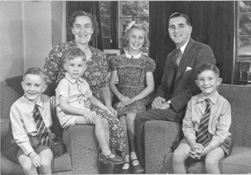
(left to right) Michael, me (the one not smiling), Mum, Maureen, Dad and John
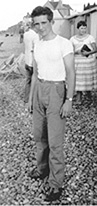
Brother John looking cool on holiday
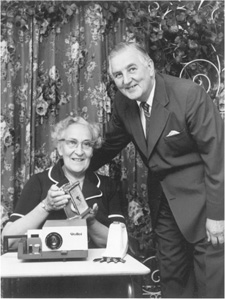
Mum and Dad with Dad’s retirement gifts
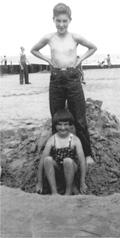
Christine and me on Sheringham beach, Norfolk
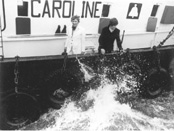
Robbie Dale and me, ready for a week’s leave
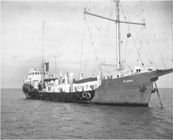
The Mi Amigo – the little ship with the big heart, 1966-8
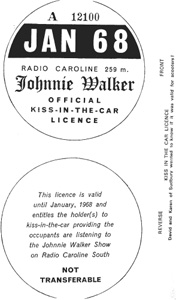
One of 19,000 ‘Kiss In The Car’ licences
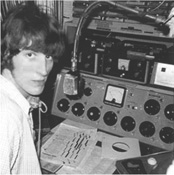
Radio Caroline’s studio
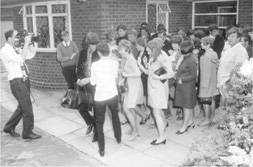
Hampton-in-Arden, August ‘67 – the fan club farewell
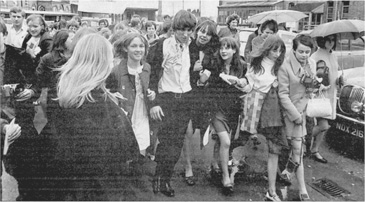
Hitting the headlines – 14th August ’67, the day I became a criminal for playing records

All alone at Hampton station (velvet jacket from Granny Takes A Trip)
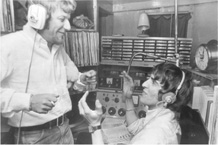
Robbie and I singing ‘We Shall Overcome’ just after midnight on 14 August 1967
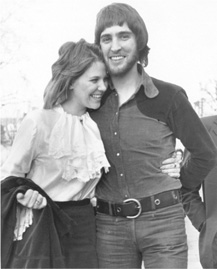
Frances and me, just married – December ‘71
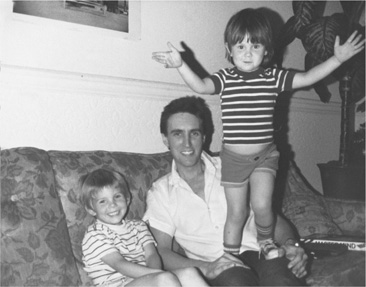
With Sam and Beth in Ramsgate
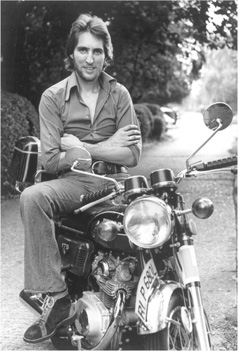
My frst motorcycle I – a 175cc Honda
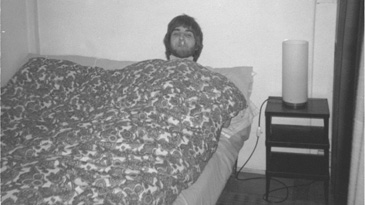
The luxurious bedroom in my frst London fat
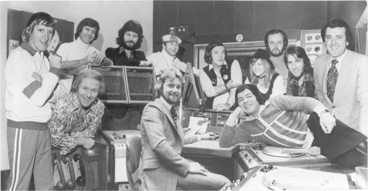
Radio 1. Back row (left to right): Jimmy Saville, Ed Stewart, Dave Lee Travis, Emperor Rosko, Alan Freeman, Annie Nightingale, John Peel, me, Terry Wogan Foreground: David Hamilton, Noel Edmonds, Tony Blackburn
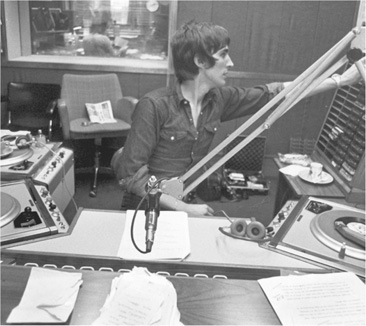
Lunchtime show at Radio 1
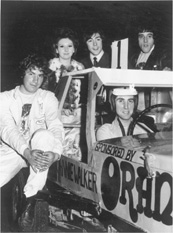
Super stock car sponsored by Orange Amplifers
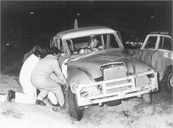
Graham North tries to pull the door off my crushed leg, Aldershot
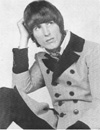
Another great coat from Granny Takes A Trip
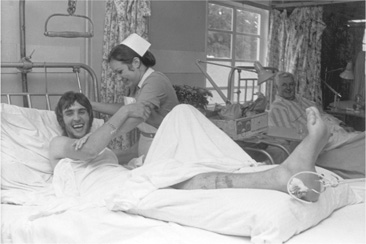
Enjoying the attention on the Orthopaedic ward in St. Peter’s Hospital, Chertsey, Surrey
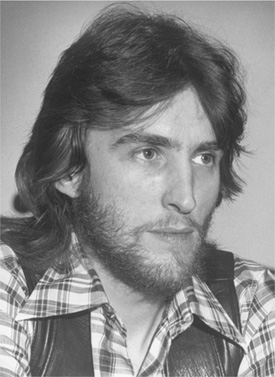
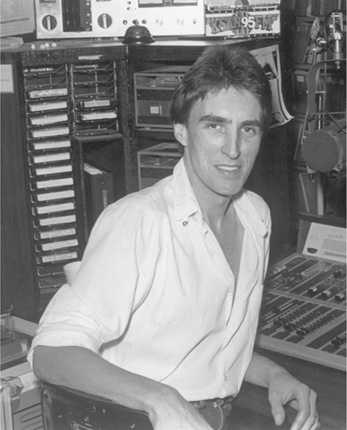
The studio at KSAN, San Francisco
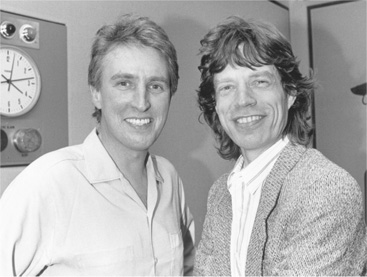
Me and Mick, looking rather pleased with ourselves
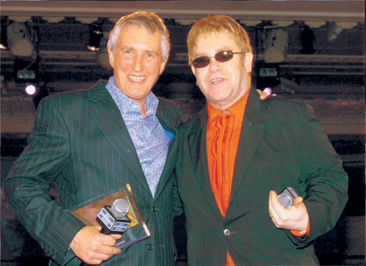
Elton hands over a Sony Gold Award for lifetime achievement
With Roger Daltrey, lead singer of The Who
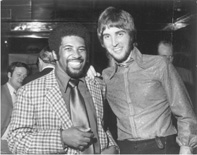
With Ben E. King (and is that Brian Epstein in the background, maybe?)
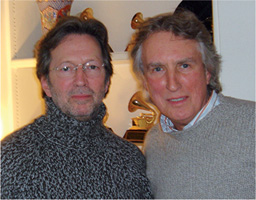
Eric and I model our Christmas sweaters
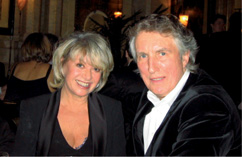
Elaine Page and me at the Radio 2 Christmas dinner
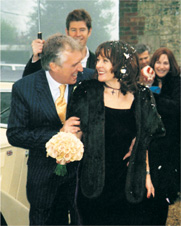
A very happy couple at Ashmore Church, Dorset

Tiggy and me in Venice
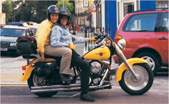
Sam on the back of my yellow Harley-Davidson Fat Boy
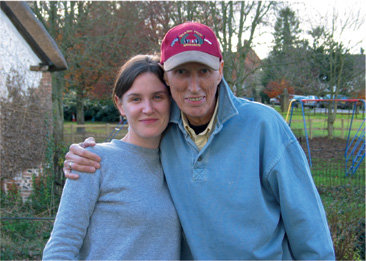
A post-hospital hug from Beth
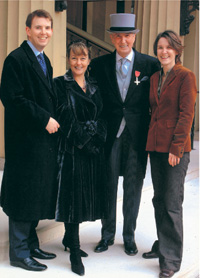
Tiggy and me with Sam and Beth – MBE day at Buckingham Palace
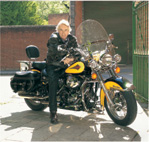
Me and ‘Hedge’, my HD Heritage Softail Classic

Proud dad Sam with my grandson, James
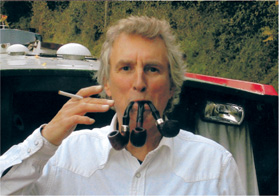
I think maybe it’s time to quit

Tiggy, looking very much at home in the Hotel Splendido, Portofino
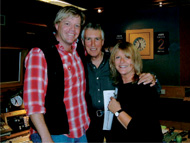
Nashville singer Pat Green, me and Sally ‘Traffic’ Boazman
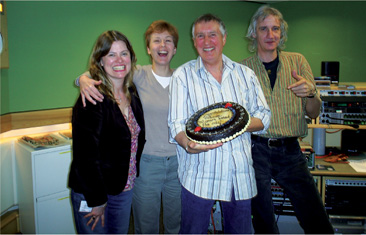
Celebrating forty years on radio in May 2006 – Fiona Day, Lynn Bowles, myself and Ralph Jordan

In Dorset, struggling to finish the book
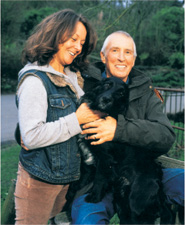
Post-cancer – me with Tiggy and Fergus in Dorset
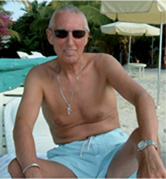
Recuperating in Jamaica

Pure happiness – a day on a boat in Majorca
There were seven of us in the Dingley family: Trevor and Mary and five kids, all crammed into a semi-detached in Heaton Road, Solihull. We were taught to pronounce the name Soley-hull not Solly-hull. It’s a leafy, somewhat posh and pretentious suburb of Birmingham, though we didn’t ever mention that city when saying where we were from. Oh no, we lived in Warwickshire.
My mother’s maiden name was Waters and hers broke on Good Friday, 30th March 1945. I don’t know the exact time I began my tortuous journey but the cord was cut and the first cries were heard in that nursing home in Olton, Birmingham at ‘about teatime’, my mum said vaguely. But I was her fourth child, so it was probably getting a little difficult to remember exactly who was born when. The eldest was my sister Maureen, then brothers John and Michael, and then me. I was to be called Peter and my middle name paid homage to my mum’s family. So Peter Waters Dingley it was, and stayed, until 1966. I was followed by Christine, the fifth and last of the Dingley children.
My father was a salesman for W. Canning & Co. Ltd, a company that made electroplating equipment for chromium-plating car parts. Dad travelled about in his company car, selling the machinery to car factories. He was very good at it, earning enough to provide a living for his large family, and later, with the help of some family money from my mother’s side, we were able to move to a grander, detached house in Broad Oaks Road. My mother devoted herself to bringing up her large and often boisterous family.
Although our home was always noisy and full of activity, it was not a place where we talked much about our feelings. Both of my parents had the kind of upbringing where adults didn’t show all that much affection to their children. Mum, in particular, was raised in a strict Victorian household dominated by a fearsome father, who she only saw at the evening meal when talking was not allowed. There was no touching or any expression of love in that home so it’s no wonder that as a parent herself she found it so difficult to express the love she felt for her children. As we grew up our parents became progressively more distant; hugging and touching were out of the question.
There is no doubt that my parents cared about us a great deal but, because they found it difficult to tell us or to show their affection, all five of us were desperately clamouring for attention and praise that never seemed to be forthcoming. This led to tensions, strains and arguments, and an atmosphere where any sign of weakness was mocked and derided. Pretty soon I realized that survival meant all feelings must be buried deep down. There’s a certain kind of loneliness you can only feel in a big family where love – or any emotion, come to that – isn’t something that is expressed.
By all accounts I started well: I was a very good little chap and Mum said I was a pleasure to have around the house. It was only later I became a rebel and a disappointment. I remember how, as a little lad, I used to love getting into my parents’ cosy warm bed in the morning for hugs and a cup of tea brewed automatically by a thing called a Teasmade that sat on Dad’s side of the bed. I don’t think I got many hugs, but it was nice and warm in the middle and it was still my early-morning ritual when my younger sister, Christine, arrived and duly claimed her place in the bed.
‘Oh, for God’s sake, Peter,’ Dad complained grumpily one morning as he clung on to what little space he had at the edge of the bed. ‘There isn’t room for the two of you in here. And anyway, you’re too old to be coming in our bed every morning.’
After that, I was not allowed in the bed any more, and it felt to me as though I’d been banished from my place of warmth, love and security. It obviously had a profound effect on me – Dad had no idea just how rejected I felt. Back then there were no self-help books on parenting, and hardly anyone took courses on psychology, so I can’t really blame my old man. Nevertheless, it was my first big lesson in quashing my feelings and learning to get on alone.
My brother John and I were different from the others. Like most older sisters, Maureen could be a bit bossy, Michael was the goody-goody, and we all considered Christine, who was the baby of the family, a bit spoilt. But John and I were kindred spirits in the art of rebellion, and we stuck together despite the four years in age between us.
It was John who got me into rock ’n’ roll and pop. But, before that, my first introduction to music was in 1955, when I was ten. Dad came striding into the front room with a big cardboard box and an excited grin on his face.
‘Have I got a surprise for you!’ he declared.
The five of us gathered round the table, fascinated. Inside the cardboard box was another box, cream-coloured with daisies all over and two clasps on one side.
Dad opened the lid, proclaiming, ‘It’s a gramophone. You wait. Watch this.’
He took out a bent handle, put it in a hole in the side and started winding the thing up. From a smaller case he removed a large, flat disc in a brown cover and placed it on the circular pad. He slid open the cover of a small compartment in the corner and removed a needle, which he put carefully in the lever at the side. None of us five kids had any idea what on earth this contraption was.
‘What’s it do, Dad?’
‘Wait, just wait.’
He moved a lever, the disc revolved and he placed the pick-up arm on to the black disc. There were crackles and pops and scratching noises, and then, and then…
‘If you go down to the woods today, you’re sure of a big surprise…’
A voice began singing ‘Teddy Bears’ Picnic’. It sounded terribly tinny and the music choice was not great, but it was a very special moment for a ten-year-old. I was completely hooked by the way this funny box could conjure noise out of thin air.
Then, when I was about twelve years old, John introduced me to the magical sound of rock ’n’ roll courtesy of his collection of 78rpm gramophone records, as they were quaintly called back in the fifties. The records were large, brittle black discs, heavily grooved, that came in flimsy paper covers. John played them in the living room on the precious gramophone. The sound was metallic and not very loud, and we had to sit almost on top of the gramophone player to hear anything, but that didn’t matter. I was still entranced by the fabulous sounds of Elvis Presley, Chuck Berry, Little Richard and Jerry Lee Lewis. We listened as often as we could, in the face of our parents’ disapproval.
John only allowed me to listen when I was with him. He banned me from playing his records after I inadvertently sat on Tommy Steele’s ‘Singin’ The Blues’ and broke it. But every time he went out, I still played them – even though I risked getting into big trouble if I was found out. They were full of such energy and raw excitement. They opened the door to another world so very different from the boring predictable one the BBC portrayed on its Light Programme, the kind of music that my parents liked.
On Sundays the radio played while Mum and Dad cooked the roast. We listened to Two-Way Family Favourites, and the theme tune ‘With A Song In My Heart’ accompanied the smell of roasting beef and potatoes, a steaming kitchen and Dad stirring the gravy. It was hosted by Cliff Michelmore and Jean Metcalfe and played the music that appealed to my parents’ generation: Perry Como, Matt Monro, Vera Lynn and Alma Cogan. It had big bands and polished singing that was neat and tidy and a million miles away from the kind of stuff that got me excited.
The only time I liked to listen to the BBC was at the weekend. On Saturday mornings there was Brian Matthew’s Saturday Club, which had a mixture of records and bands that played in front of a live studio audience. It was a huge hit with listeners, particularly young people hungry for pop music, because there was almost nothing else like it on the airwaves. As a result, it attracted the biggest stars of the day, who performed on the show. On Sunday afternoons there was Pick of the Pops, which played down the hit parade to the Number One record. It was hosted by a variety of presenters including David Jacobs and, of course, Alan Freeman. I loved the show and was glued to the radio for the two hours it was on.
Apart from those music shows, the radio didn’t hold much appeal for me. It just didn’t seem to be aimed at kids like me, who were under the spell of American music and couldn’t get enough of it. Our big radiogram in the living room was only ever tuned to the BBC. But it was a different story when I was able to listen to the radio in the privacy of my own room. There, I could tune in to Radio Luxembourg. At seven o’clock in the evening, we’d be able to pick up the signal and then I’d listen in to my favourite shows, the ones that played pop music and all the hits.
There was great excitement when our family gramophone was replaced by an electric record player. Now records came in a cool seven-inch format and went round at 45 rpm – the ‘single’ had arrived. The discs were unbreakable now, the sound reproduction was much better, with more bass and volume, and there was a stacking system on the record player, which allowed half a dozen records to be placed on the centre spindle, and they’d play one after the other. That was the theory, anyway. In practice, they slipped and skidded on each other. I found that it was much better to put them on one at a time, and, if I left the top arm off, the record would play over and over again automatically. I loved that – my current favourite record on endless repeat. My parents hated it, of course. And the more they hated it, the better it became.
As I got older, I didn’t have to listen to John’s records or get his permission to play music. I had started my own collection and did as many odd jobs as I could to earn the money to pay for them. On Saturdays I washed cars at Brunton’s Garage and spent everything I earned on records. The very first one I bought was ‘Let There Be Drums’ by Sandy Nelson. It got to Number Three in the charts and was unusual for being an instrumental piece, which wasn’t typical for the pop parade. In general, I loved the classic American rock ’n’ roll artists: Elvis Presley, Chuck Berry, Buddy Holly and Fats Domino, just for starters. The British artists didn’t seem able to compete – they didn’t have the magic of the US stars. Most British groups and singers just covered successful American songs, and their versions were never as good. Cliff Richard managed one good record with ‘Move It’ but otherwise he seemed tame and appealed too much to grown-ups for my taste.
That music was the one thing that added spice to my otherwise dull life as I grew up in my secure but predictable home, a boy in the middle of a pack of brothers and sisters, going about my daily round of school and home, bound in by rules and regulations and a stifling pressure to conform.
Things were different when Bob Wilson and the boys came into town. Invading the respectable leafy suburbs of Solihull every May came a gang of scruffy roughnecks. Their convoy consisted of huge trucks, backed up by a fleet of vans and caravans. You could feel the buzz that went around as they trundled through town heading for the local park where, over the next two days, they’d build their temporary city of glamour, noise, lights, thrills, excitement and danger. Bob Wilson’s funfair was one of the highlights of the year.
I loved it. I’d break the strict ‘go straight home after school’ rule. Stuffing my cap and tie in my pockets, I’d ride my bike through the park and stop to watch the feverish activity. The waltzers, dodgems, helter-skelter, ghost train, big wheel and wall of death all took shape at amazing speed along with dozens of small stalls and tents. Back home, I’d change out of my school stuff, have the usual fight around the table for tea and toast and maybe some cake, and then plead with my mum to let me go down the fair.
As I got nearer, I could hear the music. The sound systems of the various attractions battled with each other as Eddie Cochran, Elvis Presley, Gene Vincent and Jerry Lee Lewis strove to be heard above the cacophony of laughter and screams, the whirling and grinding of the rides, and the roar of the generators. In the air was the smell of diesel, toffee apples, nougat, popcorn and candy floss. Soon the families with young kids would head for home and darkness would fall, the coloured lights becoming brighter and ever more garish, the music even louder and more raucous.
On the waltzers, the funfair guys would nonchalantly ride the undulating wooden decks, eyeing up which car had the prettiest girls. Then, with a casual flick, they’d spin the car around even faster, eliciting piercing screams from the girls. Sexual energy charged the atmosphere and everything was to the soundtrack of the finest American rock ’n’ roll. And it was the volume that made the difference. Some of the sound gear was wound up and past the point of distortion, but it didn’t seem to matter; maybe it was a bonus. I’d never heard great pop records played so loud, and it gave them such power.
I’d been taught that young people should be seen and not heard, but this music represented another way. The fantastic noise pumping out into the night air seemed to show me a way to break free from conformity. It almost hypnotized me with its promises of freedom and self-expression. And I wasn’t the only one. The seeds of the sixties’ revolution were being sown right here, through the eager ears and into the minds of young people, with music as the driving force. No wonder it was frightening the hell out of parents, teachers and the government – all the people whose authority would be rocked by the liberation of the young.
I longed for the life my music promised, so different from the life my parents wanted for me: education, knuckling down, obeying the rules and getting a safe job for life. I envied the workers who travelled with the funfair: a few days in town, liven up the place, turn on the local girls, and then take off for a new adventure. That seemed more like living to me.
Then there was Sheringham. The annual Dingley holiday for years and years was spent at this little seaside town on the Norfolk coast, a couple of hundred miles due east of Birmingham. It was a major effort for my parents to get five kids and two weeks’ worth of their stuff packed and to get the journey under way. It was a two-vehicle expedition: Dad had his car from work, a Vauxhall Cresta, a classy motor with fins on the back and lots of chrome; Mum drove the family Morris 8, registration DAD 300.
It took the whole day to get to Sheringham and it was a long, boring journey. We went every year for most of my childhood and teens and yet still Mum or Dad would take a wrong turn and get lost. We children seemed to be in a permanent state of war with each other, squabbling and fighting in the back seat. It must have been pure hell for our parents.
Going across East Anglia took forever but eventually I’d see walls and houses built of seaside stones and get the first hint of that salty tang in the air. Soon the contest would be on for who would be the first to see the sea, and then Sheringham itself and our base for the next two weeks, the Bijou Hotel. I would hang out of the car window as we made our way through the narrow streets, breathing in deeply and getting high on that intoxicating, fresh, salty sea air. It never smelt so good as on that first day in Sheringham. As soon as we parked, I ran down to gaze at the sea and absorb the whole wonderful atmosphere, savouring the fact that I had two whole weeks there. I’ll always be grateful to my folks for their hard work and effort to make that annual pilgrimage.
In the short-trouser years on holiday I was a model son, helping carry my mum’s portable Bush radio (which weighed an absolute ton) and other stuff down to the beach every day. There we would play on the sand, dig holes, build castles and swim in the sea. When it was raining we’d sit in the beach hut, listen to Mrs Dale’s Diary and whinge a lot. As I got older, it was on those days I would sneak off when no one was looking and walk back up the promenade to the amusement arcade that we always called the ‘penny in the slots’. It was a great place, crammed with all sorts of machines. There was a driving game I mastered, where the object was to negotiate a big ball bearing through a series of ‘streets’ by means of a large steering wheel. It called for a really delicate touch; if you did have the skill and patience to get the ball all the way home, you’d get your penny back and so could start all over again. I must have set the house record for the number of winning journeys home, and so could entertain myself for hours all for the price of a penny piece.
I loved gadgets, so the machines fascinated me. The other great attraction was the arcade’s jukebox. Set right at the back, it was enormous, with a fantastic bass sound and a stock of the latest and best rock ’n’ roll and pop records, like Fats Domino’s ‘Blueberry Hill’, Johnny Burnette’s ‘Dreamin’ ’ or Eddie Cochran’s ‘Summertime Blues’. After a day playing the machines and listening to my beloved rock ’n’ roll, I’d wander back to the hotel at around the time I figured the rest of the mob would be returning from the beach. They’d be cross with me for disappearing and Dad would give me a bollocking.
‘We pay all this money, bring you all this way for some fresh air and what d’you do? Spend all your time in the amusement arcade, listening to the same stuff you hear at home.’
He and Mum would then be getting ready for their favourite time, a leisurely dinner on their own in the hotel’s cosy dining room. For us children a waitress would bring over a tray of cornflakes into the big bedroom we three boys shared. When I was younger I had to be in pyjamas and dressing gown before they arrived. They were the best-tasting cornflakes ever, eaten to the sound of the waves breaking on and then sucking at the stones just the other side of the promenade outside our window. I’d fall asleep to that sound, blissfully happy and dreaming of another day of excitement tomorrow.
As I got older, a bowl of cornflakes and an early night were no longer my idea of the perfect evening. By the time I was thirteen, I’d be getting restless as my parents began preparing for their long and boring dinner routine, and the minute they’d gone, I’d be back out again. They didn’t mind if I headed off, as long as I was back at a decent time. Sometimes I’d head for the slots to see what was going on in there, or perhaps down the steps to the lower promenade and Fisherman’s Corner, where there was another amusement arcade and a bingo place run by a husband-and-wife team from Yorkshire. The ‘missus’, as her husband called her, would be bustling around the four sides of their stall, making sure all the squares were uncovered on the illuminated plastic cards, while her old man kept up this constant patter with the microphone, trying to tempt more punters to come and join in the game.
It was amazing the power that microphone gave him. He could reach out and grab people’s attention and create a real atmosphere. But bingo is bingo, and I didn’t linger all that long. I always hoped I’d find a bit more action back up the slots. On those late-summer evenings, the dusk would be beginning to fall and the coloured lights along the seafront glowed brightly against the dark blue sky, illuminating the promenade. In the distance, the jukebox would be playing, with all its promise of excitement and adventure.
In the back of the slots, leaning up against the counter of the rifle range, would be Mick the Keys, who kept the machines running, and my brother John, who was usually with a great-looking girl. I loved being out with John, but at times like these the four years between us was a lifetime. No seventeen-year-old wants to be bothered by his little brother hanging around him, especially when there are girls to impress. If I showed up, he’d come up with some quip to put me down, so I’d bugger off and leave him free to turn the charm on the new bird he’d pulled. God, I was so jealous of John. Why couldn’t I be a few years older than I was?
But by the time I was fifteen, life seemed even more cruel. I was growing up and now I was plagued with awful spots. Who was going to fancy a gangly jerk with a serious acne problem? Then, one summer, there was one girl who did. Her name was Laura; she was nineteen with shoulder-length auburn hair and the most kissable mouth I’d ever seen. For some reason she had a serious crush on me. She was the first girl that ever did, and I can remember her saying, ‘Oh, Peter. If only you were a few years older, I could really fall in love with you.’
She sparked all sorts of feelings in me. I was frightened, overawed and sexually turned on by her, but I knew I couldn’t do anything about it. I often wondered if she was just playing a game and humouring me. Maybe she thought my brother was being a bit cruel and she wanted to boost my confidence, but I think the attraction was genuine. She certainly made a vulnerable, mixed-up and insecure teenager feel more of a man, and I’ll always be grateful to her for that.
Those holidays were the best. It’s no wonder there are so many great pop songs about summer. Somehow one can do more growing up in those two weeks of summer holiday than in a whole year back home. But all too soon it was time to return to normal life – and bloody school. How I hated the torment of getting an education: for a teenager, life was so bloody cruel.
It gave me a taste of something so good and then, just as I was really getting into it, grabbed it back off me again, stuffing me back into my boring, humdrum existence.
‘You may think you’re being really clever by not working hard. But let me tell you, you’re being stupid.’ Geography master Harry Fisher was in full flow. ‘If you boys don’t put the effort in now, you’ll end up sweeping the factory floor.’
We’d heard it all so many times before. Not only did it make me switch off, it actually encouraged my rebellion. I wondered: Surely there’s much more to a person than the ability to soak up and remember information about stuff that doesn’t really seem to have any relevance to the world beyond the school walls? Perhaps I only reacted this way because I wasn’t very good at the academic stuff. I’d always thought Tudor Grange Comprehensive down the road was a much cooler place. They had girls there and a better uniform. But my dad had got into debt to send his three sons to Solihull School and provide them with the best possible start in life. To him, money spent on our education was better than money left in a will, which could be wasted and frittered away. It was a very noble sacrifice, and I will always be grateful to him, but unfortunately, I didn’t make the most of it.
Solihull School was an unusual mix of boarding and day school. Of the 750 pupils, about 250 were boarders and the rest attended on a normal daily basis, except that it was a six-day week with sports on a Saturday afternoon. I’m sure it’s a very different place now, but back in the late fifties and early sixties the regime was brutalizing. It treated all boys exactly the same, no matter what kind of character or temperament they had; it prized academic and sporting achievement and nothing else; and if a boy became known as difficult, or rebellious, he was written off as a hopeless case and, as a result, he became one.
I started quite well. I liked rugby and was fairly popular, and I was good at reading and English. In fact, my reading was considered so good that I was asked to read the lesson in morning assembly when I was only about nine years old. I was so small that I couldn’t be seen over the top of the lectern – despite being very nervous, I think I did quite well. Later, at home, Mum asked how it had gone. My brother John laughed and said, ‘He was crap.’ It crushed me. No doubt, with hindsight, John was a bit jealous of my star turn, but at the time I felt put down by the boy I considered my hero. It diminished my enjoyment in the things I was actually any good at, and further encouraged me to reject everything about school, even those things I quite liked.
There are always boys like me in a school: a little bit sensitive, and lonely, looking for a way to be understood. The luckier ones are helped by a special mentor or teacher, who spots their potential and helps them develop it. That didn’t happen to me. I never met the kind of teacher who could inspire me to be interested in school or take it seriously. As time went by, I became regarded more and more as one of the hopeless cases.
It wasn’t helped by the fact that the school was dominated by corporal punishment. The assistant headmaster, Mr McKenzie, spent most of his time roaming around the school hoping to find a pupil who, for some minor misdemeanour, had been told to stand outside the classroom. McKenzie would knock on the door and inquire of the master taking the class if he had any objection to his taking the errant pupil away for a beating. On one occasion, McKenzie found me standing outside the classroom, where I’d been sent to ponder the error of my ways after making some kind of inappropriate joke in class.
‘Ah, Dingley,’ said McKenzie, with evident relish. ‘You can come with me.’
Having obtained his usual permission, McKenzie led me to his office and, with military precision, took me through the whole process of a beating in such a way as to cause maximum pain and humiliation.
First, he made me touch my toes while he slowly folded up my jacket and stepped back to admire the young schoolboy posterior clad in taut, stretched trousers. Then, taking his time, he whacked down the cane with maximum force: this wasn’t a beating, this was a thrashing. He paused between each stroke to allow the pain to begin to subside before the sound of the cane swishing through the air signalled the next blow was about to land. After the fifth there was a longer pause and just as I started to straighten up, thinking it was all over, he barked out the command, ‘Stay down, boy, I’ve not finished with you yet!’
The sixth and final stroke landed with even more force than the previous ones and then, to my great relief, it was all over. The challenge, of course, was to hold back the tears that were stinging the back of the eyes and never, ever to let him know just how much he’d hurt me. I hobbled out of his study, cursing him, the school and the whole bloody system that gave this miserable example of a human being the right to attack me and totally rob me of my dignity.
The head boy also had the ‘privilege’ of administering the cane. His team of prefects, or ‘benchers’ as we called them, would patrol the village of Solihull after school and the names would be noted of any boys who were seen talking to the girls from the nearby Malvern High School or, even worse, were found to be in one of the local coffee bars. At the next day’s morning assembly the announcement would be made: ‘Would the following boys please report to the head boy’s study at eleven o’clock…’
There, as the unfortunate victim was held down by benchers, the head boy would wield his cane. His beating may have been without the McKenzie venom but it was painful and humiliating all the same.
The regular masters at the school weren’t allowed to administer corporal punishment, so some of them would do it on the sly, knowing that we’d be too frightened to report them. The worst culprit was Mr Page, the music master. Over the years he’d perfected his own special brand of punishment involving the use of an old violin bow. If you gave anything less than full attention in his class, he would pick someone out at random to make an example of them.
One day it was my turn and I was called up to the front. Page’s technique was to make you hold out your left hand, which he would then hit with full force using his bow. While that hand was stinging, you would then hold out your right hand for the same treatment. Then he’d go back to the left, and so on until he’d administered three strokes on each hand. I think he thought that the pain would last longer this way. Part of the public school ethos is about being a ‘real man’ and not showing pain or hurt, or telling parents about the tough stuff at school, so I kept my punishment to myself. But Mum couldn’t fail to notice the welts and dark bruises all over my hands.
‘What on earth has happened to you?’ she asked, horrified, holding my hands to examine them.
‘Mr Page thought I wasn’t paying enough attention in music class.’
Both Mum, and Dad, when he later came home and saw the wounds, were incensed. It was a punishment that could have injured my hands for life. The next day they made a complaint to the headmaster, and Mr Page left to seek employment elsewhere. I hope that his future pupils were spared the violin-bow treatment.
I just longed for the day when I could walk out of the place for the last time.
In the summer of 1960, when I was fifteen years old, something else happened that compounded my rejection of school and exams – I got my first job.
I’d set my heart on something really special and extremely expensive: a Philips reel-to-reel tape machine that I’d seen in the shop in the high street. I’d stared at it hundreds of times through the window, dreaming about how it could revolutionize my life. With a tape machine, I’d be able to record pop programmes off the radio and have all the music I wanted for free. But it cost serious money – about ninety pounds – and I needed to earn more than mere pocket money to afford it.
After much nagging from me, my dad got in touch with one of his cousins, who ran a small factory in Birmingham and, yes, they did have some work for a few weeks during the summer. Harris & Sons Brass Founders was in the heart of Birmingham’s industrial area and if you wanted anything in brass, you’d found the right place. My job was in the polishing shop where, after a morning’s training, I was in charge of a centre-less automatic polishing machine. It was a massive thing with a spinning polishing wheel and a rest where I laid various cylindrical tubes that would start off dull and grey and emerge at the other side gleaming and highly polished with that lovely deep brassy shine. Part of the skill was to know just how much ‘compo’ to apply to the polishing brush. The compound came in brick-size blocks and the air was full of mucky particles of the stuff. I soon learnt why all the others covered their cups of tea with little bits of cardboard.
The hours were eight a.m. to six p.m. with just half an hour for lunch. It was hard, dirty work in a noisy, smelly environment but I loved it. At one o’clock I rushed down to the greasy spoon at the corner of the street for eggs, beans and chips, buttered slice and a mug of tea, all for one and ninepence. All spare sixpences went into the huge Bel Ami jukebox that dominated the corner of the tiny café. Massive speakers on each side boomed out my favourites like Fats Domino’s ‘Blueberry Hill’ and The Shirelles’ ‘Will You Still Love Me Tomorrow?’.
Every Friday I collected my pay packet in its small brown envelope. I joined in with my workmates examining the little white slip, moaning and muttering about how much tax and insurance we’d been stopped, but by the end of the summer I had earned enough to buy the Philips tape machine. I went into the shop with my wadge of cash and left, elated, with a huge box containing the gadget of my dreams. When I got it home, the whole family came to stand around and look at it, impressed by this latest piece of technology. It looked just the thing, with big clunky buttons and an illuminated tube on the front with its glowing green bars that would bounce back and forth to indicate the recording level.
The small plastic microphone attached to the machine meant I’d be able to record myself talking and act out my private dream of having my own radio show. Now my bedroom became my studio and a whole new world opened up to me. Sunday afternoon’s Pick of the Pops was the best for my purposes: the whole of the Top Twenty hit records were played one after the other. God bless DJ Alan Freeman, who never talked over the record’s introduction. With good anticipation and skilful use of the pause button, I could cut off Alan coming back in at the end of the record. It was an early example of home taping – highly illegal, but loads of people did it.
With plenty of tapes of hit records in stock, I could now do my own radio shows, telling the imaginary listeners why I liked a particular record and introducing the artist and the song. My vast, unseen audience was occasionally supplemented by one of my brothers or sisters, who would craftily listen at the door and then burst in with guffaws of mocking laughter. Flushed with embarrassment, I pretended not to care and silently apologized to my listeners for the abrupt end to my show, then switched off the tape machine until next time. I loved my tapes and got enormous pleasure out of my private radio broadcasts.
Then, about six months later, there was a huge family row, the kind that happened periodically. I was so upset by the violent argument that I rushed upstairs, picked up my tape machine and hurled it out of the window, completely destroying it in some kind of mad, grand gesture. There it lay – in pieces – the product of a whole summer’s work and the source of real enjoyment in my life. I’d wrecked it. When the anger had passed, I bitterly regretted what I’d done.
It was an early example of my stupid tendency to self-destruct and to trash something I loved for no good reason.
It was time to go back to Solihull School: now, after my taste of freedom in the brass foundry, it was worse than ever. I had proved I could hold down a job, earn money, be independent and be treated as an adult. So what was I doing back in this awful place?
This was the big year: the all-important O levels. I absolutely had to get lots of those or it would be a lifetime with a broom, as Mr Fisher had threatened. I still had a letter from my brass-foundry boss praising my dedication to the job and hoping that he would have the opportunity to employ me again as I was an excellent worker. I was pretty sure that I didn’t want to be a centre-less polishing machine operator for the rest of my life but I was also certain that, if I wanted, I could work my way up the ladder there. My brother John had left school and, like me, he wasn’t academic. He’d signed up for a six-year apprenticeship in a factory that made heating and ventilation units, and he would no doubt end up in management. Surely I could do something like that, couldn’t I?
The more the teachers whinged on about how hard I had to study and how vital the exams were, the more rebellious I became and the less work I did. I was going through a Teddy boy phase – everyone seemed to want to be one, and at school all the boys were taking in their trousers so that they tapered down into a narrow fit at the ankle. I had a whole Teddy boy outfit that I loved: tight striped jeans in spearmint green, a bootlace tie and a long drape jacket. I wore this lot with those heavy, crêpe-soled shoes called brothel creepers. My skin was still a source of agony to me as I was tormented by spots, but I drew attention away from my complexion by greasing my hair up into a Brylcreemed quiff. When I appeared in the full get-up, my parents were absolutely appalled. They couldn’t understand why anyone would want to make themselves look so outlandish – and they weren’t the only ones. When I walked up and down Solihull High Street in my gear, I would outrage passers-by, getting the most extraordinary looks from them. One day I came home to find my mum had been in my room, gathered up my beloved Teddy boy clothes and thrown the whole lot out with the rubbish.
On a Saturday, there was only one place to be and that was Frestons coffee bar. Everyone went there to hang out, talk to girls and find out where that night’s party would be. If we weren’t in Frestons, we would go down to the park and watch the older guys on their motorbikes. They rode Nortons, BSAs and Triumphs – these were the last glory days of the British motorbike industry – and they got all the attention from the girls, who loved to go for rides with them. The girls climbed on the back in their big skirts with all the petticoats underneath, put scarves over their backcombed, beehived hair, and then screamed with delight as the lads took them racing around the car park.
We younger ones watched with badly concealed envy. I yearned for a motorbike of my own, but my dad had made it quite clear that this would never happen. Without a motorbike or a car, I didn’t see how I would ever attract a girl. Cars were a major status symbol back then and any guy who could persuade his father to lend him the car had a major advantage with the opposite sex, both in pulling ability and in having somewhere comfortable and private for a good snog.
I went along to the parties that I heard about in Frestons, but nothing much happened when I got to them. I was too shy and insecure to talk much to the girls, so I moped around a bit, drank pints with my friends, smoked Woodbines and tried to pretend that I was older and cooler than I felt inside.
Inexorably, the summer arrived and with it came the dreaded examinations. Well, I decided, if I was going to fail them I was going to fail in style. For some, I didn’t turn up at all. For others, I was late. If I did turn up on time, I just wrote my name at the top of the page and sat back and waited for the interminable hour and a half or so until the time was up. I wasn’t going to play their game by putting even an ounce of effort into my exams. I knew that as soon as I had my freedom, I would be successful at something that had nothing to do with school or bits of paper proclaiming what exam results I had. I would show them all.