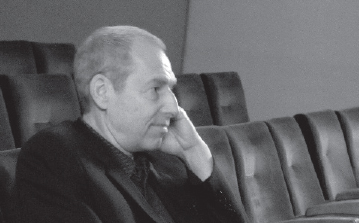
Ben Sidran has recorded thirty solo albums, produced recordings for artists Van Morrison, Diana Ross, Mose Allison, and Jon Hendricks, and is the music producer of the acclaimed film Hoop Dreams; he hosted “Jazz Alive” and “Sidran on Record” for National Public Radio and “New Visions” for VH-1 television. Sidran is the author of three previous books and holds a Ph.D. in American Studies from Sussex University.
Photo Credit: Giardini

Black Talk: How the Music of Black America Created a Radical Alternative to the Values of Western Literary Tradition
Talking Jazz: An Oral History
Ben Sidran: A Life in the Music
Music, videos, lectures, and links at:
www.bensidran.com
© 2012, 2014 by Ben Sidran, all rights reserved. Except as permitted under the U. S. Copyright Act of 1976, no part of this publication may be reproduced, distributed, or transmitted in any form or by any means or stored in a database or retrieval system without the prior written permission of the publisher.
Nardis Books is an imprint of Unlimited Media Ltd. www.unlimitedmedialimited.com Third Edition: January 2015 |
|
Book design by Planet Propaganda
ISBN: 9781450753654


| Preface: Dan Levitin | |
| Foreword: Jonathan Karp | |
| 1 | Introduction: If God Is a Story, Who Is a Jew? |
| 2 | Where Hamburgers Come From |
| 3 | Ragtime Jews |
| 4 | The New York Opera |
| 5 | Over the Rainbow |
| 6 | Strange Fruit |
| 7 | Up on the Roof |
| 8 | Hiding in Plain Sight |
| 9 | Sorry, Son, You Can’t Do Both |
| 10 | King of the Jews |
| 11 | Yo Is Oy Backwards |
| 12 | There Was a Fire |
| Acknowledgments | |
| Notes | |
| Selected Bibliography | |
| Index |
In the beginning
Man created God,
So he would not be alone,
Lost, without hope,
And God became that hope,
And hope became the reason to believe
That God created man.


The Hebrew language is very down to earth, conversational, and immediate. The translation of the torah (the first five books of the Old Testament) that most of us are familiar with in English is, however, rendered in Old English, based on the King James translation. This tends to make the Hebrew sound stilted and lofty to us today, not at all like the language of the street and the common man that it has always been. We read thy and thou, and begat, and it sounds distant and from another time. It was never intended that way—the teaching (the literal translation of the word torah) was meant to be for everyone at all times, from children to grandparents, and from the most simple person to the most erudite scholar. Before blaming poor King James, however, it’s important to recognize that his translation put Hebrew into what was, at the time, the everyday English spoken by the common man. Many generations later, clergymen and publishers retained the thys and thous either out of a sense of tradition, or because they felt it added a sense of important and separateness, of holiness. (The Hebrew word kedushah, which is translated as holy, literally means separate or apart.)
A contemporary translation of the torah to modern English would make it sound like it did to the ancient Hebrews who first wrote it down, would make it sound like the everyday conversations we overhear around us spoken in cities and in the country, in the mountains and in the plains, the language of all of us. It would sound more like the 20th Century American pop music that Ben Sidran writes about, and less like high opera. And this is what the American Jews who wrote this great and treasured canon were trying to achieve—to create songs that captured the new American vernacular, that reflected the way we spoke to one another, and often as not provide us with concise lessons in how to live and love.
When Jews started coming to America in the early 1900s, we had been a people without a home for two thousand years, a people in exile. We had become expert at learning the morays and vagaries of different cultures, of picking up new languages and habits. But we had not become expert at assimilating, at fitting in. Everywhere we went, we were separate and apart, and not by our own doing. As outsiders we were mistrusted. Our religion was grossly mischaracterized, slandered, and misunderstood, giving rise to hideous stories about our rituals including that Jews engaged in child sacrifice every Passover. (The irony here of course is that the historical record shows that the Jews were the first of the ancient people to condemn child sacrifice through Abraham’s embracing of monotheism; this is the central point of the Akeida, the story Ben describes in his Introduction.)
The central tenet of Judaism is monotheism, that there exists a single, just God who is not capricious, and who does not show favor to those in power. This image of God was a tremendous advance from the ancient pantheistic ones who were warring with one another and whose petty jealousies always seemed to be taken out on puny humans.
Judaism’s central tenet is captured in a simple prayer that every Jewish child is taught to recite, the shema. American children typically learn the Hebrew alongside a stolid English translation full of those thys and thous, and other words we never hear anywhere else. The extraordinary thing about the shema is that it functions very much like a pop song. (Or is it that Jewish-American songwriters fashioned their songs after the shema?) It employs repetition, meter, and rhyme. It’s catchy enough to stick in your head. Here for example, is how it might read in modern, conversational English, staying true to the way it sounds to native Hebrew speakers:
Hey buddy—listen up! Our God is one God, and there is only one of him....
And here’s what you need to do: love God with all your heart, with all your soul and with all your strength.
And these words that I’m saying to you now come right from Him. They should live inside your heart. You should teach them thoroughly to your children. You should talk about and think about these words and what they mean when you are sitting in your house, when you are walking along the roadside, when you lie down to go to sleep and when you first wake up in the morning. You should make written reminders for yourself so that you’ll remember what I’m saying here and be sure that the reminders are close to your hands, and that you can see them with your eyes. You should also write these words down on the front door of your house, and on the gate that leads to your garden so that you’ll remember them.
God reveals himself here to be an expert in learning theory, employing repetition, imagery, and above all, instructing us on the proper use of mnemonic devices. It’s not sufficient to hear an important instruction once—we humans forget too easily. If you say “I love you” to your significant other only once in the relationship, chances are he or she will think that you don’t love him or her anymore, and your relationship will not last. Here God knows that we need to rekindle ideas not just in our minds but in our hearts. That by teaching things to our children we come to believe them more ourselves. That by talking about them throughout the day with our loved ones, by writing them down, they become more tangible and more real, so that eventually they stick in our heads. Such is the power too of pop songs. Experimental evidence in cognitive science now shows us that the average person can recognize hundreds of songs, and knows the lyrics to nearly as many. “The answer, my friend, is blowin’ in the wind,” “God bless America, land that I love,” “Well I would not give you false hope, on this strange and mournful day, but the mother and child reunion is only a motion away” are just a few of the words embedded in our consciousness through repetition, through talking about them, and through the beauty of the craftsmanship that went into them.
Like a great song, Ben’s book is beautifully crafted. It is a social, cultural, musical, economic and family history of some of the great contributors to music that is distinctly American. These songwriters managed to do what Jews for thousands of years could not—they fit in. They defined American culture and gave it back to the rest of the country, in words and music so memorable they are bonded to the American psyche. How did they do it—where did they find the inspiration, the chutzpah to pull this off? Somewhere over the rainbow, way up high...
Dan Levitin,
McGill University
Montreal, March, 2014

The Yiddish writer Isaac Bashevis Singer once remarked that there were two things he needed to be sure of before he could embark on a new literary work: first, that the story was truly worth telling, and second that he was the one best equipped for the task. Ben Sidran’s There Was a Fire admirably satisfies both of Singer’s criteria.
There has long been a need for a serious study of Jews in American popular music. The reasons seem obvious enough: by the second decade of the twentieth century Jews had come to dominate many aspects of the popular music scene. They were songwriters and publishers, film studio moguls, theater chain owners, managers, and booking agents. A couple of decades later they were also record company entrepreneurs, distributors and retail outlet operators, music journalists and critics. As musicians, performers and singers the Jewish impact has been only slightly less profound, as the cases of Al Jolson, Benny Goodman, Bob Dylan and Barbra Streisand suggest. But if it seems self-evident that the Jewish factor constituted a crucial part of the American musical equation, why has it been so studiously ignored?
The daunting nature of the task has no doubt dissuaded many previous scholars. The precise meaning of and the reasons underlying Jewish prominence are hard, indeed treacherous, to pin down. For some historians, including many Jewish ones, merely pointing out Jews’ concentration in a given secular field of endeavor is problematic and risks fueling antisemitism. Did Jews act conspiratorially to control an entire industry? The notion seems preposterous, especially when we remember that many of the Jews in question - e.g., songwriters like Irving Berlin, Jerome Kern or Jerry Leiber and Mike Stoller; businessmen like Milt Gabler and Leonard Chess, or music critics like Jon Landau and Greil Marcus - while not altogether denying their Jewish origins, hardly emphasized them either. What role, one might ask, did Jewishness play in the lives, motivations and behaviors of individuals who remained religiously and communally unaffiliated or who even sought to escape such connections and associations? Given the opaque quality of their ascribed Jewish identity, how can we assign special relevance to it?
On the other hand, as Sidran rightly asks, how can we possibly understand twentieth-century American popular music without understanding Jews’ profound contribution to it? Which brings me to the second of Bashevis Singer’s considerations. It would be difficult to conjure up an author better equipped than Ben Sidran to trace the Jewish impact on American music. A brilliant jazz pianist and composer with many songs and albums to his credit, an academically trained scholar and the author of pioneering studies of jazz, Sidran knows the music business first hand. One reason why There Was a Fire is such an important book is that the author conveys an insider’s awareness of the underlying if often subtle ways that Jews in the music business acknowledged and even relied upon their membership in the “tribe.” Veteran record executive Bob Krasnow, who signed Sidran to his Blue Thumb label in the 1970s, was more direct than most when he confessed to a reporter, “I could work for a big company like Warner Brothers because I had all the ethnic qualities—I was white, I was Jewish, they could invite me over to their home for dinner, and I could talk to black people.” For Krasnow and many others, what we might call “assimilated Jewishness” provided an opening, an admission ticket to a career in the music business.
There Was a Fire is both a popular history, admirably thorough and beautifully written, and an invaluable insider’s account. Its approach is equally empirical and impressionistic, analytical and anecdotal. It covers most of the topics one would expect and a few that are surprising. The familiar Jews of Tin Pan Alley appear, but also the less well-known Jewish composers of Hollywood film music. The Brill Building crowd surrounding publisher and impresario Don Kirshner receives attention, but is fascinatingly juxtaposed with the young Jewish leaders of the Chicago blues revival of the mid-1960s, such as Paul Butterfield and Mike Bloomfield. Some of these Jews, stemming from families oriented to the world of business, found the meaning and authenticity they craved in the culture of an older generation of black blues musicians whom they came to know, learn from and support. As we would expect, the storied black-Jewish relationship looms large in Sidran’s account, and he offers many fresh insights into its meaning.
Sidran rightly presents no single formula to account for what sociologists would label the remarkable Jewish “overrepresentation” in the music industry. Jews occupied too many disparate rungs - creative and crass, magical and mundane - for the phenomenon to be reduced to a single cause. Their biblical inheritance notwithstanding, Jews were not the only people in this new land with a story to tell. On the contrary, what is perhaps distinctive about the American popular music business is that it developed an astonishing capacity to absorb the stories of many of the groups who traversed the national landscape and to recast them as a kind of manufactured folk merchandise. That Jews should find themselves at the heart of this process, or often as the processors themselves, is the unique result of the encounter between their centuries-old role as mediators of cultures, classes and commodities, on the one hand, and the remarkably dynamic American capitalist and cultural environment, on the other. Despite its entrenched racial and social divisions, American cultural symbols and markers were still sufficiently malleable - and moveable - to permit a wholesale reordering of status, at least in the auditory realm of musical imagination. We get this sense in Sidran’s trenchant analysis of Kern and Hammerstein’s landmark 1927 musical Show Boat, among the first art works to treat blacks as full human beings engaged with their own individual tales and predicaments. “It was almost as if the Jews were imagining an America where everyone was marginalized,” Sidran observes, “each in their own way, where everyone was an outsider with a story to tell, if only one could find the words and music to tell it.” Show Boat’s authors thereby helped to expand “the Jew within the American as well as the American within the Jew.”
The ultimate source of this Jewish drive to reshape both the self and the environment is really the ground of much of modern Jewish history as a whole. Modernity for Jews meant one thing above all else: the determination to end the condition of “exile” (galut) and isolation that had defined Jewish political and spiritual life for close to two millennia. The Jews’ insatiable appetite to participate in the larger narrative of modern life took the most diverse and contradictory forms, ranging from militant ethnic self-assertion to conscious and unconscious self-abnegation. But American popular entertainment offered, quite literally, a unique theater for the working out of these of these powerful impulses, both onstage and backstage. Whether at the level of mere playacting, as a psychological release valve from the anxieties of being a Jew in a still hostile environment, or in the conviction that entertainment—and in particular, popular music—could actually help reconfigure American life in a manner more congenial to Jewish needs and sensibilities, many Jews quickly grasped the reality that popular entertainment held a remarkable transformative power.
It is a credit to Ben Sidran that he reveals Jews’ diverse uses of popular music as possessing a broad humanism in character and intent, while in no way discounting the frequently cutthroat character of “the business.” Yet it is an ironic mark of the Jews’ success in helping to make American culture more inclusive that this humanistic quality seems to have dwindled of late. The recent but precipitous decline of American popular music can in part be laid at the doorstep of the giant corporations that since the 1980s have gobbled up the music and regurgitated it as standardized product, as well as at the feet of the managerial class of lawyers and accountants who have abetted this process. But the loss that Sidran decries also appears to be the discordant accompaniment to Jews’ fuller integration into late twentieth-century America. It is now safe, even fashionable, to be open about one’s Jewishness in the business. This is a mixed blessing, to be sure. What it signifies, as Sidran makes clear, is a decline of the kind of alienation for which many Jews paid a heavy psychic price but which likewise served to animate the search for new musical forms and entrepreneurial niches. Acceptance, a kind of general receptivity to Jewish identity as normal, even attractive, and an unprecedented transparency about Jewish identity, has somehow gone hand in hand with the increasingly generic flavor of American popular music as we find it today. Sidran’s surprisingly apt linkage of 1980s smooth jazz with gangster rap, on the grounds of their shared emotional vacuity, underscores the point.
Whether Jews will again play a large role in reviving the lost art of American popular music seems doubtful. Future revitalization will likely derive from other wellsprings. What Jews accomplished, however, in helping to forge the American contribution to popular music can never be effaced or forgotten. Certainly not now, thanks to Ben Sidran’s remarkable book.
Jonathan Karp
State University of New York
Tel Aviv, January, 2014
What boy can forget his bar mitzvah? The excitement of being onstage. The fear of forgetting the magic song. What thirteen-year-old has not asked himself, “What am I doing here?” My bar mitzvah was just such a confection, leavened with months of tedium, iced in moments of sheer terror, and served up to a small congregation of refugees from the Pale of Settlement—car dealers, insurance salesmen, retail clothiers, and my crazy uncle Hymie. Looking out at the room that morning, I knew I was from another planet. Perhaps this was part of the greater plan; in order to be a real Jew, one had to learn the taste of alienation early. Perhaps the bar mitzvah wasn’t designed for the child at all; perhaps it was designed for the man that he would one day become.
The affair was typical of those held in small American cities at the center of the twentieth century. Nothing fancy, like today’s choreographed events. I also led the Friday night service and the special Musaf service following my Torah portion; apparently, in our family, it was a matter of pride to see just how long you could carry on without actually knowing what you were saying. Because while we were trained to read the Hebrew, and even to interpret the little cantillation marks above the text, we were never introduced to the meaning of the sounds we made; that is, I read Hebrew much as I read music, purely for the sound of it.
Actually, the whole Jewish liturgical experience was obscure. For one thing, why, on Rosh Hashanah, one of the two holiest days and the one time of the year my father regularly attended synagogue, was there a point in the service when all the children were asked to leave the sanctuary? “It’s not for children,” my mother would say as she shooed me out. Goofing around in the social hall, I would wonder, “What is going on in there?” This was, I supposed, just one of the many mysteries that would be revealed once I came of age.
When that happy moment finally arrived, following my bar mitzvah service, the congregation retired to the social hall for an oneg shabbat, to enjoy a piece of cake and a glass of sweet wine. I sat at the head of the table, next to Rabbi Cohen, who, in his most luxurious baritone, told the assembled that today I was a man. Actually, he didn’t say that. He was a bit more circumspect: what he said was that I was now a full member of the community, enjoying all the benefits and obligations that came along with the honor. Unknowingly, I had signed up.
When it was over, I went home, hung up my new suit in the closet, and sat down with my jazz records; I had a pile of my father’s old boogie-woogie 78s and when I listened to them—miraculously!—I felt connecting to something both serious and mysterious (everything religion was supposed to be but, for me, clearly was not). In time, I came to understand that I had a much better chance of resolving the secrets of jazz than unraveling the riddles of Judaism.
To this day it seems odd to me to take a boy just at the age of maximum social discomfort, train him for several years to make a string of incomprehensible sounds, and then have him give a little speech at the end about its meaning and significance. The whole process is designed to confuse him about the nature of meaning and significance. A feint within a feint, perhaps? Where is the magic if not in the incomprehensibility of it all? For me, and for so many others of my generation, the liturgy was just so many ancient stories, repeated week after week, year after year, stories in which I was both intimately bound up and completely left out.
Because the year of my bar mitzvah was also the year one of my friends (my best friend, actually) asked me if it was true that Jews used the blood of Christian babies in their services. (I have always wished I had had the presence of mind to tell him yes.) I understood, in the classic moment of Jewish alienation, that I was the outsider. But as an outsider, I also understood something else: I was special in a way he would never know. That in itself made me a kind of insider: the classic duality at the heart of the Jewish experience.
I began searching for jazz records. My favorite was Horace Silver’s Six Pieces of Silver, with Blue Mitchell on trumpet; I listened to that one over and over, huddled around my little record player like an Eskimo by a fire. There was clearly something profound in this music, and I could almost comprehend its inner meanings; just one more listen, just one more … as if it might be possible to parse the hidden grammar of jazz, which spoke to me of the commonality of all people. Intuitively I grasped that these musicians were related to me in some essential way. When I found out that Horace and the others were black, I understood that we were all basically alike; we are all related. Black was just a color, and there was only one race: the human race.
One record led to another. I took piano lessons. Musicians of all colors and styles came into my life: Pinetop Smith (“Pinetop’s Boogie”), Dave Brubeck (“The Duke”), George Shearing (“Lullaby of Birdland”), Errol Garner (“Misty”), Bud Powell (“Time Waits”), Ray Charles (“What’d I Say”). I quit piano lessons. One night, I took my suit out of the closet and went to play a dance at the local YMCA; I got paid $3 to play with a small orchestra while love-hungry teenagers dressed in their Sunday best embraced each other and slowly circled the floor. I remember the room was dark, I wore white socks, and when I came home and hung my suit back in the closet, it was then that I felt like a man.
By the time I arrived at college, I was playing gigs three or four nights a week and reading philosophy, history, and literature during the day. I loved the stories, and the search for a deeper meaning in the ordinary state of affairs continued to be my m.o. In a class on European intellectual history I discovered Rosa Luxemburg, who rode the age-old Hebrew directive of tikkun olam (to heal the world) into the heart of the revolution. In a semantics seminar, I discovered Ludwig Wittgenstein, who, in his landmark book Philosophical Investigations, warned against presuming that any utterance in any language has any one definable meaning. Words, he wrote, are not charged with a specific property of meaning, but rather, “the meaning of a word is its use in a sentence.” I immediately wondered if this was also true for music: Was the meaning of the music likewise in its use?
I went to England, where I wrote a dissertation on the cultural implications of black music in America. My obsession with what and how music could mean something—part of an ongoing search for greater meaning in my own life, I suppose—continued apace. Ultimately it led me to Los Angeles, where I entered the record business, determined to stop studying the information and instead to become the information. I wanted to know, firsthand, what it felt like to be a practitioner of the ancient art of music in the modern world.
Flash forward forty years. I had recorded thirty solo albums, produced dozens more for other musicians, toured conscientiously, and even recorded with Blue Mitchell himself. I knew well that fortunes had been made and lost, lives saved and sacrificed, hope restored and destroyed, all, in part or in principle, through this music. Clearly, American popular music was more than just the soundtrack of our generations; it was both a river of emotion and a powerful social force. But never did I think about my own place in that ongoing rush—how or why I myself may have turned to the music for solace, meaning, and deliverance.
Then, in 1981, when my son was five years old and I was thinking that it would be nice if he had some sense of his Jewishness, I happened to pass a little synagogue on the morning of Rosh Hashanah, and, entering, experienced a small awakening. I remember particularly the congregation reading the following passage:
The Gods we worship write their names on our faces, be sure of that
And a person will worship something, have no doubt of that either
One may think that tribute is paid in secret
In the dark recesses of his or her heart, but it is not
That which dominates imagination and thoughts will determine life and character
Therefore, it behooves us to be careful what we are worshipping
For what we are worshipping, we are becoming.
What was I worshipping? What was written on my face?
Too, there was the story known as the Akedah—the binding of Isaac. It is a central part of the Rosh Hashanah service in which the patriarch Abraham is instructed by God to bring his son, Isaac, to the mountain and there, with a special knife, to sacrifice him. It is a test of Abraham’s faith, and it plays out in the most touching way. Abraham tells his son to walk with him (the words in the text are Vayelchu shnayhem yachdo, or “they went up together”), and tells him that they are going to make a sacrifice to the Lord. Isaac asks, “But where is the lamb?” and Abraham assures him the Lord will provide one. At the very last moment, with Isaac bound on the altar and Abraham raising the sacrificial knife, God finally calls out to Abraham that it was all just a test of his faith (“Just kidding”), and since Abraham passed the test he could set his son free: a man at risk, a child at risk, a life at risk. This was a voice from the past speaking about issues that are still very much at issue today.
This story also raises multiple questions. What kind of God would ask a man to kill his own son, and what kind of man would actually agree to do it? (An ordinary man, it turns out; Abraham simply went for a walk in the desert and “heard a voice” that commanded him to follow, and Abraham followed.) And what about the son? Surely Isaac knew what was going on. What was his role in this passion play? And finally: Why had I never heard this story before? The answer to this last question became instantly apparent: this was the part of the service when the children at my old synagogue had been asked to leave the room.
Now, I do not accept the literal truth of this story any more than I necessarily believe in the reality of the Exodus (the Sinai isn’t such a big place; surely Moses could have found the way out in less than forty years) or even the existence of God. That is just my personal position, but the physical truth of these events doesn’t seem so important to me. To me, if God is just a story, then the story is God. That is, we worship a narrative; and as this particular narrative has moved so much history, perhaps it is even more miraculous than if the details were to be literally true.
The Jewish narrative, beginning with Abraham’s covenant with God, is at the root of contemporary Western faith and philosophy. It is not simply faith in the veracity of a deal made centuries ago by a mythical man who may or may not have been experiencing an aural hallucination. It is faith in something quite real: the commonality of all people—what I think of as the inner Jew in us all. Others may call it by a different name, but in principle it remains the same. For it seems to me that social justice—a radical concept five thousand years ago, when human sacrifice was the norm—is inherent in the very idea of monotheism, the existence of the one God, the same God who spoke to Abraham. For if we believe there is only one true God, who speaks directly to anyone who can hear—who can be moved by an individual’s prayers, and who has made all people in his own image—then all people, having equal access to this single divine source, are equal to one another. (If A = C and B = C, then A = B.)
Hence every individual has an equal responsibility to do good and an equal obligation to do unto others as they would have others do unto them. In this way, social justice is inherent in Abraham’s acceptance of the voice that spoke, just as it is an essential aspect of the Jewish narrative today. (Apparently, I had signed up.)
This I could understand: the power of a narrative to frame our daily lives. It was what I was living in the music business, and the biblical narratives are not that dissimilar. Consider the story of King David. It is a story straight out of today’s pop mythology: The old king (Saul) is depressed, and his kingdom is coming apart. He’s unable to unite his people and unsure how to defeat the Philistines at his border. Word reaches his court of a poor but magical boy out in the hinterlands whose music has the power to heal (think Johnny B. Goode). By all accounts, that boy, David—a handsome and charismatic young singer who played a proto-guitar (the lyre)—arrived at Saul’s tent and was able to calm the king with his music. This same David, it is said, stepped up to fight the Philistines single-handedly, challenging Goliath and, in a very public show (like halftime at the Super Bowl), felling the giant with a single stone from his slingshot. But David’s fame was fixed for all time when he wrote the Psalms, for it is believed that he is the author of most, if not all, of them, including the great Twenty-third (“The Lord is my shepherd …”). The Psalms were “hits” when he wrote them and are still hits today. Millions and millions of people have recited David’s words over the years.
For all these reasons and more, David has been hailed as the first true “king of the Jews,” and hundreds of years after his death, three wise men were following a star to a manger in Bethlehem, seeking out the Davidic heir. King David is at the root of the search for the messiah who will deliver unity and meaning to his people.
Yet David was a modern man. In the words of one biographer, “he seemed to embrace the thoroughly modern notion that nothing succeeds like success—or, when it came to satisfying his sexual appetite, the equally modern notion that nothing succeeds like excess.” In fact, anticipating today’s pop celebrities, he even experienced the first public “wardrobe malfunction” when his codpiece flew up, exposing his genitals, as he danced ecstatically in front of the Ark. His triumphs with women, particularly his infatuation with the great beauty Bathsheba, are legend. And though he was open and remorseful about his human failings, he embraced them in such a heartfelt and poetic manner that the people only loved him more. Today he is remembered as that brave young man who defeated Goliath and let love rule, not as the aging, self-obsessed politician that he also allegedly became. In short, not to trivialize his story but to contextualize it in modern terms, King David was the first rock star.
Like rock stars ever since, he was forgiven (even justified) by the size of his musical gift and because of his ability to bring a kind of solace and unity to the community. “If this person’s music can move me so,” the typical fan thinks, “he must be in touch with a higher power.” If so, surely part of that particular power is just how randomly it has been distributed throughout the ages; so often a great musical gift is visited upon those whose failings (like their successes) are larger than life.
David, too, had feet of clay: he finished out his years more or less alone, living in a tent and anticipating the rule of his son, Solomon, who would one day erect the stone monument (the first temple) that David had always refused to build (preferring to remain a man of the road). His story is a template for pop stars everywhere, from its humble beginnings to the crumbling edifices at the end.
But what is of particular interest to me is that this story—like all the stories in the Bible and all the great epic poems such as The Iliad and Gilgamesh—was originally meant to be sung. All the stories in the Bible were once magical songs. And even though writing had been in use for hundreds, if not thousands, of years before David, the Hebrews purposely chose not to write these stories down, insisting that this proto-liturgy be passed on orally—that it be sung. Today, similarly elaborate musical histories are still being created: in Ghana, for example, where young drummers spend years learning to play their people’s history on the drums; and in Australia, where Aborigines still memorize the story of their people as a song that is, among other things, a literal map of their territory.
What is this impulse for people to store their deepest hopes and dreams in song? Obviously, oral epics benefit from the fact that music and memory go together (we remember what we sing better than what we say). Yet there is something else operating here: it seems that for a story to be a living thing, it needs to be part of a social occasion. Hence the ritual, even today, for a minyan of ten men (and/or, more recently, women) to be present to hold a Jewish service; you cannot tweet a minyan or skype a brucha (blessing). There must be a physical gathering. And music is the best social lubricant ever devised; it is the way people come together most naturally, and perhaps most profoundly.
It is as if we are all notes in the ongoing symphony of our people. Alone, we are a mere punctuation of the silence; with others—within the context of our people, to extend Wittgenstein’s point—we are music, we have meaning. In the modern world, we usually see music as an artistic endeavor (“organized noise”), but it is, and for centuries has been, much more than that: it is community in action, the human in situ. Call it, for lack of a better phrase, the inner voice of our collective self.
Music is a root of religion. Why not? With today’s multiplatform technologies it is difficult to imagine an era when the only time one experienced music was live, in the moment, as it was being created. But once upon a time, and for a very long time, music put the individual at the precise moment of creation. And that is what music represented for virtually all of human history. But the creation of what?
The answer, I think, is memory. Not just that song helps people remember their own story as it is being told; this is obvious. Rather, that the act of singing replicates the original emotions of earlier people, and so, in a profound and direct way, passes on what it felt like in the past to be alive, as a reality, on the pulse. We can feel what it felt like thousands of years ago when we sing certain songs; this retained memory is not so much about the details of the narrative—the so-called “episodic memory,” which in most cases is no doubt apocryphal—but the particular admixture in the neurochemical soup. Feeling is knowledge; you don’t know a thing until you feel something about it; and you can’t feel something until you stop, if only for a moment, trying to understand it. If only for a moment. This moment. Hence popular music is part and parcel of our spiritual self.
Here’s a story about memory and the Jews:
Once upon a time, deep in the heart of the Pale, the great rabbi known as the Bal Shem Tov had to work a miracle to save his people. He went to a certain place in the woods, lit a little fire, and said a special prayer. And this prayer was answered and his people were saved. One generation later, his disciple had yet again to save the people. So he too went to the same special place in the woods. But by now, the way to light the little fire had been forgotten. He said, “We do not know how to light the fire anymore, but we still know the prayer.” So he said the prayer, and again the people were saved. Then yet another generation later, the disciple’s disciple had once more to save the people, so he in turn went to the very same place in the woods. But by now, the prayer itself had been forgotten. So he said, “We do not know how to light the fire anymore, and we no longer know the prayer, but we still know the place in the woods where it all happened. It must be sufficient.” And it was; his people too were saved. Finally, one generation later, when the disciple of the disciple’s disciple had to again save the people, he found they no longer knew the right place in the woods. So he said, “We do not know how to light the fire anymore; we do not know the prayer anymore. Even the place in the woods where it all happened has been forgotten. But we can still tell the story.” And he did. And it was sufficient. And again the people were saved.
This story says that memory is the higher power operating in the lives of ordinary people, and sometimes, just the memory that there was a story is all that is required to invoke that higher power; it is the passing on, in the end, that is passed on. We are all connected through our shared past, and it is that connection that is sacred. The persistence and importance of music in this process is a reminder that while our mind-memory is inevitably inaccurate and obscure, our emotional memory remains profoundly relevant. Music literally keeps the past alive for us.
Consider, then, that to the extent that today’s popular music contains elements of the Jewish story as transmitted down through the centuries, we are, when listening to popular songs, perhaps feeling something of the original Jewish experience. Like the flame from a single torch passed down a long line of thousands of torches, American popular music is just one of the many ways Jews have remembered themselves into existence. Why? Why should we need some external reflection of ourselves to feel that this life has meaning? Better put, why isn’t it obvious that without this historical context, the human animal doesn’t exist? Popular music may be trivial, but it is also essential.
Memory is the context in which we all live. It is the frame around our story, and without it, we disappear. The neurologist Oliver Sacks famously recounts the case of a man who had absolutely no memory: at every moment, he felt he had just woken up with a sense of “Aha! Now I am awake for the first time.” Without a memory, he had no context for the cascade of present moments. “I haven’t heard anything, seen anything, touched anything, smelled anything,” he would say. But of course he had heard, seen, touched, and smelled many things; he just couldn’t remember them. “It’s like being dead,” he said.
To be human, then, is to be in context. And to create one’s own context (to create memory through music) is, in both the Jewish tradition and the popular mind, very close to godliness; hence the adoration known as “fandom.” Popular music, even today (for better or for worse), is how we continue to create the context that tells us who we are—it literally keeps our collective memory alive. By creating this memory, popular music is not just what we know, it’s how we know it.
We live on in the memories of those who follow. One’s personal story follows one’s life just as a stalk follows a root and a root follows a seed. The seed was planted in you; you are the expression of that which came before you and the origin of that which comes after. We are somebody’s child, so we have meaning. We are somebody’s parent, so we give meaning.
At the conclusion of the Rosh Hashanah service in 1981, I went up to the young woman leading it and asked if I could help with the music. Beginning that year, and every year thereafter, I played piano for the high holy days with my son sitting next to me on the bench. (We “went up together.”) Year after year, there was something hauntingly familiar in songs like “Avinu Malchenu” and “Oseh Shalom” as they were being sung by the congregation. These were dark emotional streams that had passed through my youth and now seemed to reconnected me to a deeper pool: I experienced a welling in the chest, stirrings of something that had nothing to do with the narrative or the liturgy but everything to do with the music. (Although perhaps the fact that the words themselves were like music to me made this possible.)
What I remembered was the feeling of sitting next to my father in a small synagogue many years before and the sense, then, of being connected to something profoundly old—his father, his father’s father, and so on—a knowing that went beyond understanding. Surrounded by old men wrapped in prayer shawls, chanting and mumbling in Hebrew, rocking to a mysterious language, raising their hand and their voice to God, with the past literally all around me, I think even then I understood that these first Jewish experiences—moments of collective entrainment and spiritual longing—were also my first jazz experiences; and, vice versa, my introduction to the world of popular music has always been part of my experience of what is spiritual in the world.
This, it turns out, is a very traditional view, both in the world of jazz and in the world of Jews, whereby melodies from popular songs are regularly adapted for spiritual singing. Since the beginning of the Diaspora, Jews have taken folk songs and popular tunes from whatever country they happened to be passing through and embedded Hebrew prayers and sentiments in them. It appears that the sacred text is quite easily conveyed on the wings of popular song; or, alternatively, that any song becomes sacred when the community sings it for a higher purpose.
Hence not a few of the melodies sung in Ashkenazi synagogues today started their lives as German drinking songs. Most modern Jewish liturgical melodies are no doubt quite different from their original Hebrew origins. But something remains. The word talmim (for the musical notations above the text) actually means “flavors,” and that is perhaps the best way to describe what these melodies deliver to us today—a taste of what it used to feel like in the presence of the original liturgy.
Talmim are interpreted variously by Jewish communities around the world. Each community, then, becomes a community in part through how it comes to agree upon the correct melody for the prayers and texts. This idea of authentic, or “correct,” melody—which, in turn, is referred to as nusach or “good nusach,” meaning the community’s version of “correct melody”—in the neuroscientist and musical sociologist Daniel Levitin’s phrase, “contains clues … to the interpretation of words or passages that might otherwise be ambiguous. That is, the assignment of words to melody (and vice versa) was not arbitrary—it helped not only as an aid to memorization and recall but also to ensure the correct interpretation” Nusach is an example of how, in the Jewish tradition, not only is there music in the words, but there are words in the music. I believe that being attuned to music in this way, being able to hear into the music and attach it to common speech, is a key to Jewish influence in the world of popular music.
The salient fact here is that the Jewish narrative, from the beginning, was meant to be sung, to come alive in the raising of the communal voice. Music and meaning go together, and they are revealed through a community coming to an emotional consensus in song. This is exactly what a “hit song” is. If we each knew what a hit song was, we’d all write them; only the community knows, and even then it doesn’t know until it hears one. Consider how democratic this process is; despite our best efforts to sell them something, it is the community that chooses the hits. We can control what they hear, but we can’t force them to sing along.
Our little Jewish community too had its own nusach, and when our son came of age, we hired a tutor to prepare him for his bar mitzvah. How could I, in good faith, having experienced what I considered an alienating sham of a spiritual exercise, have led him down this path? Simple: I didn’t. He chose it. It was every bit as much a part of his American experience as going to summer camp or learning to ride a bike. Clearly, his life as a Jew in America was going to be much different from my own. His bar mitzvah tutor, for example, was an accomplished blues and jazz singer, and together they integrated a lot of vocal tradition into the “magic song” he would sing on the big day.
When that day came, a bright crisp November morning in 1989, he was radiant in his new suit, recently flown in from Barney’s of New York. The hip threads and their urban origin signified not only that he was born at a more affluent time than myself, but that the community into which he was born was dramatically different as well. In a matter of one generation, we had gone from Holocaust survivors to “Cool Jews.” Not only had he prepared his Torah portion in a clear and confident voice, but his love of music was everywhere evident: he was his own opening act, playing piano and doing a little shtick to get the party rolling. Was it any less “spiritual” than my own more traditional bar mitzvah? To the contrary, it was wonderfully moving to see a young person literally come of age through a highly personal performance into the welcoming arms of a loving community.
For years, the members of that little community had been saying to me, as they left the synagogue after the high holy days, “You should record this music.” The year following our son’s bar mitzvah, I began the process by schlepping reels of tape around the country and cornering my Jewish musician friends at recording studios, saying things like, “Hey, man, I got you down for a solo on Avinu Malchenu.’”
What was so striking was the similarity of their responses. “I was born a Jew,” said trumpet player Randy Brecker. “I mean, I’m Jewish, but I’m not religious . . ” I reassured him and the others that I felt the same way and that they should just come down and play and if after the recording they didn’t like the results for any reason, we wouldn’t use it. They all came, they all played, and they all left with a tape for their mother. Twenty of America’s finest Jewish jazz musicians played like angels on songs they probably hadn’t heard nor thought of since they were kids.
At the time, although black musicians had often recorded gospel tributes in a jazz vein, few Jews had really done jazz versions of their liturgical music. This alone seemed odd—so many Jews in the music business and yet so few showing any interest in their own music. Then one day it occurred to me that perhaps we were playing our own music, every day, walking a very Jewish path, and just didn’t know it. How Jewish was American popular music? In what ways was it Jewish, and what were the implications of this Jewishness in American popular culture?
To answer that, one couldn’t simply prepare a list of Jews in the music business. That would prove nothing except that there are many. In fact, it appeared to me that a group that at no time exceeded 2 percent of the total population (the Jews) contributed more than 80 percent of the popular music in this country. The 2 percent is accurate; the Jews have always been a small minority, not only in America but in the world. The 80 percent I made up. There is no way to quantify the vast Jewish contribution to popular music. But if one takes into account the thousands of Jewish musicians, promoters, publishers, producers, executives, writers, hustlers, schuchlers, vaudevillians, and downright arrivistes who have populated the U.S. music business over the past one hundred or so years, it does not seem out of line; while the 80 percent is an imaginary number, it is, like the square root of pi, an imaginary number whose significance is real.
If making this Jewish record (Life’s a Lesson
