
Table of Contents
The Windsor Caper
Gerda Weissmann Klein
Author’s note
COMING TO ENGLAND
The penny introduces the adventure
Will Julie’s dream come true?
Julie heads for England
The royalty game
London gobsmacks Julie
England – at last!
Julie’s new uniform
The English school
Julie and Alysa share a secret
The Cotswold cookies
The Runnymede effect
INTO THE CASTLE
A dark dank castle
First glimpse of the castle
Inside the castle
A doll’s house for a Queen
A secret garden
Alone and trapped
The king’s armor
A table for sixty
Face to face with Her Majesty
Moving pictures
SINISTER CHARACTERS?
Man hops from picture
Alysa chooses a king
The tale of Queen Elizabeth I
Alysa shows off her history
Julie meets Henry VIII
Julie’s weird new teacher
A strange new language
The tools of war
Strange animals on shields
Mildest is wildest
More scary beasties
The seeds of knowledge
A lion struts his stuff
The medieval shield test
A very weird animal
Another tough test
Three heads too many
A wild dance
RUDE AWAKENING
A puzzling conversation
The man in the wall
A good kick in the shins
The kindly clock man
Old Ben talks clocks
Another close call
A fairy-tale ride
Home at last, but what to say?
Julie almost slips up
Girls guard their secret
A scary phone call
The mystery deepens
Unraveling dreams
The girls finally tell all
A CROOKED LANGUAGE?
Back to the castle
Too many doors unlocked
Julie makes a shocking discovery
The key to the mystery
The code revealed
Completing the puzzle
Celebrity thief catchers
Pensive penny’s last thoughts
Penny thoughts
The Windsor Caper
Gerda Weissmann Klein
First published in serial format by The Buffalo News, 1987
This paperback edition first published 2013
Copyright © 2013 Gerda Weissmann Klein
Published by Martin Good
Gerda Weissmann Klein has asserted her moral right to be identified as the author of this workin accordance with the Copyright, Designs and Patents Act, 1988. All rights reserved. No part of this publication may be reproduced in any form or by any means without the written permission of the publishers.
ISBN 978-0-9576554-2-3
Produced by Cambridge Publishing Management Limited
Illustrations by Tim Oliver
This book is a work of fiction. Names, characters, places and incidents are products of the author’s imagination or are used fictitiously. Any resemblance to actual events or locales or persons, living or dead, is entirely coincidental.
Gerda Weissmann Klein
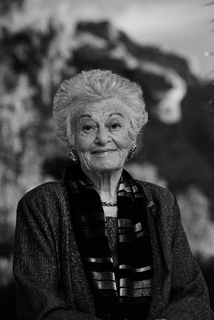
Gerda is a powerful campaigner for tolerance and human rights. Raised in Bielsko, Poland, from age 15 she suffered six years under the Nazis, first confined to the basement of her home, then in the local ghetto, followed by a series of slave labor camps. This culminated in a 350-mile forced march in the winter of 1945. Of the more than 2,000 women who began the Death March, fewer than 120 survived. She was eventually liberated by a US Army officer, Kurt Klein – himself a refugee from Germany – who later became her husband. She is the subject of One Survivor Remembers, an intensely moving HBO film that received an Academy Award for best documentary. In 2012, the film was selected by the Library of Congress to be entered into the National Film Registry. A powerful writer, her autobiography All But My Life, first published in 1957 and now in its 68th US edition, is an inspiring testament to hope, friendship and love. Gerda is still writing at age 89 and her published books span the spectrum, from a biography of a Southern philanthropist who played a key role in combating racial discrimination in the segregated South in the 1960s, to books that help children understand autism and those who are developmentally disabled.
Gerda is a charismatic public speaker who has delivered her messages across the US and much of the world – focusing not on the horrors she experienced but, rather, on the uplifting dimensions of the human spirit. An illustrative example of her humanitarian work, Gerda and her late husband were invited to help the children and families of Columbine High School, following the tragedy in that community. President Bill Clinton appointed her to the governing board of the US Holocaust Memorial Museum. In 2008 she founded Citizenship Counts, which promotes education for tolerance, engaged citizenship and service to the community. Gerda is the recipient of numerous honors: President Barack Obama awarded her the Presidential Medal of Freedom – the nation’s highest civilian honor. For more information see http://en.wikipedia.org/wiki/Gerda_Weissmann_Klein.
Gerda has always had a passion for English history – first aroused when, as a young girl, she read about her contemporary, Princess Elizabeth. Her interest was further deepened by a lifetime of immersion in the history of the monarchy and her gratitude for England’s actions during World War Two. In the 1980s she wrote The Windsor Caper in more than 60 weekly episodes as a serial in a Buffalo, New York newspaper. The story has never been published since, but remains one of her proudest achievements. Delightful, gentle and magical, it demonstrates her talents as a writer and her love for, and empathy with, children.
Author’s note
Ever since childhood I have had a love of and fascination with English history, especially as it relates to the royal family. As an adult I had the pleasure and privilege of applying my interest when I was engaged by The Buffalo News in 1977 to cover Queen Elizabeth II’s Silver Jubilee. My fascination with history and fairy tales found its culmination – literally “the jewel in the crown” – at Windsor Castle. With The Windsor Caper I hoped to capture the majesty, brilliance and magnificence of England’s many treasures and infuse them with wizardry, drama and a parade of splendid out-of-this-world beasties. I must also express my appreciation to my late, beloved husband Kurt for all the rhyming verses in the book.
In the time-honored tradition of fairy tales, princesses sleeping in enchanted castles are awoken by gallant princes into a new and different world. This story, which I typed on an old Smith Corona typewriter, slept for decades in a dust-covered box in my attic. It came to life again as a result of a visit by my distinguished, urbane British cousin. On the subject of my obsession with English history, my cousin Martin Good and my daughter Vivian Ullman, the family’s discriminating connoisseur in decorative and written art, joined forces to bring it forth into a world of computers and modern technology. In awe of what I see, I desperately wish that my beloved late husband, typesetter and editor, would see the beasties, which he so ably and colorfully rhymed, coming to life magically in print and on computer screens. To Martin and Vivian, my deepest profound gratitude and love. I want to share this educational treasure trove with my eight grandchildren Alysa, Julie, Andrew, Melissa, Lindsay, Jennifer, Jessica and Lexi, and my three young great-grandsons Elias, Jonas and Tyler, as well as with all children and all who are children at heart!
COMING TO ENGLAND
The penny introduces the adventure
The penny in the piggy bank was pleased to have gained majority approval for telling the story of his unusual adventures. Without further ado, he launched into details, allowing himself a few theatrical gestures to underscore
various points of his narrative. His resonant voice, just a little on the pompous side, came across as a mixture of benevolent uncle and great orator.
“My good friends,” he began, “you will, I hope, bear with me while I try to set the stage, so to speak, for what’s to come. That way, you will have some background and better understanding of the characters involved …”
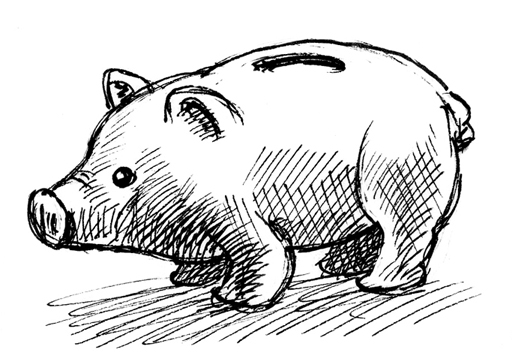
“Oh oh. He knows he’s got a captive audience,” said a voice from deep in the coin pile.
Undeterred, the penny went on, “I shall spare you the story of my early life.”
“Thank heavens for small favors,” the voice could be heard again over the narration.
“My story begins in England in the 1980s, where I was with my long-time owner, an actor at the ‘Old Vic,’ the home of a famous Shakespearean troupe that had been on tour in the United States, where he acquired me. He was very fond of an old ‘mac’ he owned … no, I don’t mean a ‘Big Mac,’ just an old, beat-up but indispensable mackintosh, as raincoats are called in England. You see, I was stuck in that raincoat pocket when my owner, while entering a theater one day, made a dramatic gesture, and that’s when I found myself dislodged and flung under a seat near an aisle. The cleaner did not find me, much to my relief. That evening, at a superb performance of the musical Cats, a pretty woman put down her purse near me.
“When the lights went on during intermission, she bent down to retrieve her bag and spotted me. I could tell right away I was among Americans when she exclaimed, ‘Look, Jim, look! I found an American penny. Isn’t that great? We’ll give it to Alysa for good luck!’
“When the couple came home later that evening, the lady put me on her dresser in a tastefully furnished bedroom. The next morning, three children burst into the room clamoring for their parents’ attention and I was convinced the lady had forgotten all about me.
“There were two girls and a boy, and I couldn’t help wondering which of the girls was Alysa. But late that afternoon my new owner took the eight-year-old to her room, reached for me and said ‘I found a penny last night, Alysa, that I think you’ll be interested in.’
“‘But Mummy, this is not a penny,’ the little girl answered with an unmistakably British accent, ‘there’s no picture of the Queen.’

“‘No, Alysa, this isn’t an English penny. It’s one of our own from home. You probably don’t remember what our coins look like, do you? You can see this one has a picture of Abraham Lincoln on it and I don’t have to tell you who he was.’
“‘No, but was he like the Queen is here?’
“‘Well, not exactly. Presidents are more like prime ministers are here – like Mrs. Thatcher.’
“It became obvious that Alysa had been away from home for quite a while and her mother filled her in on President Lincoln’s history.
“Her voice showed how proud she was to be an American and there was a touch of homesickness about the things she related. She wound up. ‘You’ve heard of pennies being lucky – well, let this be your good luck penny. You can wish on it or rub it for good luck, and anyway, it’s a reminder of home. Show it to your friends Livy and Cornelia, or anybody else in class. Just don’t lose it.’
“‘I won’t, Mummy, I won’t,’ the American girl sang out with her English lilt.
“Going to her room, Alysa sat for a moment in the broad, round window seat that looked out on a rock garden. Relaxing her tight grip, she examined me with her enormous, beautiful blue eyes.
“‘Mr. President, I’m glad you’re here; it’s an honor to have you,’ she said with conviction, then put me into a small, open box that housed some of her other treasures.
“I was in the company of a delicate gold chain, a couple of barrettes, several ribbons, a Mickey Mouse ring and a king-size Yorkie bar, which, I’m sure you don’t know, was Princess Diana’s favorite candy. She was the mother of Prince William and Prince Harry and was so popular all over the world! Now we all adore William and his gorgeous wife Kate. Oh and by the way, there was also a great big plastic button that said ‘I Love Maryland.’”
“Hear, hear,” an enthusiastic voice interrupted the narration. “Long live Maryland, my favorite state.”
The half-dollar who acted as moderator was obviously on edge about the interruption. He toppled on his back with a loud “clink” to get attention, then sternly ruled that there were to be no further interruptions, lest the story get too confusing.
The penny continued. “Pleasant as it was in Alysa’s room, I hadn’t counted on winding up as part of a collection. It was just too boring.
“Before we get any further,” said the penny, “you must understand that many things were different back in the 1980s, when all this happened. There were no cellphones, computers, smartphones, iPods, video games, Facebook, Google … there wasn’t even something called the Internet. We all had to rely on making telephone calls from fixed phones and writing letters.”
Will Julie’s dream come true?
The cat was out of the bag. Julie, curled up in her cozy bedroom in Nevada, was reading a letter from her cousin Alysa. It said that her uncle and aunt, currently staying in England, had invited her to spend at least part of her summer vacation with them.
Realizing that somehow she had to overcome her dad’s initial reaction, which had been all negative, she flung herself into a campaign of persuasion that would have done justice to a seasoned politician.
After a few days of exemplary behavior and much pleading, she thought she detected a chink in her mother’s armor. The latter had aligned herself with her husband’s position, although her arguments against the trip were never as vehement. Julie sensed an opening and used one of her mother’s admonitions to state the case in her favor.
“Mom, you always say that I’m the oldest and should have enough sense not to fight with my sister, and that I should be responsible when it comes to taking care of the baby. So, if all that’s true, then how come I’m not responsible enough to spend some time in England?”
Her mother was hard put for an answer and resorted to the old delaying tactic of “We’ll see.” But Julie knew she had scored some points. Julie’s mother was indeed wavering. That evening she approached her husband.
“You know, dear, I’ve been thinking about this thing with Julie and England. You realize how reluctant she normally is about leaving home. I’ve never seen her as enthusiastic about anything as this invitation. I think that should be encouraged. Goodness knows, she has to learn to get out into the world eventually. Quite aside from what it’ll do for family relations, think of the chance this would be to get some firsthand information and experience. The way she loves history, what could be better than a trip like this?”
“I told you, I’m against it,” her husband said simply, and she realized that his silence afterwards meant he was weighing the factors. She threw in the clincher. “You know how close those two are – Alysa will be a wonderful influence. I remember how it was for us at home when we were growing up.” The reference was to her sister, Alysa’s mother. After that, she wisely refrained from pressing the issue and her strategy paid off.
“I guess you may have a point,” her husband finally allowed, “but I can’t, for the life of me, see us putting an eight-year-old on a plane to Europe. I can’t – and I won’t do that!”
“It never occurred to me to send her alone. I’m sure we can think of some way to solve that. For one thing, there are always people going back and forth between Jim’s office here and the London branch – we could ask him about it,” Julie’s mom said. She quickly added, “And you know, Mom and Dad will be coming back from their overseas trip in July. Maybe we could time it so she can fly home with them.” She knew then that the matter was as good as settled.
It was agreed that nothing should be mentioned to Julie until somebody had actually been found to accompany her on the flight. Meanwhile, Julie was still on her best behavior. Nothing needed to be pointed out to her these days. Her room was tidy, her bed made, and she always saw to it that her younger sister’s clothes were properly hung up and no toys were strewn over the floor. She even kept the TV in the family room to a near whisper, knowing how her parents often complained about “that racket.”
Surprisingly, Melissa didn’t protest when she overheard her older sister’s continued pleas to be allowed to go to England. In fact, she wanted to know why Julie was so wild about the trip, declaring that she wouldn’t go even if she could. With that, she lifted her head imperiously, saying “I’ll go when my castle is ready. Did you know that I’m a princess? I might be a queen some day.” This evoked a lot of smiles and knowing glances between Julie and her parents, but still nothing was mentioned about Julie’s trip.
Julie had always had a fascination with royalty, ever since she had watched the TV coverage of the wedding of Prince Charles and Lady Diana.
Looking at Melissa, she had to admit that there was something about that five-year-old that commanded respect. Perhaps it was the noble tilt of her head, the wide-set eyes and the long blond hair that hung around her shoulders. She could easily imagine a coronet reposing on that head.
At that moment the phone rang and when her mother returned to the room she had a strange smile on her face. Turning to Julie, she said, “How would you feel about flying to England in June? Uncle Jim’s partner just called and said he needs a traveling companion!”
Julie heads for England
Julie was in for some startling adventures as she traveled to England to visit her uncle, aunt and cousins, who had left Arizona a year ago to live in a small town outside London.
Julie’s Uncle Jim was temporarily supervising his firm’s overseas branch office in London and had brought his whole family with him – his wife Vivian and their children, Julie’s cousins. There was Alysa, the oldest, then Andrew, who was unfortunate enough to have been born a boy, and Lindsay, the youngest. Julie was particularly eager to be back with her cousin Alysa, her senior by exactly three months. Although eight, both girls thought of themselves as nearly nine.
Julie was traveling in the company of Mark Harris, her uncle’s associate. A native of England, he had made his home in the United States for many years. Distinguished, urbane and witty, Mr. Harris was a grandfather and had a way about him that kept him young and a favorite with children. He showed a knack for whisking Julie through her potentially tearful parting from her parents and little sisters, which nonetheless left her misty-eyed.
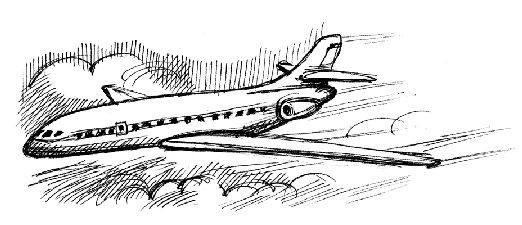
As they settled down in the huge jet, Mr. Harris said in his clipped British accent, “You know, I have a granddaughter who is also named Julie. I say, you’re not about to come down with a cold are you? That wouldn’t do, you know, when you meet your cousins and maybe the Queen.”
A smile crept onto Julie’s face. “Do you think I might get to meet the Queen, Mr. Harris?”
“Wouldn’t be at all surprised; your family lives in VirginiaWater, that’s right next to Windsor Great Park. You’ll be neighbors. Now, mind, I don’t think the Queen will dash over to borrow a cup of sugar from your aunt, or have a chat across the fence, but you might see her taking her grandson for an airing in his pram.”
“Oh, Mr. Harris, you’re really funny; the Queen doesn’t fry her grandson’s herring in Pam.”
“Julie, you misunderstood me, I think.” Mr. Harris said.
“The Queen has chefs. I can’t imagine her standing in her kitchen with the crown on, frying herring in low calorie cooking oil. Mom uses Pam because she’s always on a diet.”
“Dear, dear,” Mr. Harris was laughing now, “We certainly did get into a muddle, didn’t we? You’ll have to learn the Queen’s English.”
“Is that what you speak? It sounds funny, but I like it. It’s very nice,” Julie allowed.
“Thank you, Julie; you’ll find that in England most people speak the way I do.”
“You mean, not real English?” Julie was astounded.
“That point is debatable, but let’s get back to what I said. If I remember correctly,” and here he enunciated every word slowly and carefully, “I said that you might see the Queen giving her grandson an airing in his pram. Not herring, dear, airing. That means to take him out for a walk in the fresh air, you see. And pram is the word they use in England for baby carriage.”
“Then why don’t they say that the Queen is taking her grandson for a walk in his carriage? It would be simpler, wouldn’t it?”
“I guess you’ve got me there, Julie. But I’m afraid you’ll hear more strange expressions in England and that should be fun for you. But you do know, don’t you, that the Queen wears a crown only on very special occasions? Normally, she’s dressed more like your mother or your aunt, and not as trendy. More like your grandmother, I’d have to say.”
“Oh, I know that, I saw her at the wedding of Prince Charles and Lady Di … and …”
“Now, Julie, you were just a little girl when Prince Charles got married.”
“No, no, Mr. Harris, we have a video of the wedding at home and I’ve seen it a million times. Do you want to quiz me?”
“Should I? Maybe I should, but I might not know all the answers myself.”
That threw Julie into a tizzle of excitement and in her exuberance she was unaware that the plane had reached cruising altitude. In her mind she was already in England.
“All right, Miss Head-of-the-Class, do you know the Queen’s name and who her husband is … and what are her children’s names?”
“Of course I know – that’s easy. She’s Queen Elizabeth, her husband is Prince Philip, and their oldest son, Prince Charles, is also known as the Prince of Wales. That makes his wife, Princess Diana, Princess of Wales. Now, their children are Prince William, they call him Wills, and he’s a little older than my cousin Lindsay whom I’m going to visit. She lives real close to him, so they might even get married some day. There’s also the baby, Prince Henry, and they call him Harry. I don’t really like that name – sounds as if he is hairy.
“Anyway, to get back to the Queen’s other children: there’s Prince Andrew who married Sarah Ferguson and he’s called the Duke of New York, or something.”
“New York? You mean York, don’t you?”
“Ahm, guess so, but I don’t see why it can’t be New York – is there also an old York?”
“Julie, Julie, I think merry old England will answer a lot of your questions once you get there. But in the meantime, I have to give you high marks for what you already know.”
“Well, I know there’s also Prince Edward. I like him. I think he’s neat. And his sister is Princess Anne. She’s married to Mark Phillips and they have a boy and a girl, and also a lot of horses. She’s older than her brothers, Andrew and Edward, but she’s always mentioned last. Why is that?”
“Well, you’d have to understand the rules of succession … do you know what that is?”
“You mean her brothers are more successful, Mr. Harris?”
“No, Julie, let me try to explain it. I think you might find it fun.”
The royalty game
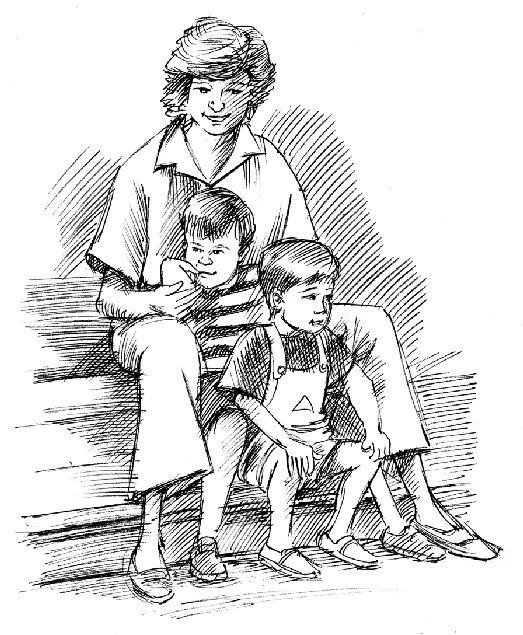
Mark Harris explained the rules that govern succession to the British throne.
“Why don’t we have a little quiz?” he suggested. “Do you know why Queen Elizabeth is Queen, but her husband is not King?”
“Well, sort of, but not quite; I would like to know,” Julie confessed.
“All right, it’s like this: the present Queen’s father was King George VI; so, obviously, there were five other kings by that name at various times in the past. Her mother, whose name is also Elizabeth, is generally known as the Queen Mother.”
“You mean, she’s not a real queen? How about when her husband was alive?”
“A good question. Now, listen carefully. At that time, she was considered the Queen Consort; that means she was the wife of a king, but not a queen in her own right. Now, her daughter, the real queen, if you like, is, as you know, Elizabeth II, because approximately 400 years ago, there was another Queen Elizabeth.
“And exactly how and why did she become queen?” Julie was still a bit puzzled.
“Because, when her father died, she was the eldest of two daughters. There were no sons, but if there had been one, even if he had been the youngest, he would have become king instead.”
“But that’s not fair!” Julie was all riled up.
“I agree with you,” Mr. Harris said, “especially because England’s queens were particularly brilliant and among the best rulers anywhere. He pressed on. “So, if Queen Elizabeth were to die tomorrow, heaven forbid, who would succeed her?”
“Prince Charles?” Julie asked hesitantly.
“Very good – and why?”
“Because he is the oldest son?”
“Excellent – you really do know a lot about it already. And his wife, Princess Diana, would be called queen. Now, let’s just assume that he died a little while later; then Queen Diana would not be a reigning queen. She would probably be known as Queen Mother also, because Prince William would become king.”
“But he’s just a little boy. Why not Prince Andrew? He’s much older.”
“That’s what is called succession. It’s always the eldest son first, remember. And if anything were to happen to King William then Prince Harry would take over. But to get back to your question, only if both William and Harry died, would Prince Andrew’s line of succession begin. Complicated?” “Well, maybe a little,” Julie allowed. There’s another thing I’ve never quite understood: what’s the difference between a castle and a palace?”
“Well, a castle is fortified, has high walls and most likely amoat around it, filled with water. All of that was designed to keep enemy troops out in the old days. Later on, when things became more civilized, they started building palaces that were not only more comfortable, but were constructed with a great deal of splendor. You’ve seen Buckingham Palace on TV. Well, that’s the royal family’s ‘town residence’ but they have several ‘country places’ including an especially interesting one – Windsor Castle.
“Oh, I’ve read about that one. I’d love to go visit it. There are all kinds of fun things in there. That’s what my Aunt Vivian wrote anyway.”
“Right you are. That’s the way to do it. You’ll learn a lot of English history that way. You know, I almost envy you, seeing all that for the very first time. You’re embarking on a wonderful voyage of discovery, Julie, and not the least of it is the language. It’s such a rich one, and it’s given us a wealth of literature, drama and poetry, which you’ll come to appreciate more fully some day.
“My advice is to keep your ears open to the music of language and let your eyes take in all that is …” Mr. Harris’s words trailed off. He was glancing at Julie and noticed that her eyes were closed, her long lashes reposing like small fans, pointing to her flushed pink cheeks and he could hear the deep, rhythmic breathing.

Hi everyone, it’s me, the penny again. There’s something you need to know, which is why I have popped up here. You see, in 2013 a new law was made in the UK which says that the succession to the throne will go to the oldest child. It doesn’t matter whether that’s a boy or a girl. A lot fairer, don’t you agree?
London gobsmacks Julie
The gray horizon outside was turning light pink, and way off below she noticed wisps of clouds. Julie was now wide awake and all smiles.