

Designed by Typeface.
First published in 2010 by The Public Interest Publishing Company Ltd (PiP).
Enquiries to World By Bike:
Fax: +64 4 473 0643
Email: margaret@worldbybike.com
Web: www.worldbybike.com
Copyright © 2010 by Jo and Gareth Morgan.
All rights reserved; no part of the contents of this book may be reproduced in any form without the permission of the publisher.
Ebook production 2010 by meBooks.
ISBN 978-09864574-3-2
As has become customary our greatest thanks go to John McCrystal who once again has written this book to totally unreasonable deadlines based upon trip diaries but got the essence bang on, and through his probing interviews made us ‘fess up to matters we would have preferred not to. We’ve always envied John’s craftsmanship in weaving the story from these expedition rides, and drawing out from the miles traversed the guts of what makes this leg of our World By Bike global traverse, unique.
The book comes with a DVD of the ride, filmed totally by Joanne whose feats at riding along single-handed while shooting film were somewhat of a marvel to the rest of us and certainly something nobody else would readily volunteer to do. Hunter Abbey has singlehandedly taken that material and re-constructed the ride on video — no easy task given the quantum of shaky footage as Jo kept her cam rolling while negotiating some of the toughest terrain we have ridden. Thank goodness for the modern marvel of anti-shake and video stabilising. Well done Hunter, a refreshing approach to logging the ride on film and we are very pleased.
To our fellow riders — Tony, Chris and Brendan — many thanks for the fun and sharing the load in organising the ride. We’ve ridden so much together now that we sort of fit together like a glove when we’re in foreign parts, our team forming a home-away-from home so valued and needed in foreign places.
Thanks also to Tony, Chris and Brendan for contributing their photos to the library we’ve compiled, only a few of which there is space in the book for. Many more though are featured on the accompanying DVD.
Back home the support crew is as solid as ever. Maintaining the website, Jaspreet and Mike did a fine job especially this time, as we kept a running daily log of whereabouts via our GPS files which had to be loaded each day. Our business partners all provided essential inputs — from Icebreaker with that fantastic merino apparel that we all just wear constantly when on the road, Bruce Bartley and his team at Spidertracker who provided the live satellite tracking of the bikes which visitors to the website could enjoy, and Crombie Lockwood for fulfilling the far from insignificant task of providing our insurances. Thanks to them and of course to Nadia, Helen and the rest of the folks at the Mike Hosking Show on ZB Breakfast; good to be riding with you again. Finally to Grant Sheehan and his team at Phantom House Books, charged with just making the book happen, our thanks are extended.
Jo and Gareth
Up the Andes Intro
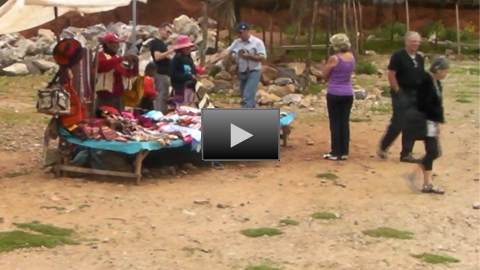
Nazca, Sacred Valley bargaining with craftspeople
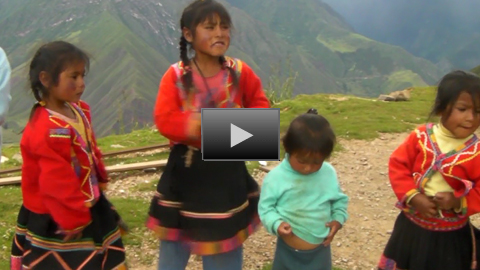
Inca kids, Inca food, Inca market day (ends going into La Paz)
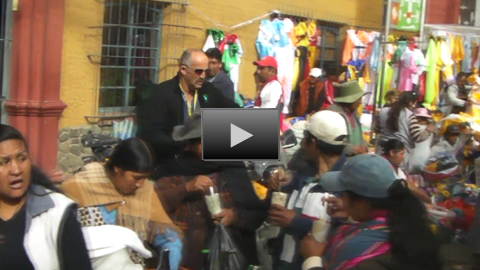
Streets of La Paz, World's Most Dangerous Road
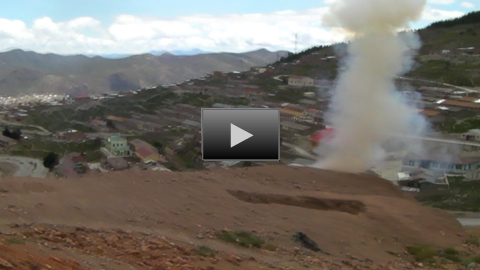
Potosi Silver Mine, Playing with dynamite
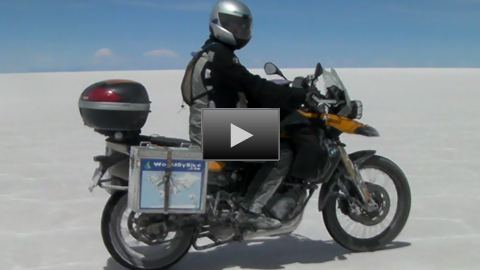
Salar de Uyuni and Fish Island
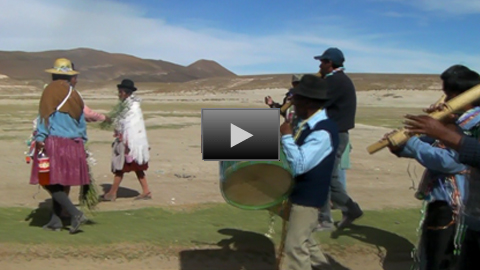
Salt Pan village of San Juan, Carnival celebrations
Involuntary dismounts on a mud Salar, Across the corner of Chile and into northern Argentina
Ruta 40, another puncture, Valley of the Moon
Jo meets Guillermo, a Colombian walking the world for peace
Switchbacks on the road across the Andes, a pickup crash
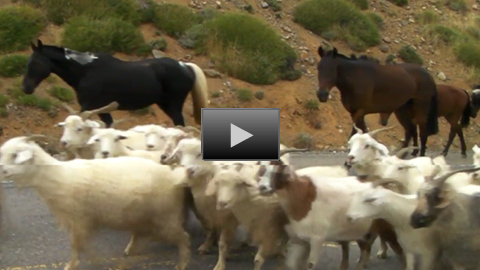
Gauchos moving stock
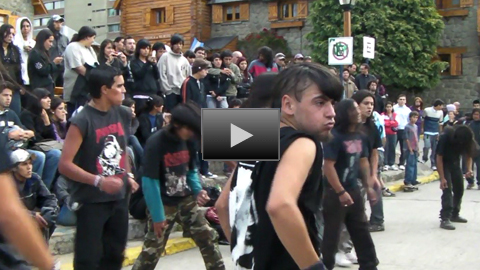
Bariloche head bangers
Carretera Austral, southern Chile
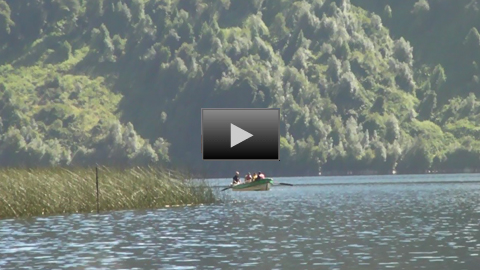
Day off in the Chilean Fjords
Breakdown Banter
Wind and Ripio of Patagonia
Perito Moreno Glacier and on to Ushuaia
Azul Motorcycle Rally, Street buskers of Buenos Aires
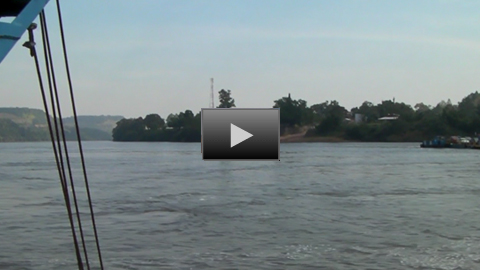
On the barge back into Argentina. A Brazilian bikers' view of Florinopolis
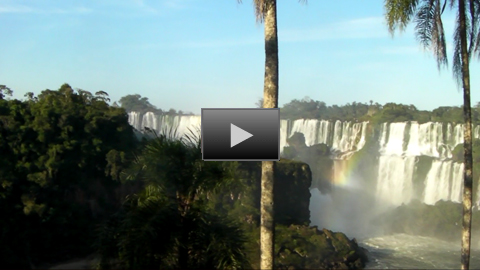
Jesuit ruins & Iguazu Falls
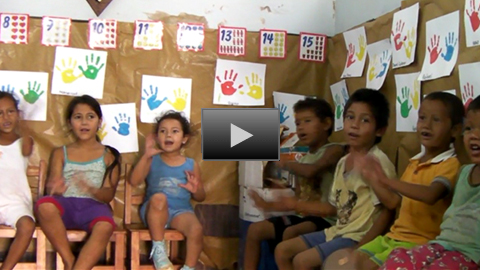
Paraguay UNICEF project in slums of Asuncion
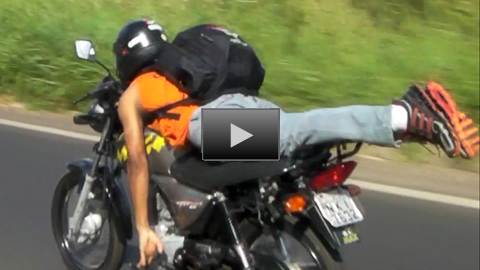
Boy on a Motorbike shows off to Jo
Finale
For blogs and more photos of their adventure, visit http://worldbybike.co.nz/latinamerica2/

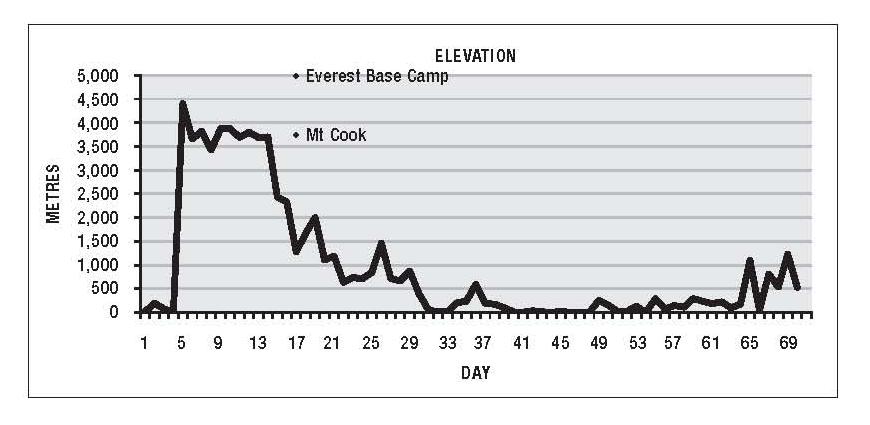
| Day | Location (Daily Destinations) | Distance (km) | Elevation (meters) |
|---|---|---|---|
1 |
Lima |
19 |
|
2 |
Chincha Alta |
212 |
198 |
3 |
Nazca |
260 |
80 |
4 |
Camaná |
288 |
8 |
5 |
Chivay |
300 |
4400 |
6 |
Juliaca |
276 |
3657 |
7 |
Cuzco |
349 |
3825 |
8 |
Puno |
420 |
3426 |
9 |
La Paz |
262 |
3876 |
10 |
La Paz (World’s Most Dangerous Road) |
274 |
3876 |
11 |
Potosi |
548 |
3693 |
12 |
Salt Hotel |
242 |
3802 |
13 |
San Juan |
172 |
3690 |
14 |
San Pedro De Atacama |
392 |
3702 |
15 |
Purmarmarca |
415 |
2435 |
16 |
Salta (after excursion to start of Ruta 40) |
308 |
2327 |
17 |
Cafayate |
318 |
1283 |
18 |
Tafí del valle |
138 |
1669 |
19 |
Chilecito |
471 |
2001 |
20 |
Villa Unión |
411 |
1110 |
21 |
San Juan |
377 |
1186 |
22 |
Mendoza |
169 |
638 |
23 |
Santiago |
383 |
740 |
24 |
Tunuyán |
398 |
712 |
25 |
Malagüe |
323 |
850 |
26 |
Las Lajas |
499 |
1460 |
27 |
San Martín |
295 |
719 |
28 |
Bariloche |
194 |
668 |
29 |
Trevelín |
369 |
877 |
30 |
La Junta |
199 |
392 |
31 |
Puerto Cisnes |
142 |
54 |
32 |
Puerto Aisén |
216 |
18 |
33 |
Puerto Ibanez |
209 |
20 |
34 |
Puerto Gaudal |
251 |
208 |
35 |
Bajo Caracoles |
233 |
240 |
36 |
El Calafate |
513 |
598 |
37 |
El Calafate (excursion to Perito Merino glacier) |
154 |
194 |
38 |
Punta Arenas |
605 |
176 |
39 |
Rio Grande |
284 |
103 |
40 |
Ushuaia |
219 |
15 |
41 |
Vista De Cerro Sombrero |
425 |
9 |
42 |
Puerto San Julián |
530 |
39 |
43 |
Comodoro Rivadavia |
432 |
18 |
44 |
Gaiman |
366 |
6 |
45 |
Puerto Pirámides |
217 |
26 |
46 |
Puerto Piramides |
154 |
8 |
47 |
Carmen de Patagones |
509 |
7 |
48 |
Coronel Pringles |
418 |
4 |
49 |
Azul |
213 |
254 |
50 |
Buenos Aires |
305 |
161 |
51 |
Colonia del Sacremento |
81 |
22 |
52 |
Risso |
157 |
28 |
53 |
Montevideo |
276 |
133 |
54 |
Jose Batlle Y Ordonez |
371 |
2 |
55 |
San Gregorio De Polanco |
162 |
293 |
56 |
Tacuarembó |
145 |
79 |
57 |
Alegrete |
340 |
148 |
58 |
Santa Rosa |
351 |
115 |
59 |
Posadas |
245 |
296 |
60 |
Ciudad del Este |
298 |
239 |
61 |
Puerto Iguazú |
61 |
190 |
62 |
Asunción |
354 |
226 |
63 |
Ciudad Del Este |
369 |
100 |
64 |
Guarapuava |
141 |
180 |
65 |
Cajati |
455 |
1100 |
66 |
Sao Pãulo |
354 |
50 |
67 |
Pôrto Ferreira |
252 |
815 |
68 |
Cristalina |
653 |
538 |
69 |
Simolândia |
403 |
1229 |
70 |
Mambai |
519 |
533 |
21,644 |
South America! Home of hyperinflation, death squads and the military strongman, land of the guerilla and generalissimo, haunt of the junta.
Think Andes — the world’s largest mountain range. Think Amazon — the world’s largest river by volume of water, and the world’s largest rainforest. Think Atacama — the driest place on earth outside Antarctica. Think Patagonia — frozen wastes, and the uttermost extremity of human habitation. Think salt flats, desert, tundra, rich pasture, rainforest, stony wasteland. Think towering, thundering waterfalls. Think glaciers. Think volcanoes, and earthquakes — a physical landscape nearly as unstable as the political.
It’s home to some of the world’s most amazing animals — llamas, alpacas, vicuñas, guanacos; condors and anacondas; snakes and tarantulas; pumas and jaguars; iguanas and caiman; capybaras, tapirs and opossums you’re allowed to like; burrowing parakeets and millions upon millions of butterflies.
Some of the earliest of the great human civilisations were South American — the Aymara, the Huari, the Chimu, the Inca, the Nazca. And today, thanks to the extraordinary series of collisions between peoples that created it, Latin America is home to some of the world’s most distinctive culture: think carnival, think samba, think tango, think macarena. OK, try not to think macarena.
Think Argentine steaks and Chilean reds, roast guinea pig and a dozen varieties of cerveza.
Some of the world’s great cities are in South America: Buenos Aires, La Paz, Santiago, São Paulo. Think contrasts between the rich and poor, the haves and have nots, the powerful, privileged elite and the oppressed, poverty-stricken masses. Think social unrest, drugs, police murders of streetkids, misery.
And linking all this together, think of the roads: Bolivia’s so-called ‘World’s Most Dangerous Road’, Argentina’s Ruta 40, Chile’s Carretera Austral, the rugged ripio of Patagonia, the cultured autopista. Think switchbacks on mountain passes and racetracks on desert straights. Think unpopulated backroads, with no other traffic. Think salt flats again.
OK. Stop drooling.

It’s hard to remember exactly when the idea came to us — we’re not getting any younger, after all… Where were we? Oh yeah, the big idea. We think it came to us in Kyrgyzstan. With our family growing up and reaching the point where they were leaving home, we were able to turn to the other love of our life (or in Gareth’s case, the other other love of his life, outside economics): expedition motorcycling. So there we were, slightly more than halfway through our epic 2005 traverse of the Silk Road, following in the footsteps of the great Venetian traveller Marco Polo. We were full of the joys of adventure motorcycling and — if it was indeed Kyrgyzstan — probably a mug of fermented mare’s milk too. The only cloud on our spiritual horizon was the depressing knowledge that this trip of trips would soon end, and that it was likely to be not only the pinnacle of our motorcycling careers but also a highlight of our lives. What could we possibly do next that would compare?
Before the Silk Road, we’d ridden extensively in New Zealand and done rides in the Indian Himalaya, Nepal and the northern Andes. Our preparations for the Silk Road entailed a shakedown trip to the Australian outback. By the end of the Silk Road, we had left the tracks of our knobbly tyres across a decent portion of the world. So why not keep going, we wondered. Why not carry on and do the World By Bike?
And that’s how the World By Bike concept was born.
So the way it’s turned out, that epic traverse of the Silk Road wasn’t the end or even the pinnacle at all. Since then, our tyres have rolled across several other parts of the globe. In 2007, it was across North America using back roads, the true motorcyclist’s aversion to dual carriageways at the fore — kicking off like Christopher Columbus in the Caribbean we headed on down to Mexico but via the Appalachians, then up the Rocky Mountains to Canada, north to Alaska and up the ‘Haul Road’ to Prudhoe Bay, back down again to Death Valley through the Pacific Northwest. We’ve had short riding sojourns in South Korea, dipped our tyres in the ice floes of Antarctica, and steered our bikes through Africa from Capetown to London. Most recently, in 2008, we’ve circumnavigated Iceland, crossed the Arctic regions of northern Europe, the Baltic States and Russia, riding back into the West through the Crimea and Eastern Europe.
Although we’d been to South America before, we couldn’t really claim to have ‘done’ the place. The 2002 ride was just a teaser; we’d joined a commercial tour designed to give us a taste of motorcycling the Andean highlands. When you look at the route of that 2002 trip on a map, it looks like we went to one of the world’s great museums and never got out of the revolving door. But we got the taste, all right. We always knew we’d be back, especially after the World By Bike project was born. This time, we would do it properly.
South America is too big, and the challenges of travel there are too great, for us to have contemplated riding the whole thing in one go. So in the best traditions of the Treaty of Torsedillas, wherein Spain and Portugal divided the olde worlde 50/50, we thought we would divide this land in two. Looking at a map of the place, and pooling our collective knowledge of the countries that comprise the continent, it seemed easy enough to divvy it up into a soft ride and a hard ride.
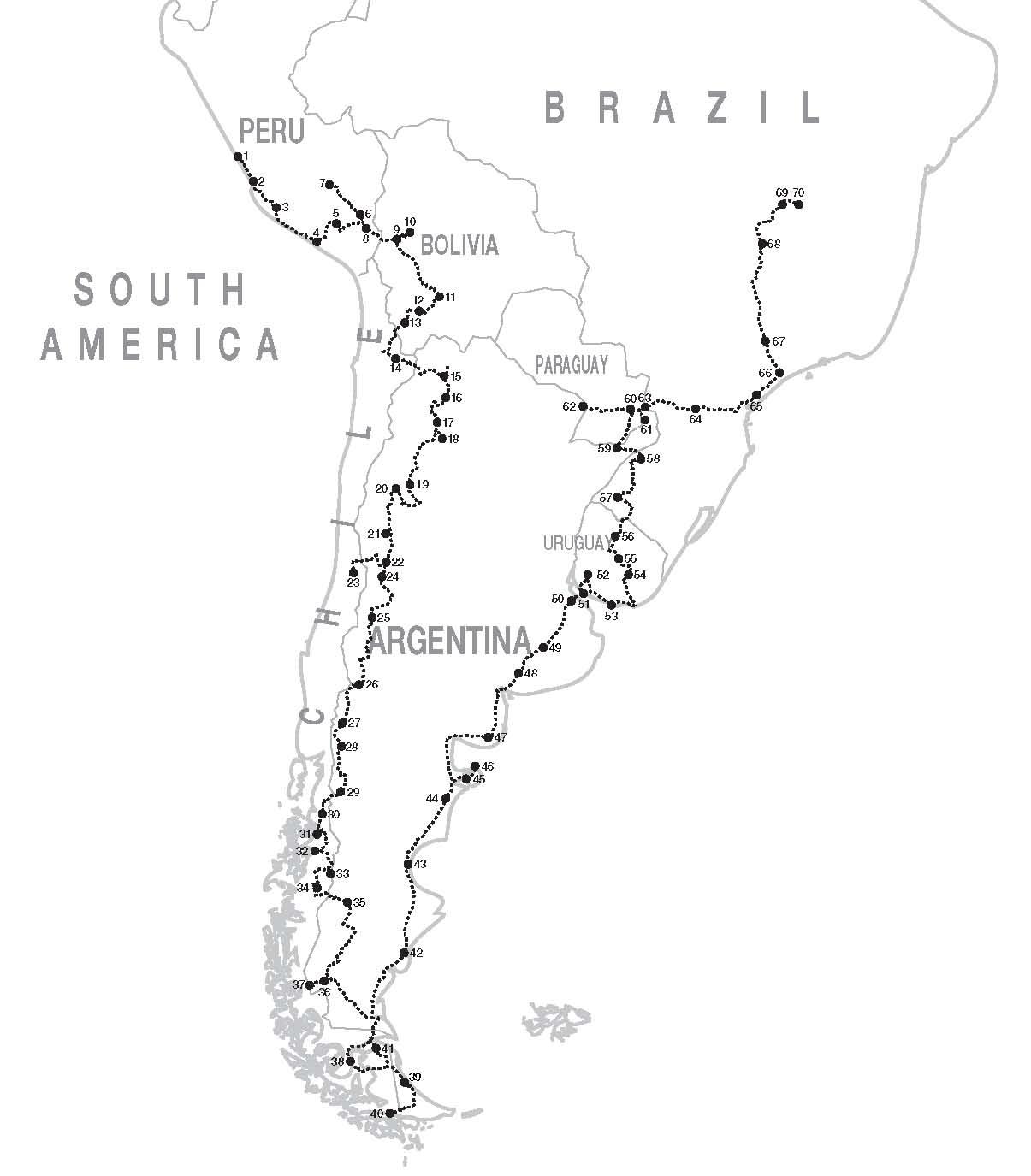
We thought we could identify a nice, genteel, civilised route that would take us from São Paulo in Brazil down to land’s end at Tierra del Fuego, and then back up the backbone of the continent — following, crossing and re-crossing the great Andes range of mountains — all the way up to Bogotá in Colombia. ‘Nice’, ‘genteel’ and ‘civilised’ are relative terms: we’d seen the roads across the Altiplano of Bolivia and Peru and knew how tough they were. Some of the others on our proposed route were reputed to be rougher still, especially the section that crossed the windswept wastes of Patagonia, but we knew they could be managed, with the appropriate equipment and level of preparation. Following this route would stitch together Colombia, Ecuador, Peru, Bolivia, Argentina, Uruguay, Paraguay and a bit of Brazil. It sounded great.
The other half, the rugged leg, would traverse the Amazonian basin taking in the tropical rainforests of Brazil, the Guyanas and Venezuela and on to Colombia and then up to Central America. That one would keep.
But as we looked into the logistics, it seemed too hard. Brazil is a bureaucratic nightmare, and since it would be the centrepiece of the second trip, we could afford to avoid it this time round, anyway. We tried to organise shipping of our bikes into São Paulo: Brazilian bureaucracy soon put an end to that idea; for them everything seems too much trouble. And there were just too many countries involved anyway: better to cut down the number, reduce the hassles of visas and permissions for the bikes, and put off until tomorrow what we could avoid doing today. As for shipping bikes out of Colombia — everyone became jumpy that every cavity on the bikes would be stuffed with marching powder. We dropped Colombia, and Ecuador, too, for much the same reasons. For a while, we thought it would be great to get out to the Galapagos Islands, but that ended up being too hard.
A couple of iterations later, it seemed to make sense to reverse the trip, starting in Peru and heading for São Paulo via Tierra del Fuego. Then we decided that even shipping bikes out of Brazil would be sheer bureaucratic hassle too, so we said stuff Brazil, let’s just ride them back to Santiago and ship out from there. Once more Up the Andes would be fun, anyway.
In the end, we criss-crossed the Andes so many times — some planned, some impulsive and others forced by dramatic things like earthquakes — that Up the Andes became the name of the ride.
Previously, we’ve done our motorcycle expeditions with a team. Six riders is about the ideal size in rough country: choose your team members carefully, and you can take a wide range of skills with you on the road, and you can share the burden of the organisation and the on-road decision-making. On our previous trips, we’ve been blessed with the teams we’ve selected, due in no small part to the fact that on just about every substantial trip we’ve done, we’ve has the pleasure of Dave Wallace’s company. He was to the World By Bike organisers what Dan Carter is to the All Black selectors: top of the list. He’s competent, resourceful and completely selfless, and just happens to be a top bloke, too. But Dave bought a business in 2008 and has followed a reverse of the arc of every other biker his age: as his golden years loom, he’s becoming more rather than less tied to the desk, and increasingly unavailable to mind Joanne when she heads off-piste in foreign climes. We missed him on our Northern Lights tour of the frozen north, and no amount of persuasion seemed likely to get him to South America, either.
Others were non-committal, too, for a time. After all, we thought we would be away for three months, maybe four, and that’s a long time to spend away from work and families. Nor would it be cheap. So while there was plenty of interest from people we don’t know but who were eager for us to hitch our wagon to their star regardless, none of our regular riding buddies were rushing to sign up. For a large part of the planning stages, when we looked at each other over the breakfast table, we were looking at the team.
But then Brendan Keogh decided he would come for half the journey, which was all the time he could afford away from work. After Dave, Brendan’s the most experienced World By Biker, having done three previous trips — the Silk Road, Korea and Africa. He’s a top enduro and cross-country rider, and owns a motorcycle shop — Wellington’s Motorad, a large bike retailer and repair shop in our home town. His skillset is of obvious value, and the fact we keep inviting him back a sure indication we can get along, too.
Another old hand, Tony Armstrong, soon decided to come as well. Tony first joined us on our tour of Africa, and liked the whole thing enough to come along on our Northern Lights trip, too. He runs a power consulting company, and what he doesn’t know about electricity generation and pylons and things isn’t worth knowing. He’s a solid rider, and great company. He’ll make sure we don’t miss the finer details of the hydro schemes we’re passing.
When Tony joined up, his mate Chris decided he would tag along, too. Chris is a bike nut, a natural mechanic with a big collection of classic bikes. He’s done a fair bit of offshore riding, too and he joined us for some of the Northern Lights tour. Chris would greatly enhance the mechanical know-how of the team, he’d bring his workshop if he was allowed to, and if anyone needed a teddy to cuddle, he could probably help out there, too: he runs a company designing, importing and distributing soft toys. ‘Toy Boy’ was up for this.
Part of the attraction for Tony, Chris and Brendan was that their families could join them for part of the trip, too. They would take a minibus and a guide along the same route. There was some discussion as to when this should happen — whether it should be the early part of the trip, when we were in Peru and Bolivia, or whether it should be at Tierra del Fuego in the middle. Thinking it through, we thought it was probably best if they were with us for that part of the trip mostly densely populated with tourist hotspots, so that ruled out the minibus having to do day after day of unvariegated traverse across Argentina’s Patagonia. Top candidate was a circuit through Peru, Bolivia and northern Chile which, we assured them, would include the most interesting parts of the trip.
So it was decided we’d start off in tandem with the van, and they’d be with us until we prepared to enter Argentina.
Brendan’s wife Caroline and daughter Lucy were coming; so too were Tony’s wife Robyn and Chris’s wife, Tess. Since we were going to have a minivan which might, after the loved ones and other baggage were stowed, have capacity, Jo mentioned the trip to her older sister Patricia as something she might like to do. Patricia’s in her seventies, but looks and acts younger (runs in the family). She has been a great traveller, and it was no real surprise when she said yes.
To work out the details of the route, we sat down as normal with a map of the continent and a few guide books to establish what the best places to visit were, and then tried to tweak the itinerary to fit as much as possible into the time available, without committing us to covering stupid distances on bad surfaces and allowing for a bit of R&R along the way. Each place has obvious attractions: Peru (Cusco, Machu Picchu, Lake Tititicaca, Nazca), Bolivia (the World’s Most Dangerous Road, the Salar de Uyuni, Potosí, Sucre), Chile (the high Andes, the Carratera Austral, assorted fjords), Argentina (Ushuaia, glaciers, Mar del Plata), Uruguay (Montevideo), Paraguay (Iguazu Falls, Jesuit mission ruins). You just try to do what you can.
We then circulated the draft to the other members of the team, and they came back with their own preferences and wishlist: ‘There’s a hydro scheme where, Tony?’ We’d then adjust where we could to try to please everyone as far as possible. Eventually, everyone was happy.
Meanwhile, we were furiously gathering intelligence on the roads and challenges along the way. Bikers are great bloggers, and so the internet is a goldmine of useful information and helpful tips. We read guidebooks by the wheelbarrowload, and whenever we heard of someone whose brain we could pick, we invited them round for coffee or dinner. We had one couple around, Angie and Silas, who had done the Patagonia stretch on bicycles, and they told us that as the land heated up, winds of up to 150km/h would sweep down off the cordillera. That was a normal day during summer: they had had days where it took them nine hours to do 12kms (where they would normally expect to cover 150km on unpaved roads in that time). And there was nowhere to hide, apparently: they couldn’t even stand their bikes up at times, let alone ride them.
That convinced us that leaving Patagonia as late as possible, until the difference between temperatures in the high and lowlands was not so great, was wise. We also had Klaus and Anna — a German couple we’d met riding a BMW two-up across the Sudan — around to stay. They’d just done a similar ride, and they were able to give us plenty of tips and advice on ‘must-dos’ and ‘don’t misses’.
And of course, anyone thinking of South America and motorcycles usually thinks Che Guevara’s motorcycle diaries. As a 23-year-old med student, the future Cuban revolutionary Ernesto ‘Che’ Guevara embarked on a couple of big road trips with a mate, Alberto Granada, riding two-up on a 500cc Norton single. Man, that must have been loud! They rode first around Che’s native Argentina, and then around much of the rest of the continent, and according to the book he published on the experience, it was the sights he saw along the way that convinced him something had to change and set him on the path to becoming a revolutionary. Gareth read it a couple of times. He noted that the pair fell off nine times in one morning, just before they reached Bariloche in Patagonia on Argentina’s iconic Ruta 40.
Bariloche was on our itinerary.
There was plenty of debate about gear. Most important, of course, on any adventure motorcycling trip is the bikes. Our first choice would probably have been the BMW 650 Dakar that we’d used to tackle the Silk Road and Africa, but BMW have stopped making it. They made a larger equivalent, the F800GS, but we didn’t really want to step up to anything bigger for these rides. We’ve seen so many macho suckers on big bikes standing by their machines in the back of beyond reduced to tears because they had put ego ahead of intelligence. When we were in Austria for our Northern Lights trip, we visited the KTM organisation to see whether we could persuade them to make an expedition bike — one that has a strong subframe for the gear, but that isn’t too big and heavy (which rules their 990 Adventure out). They told us they sympathised, but that they had made a policy decision to concentrate on road bikes, where there are far bigger margins to be made.
So we came back to the Beamer. The 800GS is a parallel twin, a new type of engine for us, but it’s made by Rotax who made the 650 single on the Dakar. Those engines never failed us. The bonus of going for the 800 is that it has a higher power-to-weight ratio than the 650, so it looked like the front-runner. We looked around at others — Honda Africa Twins and Transalps, Yamaha Ténérés, all better value for money, but we wanted maximum reliability.
Brendan decided he would take his Aprilia Pegaso 650. It’s generally not ideal in a team situation to take different bikes, as then you have to carry spares for both; but since Brendan was only doing half the ride and had vowed to sort his own contingencies out, we didn’t feel we could lay down the law.
The decision made, Gareth bought and rode his 800GS for a year in New Zealand before we left for the trip. He didn’t experience any problems, but nor did he attempt a proper shakedown ride. More significantly, Tony and Chris did an offroad spin with theirs shortly after taking delivery: they’re both KTM Adventurers, and the fact they came back smiling counted for plenty — especially Chris, with his vast knowledge of bikes and hard-coded distaste for BMW.
Disputes over what other gear to take were few. Tony and Brendan flat out refused to take camping gear, for example, saying they would simply keep riding until they found a hotel. That’s all very well, but it does weaken team cohesion somewhat: it introduces two philosophies. Jo thought it was unwise not to go prepared to camp: what happens if someone has an ‘off in the wilds and can’t immediately be evacuated? Obviously we all wanted Icebreaker gear — that merino clothing having proved itself time and time again through deserts and mountain passes, and there were plenty of individual preferences expressed in loading bikes — Jo loves her water filters, Tony and Chris their iPhones, Brendan his soft luggage and Gareth his satellite gear.
Gareth pored over a Learn to Speak Españoltext for a while, before throwing it away and surrendering to Jo’s superior linguistic bent. Tony and Chris got Spanish translator apps loaded to their iPhones. And we brushed up on our first aid skills and made sure meds were up to date. Gareth found he was behind on his rabies, which may have accounted for some of his pronouncements on the financial sector in the months leading up to our departure.
And of course, there was all the bureaucracy to sort out. Quite apart from all the border crossing permissions necessary for ourselves — and we would be making dozens of these on this trip, perhaps even multiple crossings in a single day — there were the bikes and gear to consider. Unfortunately for motorcycling travellers, the act of taking a bike and all its luggage across an international border is considered to be a form of export/import activity, and must be documented as such — presumably so that you don’t flog your BMW at a cut rate as soon as you cross the border. The bike’s equivalent of a passport is called a carnet, a yellow book, and as we’d all acquired considerable carnet knowledge on our previous trips, we’d all come to loathe them with a passion. The level of complication they introduce is infuriating: they’re as close as it’s possible to get to the diametric opposite to the feeling of wind in your hair.
Brendan didn’t want to take a carnet at all. He had heard it was possible — and a hell of a lot easier — to get by without one. But we insisted. We weren’t going to risk the whole group being held up because of a difference of opinion on team policy to border formalities. But as a compromise, we promised Brendan that carnets would only be produced as a matter of last resort — something we had long ago learned was prudent anyway.
With the itinerary sorted, shipping arranged — Chris, our resident import/export expert, heroically stepped up to take that job on, and he also tackled the phenomenally difficult job of making arrangements for the spousal van that more or less matched the bikes’ itinerary. The decisions about gear taken, all that was really left was for Gareth to find a rationale for the whole exercise. Part of the thing about the World By Bike concept is that for him to really enjoy himself, there has to be a cohering thread pulling the places we’re travelling together and linking the trip to our previous travels.
The Silk Road had been inspired by a desire to follow in the footsteps of Marco Polo as he sought a trade route from Venice to the fabled lands of the East. And our Backblocks American trip began in the Caribbean, where Christopher Columbus first arrived in 1492, seeking an alternative, sea route to ‘the Indies’ that Marco Polo had opened up with his traverse of the Silk Road. When he made landfall on a little Caribbean island on that voyage, Columbus sincerely believed he had reached an archipelago in the region of China or Japan.
In the immediate aftermath of Columbus’s voyages of discovery, Spain and Portugal became intensely excited at the prospect of discovering trading partners in the newly discovered region. There was a fair bit of squabbling over whose these rightfully were, until the Pope intervened and got everyone to sit down and talk it over nicely. The result was the Treaty of Tordesillas of 1494, which divided the world (or that half of it, anyway) in two, Morgan-style, between the two powers, along a line described as 370 leagues west of the Cape Verde Islands (no other method of determining longitude being available in those days). That line passes roughly through Brazil a little to the east of Brasilia: everything to the east belonged to Portugal; everything to the west to Spain. Of course, the Portuguese didn’t know about South America at that point. It was a little over ten years later, after Amerigo Vespucci had sailed down a little of the coast of Brazil and guessed that what he was seeing was a completely new land, that ‘America’ first appeared on a European map.
Meanwhile, new lands had been discovered to the east of China, and they were rich in new commodities (especially, believe it or not, cloves) that Europeans craved. The race was suddenly on between the two powers to explore and claim the western Pacific. It was on a voyage to find a sea route to the new ocean — indeed, to prove that the new ocean existed — that Ferdinand Magellan and his fleet set sail in 1519. He made contact with South America and sailed down to its tip, where he successfully navigated through the strait between the continent and the island of Tierra del Fuego that bears his name on November 1, 1520. Magellan then successfully crossed the Pacific, only to meet a sticky end when he tried to intervene in local politics in the Philippines — he wasn’t the last to make that mistake! Only one of his five ships, the Victory, managed to get back to Portugal, but in doing so, it completed the first circumnavigation of the globe.
It also ushered in the modern history of South America, with the progressive conquest, settlement and brutal exploitation by Spain and later Portugal in the sixteenth century. But it was that link with Marco that did it for Gareth. When we reached Tierra del Fuego — assuming we got there — we’d be fitting another piece in the jigsaw of the grand narrative of the European conquest of the world.
Ahhhh, he thought. Trade and economics: what can’t they do?
Come late January 2010, and you can’t see our bedroom for gear scattered around the pitifully small containers it’s all expected to fit in. Everything’s booked: hotel in Santiago where we’ll spend a transit night; air tickets Auckland-Santiago; air tickets Wellington-Auckland; taxi from our home to Wellington Airport. We’ve said our farewells to our kids and grandkids, who responded in a fairly offhand kind of way: they’re used to all this nonsense, now. Jo wished Ruby well for her graduation, which will happen while we’re away, and she made Jessi promise to stick to the due date for the baby she’s expecting in late May.
The bikes are even now, we hope, sitting in their container on the wharf in Lima, Peru.
There doesn’t seem to be anything else to do but pack. The adventure is about to continue.
Up the Andes Intro