“You told me to trust the process and ‘it’ would happen. Boy, were you right! Today, there’s a different feel at QVC. The QVC Difference is making a difference in who we are as a company and what we are able to achieve. It’s helping us every day in how we do things.”
Doug Briggs,
Former CEO, QVC, Inc.
‘‘In order to be a true global competitor, we realized it was critical to shift aspects of our culture. Senn-Delaney Leadership was invaluable in the development and implementation of this transformation process.’’
Ivan Seidenberg
Chairman and CEO, Verizon
“Your processes to bring the team together to create solid working relationships is the most effective I have encountered. They have not only helped us to focus on issues at work, but have added benefit in our personal lives outside the workplace. They provided the leadership necessary to address the competition, which we are reminded is outside—not inside—TVA.”
Craven Crowell
Former Chairman, Tennessee Valley Authority (TVA)
“When I became chairman and CEO at Tenneco Automotive, I recognized that creating a high-performance organization would be critical to achieving long-term success. The Senn-Delaney processes have been invaluable in helping me make that happen.”
Mark Frissora
Former Chairman, President and CEO, Tenneco
“When I came in as the new CEO of Nationwide, I knew we needed to shift some elements in the existing corporate culture. Senn-Delaney Leadership has been our guide and coach on that journey. Their processes, outlined in this book, have been instrumental to these changes. They have helped me create a great team at the top and helped create the culture which has supported improved bottom-line results.”
Jerry Jurgensen
Former Chairman and CEO, Nationwide
“The concepts in the book are proving to be of great benefit to me as a leader in building a great team and a healthy, high-performance culture.”
Larry Glasscock
Former Chairman, President and CEO, WellPoint, Inc.
“The Senn-Delaney Leadership processes and concepts were invaluable. They brought out the best in people and improved customer service, sales and bottom-line results.”
David Novak
Chairman, President and CEO, Yum! Brands, Inc.
“We were able to enhance our effectiveness as individual leaders and in so doing become a more effective senior leadership team. Senn Delaney Leadership aided us in better aligning around our vision, mission and values.”
Stein Kruse
President and CEO, Holland America Line, Inc.
Winning Cultures
Foreword by Warren Bennis
Second Edition
Copyright © 2006-2010 by Senn-Delaney Leadership Consulting Group. LLC.
All Rights Reserved.
No part of this book may be reproduced in any form without permission in writing from the publishers.

Library of Congress Control Number: 2006925063
Senn. Larry Hart, Jim
Winning Teams, Winning Cultures
Includes index and sources.
1. Corporate Culture. 2. Culture Change. 3. Culture Clash.
4. Change Initiative. 5. Change Management. 6. High-performance
Culture, Team. 6. Teambuilding. I. Senn, Larry E. II. Hart, Jim
III. Title. IV. Title: Winning Teams, Winning Cultures
ISBN 978-0-57807-162-6 (paperback)
Second edition, November 2010
Printed in Canada November 2012
Printing number
5 6 7 8 9 0 1 2 3 4
Copies of Winning Teams, Winning Cultures are available at special discounts for bulk purchases by corporations, institutions and other organizations.
For more information, please call, fax or write to:
Senn Delancy
7755 Center Avenue, Suite 900
Huntington Beach, CA 92647
(800) 788-3380 Phone
(562) 426-5174 Fax

Foreword
by
Warren Bennis
Today, most books and articles written on organizational change acknowledge the power of culture. We often see cultural issues at the heart of merger clashes, strategy failures or change initiatives. Unfortunately, culture is much like the weather—everyone talks about it with the assumption that nothing can be done about it. We thrive when the sun shines and take cover when winter winds blow. Fortunately, organizational culture is not quite so capricious. We are capable of charting a course through rain, sleet, snow and fair weather if we can maintain our sense of direction, understanding the values and behaviors that lie at the core of our organizations. Winning Teams–Winning Cultures provides an excellent guidance system for navigating these evolving cultural landscapes. The book’s ideas, tools and techniques can turn any team you lead or any culture you are a part of, large or small, into one that is healthy and high-performing.
In today’s complex workplace, a leader’s success is directly related to the effectiveness of his teams. These teams make up the culture of the organization, and their health is a reflection of that culture’s health. To realize the high-performance results we are after, we have to understand the power of these essential and healthy collaborations.
In Co-Leaders, a book I co-authored with David Heenan, we make the point that the genius of our age is truly collaborative. Because of the complexity of the issues we face, we need teams of leaders working toward a common purpose. We no longer live in a world in which individual stars can carry the day on their own. To truly succeed, we need high-performance teams and winning cultures. Winning Teams–Winning Cultures provides insight into the role corporate culture plays in all change initiatives. It offers practical ideas that can be successfully implemented and will allow you, your team and your organization to produce better results while, at the same time, supplying the personal fulfillment necessary for cultures to prosper.
My colleagues and I at the University of Southern California Marshall School of Business have been immersed in the study of leadership for many years. During that same period the authors and their teammates at Senn Delaney have been working with and studying the impact of culture on organizational effectiveness. Long before the word “culture” appeared in a business journal, Larry Senn became intrigued with the personality of organizations. It was 35 years ago as a doctoral student here at USC that he completed the first systematic study of corporate culture and its impact on the results of organizations. Over the past 25 years, he and his organization have worked on the cultural aspects of mergers and acquisitions, on shifting cultures for deregulation, on privatization in Europe, and on the fast-paced Silicon Valley cultures. No one has had more experience in identifying the secret of a winning culture than the authors of this book.
Warren Bennis
Warren Bennis is the founding chairman of the Leadership Institute, University of Southern California; a distinguished professor of business administration at the University of Southern California; author of dozens of books including the classic best seller Leaders; and consultant to hundreds of CEO’s and four U.S. Presidents.
If you are a professional, then chances are you have an interest in the areas of leadership effectiveness, team effectiveness, and/or overall organizational culture. This book shares “a view from the field.” It was written to capture many of the lessons Senn Delaney has learned—after decades of work with hundreds of companies and thousands of leaders—about what is different in healthy, high-performance individuals, winning teams and winning cultures.
This book helps explain why two companies in the same industry, with similar strategies, equipment and pricing, (like Southwest Airlines and Delta’s Song) achieve such different results. Or why a team made up of highly competent, knowledgeable and committed leaders can still be ineffective. Or why one leader can rise to the top of an organization, when another who is just as intelligent, well-educated and ambitious, is stalled many levels down.
We chose the title Winning Teams–Winning Cultures because we have found that organizations with long-term success have winning cultures—and those cultures are made up of leaders and teams with a definable set of winning behaviors. The three levels—the individual, the team and the culture—are interconnected. Our purpose in writing this book is to provide you with valuable knowledge at all three levels.
The ideas we cover in the following chapters can help you personally, not only with leadership effectiveness, but with overall life effectiveness. We explain how to:
▪ Create greater results with less time and effort
▪ Achieve more success with less stress
▪ Be an effective team leader and change agent
▪ Shape the “culture” of the team, unit or organization you lead
▪ Have more fulfilling relationships at work and at home
▪ Enjoy an even higher quality of life
Most of our time at work, and at home for that matter, is spent as part of a group of people—a team. One theme we focus on in this book is winning teams. You are probably a part of multiple teams: the team you lead, as well as all the teams to which you belong. And at some point in your life you have likely been a part of a team that really gelled. There were definable qualities that existed on that healthy, winning team. Chapter 4 talks about eight characteristics of a high-performance team. Those ideas can help you better contribute to a healthy, high-performing team of your own.
“Every organization has a definable culture; the only question is, does it shape you or do you shape it?”
Creating a winning organizational culture should be one of the highest priorities of any leader who wants long-term business success and an engaged, fulfilled workforce. That’s why the third theme, building a winning culture, is the ultimate goal of this book as well as the vision and mission of Senn Delaney: to enhance the spirit and performance of organizations by creating healthy, high-performance cultures.
The three levels of culture shaping—the individual, the team and the organization—are interconnected. You really can’t change a culture without shifting the behaviors of individuals in that culture, and winning cultures are made up of collaborative, high-performance teams across the organization.
There are moments when all individuals and teams are at their best and at the top of their game. This is akin to an athlete or a sports team when they are “in the zone.” The difference is that being at your best is accessible to you much more often than those rare moments when an athlete is “in the zone.” When we are at our best, we are accountable, collaborative, resourceful, optimistic, creative, agile and effective. We are less stressed, less worried, achieve greater results and get more fulfillment in life. We also are more likely to be connected to a higher goal such as making a difference or serving others, rather than being self-absorbed.
We believe that the qualities we have when we are at our best are part of our natural state of being. “Innate health” is contained within all of us, as are the resulting “default” life-effectiveness values. Unfortunately, over time we develop habits and thought systems, including win/lose beliefs, that override our natural state of healthy high-performance behaviors.
Senn Delaney’s work with individuals, teams and cultures is designed to re-anchor people more firmly to the best of who they already are. Rather than teaching dozens of techniques, our goal—in this book and in the work we do—is to connect you, your team and your organization to your innate values while providing pointers on how to stay at your best more of the time.
In Chapter 2 we offer a series of useful pointers for living life at your best. Chapter 4 describes the characteristics of a winning team, while Chapter 5 outlines a proven change model to help shape the culture of your organization or business unit.
The ideas in this book were developed practically, not theoretically, from more than 40 years of hands-on work with organizations.
It all began in the early 1960s when Larry Senn accepted a teaching fellowship in the doctoral program of the University of Southern California’s graduate school of business. At the same time, Larry joined his former industrial engineering professor from the University of California, Los Angeles, to help him with an overflow of outside consulting assignments. As the work grew, the professor needed more help and Jim Delaney, another of the professor’s former students, joined them. After a few years, Senn and Delaney founded an operational consulting firm to improve the performance of organizations.
They quickly discovered three things:
1. It was easier to develop a plan for change than to get the people to change.
2. Every organization has a distinct and definable personality—and many were like dysfunctional families.
3. Characteristics in the invisible, or behavioral, side of the organization largely determined whether change initiatives succeeded or failed.
Larry labeled this phenomenon organizational character (a prelude to organizational culture). His conclusion was that the change initiatives they were asked to implement would not be consistently successful unless a way was found to overcome dysfunctional organizational habits and create the high-performance behavior to support the changes.
This realization led Larry to select corporate culture as the topic of his doctoral dissertation1, referred to in the foreword by Warren Bennis. The study focused on six clients in the same industry: three were quite successful and three were struggling, with one on the verge of going out of business. The purpose was to identify the characteristics that existed in the teams and organizations that were successful, compared to the habits in the organizations that ultimately failed.
That work began to reveal the success factors we now call the Essential Value Set (see Chapter 8), which includes qualities like personal accountability vs. blaming, teamwork vs. protecting turf, trust vs. assumed motives, and openness vs. resistance to change.
In many ways the outcome of the study, completed in 1970, was a precursor to Tom Peters’ In Search of Excellence2, which was published more than a decade later.
Since cultural change requires behavioral change in both leaders and teams, Senn devoted much of the 1970s to developing more powerful learning models and processes to change habits of leaders. These processes formed a methodology to shape the behaviors of teams, which was then piloted and used as a front-end intervention to change initiatives being implemented by the Senn-Delaney operational improvement firm.
The success in supporting large-scale change initiatives led Senn to form a new and different kind of consulting company, Senn Delaney, in 1978. It was the first and only consulting firm with a specific and singular mission: to shape the overall cultures of organizations to better support business results. Delaney remained with the original process-improvement firm, which was eventually sold to one of the “Big 6” accounting firms, and Senn focused his efforts on building Senn Delaney as a culture-shaping firm.
Senn Delaney has worked with hundreds of organizations and thousands of teams around the world for more than 25 years. This work has included transforming cultures in the rapidly changing telecommunications industry, privatizing firms in Europe, creating service cultures for retailers, dealing with the cultural aspects of mergers and acquisitions, and assisting dozens of CEOs in fostering the necessary behaviors in their senior teams and organizational cultures to drive their strategies and implement major initiatives.
While many people have contributed to the model and ideas expressed within these pages, two of the principal contributors are the co-authors of this book: Larry Senn, who pioneered the process and created the core change methodology, and Jim Hart, the current CEO of Senn Delaney, who helped enhance the latest model for culture shaping. Another early contributor was John Childress, a previous Senn Delaney CEO and co-author of a forerunner of this book, The Secret of a Winning Culture3.
Whether you are a leader of a team, department, division or a Global 1000 firm, or a Human Resources professional tasked with developing leaders, teams or cultures, the principles and processes outlined here can help you and your team create the behaviors needed to better support your goals for long-term success.
Throughout this book, Larry Senn and Jim Hart will provide personal examples of various concepts, written in first person. We will note this by prefacing the text with their first names (i.e., “Larry:” or “Jim:”).
If you are not sure why culture is important, just consider these questions:
▪ What is it that makes implementing any change harder?
▪ What is the biggest contributor to lack of full employee engagement?
▪ Why do major systems installations cost more, take longer and deliver less than expected?
▪ What is the number one reason customers aren’t treated well?
▪ Why don’t reorganizations solve turf issues?
▪ What is the main reason for the failure of mergers and acquisitions?
Answer: It’s the culture.
Anyone who has ever tried to implement change quickly learns that the shortfall in results is rarely due to purely technical or operational issues. It is almost always the result of human issues.
That was our experience when Senn-Delaney originally started out as a process improvement firm. When implementation felt like pulling a car with flat tires up a hill, it was because of dysfunctional organizational habits. In contrast, when results came faster and easier, healthy high-performance behaviors were alive in the culture.
This discovery seemed to have a direct parallel to life itself. Most of the reasons people fail in jobs and come up short in their careers are due to personality and behavioral issues, not job knowledge or technical competence.
As we worked to improve the performance of clients, we soon learned another important lesson:
People and organizations are creatures of habit, and changing habits is much harder than changing structures or systems. It seemed to us that teams and organizations, like people, had personalities; and to ignore or not deal with an organization’s personality traits could be fatal to our change efforts.
We call this phenomenon the jaws of culture because cultural habits, such as resistance to change and turf issues, chew up the improvement process and reduce or eliminate the results (Figure 1.1).
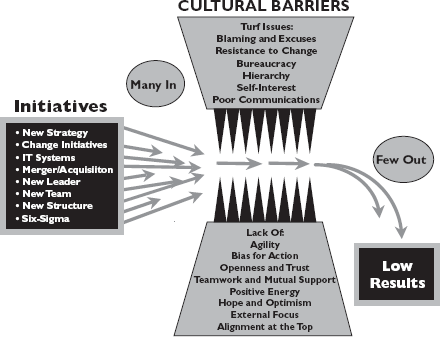
Figure 1.1 © 2006 Senn-Delaney Leadership Consulting Group, LLC.
“Corporate culture—those hard to change values that spell success and failure.”
—Business Week4
We believe that the “jaws” are the reason that most initiatives and strategies fall short of their potential. Well-intentioned but dysfunctional habits in your culture or team can literally stop your change effort dead in its tracks.
As we witnessed change efforts falter time after time, we began to say to one another privately, and with some amusement, “It’s the culture, dummy!”
The jaws of culture destroy change initiatives in a variety of ways. The following classic examples, as related to us by senior executives, are all too familiar:
“The numbers showed the merger/acquisition would really pay off, but we’re losing some of the best talent in the acquired firm, we’ve lost some key customers, and we are running into more conflict than we expected. It’s a real clash of cultures.”
“The restructure was supposed to break down the barriers between divisions and create a more collaborative organization. Instead, we just created new turf issues. It must be in the genes.”
“The latest strategy sounded great, but we haven’t been able to execute it with our slow-moving, risk-averse, bureaucratic culture.”
“The new I.T. system should have been up and running last quarter, saving us time and money. There is a lot of finger-pointing going on now because it’s behind schedule and won’t deliver all we thought it would.”
“The analysis showed we would see dramatic savings through process improvement, but so far we haven’t had many savings. Where are all the results? And why is everyone so upset?”
“We just completed another record quarter, and I should be feeling great. The fact is I’m not. I’m paying too big a price personally trying to make things happen in this culture and I don’t know if it’s worth it to stay in this game.”
Change initiatives fail more often than they succeed. In one survey cited in Harvard Business Review, 75 percent of managers polled were unhappy with change initiatives underway.5 Most people don’t need a lot of data; they know through experience, or intuitively, when a change is not going as planned. The reality is:
And yet, most change initiatives continue to focus almost exclusively on the operational, systems and technical side. What they too often ignore, or at best give lip service to, is the human or behavioral side of change.
Fortunately, most leaders today recognize, at least intellectually, that culture plays a role in results. The business world is slowly beginning to appreciate the power of cultural habits. Most change initiatives have token elements of “change management,” but these rarely address culture. They are mostly communications plans that inform but do not transform. Most organizations still don’t address culture barriers as vigorously or systematically as they should.
The only way to ensure the maximum success of any broad-based change initiative is to systematically deal with the culture.
If you have ever tried to make changes or implement improvement initiatives in an unreceptive culture, you know it is like trying to swim against the current. You put in a lot of effort but don’t make much forward progress.
Organizations can benefit from restructuring, business transformation efforts, Six Sigma, process improvements, Customer Relationship Management (CRM), and customer service initiatives but in most cases the efforts will fall far short of full potential. It’s not that the process isn’t appropriate; it’s that it is applied in a culture where the new approaches can’t fully “take.”
The importance of aligning strategy and culture was stated well in a Business Week article:
“A corporation’s culture can be its greatest strength when it is consistent with its strategies. But a culture that prevents a company from meeting competitive threats, or from adapting to changing economic or social environments, can lead to the company’s stagnation and ultimate demise.”
—Business Week6
When an organization’s cultural barriers are well understood and addressed, a much higher percentage of change efforts achieve their full potential.
We have identified ten of the most common cultural barriers. Which ones, if any, exist in your organization?
1. Internal competition between business units and functions—turf issues and “we-they” attitudes
2. Lack of agility or ability to quickly adapt
3. Hierarchical top-down tendencies and a boss-driven leadership style
4. Bureaucratic tendencies and lack of innovation
5. An “observer-critic” culture that kills new ideas
6. Entitlement mindset and poor empowerment
7. Lack of accountability, excessive blaming and excuses—“not my fault”
8. Trust issues and hidden agendas
9. Inability to foster and support diversity of ideas and people
10. Conflict avoidance and polite, but passive-aggressive, behaviors
All change initiatives must pass through these and other teeth in the jaws of culture. Most get chewed up before they ever accomplish their full objectives. While every company and team is different, each has its own barriers that comprise the “jaws” of culture. What are yours?
Sometimes cultural barriers can be more easily recognized in the context of specific business issues or events. Here are some common business situations where the jaws of culture can show their teeth.
The most widely recognized cultural challenge is in the area of mergers and acquisitions. Few business journals talk about mergers without exploring the potential for “cultural clash.” Learning how to avoid cultural clash is important to a leader because acquisitions will always be a part of the strategy of most growing companies. Acquisitions are important because of:
▪ A need for greater size or scale to better compete
▪ A need for broader competitive skills through alliances and acquisitions
▪ A need to create broader geographic presence or coverage
▪ A need to grow beyond the rate of organic growth alone
▪ Continuing consolidation in many industries
The reality is most mergers and acquisitions fall short of potential and many fail. The most common reason for this is cultural clash.
“When companies combine, a clash of cultures can turn potentially good business alliances into financial disasters.”
—Psychology Today, “The Merger Syndrome”7
While it is clear that a merger or acquisition must be based on solid financial data and other objective elements, like geographic and strategic fit, ignoring the corporate culture can be a recipe for disaster. Far too often, differences in management styles and cultures are not considered during the pre-acquisition process. As a result, many acquisitions that looked very promising from a strategic or financial viewpoint in the pre-merger phase fall apart in the implementation phase.
“When the deal is inked and the financial wizards go home, that’s when the trouble starts. You’ve got the numbers. Now, what are you going to do about the people?”
—Training Magazine, “The Forgotten Factor in Merger Mania”8
Well-known examples of the impact of culture on the success of mergers and acquisitions can be found regularly in business journals and newspapers. They include Compaq and Digital, AOL Time Warner and Disney’s acquisition of Fox Family.
Cultural incompatibility is the largest cause of 1) poor merger performance; 2) departure of key executives; and 3) time-consuming conflicts when trying to integrate organizations.
The Bureau of Business Research at American International College conducted a survey in which the CFO and other key financial executives from 45 Fortune 500 firms (with sales totaling over $240 billion) said that incompatibility of the corporate cultures, much more than financial or planning mistakes, is the most likely and damaging factor that prevents mergers and alliances from achieving their desired synergy and full potential.9
Think of a merger as a marriage. Two companies merging based on financial data alone would be like two people marrying based solely on height, weight and vital statistics—both lead to divorce.
The key to avoiding disaster is to deal more systematically with the cultural aspect of the merger. A cultural assessment and integration strategy can overcome cultural clash.
One example of this is the acquisition of several hundred Safeway stores in Southern California by Vons several years ago. The leader of Vons sensed there were differences that might get in the way. Safeway had survived in Southern California with an entrepreneurial, customer-focused neighborhood strategy. The store managers selected goods that fit each locale, paid a lot of attention to the checkout lines, and provided friendly service to customers and a cordial working environment for employees. That was the good news. The bad news was that they tended to neglect the appearance of the store, orderliness of the shelves and dating on merchandise. They also paid less attention to labor costs and details of the stores’ revenue.
Vons was the exact opposite. They were very centrally managed with strong financial controls. Store managers knew the revenue numbers. They closely managed labor costs and each store was very orderly, clean and always up-to-date. Vons was more profit-driven and disciplined. At the same time, they were less employee and customer-friendly. Managers were bosses more than coaches.
In a process we conducted to sensitize the Vons field managers to Safeway, we asked the Vons district managers who supervised stores, “What would you do if you went into a Vons store and it looked like a Safeway store does now, and was off a bit on its numbers?” One guy yelled out, “We’d be kicking ass and taking names!” He quickly added, “Oh, we’d probably lose all the Safeway store managers, wouldn’t we?” That was a significant “Ah-ha!” moment because they all had been told that the key to the acquisition’s success was the retention of those hard-to-find-and-train store managers.
The Vons District managers went on to talk about a more sensitive way to gradually achieve the relationship they wanted with Safeway, through a coaching process vs. as drill sergeants. They also acknowledged that there were several things Safeway did very well that they could learn from.
With some training and coaching, the acquisition turned out well and few Safeway store managers were lost. In an ironic footnote to the story, a few years later the Safeway parent organization purchased Vons and owns them today.
Have you ever wondered why a CEO or other leader who is very successful at one firm has a hard time getting on track when moving to a new firm? In more cases than not, he or she has not figured out or been able to overcome the new culture. A recent study showed that 40 percent of new chief executives fail within 18 months.10
New leaders have what we call “stranger’s eyes.” As they come into an organization, most of the cultural problems are very apparent to them, yet they may be invisible to people who have been there for years. The new leader often has a sense of urgency about making change and starts to take on some of the culture’s “sacred cows” in terms of both customs and people. Since organizations, like all organisms, fight to maintain the status quo, sometimes the leader wins and sometimes the culture wins. Most commonly, the change comes far slower than the leader would like, which can lead to years of frustration on both the part of the leader and the people within the organization.
The question soon becomes:
We once worked with a very successful and talented CEO. His success made him a target of recruiters and boards seeking to fill CEO slots. He was recruited to help “fix” a large underperforming railroad. He came in as a proven general manager but he was not a “railroad guy.” Unfortunately for him, the railroad industry has a very deeply ingrained culture and a history of rejecting non-railroad people. The industry is, in general, very traditional, resistant to change with long-tenured managers and, as might be expected, has a strong “old boy” network. The new CEO easily saw much of what needed to be done and set about to do it. All efforts fell short and he was gone in 18 months. The culture won and the company lost, because they didn’t have a plan and proven process to change the culture.