GATES TO BUDDHIST PRACTICE
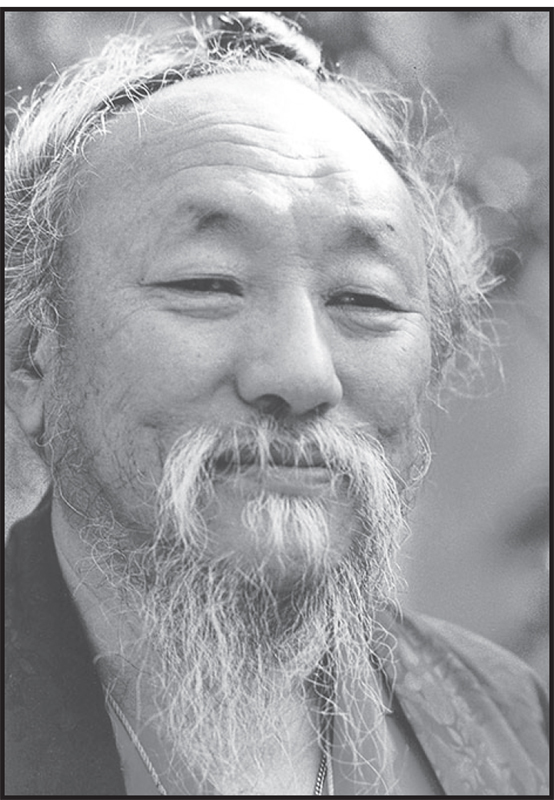
H.E. CHAGDUD TULKU RINPOCHE
Published by Padma Publishing
P.O. Box 279
Junction City, CA 96048-0279
www.tibetantreasures.com
© Padma Publishing 1993
© Revised Edition 2001
Reprinted 2006, 2012
E-book 2015
All rights reserved. No part of this book may be reproduced in any form or by any means, electronic or mechanical, including photocopy, recording, or any information storage or retrieval system without permission in writing from the publisher.
Printed in the United States of America
Library of Congress Cataloging-in-Publication Data
Chagdud Tulku Gates to Buddhist practice: essential teachings of a Tibetan master
/Chagdud Tulku.—Rev. ed.p. cm. Includes index.
ISBN-13: 978-1-881847-40-3
1. Religious life—Buddhism. 2. Buddhism
BQ5395.C43 2001294.3’449—dc21
00-52404
Contents
Editors’ Preface
Editors’ Preface to the Revised Edition
Acknowledgments
PART I Discovering the Path to Freedom
1 Turning the Wheel
2 Working with Attachment and Desire
3 Working with Anger and Aversion
4 Working with Ignorance
5 Daily Life as Spiritual Practice
PART II The Four Thoughts That Turn the Mind
6 The Importance of the Four Thoughts
7 The Lama
8 Precious Human Birth
9 Impermanence
10 Karma
11 The Ocean of Suffering
12 How to Contemplate the Four Thoughts
PART III Refuge and Bodhicitta
13 Refuge
14 Giving Rise to Bodhicitta
15 Wishing and Engaging Bodhicitta
PART IV Introduction to Vajrayana
16 Revealing Our Foundational Nature
17 Faith
18 Prayer
19 Conversation with a Student
20 Preparing for Death
PART V On the Vajrayana Path
21 Guru Yoga
22 Introduction to Great Perfection
23 Mind of Activity, Nature of Mind
Glossary
Editors’ Preface
Gates to Buddhist Practice, the first volume of The Living Dharma Series: Oral Teachings of Chagdud Tulku, presents traditional Tibetan Buddhist wisdom to Western readers in His Eminence Chagdud Tulku Rinpoche’s uniquely accessible style, interweaving stories from his native Tibet with a step-by-step exploration of the foundation and essence of Vajrayana Buddhism.
Son of Dawa Drolma, one of Tibet’s most renowned female lamas, Chagdud Rinpoche received extensive training from many great lamas and belongs to the last generation of teachers to have inherited the vast wealth of Tibetan Buddhist teachings and methods before the Chinese Communist consolidation of power in Tibet. In 1959, he was forced into exile and, during the two decades that followed, served the Tibetan community in India and Nepal as lama and physician. He also aided in refugee resettlement, as well as the artistic development of new monasteries.
Abbot of Chagdud Gonpa in Tibet—a centuries-old monastery and one of the few to survive the Chinese Communist invasion—Rinpoche came to the United States in 1979. In 1983 he established Chagdud Gonpa Foundation, which has centers throughout the United States, South America, and Europe. Rinpoche now lives at Khadro Ling, in Três Coroas, Brazil, Chagdud Gonpa’s main center in South America. His wisdom and compassion, which derive from a treasury of human experience, scholarly training, and profound meditative insight, permeate his presentation of the Buddhadharma—a presentation that, rich with metaphor, transcends cultural and religious barriers, and spirals through the extensive body of Buddhist teachings to their very heart.
Since Rinpoche came to the West, thousands of spiritual practitioners have gained insight into mind’s nature through his instruction on the Vajrayana. A master of the most profound teachings of the Buddhist path, the Great Perfection (Dzogchen), he is committed to making the full range of Vajrayana methods available to Western students. His teachings, imbued with the Great Perfection perspective and transmitted with warmth and humor, reveal to those who are receptive a glimpse of their intrinsic awareness.
Most of Rinpoche’s public talks have been tape-recorded. The Living Dharma Series consists of edited transcripts of those teachings. In Gates to Buddhist Practice, Rinpoche speaks of why we suffer and how we can eliminate the causes of suffering to create ultimate freedom for ourselves and others. He presents a multitude of methods for working with the mind in daily life; for reducing anger, attachment, ignorance, jealousy, and pride; for practicing effortful and effortless meditation; and for developing wisdom and compassion. Readers will find spiritual truths that are relevant to and of immediate benefit in their daily lives, truths that when applied with sincerity will produce unequivocal changes in their own minds and in their interactions with others. The book also contains an introduction to the Vajrayana, the “lightning path,” which can be pursued with a qualified teacher.
The teachings presented here serve as an introduction to Chagdud Rinpoche’s presentation of the Buddhadharma. Individual chapters are self-contained, yet the book proceeds through a progression of ideas, themes, and practices. The depth of these teachings will become increasingly apparent upon repeated readings, but more so through the application of the principles taught. Gates to Buddhist Practice is a book not only about the philosophy of the Buddhist religion, but also about Buddhist practice, the methods taught by the Buddha Shakyamuni 2,500 years ago that have produced profound transformation in the minds of those who have diligently applied them.
May this book be the cause of liberation for all who read it, and may all find freedom from the cycles of suffering and awaken to their mind’s true nature.
Editors’ Preface to the Revised Edition
Since its publication in 1993, Gates to Buddhist Practice has illuminated themes in Buddhist thought for new and experienced practitioners alike, and has provided instruction to people of all spiritual backgrounds. Until his passing in 2002, His Eminence Chagdud Tulku Rinpoche continued to teach in North and South America, and met with thousands of sincere, enthusiastic, and sometimes skeptical students. The questions inspired by these teachings form the basis of the material added to this revised edition. Rinpoche provides insight into formal meditation practice as well as the integration of spiritual methods into daily life. Thus new readers will receive the benefit of other students’ efforts to understand the teachings and clarify their practical concerns with an authentic lama.
In addition, the original index has been revised and a glossary compiled. Both will be helpful to new students and those familiar with the dharma, particularly those who intend to use this book as a reference or study guide.
Acknowledgments
It is because of His Eminence Chagdud Tulku Rinpoche’s tireless compassion, kindness, and commitment to the liberation of beings that these teachings have become available.
Great appreciation is due to the translators and interpreters of these teachings: Lama Chökyi Nyima (Richard Barron), who translated from the Tibetan, and Lama Tsering Everest, Lama Shenpen Drolma (Lisa Leghorn), and Chagdud Khadro (Jane Tromge), who interpreted Rinpoche’s new and unique English for Western audiences.
Gratitude is extended to Lama Tsultrim Palmo (Mary Racine), Kimberley Snow, and Barry Spacks, who worked tirelessly as a team with Lama Shenpen, series editor, to enable Gates to Buddhist Practice to emerge from the transcript pages, as well as to Gina Phelan, Anna Smith, and Linda Baer for their help in preparing this revised edition. Appreciation is due as well to all those who contributed invaluable help at various stages of the project.
1
Turning the Wheel
Why do we need a spiritual path? We live in a busy age, our lives overflow with activities—some joyous, some painful, some satisfying, some not. Why take time to do spiritual practice?
A story is often told about a man from the northern region of Tibet who decided to go on a pilgrimage with his friends to the Potala Palace, the Dalai Lama’s home in Lhasa, a very holy place. It was the trip of a lifetime.
In those days, there were no cars or vehicles of any kind in that region, and people journeyed on foot or by horse. It took a long time to get anywhere, and it was dangerous to go very far, as many thieves and robbers preyed on unsuspecting travelers. For these reasons, most people stayed in their home area all their lives. Most had never seen a house; they lived in black tents woven from yak hair.
When this particular group of pilgrims finally arrived in Lhasa, the man from the north was awed by the multi-storied Potala Palace with its many windows and the spectacular view of the town from within. He poked his head through a narrow slit window to get a better look, craning it left and right as he gazed at the sights below. When his friends called for him to leave, he jerked his head back, but couldn’t get it out of the window. He became very nervous, pulling this way and that.
Finally he decided that he was really stuck. So he said to his friends, “Go home without me. Tell my family the bad news is that I died, but the good news is that I died in the Potala Palace. What better place to die?”
His friends were also very simpleminded, so without thinking much about it, they agreed and left. Some time later, the palace shrine keeper came along and asked, “Beggar, what are you doing here?”
“I’m dying,” he answered.
“Why do you think you are dying?”
“Because my head is stuck.”
“How did you get it in?”
“I put it in like this.”
The shrine keeper replied, “So pull it out the same way!”
The man did as the shrine keeper suggested, and he was free.
Like this man, if we can see how we’re caught, we can break free and help others to do the same. But first we need to understand how we got where we are.
Throughout life, though each of us seeks and sometimes finds happiness, it is always temporary; we cannot make it last. It’s as if we keep shooting arrows, but at the wrong target. To find long-lasting happiness, we need to change our target: to focus on eradicating the suffering of ourselves and others, not only temporarily, but permanently.
The mind is the source of both our suffering and our happiness. It can be used positively to create benefit or negatively to create harm. Although every being’s fundamental nature is beginningless, deathless purity—what we call buddha nature—we don’t recognize it. Instead, we are controlled by the whims of ordinary mind, which leads us up and down, around and about, producing good and bad, pleasant and painful thoughts. Meanwhile, we plant a seed with every thought, word, and action. As surely as the seed of a poisonous plant bears poisonous fruit or a medicinal plant a cure, harmful actions produce suffering and beneficial actions, happiness.
Our actions become causes, and from causes naturally come results. Anything put into motion produces a corresponding motion. Throw a pebble into a pond and waves flow out in rings, strike the bank, and return. So it is when thoughts move: they flow out, then return. When the results of those thoughts come back, we feel like helpless victims: we’re innocently leading our lives—why are all these things happening to us? The answer is that the rings are coming back to the center. This is karma.
Ordinary mind is vacillating and full of turbulence. Without any power to control it and its effects on body and speech, we’re up, then down, then back and forth; we’re riding a roller coaster of reality.
It is as though we start a wheel turning, give it another spin every time we react, and find ourselves caught in its perpetual motion. This ever-cycling experience of reality, in all of its variations, continues lifetime after lifetime. This is the endlessness of samsara, of cyclic existence. We don’t understand that we’re experiencing results that we ourselves have brought into being, and that our reactions ceaselessly produce more causes and more results.
Because we have created our own predicament, it’s up to us to change it. Someone with matted, greasy hair looking in a mirror can’t clean himself up by wiping the mirror. Someone with a bile disease will have a distorted sense of color and will see a white surface—whether a distant snow mountain or a piece of white cloth—as slightly yellow. The only way to correct that flawed vision is to cure the disease. Trying to change the external environment won’t do any good.
Some people think the remedy for suffering lies outside of them, with God or with Buddha. But that’s not the case. The Buddha himself said to his disciples, “I have shown you the path to freedom. Following that path depends on you.”
The mind, when used positively—to generate compassion, for example—can create great benefit. It may appear that this benefit comes from God or Buddha, but it is simply the result of the seeds we’ve planted. And although from the Buddha’s teachings we receive the key of knowledge that allows us to change, tame, and train the mind, only we can unlock its deeper truth, exposing our buddha nature with its limitless capacities.
Our current experience is one of relative good fortune. There are many who suffer far worse than we. Ravaged by the relentless pain of war, sickness, or famine, they see no way to change their situations, no way to escape.
If we contemplate their predicament, compassion arises in our hearts. We become inspired not to waste our fortunate circumstances, but to use them to create benefit for ourselves and others, benefit beyond the temporary happiness that comes and goes in the endless cycles of samsaric suffering. Only by fully revealing mind’s true nature—by attaining enlightenment—can we find an abiding happiness and help others to do the same. This is the goal of the spiritual path.
2
Working with Attachment and Desire
To understand how suffering arises, practice watching your mind. Begin by simply letting it relax. Without thinking of the past or the future, without feeling hope or fear about this or that, let it rest comfortably, open and natural. In this space of the mind, there is no problem, no suffering. Then something catches your attention—an image, a sound, a smell. Your mind splits into inner and outer, self and other, subject and object. In simply perceiving the object, there is still no problem. But when you zero in on it, you notice that it’s large or small, white or black, square or circular. Then you make a judgment—deciding for example, that it’s pretty or ugly—and you react: you like it or you don’t.
The problem starts here, because “I like it” leads to “I want it.” Similarly, “I don’t like it” leads to “I don’t want it.” If we like something, want it, and can’t have it, we suffer. If we want something, get it, and then lose it, we suffer. If we don’t want it but can’t keep it away, again we suffer. Our suffering seems to stem from the object of our desire or aversion, but that’s not so. We suffer because the mind splits into object and subject and becomes involved in wanting or not wanting something.
We often think the only way to create happiness is to try to control the outer circumstances of our lives, to try to fix what seems wrong or to get rid of everything that bothers us. But the real problem lies in our reaction to those circumstances.
There was once a family of shepherds living in Tibet. On a bitterly cold winter day, it was the son’s turn to look after the sheep, so his family saved him the largest and best piece of meat for dinner. Upon his return, he looked at the food and burst into tears. When asked what was wrong, he cried, “Why am I always given the worst and smallest portion?”
We have to change the mind and the way we experience reality. Our emotions propel us through extremes, from elation to depression, from good experiences to bad, from happiness to sadness—a constant swinging back and forth. All of this is the by-product of hope and fear, attachment and aversion. We have hope because we are attached to something we want. We have fear because we are averse to something we don’t want. As we follow our emotions, reacting to our experiences, we create karma—a perpetual motion that inevitably determines our future. We need to stop the extreme swings of the emotional pendulum so that we can find a place of equilibrium.
When we begin to work with the emotions, we apply the principle of iron cutting iron or diamond cutting diamond. We use thought to change thought. A loving thought can antidote an angry one; contemplation of impermanence can antidote desire.
In the case of attachment, begin by examining what you are attached to. You might think that becoming famous will make you happy. But your fame could trigger jealousy in someone, who might try to kill you. What you worked so hard to create could become the cause of greater suffering. Or you might work diligently to become wealthy, thinking this will bring happiness, only to lose all your money. The source of our suffering is not the loss of wealth in itself, but rather our attachment to having it.
We can lessen attachment by contemplating impermanence. It is certain that whatever we’re attached to will either change or be lost. A family member may die or go away, a friend may become an enemy, a thief may steal our money. Even our body, to which we’re most attached, will be gone one day. Knowing this not only helps to reduce our attachment, but gives us a greater appreciation of what we have while we have it. There is nothing wrong with money in itself, but if we’re attached to it, we’ll suffer when we lose it. Instead, we can appreciate it while it lasts, enjoy it, and share it with others without forgetting that it is impermanent. Then if we lose it, the emotional pendulum won’t swing as far toward sadness.
Imagine two people who buy the same kind of watch on the same day at the same shop. The first person thinks, “This is a very nice watch. It will be helpful to me, but it may not last long.” The second person thinks, “This is the best watch I’ve ever had. No matter what happens, I can’t lose it or let it break.” If both people lose their watches, the one who is more attached will be more upset than the other.
If we are fooled by our experience and invest great value in one thing or another, we may find ourselves fighting for what we want and against any opposition. We may think that what we’re fighting for is lasting, true, and real, but it’s not. It is impermanent, it’s neither true nor lasting, and ultimately it’s not even real.
We can compare our life to an afternoon at a shopping center. We walk through the shops, led by our desires, taking things off the shelves and tossing them in our baskets. We wander around looking at everything, wanting and longing. We smile at a person or two and continue on, never to see them again.
Driven by desire, we fail to appreciate the preciousness of what we already have. We need to realize that this time with our loved ones, our family, our friends, and our co-workers is very brief. Even if we lived to be a hundred and fifty, we would have very little time to enjoy and make the most of our human opportunity.
Young people think their lives will be long; old people think theirs will end soon. But we can’t assume these things. Life comes with a built-in expiration date. There are many strong and healthy people who die young, while many of the old, sick, and feeble live on and on. Not knowing when we’ll die, we need to develop an appreciation for and acceptance of what we have rather than continuing to find fault with our experience and incessantly seeking to fulfill our desires.
If we start to worry whether our nose is too big or too small, we should think, “What if I had no head? Now that would be a problem!” As long as we have life, we should rejoice. Although everything may not go exactly as we’d like, we can accept this. If we contemplate impermanence deeply, patience and compassion will arise. We will hold less to the apparent truth of our experience, and the mind will become more flexible. Realizing that one day this body will be buried or cremated, we will rejoice in every moment we have rather than make ourselves or others unhappy.
Now we are afflicted with “me-my-mine-itis,” a condition caused by ignorance. Our self-centeredness and self-interest have become very strong habits. In order to change them, we need to refocus. Instead of always concerning ourselves with “I,” we must direct our attention to “you,” “them,” or “others.” Reducing self-importance lessens the attachment that stems from it. When we focus beyond ourselves, ultimately we realize the equality of ourselves and all other beings. Everybody wants happiness; nobody wants to suffer. Our attachment to our own happiness expands to encompass attachment to the happiness of all.
Until now, our desires have tended to be transient, superficial, and selfish. If we are going to wish for something, let it be nothing less than complete enlightenment for all beings. That is something worthy of desire. Continually reminding ourselves of what has true worth is an important element of spiritual practice.
Desire and attachment won’t disappear overnight. But desire becomes less ordinary when we replace our worldly yearning with the aspiration to do everything we can to help all beings find unchanging happiness. We don’t have to abandon the ordinary objects of our desire—relationships, wealth, success—but as we contemplate their impermanence, we become less attached to them. We begin to develop spiritual qualities by rejoicing in our good fortune while recognizing that it won’t last.
As attachment arises and disturbs the mind, we can ask, “Why do I feel attachment? Is it of any benefit to myself or others? Is this object of my attachment permanent or lasting?” Through this process, our desires begin to diminish. We commit fewer of the harmful actions that result from attachment, and so create less negative karma. We generate more fortunate karma, and mind’s positive qualities gradually increase.
Eventually, as our meditation practice matures, we can try something different from contemplation, from using thought to change thought. We can use an approach that reveals the deeper nature of the emotions as they arise. If you are in the midst of a desire attack—something has captured your mind and you must have it—you won’t get rid of the desire by trying to repress it. Instead, you can begin to see through desire by examining it. When it arises, ask yourself, “Where does it come from? Where does it dwell? Can it be described? Does it have any color, shape, or form? When it disappears, where does it go?”
You can say that desire exists, but if you search for the experience, you can’t quite grasp it. On the other hand, if you say that it doesn’t exist, you’re denying the obvious fact that you feel desire. You can’t say that it exists, nor can you say that it does not exist. You can’t say that it both does and does not exist, or that it neither exists nor does not not exist. This is the meaning of the true nature of desire beyond the extremes of conceptual mind.
Our failure to understand the essential nature of an emotion as it arises gets us into trouble. Once we can simply look clearly at what is taking place, neither repressing nor engaging the emotion, it tends to dissolve. If we set a cloudy glass of water aside for a while, it will settle by itself and become clear. Instead of judging the experience of desire, we “liberate it in its own ground” by looking directly at its nature.
Each negative emotion, or mental poison, has an inherent purity that we don’t recognize because we are so accustomed to its appearance as emotion. The true nature of the five poisons is the five wisdoms: pride as the wisdom of equanimity; jealousy as all-accomplishing wisdom; attachment and desire as discriminating wisdom; anger and aversion as mirror-like wisdom; and ignorance as the wisdom of the basic space of phenomena. Just as poison can be taken medicinally to effect a cure, each poison of the mind, worked with properly, can resolve into its wisdom nature and thus enhance our spiritual practice.
If while in the throes of desire, you simply relax without moving your attention, you may have a glimpse of discriminating wisdom. Without abandoning desire, you can reveal its wisdom nature.
QUESTION: I’m not sure I understand what you mean by “liberating an emotion in its own ground.”
RESPONSE: When an emotion arises, our habit is to become involved in analyzing and reacting to the apparent cause, the outer object. If instead we simply “peel open” the emotion—without attachment or aversion, hatred or involvement—we will reveal and experience its wisdom nature. When we are feeling puffed up and on top of the world, instead of either indulging in our pride or pushing it away, we relax the mind and reveal the essential nature of pride as the wisdom of equanimity.
In working with the emotions, we can apply different methods. When our mind is steeped in duality, in subject–object perception, we cut iron with iron: we antidote a negative thought with a positive one, attachment to our own happiness with attachment to the happiness of others. If we are able to relax the dualistic habit of the mind, we can experience the true essence, or “ground,” of an emotion and thus “liberate it in its own ground.” In this way, its wisdom principle is revealed.
QUESTION: Can you say more about how contemplating impermanence reduces attachment?
RESPONSE: Imagine a child and an adult on the beach building a sand castle. The adult doesn’t think of the sand castle as permanent or real, and isn’t attached to it. If a wave washes it away or some children come along and kick it down, the adult doesn’t suffer. But the child has begun to think of it as a real castle that will last forever, and so suffers when it’s gone.
Similarly, because we have believed for so long that our experience is stable and reliable, we have great attachment to it and suffer when it changes. If we maintain an awareness of impermanence, then we are never completely fooled by the phenomena of samsara.
It is helpful to contemplate the fact that you don’t have long to live. Think to yourself, “In the time that I have left, why act on this anger or attachment, which will only produce more confusion and delusion? In taking so seriously what is impermanent and trying to grasp or push it away, I am imagining as solid something that really isn’t. I’m only further complicating and perpetuating the delusions of samsara. I won’t do that! I’ll use this attachment or this aversion, this pride or this jealousy, as practice.” Spiritual practice doesn’t mean just sitting on a meditation cushion. When you’re there with the experience of desire or anger, right there where the mind is active, that is where you practice, at each moment, each step of your life.
QUESTION: In contemplating impermanence, I find my attachment lessening to a certain extent, but wonder how far I should go in dropping things.
RESPONSE: You need to be discriminating in what you address first. Eventually you may drop everything, but begin by abandoning the mind’s poisons—for example, anger. Instead of thinking, “Why wash these dishes, they’re impermanent?” let go of your anger at having to do them. Also, understand that whatever arises in the mind, sparking your anger, is impermanent. The anger itself is impermanent. If someone’s words upset you, remember that they are only words, only sounds, not something lasting.
The next thing to drop is attachment to having your own way. When you understand impermanence, it doesn’t matter so much if things are going as you think they should. If they are, it’s all right. If not, that’s all right, too. When you practice like this, your mind will slowly develop more balance. It won’t flip one way or the other according to whether or not you get what you want.
QUESTION: Is there anything wrong with being happy or sad, with feeling our emotions?
RESPONSE: Reminding ourselves when we experience happiness that it’s impermanent, that it will eventually disappear, will help us to cherish and enjoy it while it lasts. At the same time, we won’t become so attached to or fixated on it, and we won’t experience so much pain when it’s gone.
In the same way, when we experience pain, sorrow, or loss, we should remind ourselves that these things, too, are impermanent; this will alleviate our suffering. So what keeps us balanced is an ongoing awareness of impermanence.
QUESTION: Is the self still involved as we expand the focus of our attachment to the needs of others?
RESPONSE: If you were bound with ropes tied in many knots, to become free you would have to release the knots, one by one, in the opposite order in which they were tied. First you’d release the last knot, then the second to the last, and so forth, until you undid the first, the one closest to you.
We are bound by many knots, including many kinds of attachment. Ideally we would have no clinging at all, but since that is not the case, we use attachment to cut attachment. We begin by untying the last knot: by replacing attachment to our own needs and desires with attachment to the happiness of others.
We need to understand that sooner or later selfish attachment will create problems. If you are attached to your own needs and desires—if you like to be happy and don’t like to suffer—when something minor goes wrong, it will seem gigantic. You will focus on it from morning to night, exacerbating the problem. After examination under the microscope of your constant attention, a crack in a teacup will begin to seem like the Grand Canyon.
This self-focusing is itself a kind of meditation. Meditation means bringing something back to the mind again and again. Repeating virtuous thoughts and resting in mind’s nature can lead to enlightenment. But self-centered meditation will only produce endless suffering. Focusing on our problems may even lead to suicide—we can become so preoccupied with our own suffering that life seems unbearable and without purpose. Suicide is the worst of solutions because such extreme attachment to death and aversion to human life can close the door to future human rebirth.
So we begin by reducing our self-focus and self-centered thoughts. To do so, we remind ourselves that we aren’t the only ones who want to be happy—all beings do. Though others seek happiness, they may not understand how to go about finding it, whereas if we have some understanding of the spiritual path, we can perhaps help and support them in their efforts.
We remind ourselves that of course we’ll encounter problems. We’re human. But when difficulties arise, we mustn’t give them any power. Everyone has problems, many far worse than our own. As we contemplate this, our view expands to include the suffering of others. As our compassion deepens, our relentless self-focusing is reduced; we become more intent on helping others and better able to do so.
If we are sick, it’s useful to be attached to the medicine that will make us well. However, once we’re cured, that attachment needs to be cut. Otherwise, the very medicine that cured us could make us sick again. We use attachment to benefiting others like medicine in order to cut our self-attachment: we use attachment to change attachment. Eventually, to attain enlightenment, we must cut attachment itself.
QUESTION: How do we change our habit of dwelling on past experiences?
RESPONSE: No experience lasts very long. But we sustain it with our concepts and emotions; we hold on to it, turning it over and over in our mind. Whenever this happens, we need to change the direction of our thoughts. If we find ourselves dwelling on the fact that someone once harmed us, we turn the mind toward compassion and think, “He may have hurt me, but lost in the projections of his confused and deluded mind, he actually hurt rather than helped himself, working at cross-purposes to his desire for happiness.”
We also turn the mind toward impermanence. Though someone may have praised or blamed us for something, her words were only like an echo. Like everything else, words simply come and go. Acknowledging their impermanence, we invest them with less solidity and let them go more easily.
In this way we change the habit of fixating on past experiences. It’s not enough to redirect the mind only once or twice. We have to do it hundreds of times. Whatever power we give to thoughts of the past, we need to give twice as much to the antidote.
3
Working with Anger and Aversion
Attachment and anger are two sides of the same coin. Because of ignorance and the mind’s split into subject–object duality, we grasp at or push away what we perceive as external to us. When we encounter something we want and can’t have, or someone prevents us from achieving what we’ve told ourselves we must achieve, or something happens that conflicts with the way we want things to be, we experience anger, aversion, or hatred. But these responses are of no benefit. They only cause harm. Through anger, attachment, and ignorance, the three poisons of the mind, we generate endless karma, endless suffering.
It is said that there is no evil like anger: by its very nature, anger is destructive, an enemy. Because not a shred of happiness ever comes from it, anger is one of the most potent negative forces.
Anger and aversion can lead to aggression. When harmed, many people feel they should retaliate. It’s a natural response. “If someone speaks harshly to me, I’ll speak harshly in return. If someone hits me, I’ll hit him back. That’s what he deserves.” Or, more extreme: “This person is my enemy. If I kill him, I’ll be happy!”
We don’t realize that if we have a tendency toward aversion and aggression, enemies start appearing everywhere. We find less and less to like about others, and more and more to hate. People begin to avoid us, and we become more isolated and lonely. Enraged, we might spit out rough, abusive language. The Tibetans have a saying: “Words may not carry weapons, but they wound the heart.” Our words can be extremely harmful, because they not only damage others but evoke their anger. Often a cycle develops: one person feels aversion toward another and says something hurtful; then the other reacts by saying something more cutting. The two fuel each other until they’re waging a battle of angry words. This can be extended to national and international levels, where groups of people get caught up in aggression toward other groups, and nations are pitted against nations.
When you give in to aversion and anger, it is as though having decided to kill someone by throwing him into a river, you wrap your arms around his neck, jump into the water, and drown with him. In destroying your enemy, you destroy yourself as well.
It is far better to defuse anger by responding to it with patience, before it can lead to further conflict. Accepting responsibility for what happens to us helps make this possible. We might treat our connection with a perceived enemy as if it came out of nowhere, but in some previous existence we may have spoken harshly to that person, physically abused or harbored angry thoughts about her.
Instead of finding fault with others, directing anger and aversion at situations and people we think are threatening us, we should address the true enemy. That enemy, which destroys our short-term happiness and prevents us in the long term from attaining enlightenment, is our own anger and aversion. If we can vanquish that, there will be no more fights, for we will no longer perceive as enemies those we have been confronting—a great return for a little bit of effort. We, as well as they, will be increasingly less likely to find ourselves repeatedly in situations where conflict could develop. Everyone will benefit.
Our tendency is to contemplate in counterproductive ways. When someone insults us, we usually dwell on it, asking ourselves, “Why did he say that to me? How dare he?” and on and on. It’s as if someone shoots an arrow at us, but it falls short. Focusing on the problem is like picking up the arrow and repeatedly stabbing ourselves with it, saying, “He hurt me so much. I can’t believe he did that.”
Instead, we can use the method of contemplation to think things through differently, to change our habit of reacting with anger. Since it is difficult to think clearly in the midst of an altercation, we begin by practicing at home, alone, imagining confrontations and new ways of responding. Imagine that someone insults you. He’s disgusted with you, slaps you, or offends you in some way. You think, “What should I do? I’ll defend myself—I’ll retaliate. I’ll throw him out of my house.” Now try another approach. Say to yourself, “This person makes me angry. But what is anger? It is one of the poisons of the mind that creates negative karma, leading to intense suffering. Meeting anger with anger is like following a lunatic who jumps off a cliff. Do I have to do likewise? While it’s crazy for him to act the way he does, it’s even crazier for me to do the same.”
Remember that those who act aggressively toward you are only buying their own suffering, worsening their predicament through ignorance. They think they are doing what is best for themselves, righting a wrong or preventing something worse from happening. But the truth is that their behavior will be of no benefit. They are like someone with a headache beating her head with a hammer to try to stop the pain. In their unhappiness they blame others, who in turn become angry and fight, only making matters worse. When we consider their predicament, we realize that they should be the object of our compassion instead of our blame and anger. Then we aspire to do what we can to protect them from further suffering, as we would a child who keeps misbehaving, running again and again into the road, hitting and scratching us as we attempt to bring her back. Instead of giving up on those who cause harm, we need to realize that they are seeking happiness but don’t know how to find it.
The role of enemy isn’t a permanent one. The person hurting you now might be your best friend later. Your enemy now could even, in a former lifetime, have been the mother who gave birth to you, fed and took care of you. By contemplating again and again in this way, we learn to respond to aggression with compassion and answer anger with kindness.
Another approach is to develop awareness of the illusory quality of both anger and its object. If someone says to you, “You’re a bad person,” ask yourself, “Does that make me bad? If I were a bad person and someone said I was good, would that make me good?” If someone says coal is gold, does it become gold? If someone says gold is coal, does it become coal? Things don’t change just because someone says this or that. Why take such talk so seriously?
Sit in front of a mirror, look at your reflection, and insult it: “You’re ugly. You’re bad.” Then praise it: “You’re beautiful. You’re good.” Regardless of what you say, the image remains as it is. Praise and blame are not real in and of themselves. Like an echo, a shadow, a mere reflection, they hold no power to help or harm us.
As we practice in this way, we begin to realize that things lack solidity, like dreams or illusions. We develop a more spacious state of mind—one that isn’t so reactive. Then when anger arises, instead of responding immediately, we can look at it and ask, “What is this? What is making me turn red and shake? Where is it?” What we discover is that there is no substance to anger, no thing to find.
Once we realize we can’t find anger, we can let the mind be. We don’t repress the anger, push it away, or engage it. We simply let the mind rest in the midst of it. We can stay with the energy itself—simply, naturally, remaining aware of it, without attachment, without aversion. Then we discover that anger, like desire, isn’t really what we thought it was. We begin to see its essential nature, mirror-like wisdom.
This may sound easy to do, but it’s not. Anger stimulates us and we fly—one way or another. We fly in our mind, we fly off to a judgment or a reaction, becoming involved with whatever has upset us. Our habit of lashing back has been reinforced again and again, lifetime after lifetime. If our understanding of the essence of anger is superficial, we’ll find out that we aren’t capable of applying it to real-life situations.
There is a well-known Tibetan folk tale of a man meditating in retreat. Somebody came to see him and asked, “What are you meditating on?”
“Patience,” he said.
“You’re a fool!”
This made the meditator furious and he began to argue with his visitor—which proved exactly how much patience he had.
Only through scrupulous, methodical application of these methods, day by day, month by month, year by year, will we dissolve our deeply ingrained habits. The process may take some time, but we will change. Look how quickly we change in negative ways. We’re quite happy, and then somebody says or does something and we get irritated. Changing in positive ways requires discipline, exertion, and patience. The word for “meditation” in Tibetan (gom) can also be translated as “to become familiar with.” Using a variety of methods, we become familiar with other ways of being.
There is an expression: “Even an elephant can be tamed in various ways.” When goads or hooks are used skillfully, this enormous, powerful beast can be led along very gently. It is said that when elephants are decorated for festive occasions, they become docile, moving as though they were walking on eggshells. And in a large crowd of people, they are very easily controlled. So something that is big and ungainly can actually be managed well with the proper means. In the same way, the mind, often unwieldy and wild, can be tamed with skillful methods.