
The True Story Of Kill Or Be Killed
In The Real Old West
The Recollections And Personal Photos Of
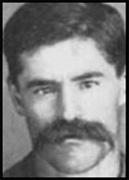
Frank “Pistol Pete” Eaton
Old West Gunfighter and Lawman
Proudly Published By:
James A. Huebner
818 S.E. 4th. Street Suite 204
Ft. Lauderdale, Florida 33301
Phone: 941/376-1595
Email: jahuebner@comcast.net
www.OldWestLawmansForgottenMemoir.com
PRINTED IN THE UNITED STATES OF AMERICA
No part of this publication may be reproduced or transmitted in any form or by any means, mechanical or electronic, including photocopying and recording, or by any information storage and retrieval system, without permission in writing from the publisher.
eBooks created by www.ebookconversion.com
My friend and partner,
Eva Gillhouse, wrote this book.
It was her idea and she did all the work.
It’s just the way I told it to her —
it’s all true — and I’ll back her
with both guns.
— PISTOL PETE
DEDICATED
To the American Cowboy,
who has played such a vital part in
the progress of our great country and
in the imagination of its people.
Contents
1 The New Home
2 Tragedy
3 Growing Up
4 Lightning On The Draw
5 On The Trail
6 The Light Horse
7 Stolen Cattle And Dead Men
8 The Material At Hand
9 My First Warrant
10 Bud Wells
11 The Big Drive
12 Holy Mother, Pray for Us
13 Gray Horse Station
14 The Last Man
15 Rolla Goodnight
16 The Famous Goodnight Bluff
17 Indian Territory
18 Time Catches Up
19 Old Oklahoma
20 The End of an Era
List of Photos
Judge Isaac C. Parker
Albuquerque, New Mexico 1880
Blue Duck, Belle Starr
Pat Garrett
United States Marshals
Rolla Goodnight, Pistol Pete
Pistol Pete & friend
Colonel Charles Goodnight
Federal Jail, Ft. Smith
Ed Webster, Pistol Pete
Garrison Avenue
Albuquerque, turn of century
1
THE NEW HOME
FATHER
FATHER owned a livery, feed and sales stable, in Hartford, Connecticut, where I was born on October 26, 1860.
After the Civil War Father came home from the army, sold his business, and went out to Kansas — a new country in the Far West.
He went on the train, which was an adventure in itself in those days. Before he sent for Mother and us three children, he bought a farm and built a house.
He had a home ready for us, so we did not have many of the hardships of the earlier pioneers.
Father was about thirty-five years old at that time, six feet tall, and weighed about one hundred and eighty-five pounds.
He was a very strong man with rather short arms. He had kind brown eyes, dark brown hair and a heavy brown mustache.
I was seven years old then, and I remember just how my father looked; he always wore a blue flannel shirt, summer or winter, and a pair of blue jean pants with suspenders.
I loved my father.
He was always tolerant with other people and respected their opinions, but he had strong convictions and set ideas of right and wrong.
When he thought he was on the right side, he was a hard man to turn. Father was a soft-spoken man, never quarrelsome; it was hard to make him mad but once aroused he had a violent temper and you had better get away and let Nature supply the lightning rods!
Father met us at the train at Lawrence, Kansas. We were looking out the window, trying to see him; as the train slowed to a stop we caught sight of him.
He was standing by his team, holding their heads and rubbing their noses so they would not be afraid of the train. I started to rush for the door, then went back and got my little sister by the hand. Mother had my baby brother in her arms and one of the other passengers helped her with some bundles and our valise.
Father hugged us and put my sister and me into the back of the wagon. Mother and my baby brother sat up on the seat with him.
I remember how he looked at her and said, “It’s good to see you, Lizzie.”
We stopped a couple of days about six miles out of Lawrence and visited some of Father’s relatives.
Then, we drove on to our new home.
THE HOMESTEAD
Our home was in Osage County, Kansas, about thirty-eight miles southwest of Lawrence, at a place called Rock Springs, on the headwaters of the Red Woods Branch.
Four big springs of good water came together there and it was a famous watering place and campgrounds for grants and freighters. (A freighter was a teamster who hauled goods and supplies from the end of the railroad to out lying points.)
There had been an old hotel on the place but it was burned by William Clarke Quantrill and his men at the time they made the raid on Lawrence, Kansas.
Our house was built on the site of the ruins of the old hotel; it lay on a gentle slope of ground on the west bank of the stream about a hundred yards off the old Santa Fe Trail
THE SANTA FE TRAIL
The Santa Fe Trail was a great broad trail and the only real one in that part of the country at the time. It was a trade route, the first of the great transcontinental trails, between the East and West.
In 1821 a man named William Becknell freighted a load of goods by packhorses from Missouri to New Mexico.
The following year he made another trip from Franklin, Missouri, and arrived in Santa Fe, New Mexico, with twenty-one men and three wagonloads of goods, which he sold for a good profit. Becknell was known as “the father of the Santa Fe Trail.”
Others soon followed — caravans began moving west starting from the Missouri River and it was called the Santa Fe Trail. Later, Independence, Missouri, became the official starting point.
Where we lived, in Kansas, the trail was lined with sunflowers; they were beautiful and they were also used for fuel. The stalks were so large they were chopped down and cut into stove lengths and burned for wood.
The flowers were dried and used for quick fires or for starting a fire.
The sunflowers provided the wagon trains and caravans with fuel when they stopped at the Rock Springs Camp Ground.
One of my earliest recollections is cutting down the sunflowers and watching the wagon trains on the trail.
WAGON TRAINS
Each wagon had its string of oxen hitched to it and the driver walked along on the left side of his team with his whip over his shoulder.
The driver was called a “bullwhacker.” He was usually a young man and he drove from two to eight yoke of oxen. He wore a wide-brimmed hat and high-topped boots with broad heels. He walked by the side of his team most of the time and commanded them with a long bullwhip.
The whip was a braided lash, from twelve to fourteen feet long, with a broad buckskin popper on the end. The whip was about one and one-half inches thick where the whipstock was tied on and ran to a true taper to the size of your little finger, where the popper was fastened.
The whipstock, or handle, was of shaved hickory and was four or five feet long. From the size of a pitchfork handle at the butt, the whipstock tapered like a billiard cue, to the size of a man’s finger where the whip was fastened on.
A good bullwhacker could kill a wolf or rattlesnake with his whip and the crack of his whip was louder than a shot from a forty-five.
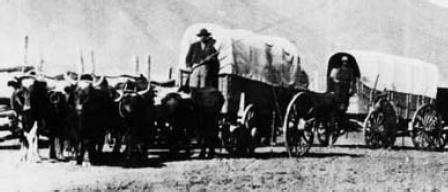
There was a trail boss, too, or an “emigrant boss” as he was sometimes called. He was a man who had to know his job.
He was always an old plainsman. The more he knew of outlaws, Indians and the country he was traveling, the better he was.
His word was law; he was in absolute control of the whole outfit.
The emigrant boss knew the destination of his wagon train and his job was to get them through.
When they arrived his job was done.
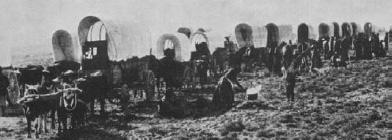
There never was a prettier sight than ten or twenty big wagons with boxes as high as your chin all covered over with white wagon sheets.
Women and children looked out both ends of the wagon; the boys and some of the men drove the cattle and horses along in the rear.
Mounted and armed men rode on the front and flanks, looking for any sign of danger.
The whole outfit, moving slowly along the trail, once seen could never be forgotten.
NEIGHBORS
There was a faint trail that branched off the Santa Fe Trail just east of our house; it ran northeast to Ottawa, Kansas.
All the rest was open prairie country covered with tall grass. When we wanted to go anywhere we forked our horse and made our own trail.
All the settlements were on the streams where water was plentiful. North of us about five miles there were a dozen farms on the creek. There was a post office five miles northeast of us, at a small settlement called Twin Mounds.
There were several small towns on the prairie; the nearest was Hundred-Ten — so named because it was one hundred and ten miles from the Missouri line.
Then there were Carbondale, Lyndon, Ridgeway and Ottawa.
George Saffles was our nearest neighbor — he lived about half a mile south; Marcus Whittenburg lived a little farther on. Mose Beaman, Arthur Duffy and his brother Pete lived about six or eight miles south. Bill Montcastle and Si Dodder were east of our place four miles.
Across the Rock Springs draw, about a half mile away, was the Campsey place. The Campseys were bad and their friends were bad. They had belonged to the Quantrill Raiders during the Civil War and their place was a hangout for men of shady reputation.
There were two brothers, Doc and John Ferber, who spent most of their time at the Campsey place, but the place belonged to Shannon Campsey and his three brothers, Jim, Jonce and Wyley.
SIGNALS
We were right on the edge of the open range.
Nearby were some limestone bluffs, full of rattlesnakes. We could climb on top of a bluff and see as far as the eye could reach.
By putting up a red flag we could have a band of fifteen or twenty armed men in a very short time and more coming as fast as their horses could carry them.
Father was always on the lookout for all signals.
He would come into the house, put on his gun belt, take down his rifle, and in his quiet way he would say to Mother, “There is a meeting, Lizzie.”
Then he would kiss her and us children and ride away to the gathering place and Mother would go into the bedroom and kneel by the bed and pray.
TWO FACTIONS
It was directly after the close of the Civil War and the country was sparsely settled at that time.
Veterans of the Union and Confederate Armies were about equal in number among the settlers.
There was still a lot of bitterness among them over the war and it was only natural that there were two different factions striving for control.
In Kansas after the Civil War, the Vigilantes, like the Vigilance Committees in the entire Western states and territories, were organized to protect the citizens from a lawless element.
The Vigilantes were made up of Union men and a few hired gunmen, and were under the command of a Northern man named Mose Beaman.
Beaman, during the war, had been one of the Jennings Red Legs, a regiment of Jayhawkers in the Union Army, who saw service along the Kansas and Missouri line.
On the other side were the Regulators, armed men organized in some of the Southern states and along the Border States, to obstruct the activities of the freedmen’s organizations.
They usually rode at night, sometimes in disguise. They were a sort of forerunner of the Ku Klux Klan, but they were not well organized and lacked a definite aim.
The Regulators were composed of Southern men and some hired gunmen, and were led by Si Dodder.
They had been able to get some of their men elected to office and were having things pretty much their own way— so it was a bad situation
Si Dodder had a habit of stealing some of the horses and cattle from the emigrant trains that were camped in his neighborhood.
He would hide them; then collect a reward for finding them. When he drove them back to the owners and they paid the reward, he would turn some of their other stock loose, later demanding damages because they ran over his hay land.
There was a lot of travel and he was doing fairly well until the Vigilantes got on to it and started watching him.
THE BULLWHACKER
One day a young man driving three yoke of oxen camped at the spring by the side of the road.
He had made a fire of dead sunflowers and dried cow chips and was cooking his dinner when Si Dodder came by and tried to scare his cattle but they were chained to the wheels of the big wagon and could not break away.
The bullwhacker grabbed his whip and nearly whipped Si Dodder to death.
Just then some of Si’s men came along and took him home and swore out a warrant for the bullwhacker.
They took him up before old man Wadsworth, who was Justice of the Peace and also one of Si’s strongest henchmen, with instructions to fine him his wagon and three yoke of oxen.
VIOLENCE
Mother had gone to Mrs. Saffles’s as midwife and Father was down in the orchard hoeing weeds out of the gooseberries.
I was trying to catch a gopher and had him in a hole, when Mose Beaman and about a dozen other mounted men came riding up in a hurry.
“Get your horse and guns, Frank,” he called to my father. “The Vigilantes are riding!”
Father looked at me. “What shall I do with the boy? Can’t leave him here alone.”
“Never mind,” says Mose, “hand him up here and we will begin his education right now!”
Father swung me up to Mose who put me down behind him and told me to hang on.
Father had his horse ready and in a few minutes he came out of the house with his rifle, buckling on his gun. I got both hands in Mose’s gun belt and hung on for dear life.
I had ridden the workhorses down to the spring for water. I had been thrown from every calf, colt and hog on the place. But this was different!
This was excitement, adventure, maybe violence! I had never seen any violence. I thought about the many times I had watched the men ride away, their faces grim and set.
Now I was going with them!
With all my seven years of experience, I was one of them!
As we rode along Mose told of Si Dodder’s fight with the bull whacker. “Are we going to hang Dodder?” someone asked.
“Not yet,” said Mose. “Our job, now, is to turn the bullwhacker loose. A couple of our men are taking his outfit wagon and oxen — over to Hundred-Ten Creek. They will wait there for him until we send him in, which won’t be long now.”
About that time, Arthur Duffy and a group of twenty-five or thirty men, who had met at his house in answer to his signals, came in across the prairie and joined us.
Judge Wadsworth was holding court in a small rock house by a big spring. There was a bunch of horses tied to the willow trees around the spring but no men were in sight.
“They must all be in the house,” said Mose, “and that is all the better for us.”
All the men knew just what to do. They surrounded the house and placed guards at all the doors and windows.
Then Mose and the rest of the men went into the house. I was put in the corner and told to lie down on the floor if there was any shooting.
Mose walked deliberately across the room and lit his pipe with a coal of fire from the hearth.
He was a large man with a heavy body, and he didn’t know the meaning of fear. He was square and honest and believed in settling his difficulties immediately, without quarreling.
Judge Wadsworth was a big man too, but overbearing and dishonest, put into office by a lawless element for his own protection.
His eyes were black and set close together; he had lots of thick black hair, a long beak nose and a thick, heavy neck. He was watching Mose, with his shoulders hunched, as though he were ready to spring.
Mose took a long draw on his pipe; it was a clay pipe with a long cane stem. He looked the judge square in the eye and threw his hat into one corner of the room and his coat into the other.
Then, still looking him in the eye, he walked over in front of him and banged his fist on the table saying, “This court is now adjourned!”
“Who are you,” cried Wadsworth, “that you are usurping the proceedings of a court of justice?”
Reaching over and giving the judge’s nose a vigorous twist Mose replied, “I am Mose Beaman, by God!”
The judge looked around. The room was full of armed men and the door and windows were bristling with rifle barrels.
The Regulators were stacking their guns in one corner. Judge Wadsworth unbuckled his belt and threw his guns with the others.
Taking the bullwhacker by the arm Mose led him out where Marcus Whittenburg was holding a bunch of horses.
Mose brought out his own sorrel, bald-faced mare and giving the reins to the bullwhacker said, “Now, mister, you get on that plug and ride to Hundred-Ten, where you will find your outfit waiting for you. Give the boys this horse and take your oxen and wagon and get the hell out of here! And if you ever come back bring your guns and a few friends in case we haven’t got cleaned up around here.”
The grateful bullwhacker thanked him and rode off in the direction of Hundred-Ten.
After looking around for Si Dodder and not finding him Mose Beaman started giving the judge some good advice, but Wadsworth was in a fighting mood.
It didn’t last long for Beaman just kicked and booted that judge all over hell!
Then the Vigilantes got on their horses and rode away, leaving the judge swearing at the top of his voice while trying to stop his nose from bleeding.
THE FIGHT
A few days later Eli Emery came by our house and told father that the two men had met on the prairie and fought it out. Wadsworth was at home, and Doc Ferber was trying to keep him alive.
When the two men met they hung their guns on their saddle horns, took off their coats, and fought barehanded.
Wadsworth knew Mose Beaman could outshoot him but he thought he could whip him with his fists.
He was wrong!
They must have fought like hell, for Beaman had beaten him senseless. The grass was high and Beaman had then tied Wadsworth’s pony to his master’s foot to keep the wolves away and so his friends could find him, or so his pony wouldn’t stray and he would have a way to get home when he regained his senses.
Mose had got on his horse and started home, but his eyes swelled shut and the horse, used to stopping at Duffy’s, turned in and stopped at the hitch rack.
Mose thought he was home and got off his horse and went to hunting for the yard gate.
Arthur Duffy was sitting on the porch, and he saw there was something wrong with Mose; he got up and went out to where he was groping along the fence and when he saw Mose’s face, he exclaimed, “Good God, Mose, what have you been up to?”
“Well,” said Mose, “you know old Wad and I had an argument at the trial the other day and we finished it a while ago. I left old Wad out there in the grass and started home while I could still see but my damned eyes swelled shut and the pony stopped here and here I am.”
Arthur Duffy took him home and then went after Wadsworth. He found him covered with green flies and took him home and told Doc Ferber.
Doc worked on him all night, cleaning off the flyblow, but it was no use; Wadsworth died the next day and they buried him in the Willow Spring graveyard.
There was a big crowd of Vigilantes at the funeral and among them were Pete and Arthur Duffy.
As we walked away from the grave I heard Arthur say, “May the devil fly away with him and dogs defile his grave! But he had good nerve and he was a good fighting man.”
2
TRAGEDY
WOOD was scarce, so father and Perry Manning took their teams and went over to Carbondale after a load of coal.
When they got there they found the sheriff from Ottawa and a couple of men from Burlingame looking for some stolen horses.
After they had described the horses Perry Manning said, “I saw those horses as we came over this morning.”
“Where were they?” asked the sheriff.
“In Shannon Campsey’s corral!” replied Manning.
“Where is the place?”
“Out at Rock Springs Camp on the east side of the ravine.”
“How far?”
“About ten miles.”
“All right, boys, let’s get going,” said the sheriff and he and the two other men rode on.
Shannon Campsey lived on the east side of the Rock Springs draw. The camp ground and the spring, on the west side of the draw, were on my father’s land and all the neighbors used the spring and the branch for water for the stock and also for their homes.
Beginning of Trouble
I had my little ax and was out beside the trail chopping down the sunflowers and cutting them into stove lengths, when the sheriff and his posse rode up and stopped to question me.
“Hello, son,” said the sheriff, “is this where Shan Campsey lives?”
“No sir,” I said. “He lives in that house across the creek.”
“Who lives here?”
“We do,” I said.
“What is your father’s name?” asked the sheriff.
“His name is Frank Eaton.”
“And what is your name?”
“My name is Frank Eaton and my sister’s name is Lizzie and the baby is Jean.” I was just getting acquainted.
“How many men are there over at that Campsey place?” he asked.
“There are four, Jim and Jonce, Shannon and Wyley Campsey; and I saw Doc and John Ferber ride up there a little while ago.”
The posse rode on and Mother and I stood out in the yard and watched them.
Shannon Campsey was riding the horses down to water when they met him. They arrested him right on one of the stolen horses and he gave up without any trouble.
Then he asked to go to the house to get his hat and the sheriff told him to go ahead.
The sheriff and his posse were getting the horses tied and ready to lead when Shan came out of the house with five other men and covered them.
Shan ordered them to throw down their guns and dismount. The six of them started the sheriff and his posse down the back trail, at gunpoint, while they took their saddle horses, along with the stolen horses, and rode off in the direction of Si Dodder’s place.
The sheriff came back to our house and asked where they could get help. Mother told him to go to Arthur Duffy’s or Mose Beaman’s, or else to Marcus Whittenburg’s.
It was only three miles to Whittenburg’s, so they went there.
When Father and Perry Manning came home Mother told them what had happened and they knew there was going to be trouble. Manning started home at once.
There was no one at the Campsey place when he passed there, but about half a mile beyond someone shot his hat off.
He got out his gun and had a hot time until his team started to run and took him out of danger.
Father unloaded the coal and turned his team in the lot.
After supper he thought the Vigilantes might ride so he tied up his saddle horse to have him ready.
Then we sat and talked until bedtime.
HORSEMEN
Mother had gone to bed and Father and I had taken off our boots when we heard the sound of running horses and Father said, “There comes Mose and the boys now; they are early, aren’t they?”
I ran to the door just as the horses stopped.
A man called for Father, who was right behind me.
There was a burst of gunfire and my father fell to the floor with six bullets through him.
I fell on his body screaming. One of the men got off his horse and pulled me away. He kicked me and hit me with his riding whip.
Then he emptied his gun into my father’s body and cried, “Take that, you God-damn Yankee!”
Then they galloped away; but I had seen their faces. They were the four Campseys and the two Fcrbers.
THE VIGILANTES
Our nearest neighbor was George Saffles, who lived about a half mile away, and Mother sent me to get him.
Just as we got back another body of horsemen rode up and Mose Beaman came in the door. I ran to him crying, “Oh, Mr. Beaman, they killed my father!”
He put his hand on my shoulder and spoke kindly. “Who killed him, son?”
“The Campseys and the Ferbers!”
Mose waited no longer but sent Arthur Duffy and all the others on the trail while he stayed to help us.
He went to Hundred-Ten and came back with a coffin and some more men. He did everything he could.
They buried my father in a cemetery at Twin Mounds. The coffin was lowered and the last clod of dirt was thrown on top.
As we turned to leave, a column of black smoke arose in the direction of Si Dodder’s place, and I saw Mose look at Perry Manning and nod his head.
But nothing could bring back my father!
Mose went home with us and helped with the chores and told Mother not to worry: he would come every day and help her with the work.
When he was ready to leave he took my right hand in his, placed his left hand on my head and, looking straight into my eyes, said solemnly: “My boy, may an old man’s curse rest upon you, if you do not try to avenge your father!”
“I will, Mr. Beaman! Just as soon as I am big enough and learn more about guns and shooting.”
“Don’t worry about guns and shooting,” said Mose, “I will tend to that part. I want you to be good for the job ahead of you or you may not get it all done. You must never stop until they are all accounted for!”
GUNS
The next day Mose brought me a navy revolver.
The army and navy revolvers were the most popular guns in those days. “I brought the navy gun, son,” Mose said, “because it is lighter than the army and the barrel is a little shorter. I think it will be better for you.” It was about eight inches long, and the army gun had about a nine-inch barrel.
The army and navy guns were six-shooters.
Mose fired the gun, and then held it for me to see.
“Now after the shot is fired and the gun is cocked, the chamber revolves and brings a new load under the hammer. That is why they are called revolvers.”
There was an old gun, before the revolver, called the pepperbox gun, in, which the whole barrel revolved. But it went out when the revolver came in.
If these guns seem crude, remember that at that time there was no better weapon; it was a matter of knowing how to use them effectively.
You know the old flint arrow gave the Indian supremacy over man and beast.
It wasn’t much of a weapon compared to the atom bomb, but at that time the bow and arrow was the best weapon available and the Indian knew how to use it
MOLDING BULLETS
All the guns used to be cap-and-ball guns — there were no cartridge guns in those days — and we made our own ammunition.
A couple of days after Mose brought me the gun he rode in and when he got off his horse he took some things out of his saddlebags, saying, “Today I am going to start teaching you to mold bullets.”
I was very happy about that and looked to see what he had brought.
There was a can of gunpowder, three boxes of caps, a lot of lead, a pair of bullet molds and a melting ladle.
We put the stuff on a bench beside the house and built a small fire.
Mose put some lead into the ladle, then put it on the fire to melt; when it was hot he poured it into the bullet mold and let it set just a few seconds, then he dropped out the molded bullet.
I watched him: as soon as he had finished one he closed the mold and poured it full of lead again.
They were perfect but they sure were hot. We had to wait until they were cool enough to handle, then we cut the neck off and the bullet was ready to use. Mose said, “Always save the neck and use it again, for lead is scarce.”
Then he let me fill the mold while he watched.
LOADING A CAP-AND-BALL GUN
Mose told me that as soon as I could mold the bullets by myself he would teach me how to load and fire my gun and sight a target. You had to get the knack of loading a cap-and-ball gun to be fast about it.
We used to keep the gunpowder in a powder horn, to keep it dry. We wore it fastened to a strap that hung over our shoulder. On the small end of the horn was a removable cover, called the charger — the charger was a measure.
In a few days I had a nice stack of perfect bullets for Mose to look at when he came. He inspected them carefully, then patted me on the shoulder and said, “That’s fine, son. Now get your powder horn and I will show you how to load your gun.”
I brought my powder horn and my gun and Mose loaded his gun as he showed me how.
“First,” he said, “You pour the gunpowder out of the powder horn into the charger. When the charger is full that’s how much powder it takes to fire the bullet. Then you pour the powder into the chamber of the revolver; now put in the molded bullet and ram it down with your ramrod; then put the cap on and you are ready to go.”
I had done everything just as Mose had, while he was talking, and I was proud when he looked at my gun and said, “That’s fine, son.”
LEARNING TO SHOOT
Hardly a day passed but Mose was there to go on with my lessons. Patiently he taught me the first steps.
Then one day he saw me sight a small jug, on a fence post thirty feet away, empty my gun and hit it with the last shot.
He taught me always to be careful in loading and handling my gun. I will never forget his words, “Never aim your gun at anything but what you want to kill!”
He told me always to shoot at least ten or twenty shots a day. He gave me a belt and holster and fitted them to me.
He taught me how to draw and shoot without sighting along the barrel of the gun. “You must get used to pointing your gun like you would your finger,” he said. “Look at your target instead of the sights. It may take a long time to master your gun but keep at it and you can shoot with the best of them for you have it in you. Learn to use your left hand part of the time. When you get good with it, I will give you another gun.”
“Another thing,” Mose said earnestly, “when you are older never take a drink of whisky and never gamble, for that would hurt your eyesight and your nerves. You will need them both for the job ahead of you.”
I was only eight years old but I gave Mose my word. Gravely, he shook my hand, mounted his horse and rode away.
My days were spent helping Mother and learning to shoot with both hands.
Mose kept me supplied with ammunition and in the evenings I molded bullets and put them into the bullet pouch he had given me.
TWO GUNS
There were hundreds of rattlesnakes along the limestone ledges of the surrounding region. I had a box full of rattles cut from the snakes I had shot.
One day when Mose came to watch me I showed him how I could shoot a snake’s head off with either hand.
True to his promise he brought me another gun, belt and holster complete. It was the same size as the first one and the same molds would make bullets for both guns.
I was proud of my two guns and felt I had lived up to what Mose expected of me. Times were very hard for the snakes after that, but we never killed game unless we needed it for food.
All the guns on the place were cleaned and loaded every day.
But the Campseys and the Ferbers had gone and so had Si Dodder.