AN INSIDER’S GUIDE TO
INTERIOR DESIGN FOR
SMALL SPACES
How to Create a
Beautiful Home
Quickly, Effectively
and on a Budget
EXPERT DESIGN AND DECORATING TIPS
GAIL GREEN
Copyrighted Material
An Insider’s Guide to Interior Design for Small Spaces: How to Create a Beautiful Home Quickly, Effectively and on a Budget
Copyright © 2015 by Zero Circle Publishing/Zero Circle Solutions, Inc. All Rights Reserved.
No part of this publication may be reproduced, stored in a retrieval system or transmitted in any form or by any means — electronic, mechanical, photocopying, recording or otherwise — without prior written permission from the publisher, except for the inclusion of brief quotations in a review.
For information about this title or to order other books and/or electronic media, contact the publisher:
Zero Circle Publishing
7014 13th Avenue, Suite 202
Brooklyn, NY 11228
ISBN: 978-0-9862875-1-0
ISBN: 978-0-9862875-0-3 (Print)
Printed in the United States of America
• Legal Disclaimer
• A Note From the Author
• Who Should Read This Guide
• What Information Is Covered
• Key Concepts
• Designing Your Space!
DO-IT-YOURSELF (WITHOUT A DESIGNER)
Color and Paint
Furniture Selection and Arrangement
Lighting
WITH A DESIGNER
Color and Paint
Furniture Selection and Arrangement
Lighting
SMALL RENOVATIONS
Lighting
Architectural Changes
• Additional Tricks of the Trade!
Do-It-Yourself (Without a Designer)
With a Designer
Small Renovations
• Trade Descriptions
• About the Author
• About the Architects
• Acknowledgements
• Sources
• Bonus
While every attempt has been made to ensure that the information presented herein is correct, the contents reflect the author’s views and are meant for educational and informational purposes only. References or hyperlinks to outside sources are not warranted for content, accuracy or any other implied or explicit purpose.
The price information provided is intended to serve as a point of reference and is based on values as of summer 2014. All price estimates are ballpark ranges and do not represent final costs. Prices change over time and depend on factors such as location, quality of materials and services, scope of work, hourly rates and costs of goods and services; as such, the estimates are subject to change and are not binding on the author. Because of the many variables involved with the pricing of goods and services, the author makes no guarantees about the accuracy of price information and assumes no responsibility for unintended, objectionable, inaccurate or misleading information.
Neither the author nor the publisher shall be held liable or responsible to any person or entity with respect to any loss or incidental or consequential damages caused, or alleged to have been caused, directly or indirectly, by the information contained herein.
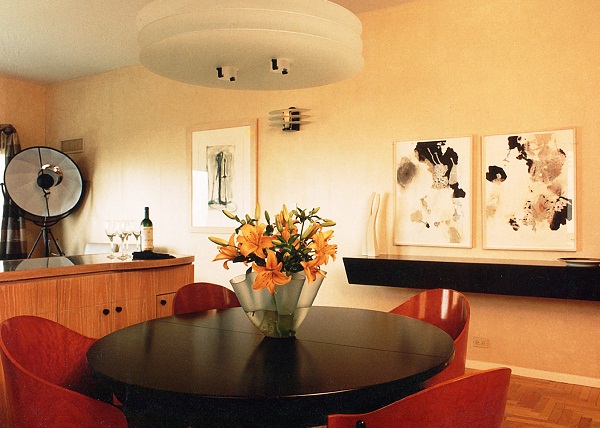
Interior design is about much more than merely having good taste. Designing elegant and chic interiors requires knowledge, resourcefulness and creativity, especially in small spaces.
As with most art forms, interior design is highly subjective; however, with the right focus and planning, it can be an exciting and cost-effective adventure with instant returns and extraordinary, long-lasting results — in other words, a profitable investment.
When it comes to small spaces, however, there is a common misconception that it is not worth the time or money that it takes to create a beautiful home. Conversely, many overspend and overdecorate their spaces because they do not have proper direction.
The intention of this guide is to not only present you with valuable options but also to describe those options to you to the extent that you can make an educated decision as to whether to pursue the changes — on your own or with the help of a professional. Specifically, you will learn professional tricks and techniques for transforming small spaces into beautiful, upscale dwellings while saving significant time, money and energy. The strategies that will be discussed have been successfully implemented for more than 30 years and reflect inventive problem solving.
After reading through this material, that knowledge will be yours to use as you wish!
This book is for anyone interested in learning simple, effective and practical home-design solutions for any type of space; however, it is particularly valuable for small spaces — such as studio or one-bedroom apartments, or even small rooms — which are common in urban settings.
Although the ideas here do not pertain solely to any one type of living space, the term apartment has been used throughout for simplicity. The information presented can also benefit those looking to spruce up starter homes, guest homes, smaller second homes or investment homes.
This guide is divided into distinct focus areas that have been carefully selected in response to a common question: Where and how should I focus my interior design efforts to achieve the most noticeable results in the least amount of time? These key areas — if you’re interested in a basic framework for a remarkable outcome within a reasonable time frame — are as follows: color and paint, furniture arrangement and selection, lighting and architectural changes. Architectural ideas and viewpoints communicated here are largely based on or supported by projects and philosophies of one of New York City’s leading architectural firms, David Estreich Architects.
The sections have been further organized into the following three categories where applicable:
Do-It-Yourself (Without a Designer): A do-it-yourself (DIY) approach that does not involve construction or architectural changes. All enhancements are strictly decorative and can be performed without the expertise of a professional.
| Pros | Cons |
| • Minimal cost | • Final outcome is uncertain |
| • Sense of control | • Higher probability of error |
| • Quick results | • Potential for costing more (both in time and money) |
With a Designer: When the desired changes are pursued with the expertise and experience of a professional. Here, the primary focus is on soft furnishings (furniture and accessories) without construction or the use of a contractor.
| Pros | Cons |
| • More likely to achieve or exceed expectations | • Additional time and effort to identify, select and work with a designer |
| • Cost savings on better-quality materials | • Potential for differences in vision |
| • Longer-lasting and more impressive results | • Expectations may not be met |
| • Unique and custom solutions | • Possible cost overages |
| • More efficient use of time | |
| • Transfer of knowledge and information |
Small Renovations: Using a professional with specialized construction knowledge (meaning an architect or advanced designer) and a contractor to implement architectural changes or enhancements to a space.
| Pros | Cons |
| • Can increase the value and purchase price of the home | • Higher initial costs |
| • Better functioning and more flexible space | • Takes longer |
| • Customized results | • Inconvenience of renovating while living in the space |
| • Permanent and longer-lasting results | • Coordinating and planning with multiple parties |
| • More unique and makes a big impression | • May require pre-approval by the building |
| • Fear of the unknown (e.g., where to start, total cost, timing, end results) |
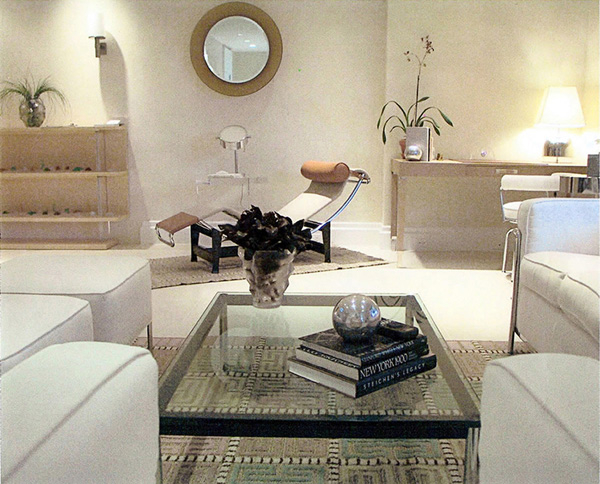
Many of the reoccurring concepts cited throughout this guide relate to the following four interconnected design theories, which contribute significantly to the end result of the suggested tips. If applied properly, these strategies provide valuable benefits, such as enhanced space, comfort, harmony, interest, function and aesthetic appeal.
It is overwhelming and distracting when too much is going on in a studio or one-bedroom apartment. The effect is similar to that of a pinball machine — how your eye bounces around from object to object without a stable resting place. That’s why it is important to establish consistency in your space. This effect can be achieved throughout an apartment by decorating with the same (or similar) colors, fabrics, proportions, textures and furniture styles.
Simply put: Less is more. Less color variation used more effectively, for instance, creates a more powerful statement. This is especially true in a small space, as individual objects tend to stand out more than they would in a larger environment. When you have less to work with, how you use what you have becomes more significant. Creating relationships between the items in your apartment as well as with the architecture is an effective method for optimizing and personalizing your space.
Consistency is what will help communicate a strong message within your home. Building a consistently designed space with a sense of visual flow is an essential component for instilling your home with meaning.

Think about some of the best novels and films — they all find creative and ingenious ways of connecting the elements within a story to support an underlying theme deemed to be meaningful. Likewise, it is equally important (if not more so) to do the same with your home.
In simple terms, definition of space means allocating different interior areas for primary functions: eating, bathing, resting, entertaining. A few examples of common areas that people usually define immediately are the dining room, living room, kitchen, sleeping area and bathroom. By defining your space, you create a personal map within your home.
As you will see throughout this guide, there are many ways that you can define your space, including maintaining a sense of consistency, relating furniture through alignment and accentuating particular elements through “framing.” Another way to define a space is to introduce particular elements that have a clear meaning or purpose, such as televisions (entertainment), place mats (eating) or desks (work).
Defining your space plays an important role in creating an ambience that will make you feel relaxed and comfortable.
Imagine you are strapped for time and under pressure to get something done. You need quick, specific and comprehensive answers immediately, so you call up a friend. Now, think about how annoying it would be if that friend were to explain things to you in a broad, general and undefined way. You’d be pretty frustrated because you wouldn’t be able to interpret what that person was saying. As a result, you wouldn’t get what you need, which would cause feelings of confusion and restlessness.
You can attain a sense of solace every day by having a home that is proportional and balanced. A personal setting that fosters stability and security is an important outlet for counterbalancing the distractions or stress that may come from everyday life.
You have the ability to influence how you feel when you’re at home. With this in mind, you should create a space that is a reflection of how you want to feel. From an interior design perspective, words such as proportion, balance, scale, symmetry and harmony are all essentially alluding to the same thing: a feeling of order and comfort within your space. There is an inherent value in proportion and how we relate to our spaces. Proportion not only provides comfort but also is linked with beauty (aesthetics); however, when it comes to designing your home to achieve all these valuable benefits, it may be difficult to figure out where to start.
You will see that many of the tips mentioned in this guide have an element specifically designed for achieving balance and proportion.
Without thinking twice, people easily spend thousands of dollars a year on yoga classes and related initiatives to balance the mind and the body. Why? Because it feels good. A healthy mind is a healthy spirit. The same concept applies to your home.
Focal points are visual destinations that naturally capture a person’s attention. From a design perspective, they are important because they offer the eye a comfortable resting place (and are usually located near eye level). For this reason, focal points can subconsciously provide more relaxing and peaceful atmospheres.
When interior space is limited, it is important to control where you want focal points to be. By keeping patterns and bold colors to a minimum, you are able to direct the eye to specific areas or pieces. Intense patterns and eye-catching colors can produce a potentially unwanted focal point that may divert attention and cause disorientation.
By understanding how to create and manipulate focal points, you can control what parts of your space are accentuated and which parts are best subdued. When selecting a destination point, it is important to consider several things: that the element is relatively more aesthetically pleasing than the other surrounding pieces, that the element fits well with the rest of the room and its components, and that it is centrally located in the room at eye level (if possible) — and looks attractive at that height. It is helpful to think of this exercise as a composition, in which all of the pieces fit together in a complementary way.
If everything has the same level of importance in your space, nothing will feel special. It is quite rare for a person to be completely ambivalent toward all objects in his or her home. People instinctually place more emotion or value on things that they perceive as important. By selectively differentiating areas or items in your space, you’ll evoke stronger emotions and interest. A natural tendency is to accentuate favorable focal points and de-emphasize less-appealing features or views.