The Complete Guide to
Preserving Your Own Seeds for Your Garden
Everything You Need to Know Explained Simply
By Katie A. Murphy

The Complete Guide to
Preserving Your Own Seeds for Your Garden
Everything You Need to Know Explained Simply
By Katie A. Murphy
The Complete Guide to Preserving Your Own Seeds for Your Garden: Everything You Need to Know Explained Simply
Copyright © 2011 by Atlantic Publishing Group, Inc.
1405 SW 6th Ave. • Ocala, Florida 34471
800-814-1132 • 352-622-1875–Fax
Website: www.atlantic-pub.com • E-mail: sales@atlantic-pub.com
SAN Number: 268-1250
No part of this publication may be reproduced, stored in a retrieval system, or transmitted in any form or by any means, electronic, mechanical, photocopying, recording, scanning, or otherwise, except as permitted under Section 107 or 108 of the 1976 United States Copyright Act, without the prior written permission of the Publisher. Requests to the Publisher for permission should be sent to Atlantic Publishing Group, Inc., 1405 SW 6th Ave., Ocala, Florida 34471.
Library of Congress Cataloging-in-Publication Data
Murphy, Katie A., 1979-
The complete guide to preserving your own seeds for your garden : everything you need to know explained simply / by: Katie A. Murphy.
p. cm.
Includes bibliographical references and index.
ISBN-13: 978-1-60138-352-5 (alk. paper)
ISBN-10: 1-60138-352-5 (alk. paper)
1. Seeds--Collection and preservation. 2. Gardening. I. Title.
SB118.38.M87 2011
631.5'21--dc22
2011012518
LIMIT OF LIABILITY/DISCLAIMER OF WARRANTY: The publisher and the author make no representations or warranties with respect to the accuracy or completeness of the contents of this work and specifically disclaim all warranties, including without limitation warranties of fitness for a particular purpose. No warranty may be created or extended by sales or promotional materials. The advice and strategies contained herein may not be suitable for every situation. This work is sold with the understanding that the publisher is not engaged in rendering legal, accounting, or other professional services. If professional assistance is required, the services of a competent professional should be sought. Neither the publisher nor the author shall be liable for damages arising herefrom. The fact that an organization or website is referred to in this work as a citation and/or a potential source of further information does not mean that the author or the publisher endorses the information the organization or website may provide or recommendations it may make. Further, readers should be aware that Internet websites listed in this work may have changed or disappeared between when this work was written and when it is read.
TRADEMARK DISCLAIMER: All trademarks, trade names, or logos mentioned or used are the property of their respective owners and are used only to directly describe the products being provided. Every effort has been made to properly capitalize, punctuate, identify and attribute trademarks and trade names to their respective owners, including the use of ® and ™ wherever possible and practical. Atlantic Publishing Group, Inc. is not a partner, affiliate, or licensee with the holders of said trademarks.

A few years back we lost our beloved pet dog Bear, who was not only our best and dearest friend but also the “Vice President of Sunshine” here at Atlantic Publishing. He did not receive a salary but worked tirelessly 24 hours a day to please his parents.
Bear was a rescue dog who turned around and showered myself, my wife, Sherri, his grandparents Jean, Bob, and Nancy, and every person and animal he met (well, maybe not rabbits) with friendship and love. He made a lot of people smile every day.
We wanted you to know a portion of the profits of this book will be donated in Bear’s memory to local animal shelters, parks, conservation organizations, and other individuals and nonprofit organizations in need of assistance.
– Douglas and Sherri Brown
PS: We have since adopted two more rescue dogs: first Scout, and the following year, Ginger. They were both mixed golden retrievers who needed a home.
Want to help animals and the world? Here are a dozen easy suggestions you and your family can implement today:
Five years ago, Atlantic Publishing signed the Green Press Initiative. These guidelines promote environmentally friendly practices, such as using recycled stock and vegetable-based inks, avoiding waste, choosing energy-efficient resources, and promoting a no-pulping policy. We now use 100-percent recycled stock on all our books. The results: in one year, switching to post-consumer recycled stock saved 24 mature trees, 5,000 gallons of water, the equivalent of the total energy used for one home in a year, and the equivalent of the greenhouse gases from one car driven for a year.
Dedication
There’s no one I know who better understands the value of family and commitment than my brother, Sean. He taught me to love the therapy of gardening, but more than that, he has shown me what selflessness truly is. Thanks, Sean.
Table of Contents
Table of Contents
Introduction: Encouraging Words for the Home Gardener
I grew up in the hot, humid sunshine of south Florida in a small, suburban home on less than one-fourth acre in the same house as my mother, brothers, sister, and grandparents. We had a little front yard and a little backyard, little extra money, and little extra time. Somehow, we always had flowers, fruit, and little garden vegetables growing despite all of our limitations.
Mom had her favorites, among them gardenias and sunflowers. Our front yard was always fragrant from the gardenia bushes and often dressed with tall, bright yellow sunflowers, both of which would grow almost year-round, with no harsh winter to impede on them. There was very little lawn, as lawns are difficult to grow in the sandy soil of Miami, which was ripe with ants and overwhelmed by crabgrass, so my family just grew plants — lots of plants.
All along the chain-link fence that separated the yard from the sidewalk were my grandmother’s prized yellow roses, some dozen or so rose bushes that formed a protective hedge and blessed our yard with a little bit of beauty in an otherwise concrete jungle. My grandmother planted these roses when her only son left to join the Marine Corps. They served as a reminder to the family of his sacrifice on behalf of others.
The neighborhood otherwise was a wasteland of crime, graffiti, and unsightly litter, but our yard was a haven with birds of paradise, yellow roses, bright white gardenias, a few palms, exotic orchids, an umbrella tree, a sea grape tree, a large pine tree, some hedges, and whatever we gathered from friends and neighbors. My personal favorite was lantana, which grew as a weed along the city sidewalks. I would gather the flowers and bury them in the front yard, hoping they would grow. That was, of course, before I ever learned anything about how plants actually reproduce.
Our backyard consisted of a chicken coop with about a dozen chickens, whose eggs we sold to neighbors and whose manure we harvested for our gardens. There were also a few sheds with a woodworking shop where my grandfather built a structure my grandmother used to raise her prized orchids. It was her own little garden greenhouse, except in that part of Florida, it is never really cool enough to need an enclosed greenhouse, so it was mostly trellising. In it, my grandmother spent many hours tending to her beautiful flowering orchids, as well as doing any potting, sowing, or other garden tasks she desired. (Sometimes, I think she would just hide out there to have a little peace and quiet, away from the chaotic house.)
Her workroom was nestled in the far corner of the backyard, right between a decades-old avocado tree that was ornamented with hanging stag horns the size of small cars and a hedge of bougainvillea, which protected the property from intruders with its spiky thorns. The tree produced avocados that were usually about the size of a gallon-sized milk jug. We often had avocados from the backyard with dinner. One of our childhood chores was to scour for freshly fallen fruit that we would place in brown paper bags to ripen for dinners. Once we ate the fruit, grandma would take the large seed, skewer it with three toothpicks like a tripod, and set it halfway in a cup of water in the windowsill to begin a new tree. She planted some of these trees, but gave many more away to neighbors and friends. In this way, the avocado was my first experience with harvesting seeds for growth.
In addition to these other plants, my family also had a mango tree that grew on the property line in the corner of the other three yards we neighbored. The fruit that fell in our yard was ours to keep. We also grew limes, grapefruit, and oranges from time to time, though due to citrus canker threat, these trees were eventually eradicated in our area. But for a time, we often feasted on fruit salad for dinner.
When we bought pineapples at the grocery store, my grandmother saved the tops and planted them in our side yard. These grew into new pineapple plants that were just as tasty as the ones that came from Hawaii. We also would collect and trade the sea grapes to neighborhood kids for their nectarines and oranges.
I was often fortunate enough to be able to take trips up the coast to visit my aunt in Merritt Island, Florida. She kept some of the sweetest grapefruit known to the state (at least in my opinion), and her gardens were tropical and lush, fragrant, and colorful. It was in her front yard that I discovered plumeria, a sweet, nectar flower nearly as fragrant as gardenia and every bit as lovely.
We also lived very close to my great-grandmother’s horse ranch. She had a lime tree in her side yard with a stag horn so big it bent the tree over and down to the ground. This lime tree was at least 25 years old and still produced amazing fruit. Great-grandma also had a vegetable garden where she grew lots of tomatoes. She and my great-grandfather owned a restaurant and were chefs; they prized their vegetable garden almost as much as their own home.
My older brother had the opportunity to go to a vocational high school that focused on horticulture. He learned many practices and brought them home to implement in our yard. I observed as he grafted orange trees, pruned roses into perfectly shaped bushes, grew herbs and flowers we never had before, and brought my grandmother’s struggling elephant ear plant to vibrancy. He had a truly green thumb and made me realize that gardening was not just an interesting hobby that belonged to past generations; it was in our blood.
As I was coming into my own, I was fortunate enough to live for a while on a south Miami property that was a couple acres large. It was a beautiful log cabin on a densely wooded lot. The property’s owners loved many of the same plants I grew up with, like stag horns, but they also had several fruit trees in an orchard in the backyard surrounding the pool. Much like our avocados and mangoes, their family often delighted in fresh grapefruit, oranges, lemons, and Key limes that grew on the thorniest trees I had ever known to that day. True Key lime pie is very different than just lime pie, and with fresh Key limes from the backyard, it is remarkably good.
I left that temporary home for the Air Force, which took me all over the United States. I experienced plants I had never seen before that could not grow in the South Florida heat. My newfound love of horticulture was met with an endless supply of new experiences. I learned lantana was not just a sidewalk weed. I discovered hydrangea in Virginia, and completely lined my home with them, experimenting with acidity and alkalinity of their soil (which changes the color of the flowers). I found all of my new favorites — crepe myrtle trees, azalea, maple, rudbeckia, columbine, and more — across the vast landscape of the country.
In Virginia, I became an accidental master gardener, taking classes at community centers, winning awards for my small home garden, and volunteering hundreds of hours at community gardens. The title was inadvertent; I earned it in passing while doing something I truly enjoyed. My passion for horticulture was alive and well. My garden filled with hostas, pansies, snapdragons, dianthus, azaleas, hydrangeas, gardenias (which were not known to grow so far north), roses, hollyhock. Many more varieties earned me daily visits from neighbors, and we began trading seeds.
Gardening became a neighborhood practice, improving the lives of my own family and those who shared in the hobby. We grew a small community vegetable garden (this was all in base housing on Langley Air Force Base) with rows of beans, peas, wintergreens, herbs, carrots, potatoes, tomatoes, and peppers. Saving seeds from these plants and using them to grow many generations, we all supplemented lunches and dinners with our crops and enjoyed a strong sense of community from our garden.
While I was away, my family sold my childhood home and moved to northern Florida. They still have no lawns, as the soil is still as sandy and problematic, but on the several acres mom and grandma own, there are bountiful plants. All the wonderful things they could not grow further south now grow in abundance. My brother still tends to my mom’s gardens and his own, and my grandmother and grandfather now have a small farm and orchard, as well as a beautiful landscape. There are still gardenias and yellow roses aplenty, and now hollyhock and hydrangea thrive as well. In fact, the hollyhock sprouting in my garden in Oklahoma is from the seeds of my grandmother’s plant in Florida, which were the children of mine that grew in Virginia, and siblings to those of various friends and neighbors in Colorado and Texas.
Now, as I settle into my new home in Oklahoma, I have just enough room for a small flower garden with my few favorite plants to keep my home inviting. I will undoubtedly spend my extra hours doing community gardening and growing things indoors with my own children to ignite the spark in them. Gardening is more than just a hobby; it is a lifestyle. It is a bond that connects generations and builds communities. It is a manifestation of natural desires to be productive and master the environment. It is therapeutic, and it is valuable.
Whether you have acres, or a few feet in front of a condominium; whether you are in the far extremes of the South or at the highest altitudes; or whether you have a lofty budget, many resources, and lots of time, or very little of the three, gardening is an accessible, worthwhile endeavor. Gardening has many tangible benefits, including enhancing the beauty of the environment around you, increasing air quality, and growing healthy foods.
This book seeks to help you become the gardener you desire to be. It will help the home gardener perpetuate the plants you already possess and those that you will plant and grow in the future. It will help you find ways to not just grow your plants, but grow your garden, widen its horizons, and mold it to produce what you require of it. It will not tell you what you want to grow — that part is up to you — but it will make recommendations for plants that are easier to grow and propagate (reproduce) from seed.
I will cover the reproductive life of plants and how they procreate, using that information to assist the natural reproductive process to meet your needs as a gardener. I also will cover hundreds of specific plants and how to harvest life from them in the form of seeds. It is my hope that this book will be a detailed resource for you, the home gardener, with well-worn, weathered pages that inspire rows of bountiful crops and lush beds of ornamentals. I also wish you the absolute joy that gardening has brought me and my family over the years. Happy harvesting!
Table of Contents
Chapter 1: The History of Preserving Seeds
Gardening long served an important role in society. From earliest history, primitive peoples relied on the food they harvested in addition to the spoils of a hunt for sustenance. As the human species developed in ability — using tools, communicating, and learning — sophistication in the garden also developed. No one knows exactly where and when man first deliberately gathered seeds for future use in the garden, but the evidence of this learned behavior dates back to very early civilizations.
Origins of Seed Preservation
Many historians believe that wheat was the first grain man cultivated, with evidence of its planting dating back more than 10,000 years in the Middle East. The citizens of Jericho sowed two varieties of wheat (emmer and einkorn), as well as barley around 8,000 B.C. As the first-known town with more than 2,000 residents, archaeologists attribute Jericho’s successes to the ability to cultivate the land and produce a crop. A pioneering civilization on many accounts, with the ability to grow and harvest their own food, the citizens of Jericho advanced beyond their hunter-gatherer neighboring villages, requiring the city to build fortifications to protect its many assets, including propagated food.
In what is modern-day Mexico (the Tehuacán Valley), people first cultivated chili and squash as crops as long as 7,000 years ago. Corn (maize), beans, and gourds followed suit soon after. All these plants preceded rice as a crop, which did not occur until about 2,500 B.C., in either India or China.
Many more pieces of archaeological evidence show the most common plants still grown today have been used for thousands of years. There have been as many generations of plants as there are years between those early cultivars and the ones that exist now. Some cultivars carry large genetic differences due to environmental changes, migrations, people intentionally growing plants with characteristics they desire, and so on. Regardless, people still use many plants like just like their ancestors did. From the beginning, horticulturists — those who practice cultivating plants in a garden or nursery — from around the world recognized and cherished the legacy of seeds and the numerous gifts they give us. They are food but also serve to provide clothing (cotton, hemp), medicine and holistic therapy (Echinacea, tea), shelter (straw as thatched roofing, timber), and tools (plant fibers as twine, gourds as ladles, spoons, and bowls). They are a source of natural beauty, refreshing and fragrant, and improve the air surrounding us. Their value lies in both form and function.
Because of their inherent importance, the earliest gardeners saved and preserved the seeds from the plants they used, sowing their seeds across the landscape as they migrated to new frontiers. They collected new varieties and improved their crops. Sometimes they thrived (as in Jericho) and sometimes they failed (as did Americans in the Dust Bowl), but they gained a better understanding of the natural environment and amassed a collection of best practices in cultivation still passed on today.
Historians hold accounts throughout humankind’s historical narrative of seed saving. Cultivated crops emerged as the main source of food for man and his animals and were often so valuable that civilizations periodically bartered seeds. Mayan and Aztecan societies even used seeds such as cacao and chia as currency, with cacao actually considered sacred.
Europeans traveled to the farthest corners of the unexplored world and returned home with precious seeds from the new lands they had visited. In fact, explorers discovered and settled the Americas while racing to find a more efficient trade route for spices grown in places like India and China. Leaders of European nations spent vast resources on developing trade routes because many of the seeds that were so highly developed could not be grown in Europe. Europeans still enjoy many plants from explorers’ yields by cultivating the seeds successfully brought back on their own soil. Thus, plants and seeds played a significant role in finding and developing the New World.
When establishing settlements in the Americas, Europeans arrived with carefully guarded seeds from home, hoping the seeds would thrive and become their initial supply of food while exploring their new environment. Fortune held for many settlers, and they successfully colonized the Americas. In turn, some of them traveled back to the European continent with indigenous seeds like corn, which at the time was unknown to Europeans.
Among his other missions, Captain James Cook explored the Pacific Islands in part to bring back specimens and seeds of the breadfruit plant. Sailors demanded breadfruit because it was easy to cultivate and harvest aboard ship, and they used it for food during their long ocean voyages. Sir Walter Raleigh brought plants and seeds back to England as well, introducing the Europeans to the wildly popular and addictive nicotiana (tobacco) plant.
Seeds do not just carry historical significance in the migration of societies and exploration and conquering of new lands. Seeds also carry a great deal of importance in the fabric of society. The story of Jack and the Beanstalk is more than just a parable with a warning against imprudent decisions. It demonstrates the value of the tiny seed with exponential potential. The Biblical tale of the faith of a mustard seed is another instance of such great value assigned to such a small biological wonder. The seed is a symbol of potential and promise, of fertility and regeneration. The Good Earth by Pearl S. Buck follows a Chinese rice farming family through feast and famine, and The Grapes of Wrath by John Steinbeck is about an Oklahoma farm family forced off their land in the 1930s because they lost their ability to cultivate seed into crop.
Seed Preservation Today
American pioneers are responsible for planting seeds, which to this day represent crops still cultivated across the United States and Canada. Today, those gardening practices that happened throughout history still endure and prevail in every agricultural society on earth. Scientists at the University of Wisconsin-Madison estimated total organic and nonorganic farming (including pasture used for grazing for livestock) consumed approximately 40 percent of the Earth’s arable land in 2005, compared to about 7 percent in 1700.
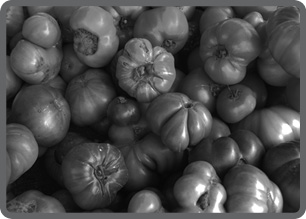
Heirloom tomatoes
In the last quarter century, seed saving and preservation reemerged as a cherished gardening practice. Heirloom fruit, flowers, and vegetables are back in force in their rightful place — the home garden. Heirloom plants are plant species handed down through generations, like a prized wedding ring or an ages-old family portrait. Many families keep these traditions and pass on seeds, with grandchildren enjoying the same heirloom fruits, flowers, and vegetables that their grandparents did. There is no genetic engineering, complex scientific alteration, or hormones. What sits on the plate or in the vase is an unaltered grandchild of the plant from great-grandmother’s garden.
While some people preserve plants for their personal enjoyment, there are other reasons people opt to preserve seeds and grow their own plant varieties. One such reason is the assurance of the means by which the plants are grown — the use or non-use of chemical fertilizers, pesticides, hormones, or herbicides. The increasing desire for organically grown foods is evidence that consumers are aware of the harmful effects chemical pesticides have on those who consume traditionally grown produce and foods. People reverted to home gardening to satisfy their desires for quality-grown food that carries no unnecessary carcinogenic risk for them and are interested in preserving seeds to make such home gardening more affordable and sustainable.
Some gardeners preserve seeds for hobby and some for health, while another group of people save seeds for survival. There are many reasons survival gardeners save and preserve seeds. While some believe in the impending doom facing civilization, be it Armageddon or some other end-time prophecy, others simply believe there is a likelihood of natural disaster on a large scale that will impact life as we know it, to the extent that having a stash of seeds ready to grow will ultimately lead to the survival of their families. Some seed companies cater to the needs of these individuals and even sell ready to use seed vaults that contain all the preserved seeds a person needs to survive through a “the end of the world as we know it” situation. Typical seed vaults are actually not vaults at all, but rather airtight containers housing a few pounds of various types of seeds, usually 25 to 30 varieties with about 50,000 seeds. A 1.5-pound seed vault, containing 50,000 nonhybrid seeds of 25 plant varieties, is available from Heirloom Organics (www.non-hybrid-seeds.com/sp/survival-seed-vault.html) and another, containing 35 plant varieties in 22,000 seeds, is sold by Hometown Seeds (www.hometownseeds.com/survival-seeds-c-213/survival-seeds-peace-of-mind-for-your-family-p-35).
In addition to these considerations, many economists and agriculturists around the world believe that with the increasing demand for produce and the ever-shrinking availability of farmland to expand into, prices for produce will grow higher and higher. Accordingly, they believe this trend will continue until the market eventually cannot fill the need, and a food shortage will occur. People with their own food supplies will not have to face many of the hardships it is believed people depending on the economy to provide their food will — standing in bread lines, dealing with ration stamps and cards, and going without altogether. Of course, this is only one theory, but there is evidence already that it is an increasing likelihood. Those people who preserve and grow their own seeds, and have the knowledge to do so into the future, will be better equipped to endure this kind of hardship.
Around the globe, widespread legislation threatens to control seed preservation and distribution. In the recent past, Great Britain revised and loosened their seed legislation. Initially, gardeners could only use, trade, and sell from a list of acceptable seed varieties. The legislation was created to ensure that the integrity and genetic diversity of seeds was maintained, and the responsibility was on commercial growers to determine what varieties to invest their time and money into preserving. However, it also meant that certain heirloom varieties that did not have the perceived popularity or backing by commercial growers risked falling into obscurity.
Many other nations are restricting the free trade of seeds by farmers and gardeners in much the same way as Great Britain’s original legislation, allowing only commercial companies to distribute seed. In some cases, commercial growers lobby ill-informed legislators, assuring them these restrictions are in the best interest of the nation’s agricultural stability, but in reality, commercial growers can only sustain a small portion of the seed diversity that a network of small, independent growers can. Though intended to preserve the purity of seed stocks, these laws significantly restrict small farmers from conducting business as they often have for many generations. In India, the law dictates that farmers cannot even give away their surplus seed; it must be destroyed.
These types of laws are another major reason for the recent growth of individual interest in harvesting and saving seed. When governments begin to infringe on personal liberties, people take greater interest in preserving those liberties. In this case, people are actively taking measures to preserve their ability to provide food for themselves and their families and to run their businesses as they have grown accustomed to.
But seed legislation and government intervention is not all doom and gloom. In the United States, the National Center for Genetic Resources Preservation (NCGRP) maintains the largest of many thousands of seed banks around the world. With more than 475,000 accessions in its temperature and humidity-controlled Colorado facility, its mission is to ensure agriculture can survive in the event of global catastrophe or significant climate change. These accessions currently represent about half of the 10,000 species preserved nationally by the United States. NCGRP also maintains cooperation with the Svalbard Global Seed Vault, built in the arctic north to house and preserve a global collection of seeds. Other nations are attempting national seed preservation efforts as well, some successfully and others failing (as in Iraq where seed stockpiles were pillaged during war). Beginning with the first seed bank in Russia in 1894, the N.I. Vavilov All-Russian Scientific Research Institute of Plant Industry, and looking forward to future arctic preservation efforts, seed saving is a global effort.
The NCGRP collects its accessions mainly from small, independent growers across the country. Its collection is largely heirloom variety seeds. As an at-home gardener, like the smaller independent growers, you play an important role in preserving plant species when you harvest your own seed. Every generation a plant species succeeds ensures the line for posterity. In your backyard garden plot, you are making history, and as you pass your seeds on to friends and family, you are creating a legacy.
Benefits of Gardening and Saving Seeds
Gardening is widely regarded as one of the most therapeutic hobbies in which people engage. It is known to be calming and meditative, and it quenches a primal need to provide food to family and work the earth. It is an outlet for frustration and for creativity. It brings a measurable product in terms of quantity and quality, as well as intangibles like beauty. A plant rejuvenates a room more than a painting, purifies the air more than an air freshener, and is a one-of-a-kind living creature.
Of course, plants are food as well. Certain vitamins that are found in sufficient quantities solely in fruits and vegetables prevent disease and improve overall health. In third-world nations, certain nutritive diseases prevail. The World Health Organization of the United Nations (WHO) addresses many of these diseases on its website, www.who.int, including vitamin A deficiency (causing blindness), combatable by consuming simple garden vegetables like carrot, broccoli, and sweet potato. Scurvy, once common aboard ships, is easily staved off with vitamin C-rich foods. Consuming the plant foods that are routinely grown in the home garden fights beriberi, lesions, pellagra, pernicious anemia, rickets, neurological disease, hemorrhaging, and a variety of other conditions and diseases.
Economically speaking, gardening is a more cost-effective way to provide many of these dietary staples. Studies conducted by the National Gardening Association indicate that with an initial $70 investment in seed, tools, and fertilizer and about 600 square feet of garden space, the average annual vegetable garden yield is $530 in produce. A savvy gardener who starts with seeds instead of plants can save even more and possibly produce even more (with heirloom varieties that thrive in the local environment). Even if starting from seed this year is not a possibility, in following years, starting from harvested seed will prove to be very cost-effective, nearly free. And even if you do not have 600 square feet to plant in, the estimated annual yield for a well-maintained garden is about a half pound per square foot, so any amount of gardening can save you money.
There are countless health benefits to gardening in addition to providing nutrition at a reduced cost. Working the land — bending, stooping, pulling, digging, raking, carrying — all benefit physical health and fitness. Fresh air and sunshine, which is a major source of vitamin D, also contribute significantly to health and wellness. Better overall health and lower stress levels are consistent traits found among regular gardeners.
Gardening and seed saving both also play important roles in family and community. Neighborhood gardens offer up locations for friends to come together for their own benefit and for that of the entire community. They learn new techniques from each other and pass along plants, seedlings, and seeds to share.
Sharing seeds occurs in more than the community garden plot. Seed cooperatives and seed exchanges are growing in popularity as gardeners seek less commercialized varieties of garden favorites, like heirloom tomatoes and beans. This is yet another cost-effective gardening practice that further increases the benefit to the home gardener.
Table of Contents
Chapter 2: Initial Questions about Preserving Seeds
Where to Start
Most gardeners have a selection of favorite plants that they would like to continue to grow in their gardens. If this is your case, you will want to research the specific reproductive life of the plant you would like to harvest seed from to find out what its needs are, when and how it is fertilized, how it produces seed, and when the seed is ready for harvesting. This book will include many common and some lesser common garden plants and varieties with all the research complete for you. If you do not have plants to harvest from, see Chapter 3, which describes in more detail readily available seed sources. Once you have your seed and plant it, you will want to come back to this book to read about how to get it to produce viable seeds for the future.
Where Can You Grow Plants?
Is there any particular geographic region of the country that is more conducive to successful seed saving and preservation? The answer is no. If you are successful in growing plants in your area of the country, there should be nothing preventing you from saving and preserving the seeds from those plants, or any new plants that thrive from seeds you have acquired. Plants existed on the planet before humans or animals were present, and they thrive sometimes despite our best efforts to eradicate them (think of persistent weeds). Some plants are hardier than others and better able to survive, and conversely, some do not like human interference at all. Regardless their special needs, most plants take well to seed preservation and human assistance in propagation.
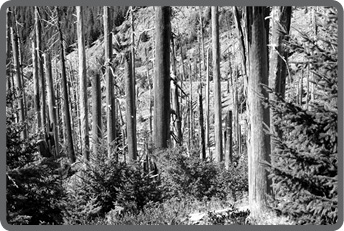
Rebirth of a forest that was destroyed by the eruption of Mount St. Helens
Plants are genetically predisposed for adaptation and survival. To understand the survival instinct that exists in the plant world, revisit the photographs from the aftermath of the volcanic eruption of Mount St. Helens that occurred in Washington in 1980. Remember the pictures of the seedlings sprouting through the volcanic ash? Those little evergreen seedlings grew with determination, even in the most drastically unfavorable conditions possibly imaginable.
Plants are like any other living, breathing organism. They want and need to live. Everything in their genetic makeup demands it. It is feasible to grow plants in nearly every location on earth, except where the cold temperature extremes make it impossible for plant life to survive.
That being said, you know which plants have given you the best results and were the easiest to grow with the least amount of effort. If you have limited experience in your own garden, visit a local botanical garden and ask questions, or seek the input of a neighbor with a thriving garden. Every environment possesses its own challenges, be it humidity, aridity, soil acidity or alkalinity, sun exposure, extreme cold, excessive heat, poor drainage, or even altitude. Knowing your environment and its problems will help you choose successful plants for your region. Consult the quick reference section in Appendix 1 for ideas of plants that do well in your climate and region of the country, and start there.
How Long Does it Take?
Depending on what you expect from your garden, it can be an easy, part-time hobby, or a time-consuming lifestyle. If you are looking for a few tomatoes and a couple green beans, you will have plenty of time for other things around your gardening. However, if you are considering a full-scale backyard garden, complete with cabbage, lettuce, carrots, potatoes, spinach, cucumbers, melons, strawberries, and all other types of delicious fresh treats, you can expect to spend considerably longer in the garden. In fact, if that is the scale you wish to achieve, you will likely be looking at a change in lifestyle if you are not already gardening.
This is not meant to discourage you in the least from gardening as much of your own food as possible. On the contrary, it is one of the healthiest choices you can make for yourself and your family, and one of the best returns on your time investment that you can make. Gardening is an economic decision to use less to get more. It is a decision to work and build strength and to eat more nutritiously. Its benefits are great, and its cost in time is disproportionately low.
While there are lulls in between growing seasons, in the diversified garden, during the warm weather months you will invariably have a garden task to complete. Whether it is removing weeds, watering, pruning, or other basics to maintain the health of the plants or to prepare a plant to pollinate and produce seeds, there are abundant tasks for the home gardener to perform. At the beginning of the growing season, expect to spend time preparing the soil, sowing seeds to start plants, and thinning the herd for the best samples to grow. Then you will be monitoring their growth, watching for blooms, deciding how many plants to breed and how many to eat, how to keep them from breeding on their own, and watching them develop seed for the next year’s garden. You will harvest that seed and prepare it for its rest (and yours) before the next season starts anew. It is work, but it is also rewarding.
Look at all of the requirements of the plants you are planning to grow and harvest seed from. See what kind of attention they need and how routinely. You can take shortcuts on some things, like irrigation systems instead of hand watering, but assess fairly the amount of time each task takes and when. Include time to prepare soil and pots, sow seeds, transplant them, water, thin seedlings, emplace isolation techniques, pollinate, protect plants, move them, and gather and dry seeds. Stagger your plantings throughout the growing season to spread out your garden tasks, and then plan to be in the garden regularly. This way, you will never have too many tasks to complete at any one time.
How Much Room Do You Need?
A full vegetable, fruit, and flower garden for a single family over the course of a year can take up hundreds of square feet in the yard. To determine how much room you need, decide what you need from your garden. Again, a few plants can make a huge impact on a grocery bill and still take very little space. Some do not even require being planted or grown outdoors, let alone in mass quantities in the ground.
Growing a garden should be a gradual process for the inexperienced gardener. Start out with a few stable varieties that do well in your region and that you will enjoy (for example, do not grow peaches if you will not eat peaches). You should gradually increase your garden to fill both your available time and available space.
If you only have a patio at the back of your townhome or apartment, container gardening will be the only option for you, but you can do a lot with containers; strawberries and tomatoes do very well, for example. If you have many acres, you may have more space available, but time will still be a limiting factor for you. Can you successfully plant and harvest a full acre garden? Some certainly can, but others may find it overwhelming. Assess your needs and desires, look those plants up, see what their requirements are, and determine what you can fit in your garden.
For seed preservation, little room is needed besides the garden itself. You will want a work surface on which you may separate seeds from their pods, label and prepare them for storage, and adequate storage room (usually a dedicated shelf in the refrigerator for most kitchen gardens).
For some plants with special needs, you may need to find a dry, warm place to guard dug up plants or harvested seedpods while they dry. This can be a heated shed or garage, basement, or greenhouse. You may also need a root cellar or other arrangement to simulate damp, cool storage for plants over the winter. These requirements, though, depend on your region, climate, and your plants’ specific needs.
Do You Need Special Equipment?
Though there are all types of specialized equipment you may purchase if you so desire, the majority of seed harvesting tasks require nothing more than a pair of garden scissors, a shovel, a good pair of gloves, and a bucket. Certainly, no expensive equipment is required. You can dry seeds on a tarp, a cookie sheet, or newsprint. You can collect silica gel packets from products you buy (shoes and luggage frequently have these packs inside) to keep in with your seeds to keep them dry while you store them. You can recycle clear jugs to use as cloches and insulate your plants. Cloches are small structures made of glass or clear plastic that are placed over cold-sensitive garden plants in cold weather (Cloches are discussed in detail in Chapter 6.). Window screening and two-by-fours make cages to isolate your plants. The salvage store can be your greatest friend in the garden, using old gates as trellises or old windows as a cold frame — a box with glass or clear plastic sides and an opening roof that also protects plants from cold. Community sharing and swapping sites like Craigslist (www.craigslist.org) and Freecycle (www.freecycle.org) often have salvage items posted by members that you can use in the garden as well. Anywhere this text describes a process requiring materials, it will recommend commonly available resources that cost little to nothing, or that most homes already have. The goal here is to make the process of saving seeds attainable for every home gardener.
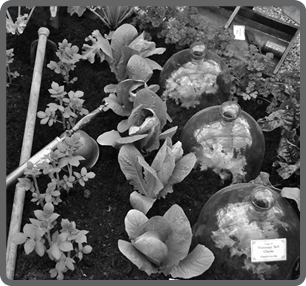
Example of a glass cloche
Case Study: Preservation and Storage Tricks to Yield Fresh Product
Dan Jason
President, The Seed and Plant Sanctuary for Canada; owner, Salt Spring Seeds
Dan@saltspringseeds.com
Dan Jason is the president of the Seed and Plant Sanctuary for Canada and the owner of Salt Spring Seeds. Jason has been president of the sanctuary since 2002 and founded his mail-order seed business Salt Spring Seeds in 1986.
His passion for seed preservation began when he was a young teenager. “When I started to grow out unusual crops in the 80s, such as quinoa and amaranth, I realized the best way of popularizing them was to start my own seed company,” Jason said. He is currently upholding his strong enthusiasm for saving seeds through the organizations he leads and the many books he has written.
Jason describes the process of saving seeds in four basic steps: selecting the seeds when they are ready, gathering the seeds, drying, and then storing them.
“Getting good seeds at the right time involves knowing the usual life cycle of a plant and whether a seed will stay true,” Jason said. The means of gathering the seeds involves several different methods, such as plucking, rubbing, shaking, or grabbing.
Drying requires the preserver to have an appropriate drying space. This step helps prevent mold from accumulating. “Most seeds will dry adequately for home storage if spread on wax paper, newspapers, trays, plates, or screens in an airy place for a few days to a week,” Jason said. He also said that letting the seed heads or stalks dry in open, paper bags for one or two weeks is an equally effective method.
When digging up plants for storage, Jason advises choosing healthy plants that show desirable characteristics to the variety. “Don’t save seed from plants that bolt to seed the first season,” Jason said.
http://seedsanctuary.com
Salt Spring Seeds provides untreated, open-pollinated, and non-GMO seeds to farmers and gardeners on their website. For more information, please visit Salt Spring Seeds at http://saltspringseeds.com.
Table of Contents