The Healing Dimensions
ResolvingTrauma In BodyMind and Spirit
Copyright © 1997 by Brent M. Baum. All rights reserved. No portion of this book, except for brief reviews, may be reproduced, stored in a retrieval system, or transmitted in any form or by any means – electronic, mechanical, photocopying, recording, or otherwise, without written permission of the publisher. This text is not intended as a substitute for appropriate medical or psychotherapeutic care.
*Essential features, including names have been altered to respect and protect clients.
Published by:
Healing Dimensions, A.C.C.
5675 N. Camino Esplendora #6137
Tucson, Arizona 85718
Phone: (520) 615-9247
Web Site Address: www.healingdimensions.com
Edited by Laura Orlich
Cover illustration and design by Dale Chaon
Cover photographs by Brent M. Baum
Portrait photograph by Philip Ramackers
Inside illustrations by Lynne M. East
Layout by Glen Weimer
Manufacture and reprint by West Press
Original Cover production by Artistocrat Printing
First Printing, 1997; Second Printing, December 2004
Printed in the United States of America
Library of Congress Cataloguing-in-Publication
Baum, Brent M.
The healing dimensions: resolving trauma in bodymind and spirit/by Brent M. Baum – 1st ed.
p. cm.
Includes bibliographical references.
ISBN 978-0-9661990-5-5
Library of Congress Card Catalog Number (CIP): 97-91308
1. Self Help 2. Psychology |
3. Spirituality |
4. Mind and Body |
5. Psychoneuroimmunology |
I. Title II. Author
This book is dedicated to Doug Brantley
whose early departure inspired me to seek
a more effective and timely resolution
for the traumas that foster illness
in bodymind and spirit.
Acknowledgments |
|
The “Yantra” |
|
Foreword |
|
Preface |
|
Definition of Trauma |
|
Chapter One: |
The Focus |
Chapter Two: |
The Journey of Empowerment |
Chapter Three: |
Holographic Space |
Chapter Four: |
Trauma Metaphors – The Keys to Healing |
Chapter Five: |
The Dynamics of Trauma Induction |
Chapter Six: |
“Triggers” – The First Glimpse of Trauma |
Chapter Seven: |
The Language of Healing |
Chapter Eight: |
The Electromagnetic Key |
Chapter Nine: |
The Physics of the Soul |
Chapter Ten: |
The Hierarchy of Healing |
Chapter Eleven: |
The Spiritual Implications of Trauma |
Chapter Twelve: |
Recovering Spiritual Awareness After Trauma: Twelve Principles |
Chapter Thirteen: |
The Healing of Dreams |
Chapter Fourteen: |
The Healing of Disease |
Chapter Fifteen: |
Creating the Future and Resolving the Past |
Chapter Sixteen: |
Conclusions |
Notes |
|
Bibliography |
|
First, to each trauma survivor whose shared struggles have given me the gift of insight and validation, I remember and offer my tribute to you. Without your willingness to face your pain, the lessons and techniques contained herein would not be. I thank my angels, especially Michael and his associates: Gail Konz, Chris Oehrle, Mary Jo McCabe, Fran and Ray Lemkul, Ronnie and Betty Falgout, Tim Frank, Gay Mallon Frank, Rev. Reed Brown, Rosemary Vaughn, Tony Farano and Sue Pirrung, David Abadi and Martha Foy, Susan Holmen, Irene Anderson, Linda Prucha, Chris Russell, Bill Wigmore, Martha Hildreth, Ron Welch, Talbot Outpatient Center, Cottonwood de Tucson, Kathleen Fitzgerald, Rachel, Judy, Liz, all the “Light Bearers,” Dr. Mariko Tanaka, Dr. Roger Cummings, Dr. Teri Daunter, Dr. Carol Arnoff, Dr. Fran Moore, Dr. Beth Shapiro, Dr. Lorraine Baillie, Dr. Jim Graham, Dr. George Nash. Acknowledging some other special friends and influences from near to remote past: Marty Zlatic, David Ulkins, Robert H. Jordan, Scott McLavy, Dare Nagy, Don Lavender, Daniel Moxley, Bobby Spell, Shawn Marsh, Peter Udall, Kirk Kupensky, James Efferson, Reverend Jaime Madrid, Reverend Janusz Ihnatowicz, Dr. Paul Jacobs, Dr. Harold Forshey, Dr. Joseph Seger and Patti Seger, all my friends over the thirteen years of digging at Tel Halif, Kibbutz Lahav, John and Nancy Stein, Gabriel and Alicia Stein, the Missionaries of Charity at Mansatala in Calcutta, Reverend John Naughton, Reverend Leo Guillot, Reverend Jean-Pierre Ruiz, I express gratitude. I recognize the Diocese of Baton Rouge for its twenty years of support. To my friends in Holy Family, St. Thomas More, and St. George Catholic Church Parishes, I express gratitude. I thank the “medical team in spirit” who has worked at least as hard as I. I thank you who are my “spiritual family.”
I offer heartfelt gratitude to Laura Orlich for your friendship, support, and indefatigable editing skills; Dale Chaon, for your artistry and graphic design; Glen Weimer, for your assistance in layout, and Robert Odom, for your support and personal reflections.
Most profoundly I am grateful to my earliest teachers – my parents, my first gods, Mom and Dad. I thank the Divine. All is perfect; all is as it should be. I cherish my secondary parents – my sisters, Margie and Peggy, who so greatly enhanced the love and nurturing, and my one of a kind brother, Jerry. Keep on singing. I thank my younger sister Carole for all that we shared growing up and for making me part of her current journey; it is a privilege to share your “little angels.”
To all the guiding influences, of many eons, who have contributed to this expression of hope and vehicle of healing, I say thank you.
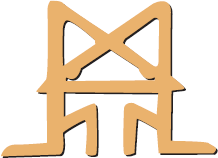
“Unlimited Power in Service to Others”
A “Yantra” is a visual form of meditation. By looking upon the image one is drawn into its mysteries and messages. The design on this page contains a variety of images, including: two genuflecting “Ankh’s” ( ) – the ancient Egyptian symbols of “life,” facing each other. These symbols were often depicted as persons to communicate special messages in the hieroglyphics and mythology of Egypt. In the Christian tradition, the figures resemble the combination of the Greek letters “Chi” (X) and “Rho” (P) which, when superimposed upon each other, combine to form the symbol for Christ; the “triangle” becomes the symbol of the “Trinity” – the “Father, Son, and Holy Spirit” of Christian belief. Whether Egyptian or Greek in derivation, the heads of these universal figures meet to form the mathematical symbol for infinity (∞), denoting eternity or absence of limitation. Their arms form a pyramid or triangle – ancient symbols of power and balance. These two figures of unlimited power are superimposed over two smaller human figures whose heads are bowed and are visible within the pyramid. The arms of the Divine figures are superimposed upon and render service through the arms and humble stance of the two small human figures who are overshadowed by the immensity of their “guides.” The positioning of the heads and knees combine to form a four-pointed star, indicative of the four directions and four “spirits” of the Native American Medicine Wheel – inclusive of the four protectors invoked in the hierarchy of angels, the Archangels: Michael, Gabriel, Raphael, and Uriel. There is an arrow in evidence when looking upward from the bottom of the figure, a reference to Isaiah 49:2b, “He made me a polished arrow and in his quiver he hid me.” The Greek letter “Tau” is also evidenced, signifying a new beginning. Together, these images communicate the abundant energy, life-force, and Divine support available for service to others. When you behold this yantra within the pages of The Healing Dimensions, may you be inspired to remember your true nature and the powerful resources available for healing self and others.
All pain, trauma, addiction and disease are raw material from which our conscious awakening is formed. The experience of walking through the pain (utilizing the tools available, whether they be therapy, treatment, bodywork, journaling, etc.) is a journey of healing which moves us from darkness into light. This journey is multi-dimensional, transcending the limiting experience of pain and embracing the divine self within each of us. The journey through the “valley of the shadow” can bring us from the depths of desperate limitation to the heights of expressing the fullness of our humanity. This is our birthright.
The book you now hold in your hands is an extraordinary work. Through its pages you will embark upon your own journey of understanding. Brent Baum offers the gift of transforming your pain, trauma and addiction into emotional, psychological and spiritual gifts which have the potential to enrich you, your family, your community and the planet we all share. We are all one people. We are all inextricably bound together in our pain as well as in our wholeness. Therefore, as you heal, your brothers and sisters, in some way, participate. As I heal, a part of you heals. The great spiral of creation includes all of us, together, in the agony of our pain and the beauty of our healing.
My work with clients has convinced me that recovery from addiction and trauma is a communal experience. No one practices addiction or recovers alone. There are always others involved in our dysfunction as well as our healthy celebrations of life. It is imperative that we summon the courage to plunge headlong into the various dimensions of healing presented to us on our journey back to the Source.
The long history of human interaction proves the importance of honoring the communal nature of our lives. Every spiritual tradition emphasizes our interdependence. In fact, thousands of years ago, Lord Krishna said in the Bhagavad Gita, “When a person responds to the joys or sorrows of others as if they were his own, he has attained the highest state of spiritual union.” Indeed, Lord Krishna taught that whether we perceive it or not, the joys and sorrows of other are ours as well. I believe this is a mandate to heal. This same teaching was echoed later in the message of Jesus. It is also found in the beautiful traditional spirituality of the Hopi and other tribes. We ignore this truth at our own great peril. It should also be pointed out that this journey is a continuing experience. I do not believe we are ever “healed,” but, rather, that we are “healing.” Healing and recovery are multidimensional processes, not isolated linear events. We have the opportunity to move ever deeper, from one level to the next, from the dimension of limited pain, higher and higher into the dimensions where balance and harmony are the hallmarks.
Brent Baum is a healer; he is a guide; he is a teacher. In The Healing Dimensions, Brent shares his experience, strength and hope. He shares his own knowing in ways which are accessible both to those beginning a journey of healing, and to professionals with years of experience.
I have moved deeper into my own healing through Brent’s technique. I experienced a profound revelation of healing one snowy evening several years ago when Brent was a guest in my home in the mountains of northern New Mexico. I continue to marvel at that experience. Having worked with many healers in my career, this was one of the few times I actually experienced the healing dimension myself. I am confident that you will find the information and techniques in this book to be valuable tools in your own healing and in your work with others. May we continue to bless and enrich each other as we explore the healing dimensions.
God bless us all.
Robert Odom, M.Div.
How do our bodies record what our minds
and emotions cannot handle?
Are our bodies continuously prompting us
to heal emotional wounds?
How can we safely access painful information
without retraumatizing ourselves?
What Brent Baum has developed, in Holographic Memory Resolution, is a simple yet profound method of accessing memories and events from our lives that remain frozen in time, locked within an eternally present moment just waiting to be healed. This innovative approach to trauma resolution provides gentle, expedient methods for resolving those events in their totality, not simply addressing them mentally and emotionally, but discharging them from the nervous system where they are held in the body. The hallmark of this process is that it addresses trauma on the “cellular” level.
As we move into this work, it is important to understand how the term trauma is being used today by trauma therapists like Brent Baum. Trauma is not so much what happens. Of course rape, dismemberment, and incest, are all traumatic. Yet seemingly ordinary or common events can prove damaging as well: hearing one’s parents argue, suddenly losing a loved one, being fired from a job. Trauma is determined by how a person views what is happening. At the moment of trauma, the individual is unable to handle what is happening, so the system internally records the entire event to be dealt with later from a safer, more resourceful state. At the moment of trauma, the person simply does not have the necessary tools or assets available to avoid the experience or resolve it. It is a conflicted moment in which the individual experiences a powerlessness to alter the external course of events. Emotionally, the message that reverberates in the victim’s system is an overwhelming one: “Oh, my God! I can’t deal with this! It’s just too much to handle! I feel like I’m going to die!” By this definition, we have all been traumatized at some time in our past, overwhelmed by everyday life.
The implications of this work run deep: One is that we can reclaim those parts of ourselves that are still expending energy rehashing, reliving, or unsuccessfully trying to “forget” those old events (whether we remember those events or not), and come into the present as whole individuals truly “living in the moment.” Another is that the lessons contained herein constructively challenge our very concept of self, reality, and our physical world.
This writing, through the use of the author’s personal experiences, case studies, and references to the leading edge theories on body mind connectedness, examines the mechanisms that our system employs for holographically recording events internally and for retrieving and healing those events. Whether you are a therapist looking for body- centered techniques to address the bodymind component of verbal therapy or an individual looking for effective self-help techniques, I believe you will find this book to be thought provoking, enjoyable, and extremely enlightening.
Glen Weimer, RPP, Director
Arizona Polarity Institute
A “trauma” is a spontaneous state of self-hypnosis, an altered state of consciousness which encodes state-bound problems and symptoms (Cheek, 1981). Hypnosis occurs spontaneously at times of stress and serves to contain the experience to prevent the subject from becoming overwhelmed. Psychological shocks and traumatic events are psycho-neuro-physiological dissociations and often result in “traumatic amnesia” or “delayed recall.” This amnesia may be resolved by “inner resynthesis” (Erickson, 1948/1980). The encoding of trauma in the nerve cells of the body is facilitated by the limbic-hypothalamic-pituitary system and exercises a profound influence on the functioning of the autonomic nervous system, the endocrine system, and the immune system (Selye, 1976). At the moment of traumatization, all sensory perceptions are “paused” and stored holographically at one millisecond prior to the worst part of the event (“T-1” – David Grove, 1989). The event is encoded as a holographic fragment and is stored in the nerve center(s) of the body where the pain first became overwhelming (Baum, 1995). Focusing on such memory fragments provides access to the stored memory, as every fragment of a holographic scene contains the whole. The holographic nature of our perception (Pribram, 1977) forms the foundation for self-hypnosis and the containment of the overwhelming experiences of our lives. Whereas we could not “control” the external circumstances which led to traumatization, the bodymind assisted us by seizing control of our internal picture, a reality we could control through our creative act of perception – a creativity affirmed by quantum physics. A trauma is a moment when we utilize our creative resources of mind to “pause” our space-time perceptions to prevent overwhelm to the psyche. The resolution of our traumas, therefore, requires that we address these powerful, encoded moments and states of consciousness.
Brent Baum, 1997

What we are today comes from our thoughts of yesterday, and our present thoughts build our life tomorrow; our life is the creation of our mind.
Buddha
This book explores our power to transform reality itself. It is born from my own pain and that of other trauma survivors who, like myself, sense that life is intended to be more than victimhood or exile from one’s own happiness, wholeness, emotional and spiritual “connectedness.” Do not be misled by the word “trauma,” for contained within this work is an important message for all. Each and every one of us has known some experience of trauma – that is, trauma as it shall be exposed within this work. At the same time, we shall discover that we each possess, within our remarkable design, an inherent capacity to deal with the overwhelming experiences of our lives by freezing them or pausing them until such time as we are able to release or resolve them. Forgetting does not release this energy, and remaining in the victim posture or medicating pain necessitates its attention-getting emergence as illness, addiction, depression, nightmare, or flashback. This built-in capacity to deal with the critical moments of our lives has not been clearly understood or appreciated until now.
As individuals and as a society, we began to recognize the presence of trauma in our psyches by becoming conscious of our addictions, of the many faces of abuse, and of the “flashbacks” of our war veterans. Slowly we gained a greater understanding of our mind’s ability to protect us from the overwhelming pain of traumatic experiences. As a society that long ago learned to cope with pain primarily by medicating it, resistance to exploring the nature and origins of this pain is great. For the most part, the healing efforts of the medical profession have revolved around medicating symptoms in the physical body while missing the mechanisms underlying and sustaining the majority of our illnesses – the trauma induction process. Only now, with the emergence of quantum physics, “psychoneuroimmunology,” (the new mind-body science) and spirituality, are we coming to understand the function of consciousness in rapport with the body and in defense against trauma. The case experiences that have been shared with me by thousands of trauma survivors over the last seven years have shocked and overwhelmed me. Working with the partners and children of these survivors has also moved me to report the truths that I have found. It is terrifying and confusing both to the trauma survivor and to family members to see the sudden and compelling emotional withdrawal, dysfunction, and even illnesses which result from carrying powerful traumas within our bodies, minds, and spirits. Some cases may surprise you. Many of them you will identify from your own experience, either personally, or in observation of others. All of them will stimulate your thinking.
In my own relationships I have felt the trauma-induced barriers to intimacy keeping me isolated and distant from those who reached out to me in love, and I have felt the anguish of those whose unresolved traumas prevented them from receiving my love and support. For so long, I, like most of us, lived in the belief that the past was essentially unchangeable – something that simply must be accepted as fact and “put behind” me. The shadows of my traumas, however, remained quite real and often close at hand. Triggered periodically, they continued to exert a profound impact on my self-esteem, my relationships, my health, and my occupation – and they frequently did so despite my best efforts to ignore them. It was this profound sense of frustration at the personal and interpersonal restrictions that were imposed from unresolved memories that stimulated my search for a more effective way of dealing with these blockages. After working with over five thousand trauma survivors, with more than twenty-five thousand memories, I am aware, not only that I am not alone in my frustration, but that an earnest search is under way for new solutions.
Individually and collectively we find ourselves discontent with having to settle for less than our full potential. Our attention is directed to that which is impeding our personal and professional lives. Focus is drawn to the fact that we are in an awakening stage – realizing that our lives have been programmed and influenced by experiences that, in the past, we felt powerless to change. This is the impact of trauma as I define it within this work. We are becoming conscious of everything from our addictions, to overt (obvious) and covert (hidden) forms of abuse. We are gaining a better understanding of the devastating impact of neglect and abandonment. Simultaneously, we are challenged to move beyond this stage – to not stop at the identification of our traumas and remain frozen in our victimhood, but to take the next step as well. We are invited to recognize our personal and collective power as creators. As creators, I assure you, we possess the ability to transform our traumas, overriding the power of the past. William Faulkner once said: “The past isn’t dead; it isn’t even past.”1 This truth will emerge more clearly as we explore the nature and resolution of trauma.
My work with trauma survivors has led to confrontations with a number of old beliefs that many of us have carried for generations. These involve our perceptions of ourselves – the nature of our bodies and the power of our minds. Imagine my great surprise when I realized that helping my clients resolve trauma memories also resolved their diseases as well! Their migraines, for example, turned out to be fragments of old trauma memories that were being triggered. By “trigger” I refer to the ability of a memory fragment to suddenly draw us back into an earlier, more emotionally potent (positive or negative) experience that is suddenly resurrected with all of its original intensity. Their pre-menstrual discomfort or “P.M.S.” (Pre-Menstrual Syndrome) was simply the re-live of their first, traumatic experience of their own bodies at puberty. Their cancer was the manifestation of abuse or trauma memories surfacing to get their attention. Their arthritis was related to anger and pain from childhood abuse that they held repressed in their hands, unable to safely release. Their “anxiety attacks” were simply the re-experiencing of the original anxiety induced at a moment of trauma. Their “epilepsy” was the relive of an earlier seizure which encoded as trauma. Their chronic pain was the residue of the unresolved trauma memory that created it, not the result of any permanent nerve damage. In each of these cases, when the memory was resolved, the disease pattern yielded as well. These cases demonstrate the evidence emerging from scientific research that: 1) our nervous systems are so sensitive that they often, easily store traumatic experiences to protect us, 2) these traumas impact the functioning of the immune system, and 3) with such a connection, traumas have the ability to precipitate illness. This fact will become evident within this work. My contribution to this endeavor resides in my ability to identify and feel the primary site(s) in the nervous system where a trauma is stored – sites which become the habitation of migraines, arthritis, cancer, chronic pain, etc. I affirm here that there is an evident link between our traumas and the anxieties, diseases, depression, and dysfunction that we subsequently manifest. The most shocking implication is the demonstrable fact that we have been operating with impaired immune systems. In my practice I have encountered no one free of some encoding of trauma in the nervous system. It would appear that we have been struggling for health while holding tightly (on a subconscious level) to the traumas which repress the functioning of our immune system. It’s quite simple: we have not known how remarkable and sophisticated our minds are at protecting us from the traumas of life, and, therefore, have been unaware of their impact on our health. Based on this premise, the resolution of our traumas should, therefore, produce enhanced immune system functioning. This is, in fact, what science is finding and which we are here to examine in detail. There is hope beyond our imagining. There are cures because most diseases are not independent physiological entities beyond the reach of our ability to self-heal; they are, more often than not, the products of our incredibly sophisticated consciousness manifest in body and mind – and given the power of this mind, which we are now exploring in this, the “decade of the brain,” we have hope beyond anything that medical science has previously offered.
The title of this work, The Healing Dimensions, alludes to the place and manner in which we will reclaim our capacity to heal ourselves. Both science and spirituality are converging to bring this multi-dimensional experience to light. The findings of quantum physics and spirituality affirm our ability as creators. What has not been adequately appreciated until recently is our remarkable capacity to store intact the experiences that overwhelm us. This is part of our creative power, and it has been profoundly undervalued. The notion that we create both consciously and subconsciously, and that the mind possesses the capacity to freeze and store all perceptions at a moment of trauma, is only now receiving our full attention. Study of the dynamics of trauma induction allows us to operate more powerfully and responsibly as creators within these healing dimensions, as you will see. The power of our minds to move fluidly within and to alter our states of consciousness has unbelievably profound implications. Learning to move within these states of consciousness opens the door to the healing of illnesses, addictions, depression, compulsivity, nightmares, and many other painful life patterns.
The overall scope of this work is two-fold. On the one hand, it is my desire to provide you with very specific practical tools that will facilitate your self-healing and growth toward wholeness. The second goal is to provide the cognitive understanding and context for these tools to be used most effectively. Unless we understand these dynamics, we cannot take full advantage of them to facilitate the healing of self and others.
Above all else, I am a student of life. I have come to enjoy this learning process, having spent over half of my life in educational institutions. By nature I am an interdisciplinarian. In my evolution I have been a Catholic priest, a Near Eastern archaeologist, a seminary professor, a psychotherapist, and a facilitator of healing. While this may provide a glimpse into the influences that have shaped me and this work, there is a search, a continuity that underlies my entire journey.
As a child I wanted to be an archaeologist. This impulse was awakened during a vacation to New Mexico with Uncle Mel who was an amateur archaeologist. While visiting the Puye Cliff Dwellings in New Mexico, I was moved by the beauty, silence, familiarity, and overwhelming power of this civilization. Though only a child, this trip awakened a romance with the past and a craving to understand more about myself and my cultural placement in relationship to civilization’s historic unfolding. Later, when I was chided by my best friend’s father for aspiring to be an archaeologist in Louisiana (a state mostly covered with water), I found myself contemplating a more regionally respected occupation – that of a Catholic priest. Now I know that my serving as a priest was influenced by my family – a “family role assignment,” and a way of subconsciously resolving personal and familial traumas. On a higher level, I know that it was my appropriate spiritual path. I began studying for ministry at the age of thirteen, long before I had any clear idea as to what I was undertaking. I seemed to thrive on the added spiritual component to my high school education and felt comfortable continuing on into the college seminary. While personally searching for some clear, secure experience of knowledge and truth, I found myself moving from a focus on mathematics to a major in theology in pursuit of more personally fulfilling knowledge. Much of this shift in interest was due to the influence of a brilliant theologian, Father Janusz Ihnatowicz, who nourished my spirituality and challenged my hungry mind. I completed my undergraduate degree in theology at the University of St. Thomas in Houston, Texas, and, subsequently, was appointed to continue my studies at the Pontifical Universities in Rome, Italy. My experience in Rome was profoundly nurturing both intellectually and spiritually. My first full day in Rome was the first day “in office” for Pope John Paul I. The events which transpired in the months that followed served to deepen my appreciation for my own spiritual heritage, while watching history in the making. To this day I am moved by my recollection of standing beneath the balcony of St. Peter’s Basilica, watching the election of the first Catholic figurehead from a communist country and the first non-Italian Pope in several hundred years. A more global vision of my spirituality was one of the gifts of Rome, along with a certain appreciation for the political implications of spiritual change.
My time of study in Rome afforded me countless educational opportunities, and among them was the reawakening of my early childhood longing for a “hands on” experience of the past. With its proximity to the Middle East, Rome afforded me the opportunity to pursue my childhood impulse to do archaeology. One of my former college professors, Dr. Paul Jacobs, was involved in an archaeological research project in Israel. The summer of 1979, I joined the Lahav Research Project, an American-sponsored archaeological undertaking in Israel, and excavated an ancient site called “Tell Halif.” My archeological work continued for thirteen years (1979-1992) – throughout my parish ministry and on into my transition to counseling. I did not know at the time that it was this very work that would provide a profound introduction to my future involvement in the trauma field. My archaeological work over these years would lay the foundation for developing the sensitivity in my hands necessary for my future trauma work while teaching me rigorous scientific discipline and providing me with profound motivation for gaining a deeper appreciation for the power of the past.
This was never more evident than in 1992 when, during excavation, I discovered the body of a man. Roughly the same age and height as myself, he had been trapped when a cave collapsed upon him and his family, entombing them around 3800 BC. I was the first to come upon the body with its hand raised upward to fend off the collapsing cave, his mouth opened in a cry of surprise and fear. Around the body were the treasures of his household – flint tools, potter’s wheel, fired and unfired ceramics, red ochre, smashed jars of grain, a hearth, and countless other precious finds. I profoundly identified with this experience, having had an inexplicable fascination with the Chalcolithic Period (4500-3750 BC). I had studied this remarkably artistic and spiritual culture that had painted frescoes with spiritual representations literally thousands of years before any other civilization. The abrupt disappearance of the culture remains a mystery. Never in the history of Near Eastern archaeology had any “in situ” evidence (that is, in its original state of preservation) of this quality been found associated with the Chalcolithic Period. I still cherish the richness of the experience and the power I felt being able to recover the lives of those who lived over five thousand years ago. Ironically, the Chalcolithic culture was pre-biblical by over a thousand years and, therefore, pre-dated my theological field of study: Abraham, the patriarch of the Judeo-Christian tradition, didn’t appear until around 2250 BC! Upon completion of the excavation of these finds, I felt that a chapter in my life was complete, and that I could now move on in my life. I had regained or acquired a “lost” part of myself in the process. I did not know at the time that Freud himself had used archaeology as a metaphor for psychoanalysis and emphasized the importance of “digging” into our past to understand who we are and why we live the way we do in the present.
I was ordained to the Catholic priesthood in 1982 and continued my studies with the Jesuits in Rome and Jerusalem, completing my post-graduate degrees at the Gregorian University and the Pontifical Biblical Institute. Even before ordination, however, following a profound spiritual experience during a retreat at La Storta, Italy, in March of 1979, I knew that my ultimate work would not be that of a “diocesan” priest. I became aware that my work would not simply be a ministry to the diocese or geographical region from which I had come and that, somehow, the implications of my work would be international. Having no sense of what direction this would ultimately take, I continued on the path that felt harmonious to me. I must humbly confess my ignorance that, at the time of this experience, I did not know that La Storta was the town where Ignatius Loyola had experienced his vision, his invitation to help “reform” the Catholic Church – an experience which led to his founding of the Jesuit Order. Recently, I have grown in understanding the implications of my experience there; it continues to unfold.
Among the most pivotal points in my life turning me toward my current work, were a series of traumas that occurred in 1983 which profoundly affected me and moved me in the direction of trauma research. These painful experiences included the emotional loss of my best friend, Marty, the death of my priest-friend, Joe, and the death of my mother from cancer. These were the three most powerful influences in my life at that time. To deal with my pain, I simply intensified my focus on my studies, not knowing how to deal with such profound sadness and grief, yet knowing that these feelings could better be addressed around family and friends. I completed my degrees at the earliest possible date and returned home to begin my ministry in Louisiana. My work in parishes of more than two thousand families allowed me to channel my sense of loss into constructive outlets, but it did not resolve the pain. One of my joys during this difficult time was the ongoing archaeological work which the diocese, with its increasing shortage of priests, hesitantly allowed me to continue. Within a few years of active ministry in Baton Rouge, I found myself “burning out” and feeling as though I were dying emotionally. Clearly, I was workaholic, attending less and less to my emotional pain. Because my peers were also struggling under increased occupational demands and were utilizing similar compulsive coping mechanisms, they were of little support. It was apparent to me that without changes in my life this sense of impending emotional death would intensify. I took a “leave of absence” in 1988 intending to identify the fundamental sources of my earlier anxiety. I began to delve into the underlying traumas which occurred within my family and religious system that had contributed to my unrest. My fascination grew as I discovered that childhood and adulthood trauma had profoundly shaped my choices in life. I was amazed at how unaware I was of the traumatic impact of certain childhood experiences. Immediately, some unique opportunities arose which, through following my intuition, validated what I had known all along – that I would, eventually, be specializing in a specific area of ministry. I began to perceive that, in light of my personal history and recent experiences, this service involved the integration of three of my life themes: trauma, science, and spirituality. These three themes had been evidenced throughout my life, whether in archaeology, ministry, or my everyday experience. I subsequently committed myself to the exploration of these personally historic themes.
I managed to delay facing the traumas that occurred earlier in my life by focusing on service to others in much the same way that my parents had modeled. I was surprised at the powerful feelings that remained from the traumas that had occurred years before. Facing the unresolved emotions that I had stored was a primary step toward the integration of my “life themes.” From the liberation that I experienced through trauma resolution, I became motivated to help others get in touch with these peak emotional experiences that hold their victims captive until released. The trauma survivors that I met greatly facilitated my journey into exploring the interrelationship of trauma, science, and spirituality. Particularly through the guidance of some very intuitive women who were also therapists and healers, I began to see my path more clearly.
Some of the most spiritual people I encountered were recovering alcoholics and trauma survivors who had come face to face with their own deaths emotionally through their traumas. I could see clearly that there was a gift to be gained by embracing one’s traumas instead of repressing, medicating, or avoiding them in other ways. Though not alcoholic myself, I had benefited greatly from the spiritual recovery model from programs such as The Twelve Steps of Alcoholics Anonymous and its off-spring self-help groups (e.g., Adult Children of Alcoholics, Al-Anon, Codependents Anonymous, etc.). I chose to become a Certified Addictions Counselor because of the spiritual nature of the approach to treating addictions, and soon found myself drawn into the histories of my clients who revealed powerful, antecedent forces that had precipitated their need to medicate. These forces originated in moments of trauma. As a result, I specialized in learning and developing techniques to resolve the trauma-induced triggers that fostered such compulsivity and relapse. I began to realize that the majority of my clients with addictions were also traumas survivors, often with extensive trauma histories. In even the least of my traumatized, addicted clients, the addiction itself had often managed to imprint as a trauma. Having medicated their feelings for long periods of time, emotional blockages had been erected; years of anger and hurt had been repressed through drink or other medicating agents. I also discovered that many of my clients had tried, like myself, to find ways of forgetting or releasing the pain of their traumas. And, like myself, they often found themselves recycling the same feelings over and over without release. Both for my own health and that of my clients, I began to investigate techniques that promised to more effectively resolve the feelings induced from trauma. I became acquainted with verbal techniques and approaches to trauma resolution like those of David Grove, a psychologist from New Zealand, and with electromagnetic field techniques like “Healing Touch,” which, I found, when used in conjunction, greatly accelerated the trauma resolution process.2 While creating the safety needed for my clients to resolve their trauma memories, I discovered a number of techniques which allowed me to support and enhance the functioning of their nervous systems during the process. When fully applied, these new principles enhanced their sensory access to memory, improving their ability to visualize and perceive the details of the experience without inducing a “relive” of the event. With these new tools in place, my own style and technique of memory resolution began to evolve very quickly. Soon I saw some amazing results:
♦ The negative feelings of a specific trauma could be fully resolved without having to relive the event and without subsequent recurrence.
♦ The need to medicate or “act out” a compulsive behavior often diminished considerably when the precipitating event or trauma was resolved.
♦ The “triggers” that had fostered relapse, flashbacks, and depression due to the presence of trauma in the body were no longer present.
♦ The physical symptoms and many illnesses of my clients completely disappeared when the original trauma scene was resolved, suggesting that eighty percent or more of the illnesses in evidence in the average person were trauma-induced and could be resolved using effective trauma resolution therapies.
♦ The spiritual impoverishment felt by many of my clients was directly related to their trauma and was pre-moral in its inception. This meant that there were profound spiritual implications to the induction of trauma.
♦ Many of the helping professionals who experienced the process reported that the effects were immediate and were cognitive, behavioral, and affective in their impact.
♦ Clients evidenced profound improvement in the functioning of the autonomic nervous system, the endocrine and the immune systems.
♦ Certain immunological problems, as the low T-Cell count in the HIV positive patients, showed considerable improvement once trauma resolution techniques were effectively incorporated. This was predictable from our current purview of the impact of trauma on the immune system.
♦ A positive correlation was found between the location in which a disease presented itself and the site storing the trauma memories. The location where the pain was encoded at the moment of trauma, quite often, became a site of illness. This was a predictable result of carrying distortions for years in the nerve centers of the body.
Though originally developed for my work with addicted populations, it became apparent that the underlying causes of many physical diseases as well as depression, perfectionism, compulsivity, and self-destructive behaviors had their origins in trauma. After working with a chemically dependent population in an inpatient setting, I was asked to extend my trauma work to dually diagnosed patients (for example, those with both alcoholism and major depression) and to those in the psychiatric unit. Here I found that many personality disorders originated in trauma, and, without a better understanding of the dynamics of trauma-induction, many of these patients were given psychiatric diagnoses while the Post-Traumatic Stress Disorder and the less evident traumas were missed during psychological assessment. With increasing success in the treatment of trauma and while working for an outpatient chemical dependency center, I also began to see the need to help survivors recognize the spiritual impact that trauma had in their lives and their relationships. They often berated themselves on a moral level for the dysfunction in their lives when, in fact, it was quite evident that the unhealthy behaviors and patterns were trauma related. To facilitate spiritual healing from trauma, I developed a spirituality tract that was used in conjunction with the treatment offered in the chemical dependency and psychiatric units. It was successful with patients and well received by administrators, due to its use of the more positively oriented trauma resolution model in place of the frequently shaming morality-based model.
As the technique continued to evolve and my effectiveness in treating trauma survivors increased, I was invited to bring my trauma work to a Catholic hospital. Incidentally, this was the hospital where I had been born. While my technique improved considerably during my work at this facility, it was unfortunate that well-researched and documented techniques like “Healing Touch” were suspect. The administration was bogged down religiously and politically in its efforts to introduce the proper protocols – those that had earlier been accepted in sister hospitals in other parts of the state. Before I could make further contribution to the discussion, I was invited to become Clinical Director of Cottonwood of Albuquerque, a treatment center to which I had referred clients due to its specialization in the treatment of acute trauma. Not long after my move to Albuquerque, New Mexico, Cottonwood Centers, Inc., decided to merge its Albuquerque facility with its larger Tucson, Arizona facility. Suddenly, I found myself in Tucson, developing the trauma resolution component as an adjunct to the treatment of chemical dependency, severe trauma cases, dual diagnosis patients, and a variety of other diagnoses. Word of the effectiveness of the technique I was developing spread through the experiences of both patient and therapist alike, and by the fall of 1994, I was asked to train therapists to use my approach for the resolution of trauma. Pressure began to mount for a more detailed description of my method, its history, implications, and underlying principles. As a resource for trauma survivors, therapists, and family members of survivors who were struggling to grasp what their loved ones were experiencing, I began to record my experiences in writing.
This book is intended as a tool for any of you who are desirous of gaining understanding and empowerment from experiences of trauma, whether this is your experience or that of a loved one. In its larger scope, I hope that this work reaches out to touch members of the population, especially children and adolescents, whose lives could be transformed at a younger age than has occurred for many trauma survivors. It is my belief that this process and its implications will provide new options for treatment of many diseases and disorders. Our findings suggest that many illnesses, some of which we are deeming “terminal” or “chronic,” are being missed as the opportunities for healing that they are. Unresolved traumas manifest their presence in our systems by creating the imbalances which we come to label as “disease.” These illnesses are the cues to healing our unresolved traumas which, when followed and resolved, leave us with no further need for such painful warnings or lessons.
You will note that there is a strong spiritual component to this work. By “spiritual” I do not mean religious, for spirituality was evidenced in human evolution long before the advent of organized religion. The organized religions as we know them are, in comparison, fairly recent developments (this is the archaeologist speaking). Today we are coming to understand the profound role that trauma has played from humankind’s inception. Rather than emerging as the victims of our past, we are on the verge of consciously claiming our identities as the “creators” of a new, emergent reality. The nature of trauma is such that it is profoundly tied into our spiritual nature – to the very question of our rapport with the “Creator,” “God,” the “Divine” or “Transcendent,” though it is not my intention to define this for you. That is a personal journey which we each must undertake. Within this work, however, we will explore this question from the perspective of trauma. I feel comfortable stating that the most severe impact of trauma is spiritual, involving the actual containment and splitting of consciousness in such a way that our creative potential is necessarily diminished. Just as trauma is an altered state of consciousness – a fragment of consciousness that is separated by crisis from that greater unity that is self, so too is there a profound consequence for that greater unity we call spirit. Hence, if we fail to honor the power and invitation to heal the traumas of our lives, or are directed not to do so – perhaps to just “forgive and forget” — this is tantamount to spiritual abuse. From my own lessons and experience, born of the struggle to address trauma within my family, educational, religious and other social systems, I will discuss this notion of spiritual abuse. Much spiritual abuse has occurred from lack of knowledge and information about how traumas are induced and encoded. Our deepening understanding of consciousness and the mind’s functioning assists us in this undertaking of healing. Within this work you will glimpse how influential are the states of mind that capture our traumas and our spirits. It appears that we have been, both individually and collectively, much like an adult with childhood trauma and the accompanying symptom of amnesia. Suddenly, we are awakening physically, emotionally, mentally, and spiritually to find the source of our loss of power – and it is all happening in concert! There is a growing appreciation for the intricacy of the human mind and its profound unity with the body. There is a spiritual awakening arising in conjunction with increased awareness of mind-body connection that directs us toward inherent unity.