
Published by Danzig Insight Services, Inc.
Copyright © 2012 by Robert J. Danzig
Original Copyright for Print Edition © 2009 Robert J. Danzig
All rights reserved. No part of this publication may be reproduced, stored in a retrieval system, or transmitted by any form, electronic, mechanical, photocopying, recording or otherwise, except for the inclusion of brief quotations in a review or article, without written permission from the publisher or author.
First Edition Ebook
Electronic ISBN 978-0-9855129-7-2
Paperback ISBN 978-0-9855129-5-8
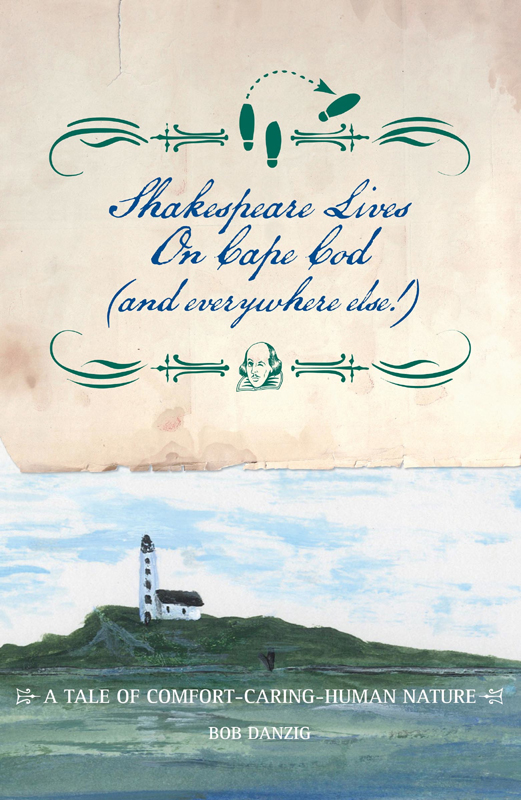
Featuring Paintings by Dianne Evans
Cover Design by Sarah E. Barr
sarahebarr@gmail.com
Author Website
http://www.bobdanzig.com
http://www.youareworthwhile.com
Every book is a reflection of creative whispers guiding the author. This work is a mirror of those whispers from many. It is enhanced by the original Cape Cod scenes captured by the gifted local artist, Dianne Evans. My gratitude is great for the abundance of her shared gifts and the whispers of so many. You know who you are. As do I. Thank you.
Invitations
Foreword
1. Enter or Exit
2. Ramrod Straight
3. The Hand Off
4. A Slice of Orange
5. Sea Legs
6. Flashing Neon Signs
7. Porcelain Doll
8. Store-Front Windows
9. Clip Clip
10. Stem Support
11. A Best Friend
12. Lean On Me
13. Need to Need to Need
14. Doing It Our Way
15. The Race is On
16. Goobers or Licorice Sticks?
17. Rafael’s Cupcake
18. One O’Clock Walk to the Mailbox
19. The Magnetic Personality
20. Butterfly Splendor
Reflections
About The Artist
About The Author
There may be only a few who thumb these pages, whose lives are dulled with loneliness, with quiet desperation to find joy, meaning, illumination, even simple fresh friendships. And for those few, this message of the cocoon dancing pals may be just the candle of new light you are seeking to fill voids and purpose in your life.
The message is to move out, move on, and move forward to put yourself into situations that engage you and other people. These need not be deep or complex programs, but they do require you to take that action step and embrace common interests with other people.
Look for local library reading groups, look for adult school study programs, look for area dance lesson groups, look for any interesting program that merely requires you to seek it out and join it.
Loneliness is a choice. Abundant living is also a choice. Should you be one of those gripped in low-level sadness with no sense of greater purpose to your life, determine this minute to reach up, reach out and find new joy with new faces, new friends and new purpose.
And as one embraces common interests with others—functioning in your own shared activities, seek opportunities to build a cocoon of caring, of support, of “being there” for each other.
Those opportunities are the building blocks in creating those “cocoons of comfort.”
Work to understand the reality of the spectrum of human conditions, issues, and life journeys represented in each individual member of your cocoon.
Shakespeare’s works endure because he captured basic truths of the human condition.
Every member of your shared activity deserves the respect and understanding for their own life issues. When in your cocoon of comfort, those life issues are made more manageable and less threatening.
It is when you can nurture a shared activity to become a caring, nurturing, supportive element that the notion of a cocoon can embrace your life.
“YES-YES-YES” was the collective chant as the dancers shared the songs of the popular band. It was Friday night—tradition night, launch-the-weekend night. As was their weekly tradition, the friends first gathered at the local yacht club’s rectangular-shaped, nautical-themed, shining- wood bar, featuring a spectacular view of the ocean, through oversized windows.
I was invited to join them and “observe” this group of friends who shared their lives on Cape Cod (their more permanent home) and in Florida (where they spent winters).
Their friendships are broad, inclusive, rich—beaming with celebration of life.
Ballroom dancing brought them together and then became the glue bonding their friendships. The glue was made more biting as they sought out dance spots featuring bands that played happy memories-invoking music. Those past memories were infused into their current dance, a delightful mix of past and present.
The sound of their bantering voices grew to a low rumble, punctuated by bursts of laughter, and enthusiastic phrasing that popped up and out of the rumble throughout the night. It was easy to tell that this was a gathering of pals.
The ease with which they spoke to each other, the level of comfort, and the patience and attention they showered upon each other confirmed the richness of their friendships.
Even without words, the bond was apparent. Handshakes, hugs, gentle pats on the back, “air kisses” and waves were constants throughout the night.
Some looked dressed to match the bar’s nautical theme, while others were attired in loud florals. Then there were those that embraced the traditional Cape Cod “look” of casual slacks and sweaters draped over their shoulders, with the arms tied loosely in front, falling just above their chest. They were ready for the cool air from the ocean, which often arrived as the sunset departed.
From the loud to the conservative, their outer differences were welcomed in the group. Their common love of dancing was always up front. The backstage differences were indicators of each individual’s personality—and were always welcomed. They embraced their differences in addition to their shared interests.
Though they start their evenings at a bar, alcohol is rarely a part of the evening. Some drink ice tea, some sip coffee, and others glasses of water. A few have beers or wine. They aren’t there for the drinks, but for the dancing, the conversations, the friendships.
I could see that they were in harmony with one another. I wondered how others might learn from this group of friends—how they might be encouraged to join a group of people and help nurture it into a deep pool of care for one another.
This started out as a dance group. In the beginning, no one envisioned it becoming such a strong support group of friends—informal yet absolute.
My mind’s eye sees a cocoon when I think about them. Those within the cocoon are insulated, cared for, nurtured. At the same time, each person grows as an individual. This cocoon features numerous butterflies, all growing together, but all very different—all individuals.
As the evening hours pass, their talk turns to dinner. Where will they sup? Who will call ahead to arrange enough tables for them to all eat together? After years of asking the same questions, the answers easily follow. They discuss a few restaurants with great local bands where they can dance and dine. When they leave the yacht club, a few do so with dance steps leading the way outside.
At dinner, the constant rumble of the bantering turns to a staccato—with conversation arriving in short bursts, between bites of dinner. The pitch is a little higher, indicating excitement and the dancing that will soon follow. As dinner comes to a close, pairs start to peel away to start dancing.
Though they don’t dance in one large group, they seem to move as one—no sharp divisions, stress or gaping seams. They are still in their cocoon.
Each person who walked into the yacht club, who supped and delighted in the banter, and who moved his or her happy feet over the dance floor, ultimately returned home, without the group of friends, to engage and explore a new tomorrow, often emerging from the cocoon alone.
The benefit of the cocoon is that the nurturing prepares each butterfly to gradually leave the cocoon, slipping through the opening, spreading his or her wings, and flying. Though some of the butterflies struggle, there are others, who have shared the cocoon, who are there to help.
That cocoon offers them the support to navigate the Shakespearian dramas of their individual lives, when they are not dancing or dining with friends on Friday nights.
Those dramas—and sometimes comedies—reflect the perpetual elements of human nature that have caused Shakespeare’s works to be relevant over so many generations. There are certain themes that transcend time, and which are relied upon, valued, and cherished in relationships around the world and through the years.
Contemplate those lasting themes that punctuate the rich works of the bard: Wisdom, Unity, Courage, Family, Loyalty, Hope, Romance , Joy, Love, Kindness , Trust, Truth.
These themes sustain the influence of Shakespeare. They are rooted in everlasting elements of the human condition.
The permanence of it all creates its wonder.
Varying peoples of varying backgrounds, varying life patterns, and varying influences, sharing the unvaried elements of the soul, the heart—the inexplicable impulses of the human nature—is what stimulates the ongoing welcoming of Shakespeare’s works.