This book about the history of Holocaust/Genocide education in New Jersey was made possible by dedicated resources at The Richard Stockton College of New Jersey. These include the work of writer and researcher, Dr. Maryann McLoughlin, and the services of the copy editor, Pam Cross, as well as the work of Stockton’s Graphics Production in design and layout. In addition, Stockton College covers an array of associated production costs. This book adds to the mission of the Sara and Sam Schoffer Holocaust Resource Center at The Richard Stockton College of New Jersey.
©The Richard Stockton College of New Jersey and The New Jersey Commission on Holocaust Education 2013 All rights reserved. No part of this book may be used or reproduced in any manner, electronic or mechanical, including photocopying, recording or by any information storage and retrieval system, or otherwise, without written permission from the publisher.

Published by:
ComteQ Publishing
A division of ComteQ Communications, LLC
101 N. Washington Ave. • Suite 1B
Margate, New Jersey 08402
609-487-9000 • Fax 609-487-9099
Email: publisher@comteqpublishing.com
Website: www.ComteQpublishing.com
ISBN: 978-1-935232-53-7
ISBN: 9781935232742
Cover Design & Book Layout by Sarah Messina,
Stockton College, Graphics Production
Copyediting by Pam Cross, Stockton College,
School of General Studies
Printed in the United States of America
In honor of the New Jersey
Holocaust Survivors
And all victims of the
Holocaust and Genocide
In honor of the Commission
members, past and present,
and the network of centers and teachers
who have implemented the Holocaust and
Genocide Mandate
I attended a Commission meeting when Diane D’Amico of The Press of Atlantic City was honored. Everybody gave a report on his or her activities. One commissioner talked about the Armenian genocide and events related to that; another commissioner, a nun, talked about what the Catholic church was doing to promote Holocaust education. Many of the Commission members were not Jewish, yet they were working to promote Holocaust education. I was overwhelmed, literally sitting with my mouth open. I couldn’t believe that people were working so hard for us.
—Cyla Kowenski,
Holocaust survivor of the Vilna Ghetto
I am very pleased with the job the Commission is doing. The Commission values Holocaust survivors. I put my family and my husband’s family on the Wall of Remembrance at the Holocaust Commission website. The Commission always tries to connect survivors with students. Paul Winkler came to our Holocaust survivor luncheons last year and brought students who sat with us. We talked and told our life stories about the Holocaust, and the students promised to tell others our stories. This was a good experience for the survivors and the students. I thank Dr. Winkler and the Holocaust Commission for their work.
—Rose Zelkovitz,
Holocaust survivor of Auschwitz-Birkenau, Stutthof,
and Bromberg-Ost Concentration Camps
The New Jersey Holocaust Commission has long been an important and valuable part of Holocaust education in New Jersey and elsewhere. I have been fortunate to be included in some of the programs offered by the Commission. As a survivor of the Holocaust I speak often about my experiences to school and college students. Education and remembrance are a very important part of Holocaust teaching and that is where the New Jersey Holocaust Commission excels. I am proud to be a part of this endeavor.
—Betty Grebenschikoff,
Holocaust survivor of the Shanghai Ghetto
Preface |
|
About Dr. Paul B. Winkler |
|
Chapter One |
2045 & Today |
Chapter Two |
Programs for Holocaust Survivors and Students |
Chapter Three |
The Beginnings: Teaneck and Vineland |
Chapter Four |
A Brief History of Holocaust and Genocide Education, Teaneck, NJ |
Chapter Five |
Pioneering the First High School Course on Holocaust and Genocide: The Vineland High School Experience |
Chapter Six |
The Emergence of Holocaust Education in Vineland, NJ |
Chapter Seven |
Governor Tom Kean and the New Jersey Advisory Council on Holocaust Education |
Chapter Eight |
Becoming a Commission |
Chapter Nine |
Passage of the Mandate |
Chapter Ten |
Curricula Development |
Chapter Eleven |
The Holocaust and Genocide Education Centers |
Chapter Twelve |
The Center for Holocaust Studies at Brookdale Community College: A Case Study |
Chapter Thirteen |
Impact of Governors, Legislators, and Commission Chairs |
Epilogue |
The Future |
Reflections |
|
Photographs |
The Holocaust remains one of the most disturbing and horrific events of all time. For that reason some have always maintained that we should not remember it. That it is best forgotten. I have always believed the opposite.
When the last survivor is gone people must still remember because only by remembering can we ensure that it never ever happens again, and in this regard these are important lessons to be learned.
In Western society we have always believed that education, particularly universal education, is the answer to most of the world’s problems. And yet the perpetrators of this crime were educated people. Engineers designed the crematoria, and doctors prepared the experiments. How was this possible?
And what is our individual responsibility? If you know of something evil going on, should you report it? What if reporting it would endanger your job or even your personal safety? What is our responsibility as a nation to speak out against persecution or injustice in other parts of the world?
In studying the Holocaust, students must confront these and many other difficult questions. If we are to insure that this is never repeated, we must understand how it happened in the first place. I am proud that New Jersey led the way with a well thought-out curriculum, which not only will lead to a thorough understanding of the history, but to steps that will ensure that tragedies like the Holocaust will never happen again.
Teaching the Unspeakable: The New Jersey Story of Holocaust and Genocide Education by Dr. Paul B. Winkler is a book of great consequence not only for other states that are planning to implement Holocaust and Genocide mandates but also for educators who are searching for ways to teach Holocaust and Genocide Studies. This book is essential reading.
Governor Thomas Kean
November 2011
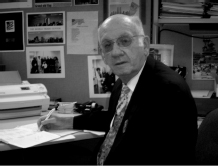
Dr. Paul B. Winkler has been formally involved in Holocaust and genocide education and prejudice reduction education since 1974. This abiding dedication was developed, encouraged, and learned from his parents and grandmother through their community involvement.
Dr. Winkler has served as a teacher, principal, superintendent, Regional Education Director, New Jersey Deputy Assistant Commissioner of Education for Exceptional Children at the New Jersey Department of Education, and Director of a Teacher Training Center. In addition he has coordinated Holocaust and genocide education in the State of New Jersey, sometimes as a volunteer, and then as a part-time employee after retiring in 1990.
In addition to coordinating all Holocaust and genocide activities in New Jersey, Dr. Winkler also trains teachers and makes direct presentations to students. Under his leadership, the Commission collaborated with the Italian, Arab, and Amistad Commissions, as well as the Martin Luther King Commission.
Dr. Winkler has also written many articles dealing with Holocaust and genocide education, as well as articles about Darfur, published in the New Jersey Education Association Review 2007 and in About Terrorism and 9/11, published in 2008. Numerous curriculum guides have also been developed under his leadership; these span genocides from Native Americans to the Holocaust to Nanking and Darfur.
The efforts of many community groups, educational and government officials, and individuals resulted in Governor Tom Kean’s creation of a Holocaust Education Advisory Council—the first in the nation. Eventually the Commission on Holocaust Education was established in New Jersey as well as the Holocaust and Genocide Mandate, which was signed into law in 1994.
Over the years, the role of the Commission has been to set goals and direction for the state of New Jersey’s Holocaust and genocide education. The efforts of all past and present Commissions have carried out their responsibilities to the fullest, whether making a decision to seek mandated legislation, standing up to deniers, or in proposing curriculum be developed for schools.
The year is 2045. Thousands of adults between the ages of thirty and fifty are engaged in very meaningful activities. These individuals whether they are in New Jersey, around the country, or living internationally, are telling their colleagues, students, co-workers, parents, family, friends, etc., about the interaction they had with a survivor of the Holocaust when they were in school.
Why 2045? That will be the 100th anniversary of the liberation of the concentration camps in Europe in 1945. Many of the adults celebrating the anniversary would have participated in Holocaust and Genocide Programs sponsored by the New Jersey Commission for Holocaust Education when they were students. In those years, from the late 1980s onwards, New Jersey was renowned for its quality statewide educational programs.
How did New Jersey come to be recognized by many individual organizations and groups as having a quality statewide Holocaust and genocide program? Bill Shulman, Director of the Association of Holocaust Organizations (AHO), ascribes the passing of the Holocaust and Genocide Mandate, the enforcement of the Mandate, and the funding of teacher training as the reasons for New Jersey’s success. In Hadassah Magazine, 2000, Shulman wrote the following:
The promotion of Holocaust education in New Jersey is the work of the New Jersey Commission on Holocaust Education, created in 1991 by Governor James Florio. It grew out of the [Advisory] Council on Holocaust Education, the first of its kind in the United States that had been formed nine years earlier by Florio’s predecessor, Thomas Kean. In 1994, the legislative mandate was signed into law. Only four other states—New York, Illinois, California, and Florida—have such mandates, though several states “recommend” Holocaust education. Of the five, New Jersey is the only one requiring Holocaust education at all grade levels of elementary and high school, says Bill Shulman, Executive Director of the Association of Holocaust Organizations (AHO). “Along with Florida, New Jersey not only has the best record in the country in enforcing the mandate, but it funds teacher training, too,” Shulman explains. “It also has more Holocaust centers than any other state.”
Michael Berenbaum, Holocaust scholar, writer, lecturer, teacher, consultant in the conceptual development of museums and the development of historical films, director of the Sigi Ziering Institute at the American Jewish University where he is also Professor of Jewish Studies, and executive editor of the second edition of the Encyclopaedia Judaica, writes praising the work of the New Jersey Commission on Holocaust Education:
New Jersey has been a pioneer in Holocaust education. More than thirty years ago one of the first teaching curricula for high school students was developed in the state of New Jersey; its MA programs in teaching the Holocaust and Genocide both at Richard Stockton College and at Kean University are widely respected. The New Jersey Commission on Holocaust Education has been a model for other states of the Union. I have always appreciated the wisdom and professionalism of the Commission staff led by the indefatigable Paul Winkler.
These educational efforts have been carried out in the most densely populated state in the United States and one of the most diverse states—with over 130 languages spoken and with many different racial, ethnic, religious, and cultural backgrounds. The state is as well number two in the most hate crimes, carried out mainly by young people of school age, and is a segregated state educationally. In fact, only four other states in the nation are more educationally segregated than New Jersey. The housing patterns in New Jersey cause the over 600 school districts to be educationally segregated.
Why did New Jersey need to mandate Holocaust and Genocide Education? The explanation has to do with the atmosphere that produces these hate crimes, the bias-motivated criminal incidents in New Jersey. Prior to 1999, hate crimes were not reported in total; however, evidence indicated many incidents of bias were occurring at the local level and statewide.
New Jersey Bias-Motivated Criminal Incidents between 1999 and 20101
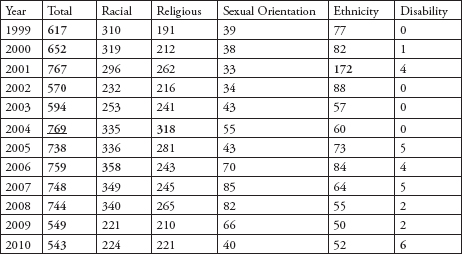
Although the number of hate crimes reported has remained fairly consistent since the reports began—with the exception of a spike in ethnic biased crimes in 2001, and a high for disability biased crimes in 2010, New Jersey has the highest rate of hate crimes, second only to California. According to a 2009 article, “NJ Hate Crime Rate Doesn’t Tell Whole Story,” by Matthew E. Berger, some ask, “Is New Jersey the hate crime capital of America?”2 Berger writes that the Anti-Defamation League reported that “nearly one out of ten hate crimes reported in the U.S. in 2008 was from New Jersey” and also that “New Jersey had the most incidents of antisemitism in 2008.” New Jersey officials agree that the numbers are high; however, they claim that these numbers reflect New Jersey’s commitment to “monitoring and reporting” bias crimes. Detective David D’Amico of the Monmouth County prosecutor’s office said,
All police officers in New Jersey receive two hours of bias crime training while in the police academy, and all 21 county prosecutors have bias crime units. New Jersey was one of the first to mandate the training in 1993, and also led the way in gathering data on bias crimes statewide. The laws are so strict that anytime a police officer becomes aware of a bias motive, he must report it, even if it does not rise to the level of a crime. That’s why the state calculates “bias incidents” instead. (Berger)
New Jersey officials continue, explaining that one problem is underreporting of hate crimes in other states:
While New Jersey reported 744 incidents last year, Mississippi reported the fewest, recording just four. Three other states—Georgia, New Mexico, and Wyoming—are in the single digits as well, while 24 states, plus the District of Columbia, reported less than 100 incidents. (Hawaii does not participate in the reporting efforts.) (Berger)
Despite the high rate of New Jersey’s hate crimes as compared to other states, the rate has been stable over the last decade even though New Jersey’s population has increased. “New Jersey’s Census 2000 Population Counts: State Highlights” reported, “The estimated increase of 684,162 residents in New Jersey since the 1990 Census represents a faster rate of population growth (8.9%) than in the 1980s (5.0%).”3 The 2010 Census reported that New Jersey’s population increased from 8,414,350 to 8,791,894, an addition of 377, 544, or 4.5%.4
Thus, while New Jersey’s population has increased, the rate of hate crimes based on race, religion (antisemitic and others), sexual orientation, and ethnicity has not increased. Education, such as is mandated for New Jersey’s schools, police, and other agencies, seems to have been instrumental in combating hate crimes of all types.
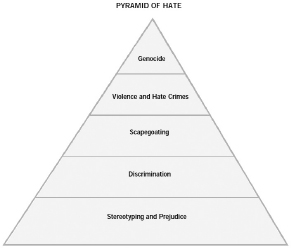
The New Jersey Commission on Holocaust Education has been working with schools and colleges since the 1980s, even before the Holocaust and Genocide Mandate of 1994. New Jersey students have been taught lessons focused, in the lower grades, on understanding differences and being kind to one another, and on Holocaust and genocide in the higher grades. Our students are aware of the pyramid of hatred and understand “the pain caused by bias” and how prejudiced attitudes and behavior can escalate leading to discrimination, violence, and sometimes even to genocide.5
Students throughout the state have also been involved in Commission programs that encourage their interaction with Holocaust survivors as well as survivors of other genocides. Indeed, students state that these programs have the most impact on them. Over the years—from the 1980s to the present—The New Jersey Commission for Holocaust Education has sponsored the following exceptional programs: Adopt a Holocaust Survivor, Writing as Witness, Survivor Prom, Certificate Program, Luncheon Programs, Survivor Anthologies, Portraits of Survivors, Bar and Bat Mitzvah Programs, Survivor Trunks, and Computer Training for Survivors. These are just a few of the activities Holocaust survivors and students participated in during those years. They will be discussed more fully in Chapter 2.
Therefore, by 2045, the 100th anniversary of the end of World War II and the Holocaust, hundreds of thousands of New Jersey students will have learned lessons of the Holocaust and other genocides and will have had the opportunity and honor of interacting with survivors.
1 Statistics from the U.S. Department of Justice, Federal Bureau of Investigation Hate Crimes Statistics, 1990-2010
http://www.fbi.gov/about-us/cjis/ucr/hate-crime/2010
2 Berger, Matthew E. “NJ Hate Crime Rate Doesn’t Tell Whole Story.” AOL News. 15 Dec. 2009. Web. 21 Jan. 2012.
http://www.aolnews.com/2009/12/15/n-j-hate-crime-rate-doesnt-tell-full-story/
3 “New Jersey’s Census 2000 Population Counts: State Highlights.” Office of Labor Planning and Analysis’ Labor Fast Facts world wide web site
http://www.state.nj.us/labor/lra. Web. 21 Jan. 2012. http://lwd.state.nj.us/labor/lpa/census/2kcensus/pl94/Census%202000%20BPs.htm
4 “Population Distribution and Change: 2000 to 2010.” U.S. Census 2010. Mar. 2011. Web. 21 Jan. 2012.
http://www.census.gov/prod/cen2010/briefs/c2010br-01.pdf
5 The pyramid of hatred is designed to promote recognition of the value of interrupting the progression from prejudiced attitudes to violence and genocide