In Memoriam: For Michael
May his beat resonate in our hearts.
“They had cheaters. We had cheaters. They won.”
On baseball’s steroid scandals,
Bruce Weber, New York Times
August 2, 2009
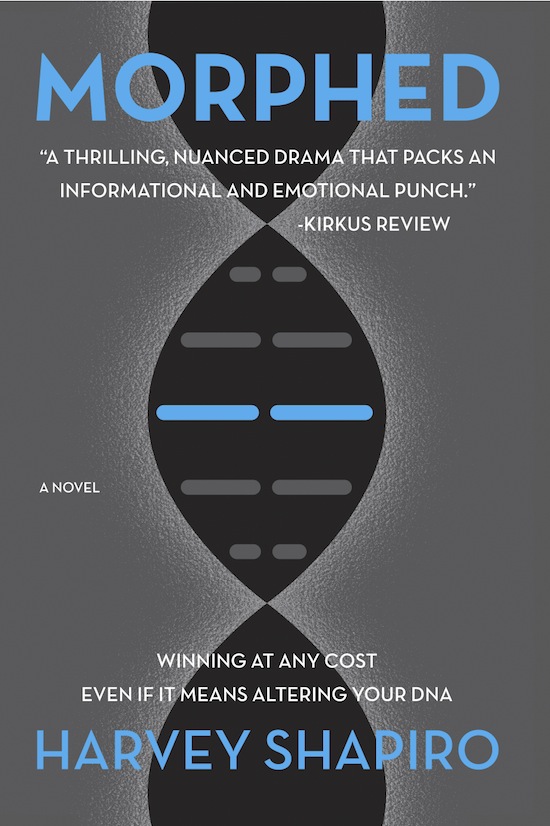
MORPHED
Harvey Shapiro
Chapter 1
Fall 2010
Santa Maria, CA
Moving away from the noise and prying ears of the emergency room, Dr. Speak Singleton ducked into his on-call sleeping quarters. He’d become accustomed to using it when he needed to make personal calls. Less than an hour ago, as he prepared to do an Internet search on Medscape, he couldn’t help but notice his son’s photo on his iPhone’s wallpaper. Only a few months ago Liam appeared almost frail compared to how he looked today. He couldn’t figure out how he could bulk up so quickly. Wondering if his wife had observed the same thing in their son, he dialed her number.
“Dr. Singleton, stat to Trauma 1,” sounded over the ER’s internal paging system.
***
Liam shook his head to clear the shimmery veils blurring Blasingame’s blocky face. Squinting didn’t help. His belly felt like an elephant had stomped on it.
“You all right, Singleton?” the burly head coach asked. “The fullback ran over you after the guard knocked you on your back. You were out cold. Can you get up?”
“Maybe,” Liam said, still feeling woozy. He took his coach’s beefy hand and sat up. His teammates appeared to circle around him like grotesque animals on carousel. He grabbed the prickly dry grass to make sure he wasn’t the one spinning.
“Son, if you want to play center linebacker, you need more meat on your bones.”
His coach yanked him to his feet and the sky went black.
***
Liam pulled his blue VW bug into the driveway and turned off the engine. He fingered the garage door remote and folded his arms over his chest. He had a headache from hell. Worse than that had been being carted off the field in front of his teammates. It marked him as more water boy than player. If he didn’t bulk up faster he’d have to quit the team. His only other alternative for dropping out without shame would be to fake an injury.
Liam went back to his coach’s comment on getting bigger. The varsity guys had the right approach. They passed high-octane steroids around the locker room like forbidden chocolates. When it came to drugs, Blasingame had a blind eye because they won games; Liam’s doctor dad, on the other hand, never missed an opportunity to preach about doping’s dangers. He didn’t want to be a doper, but no way could he survive more body blasts by his juiced-up bulldozer teammates. A month ago he’d made his decision. At least in his room he already had what he needed to hang on with the team. Only he’d waited too long to start using it. He should have bulked up more by now, but the stuff wasn’t working fast enough. Still, he had to stick with it. He wasn’t a quitter.
The garage door opened and Liam’s dad sauntered out to the car.
“You feeling OK?” His father opened the VW’s door.
Liam shrugged. “I took a hard hit and passed out after I stood up. The coach sent me home.”
“He called me a few minutes ago. He’s worried about you. He said you left the locker room before he could check you out.”
“No way was I staying alone in that stupid smelly place. You’re an ER doc, you can check me out.” Liam grabbed his dad’s extended hand. He kept hold until he felt steady on his feet. Standing in the driveway holding hands with his father felt stupid but reassuring.
“Sounds like you got a concussion. What’s the president’s name?”
“Wama… ah, sorry, Obama. Don’t do your doctor deal on me.” He had to work hard to get those words out. His brain wasn’t up to speed.
“Mom has dinner on the table. I’d like you come in to the ER after we eat. I’m working a shift there tonight.”
“Liam, you’re only picking at your food.” Fiona’s Irish accent increased, as it always did when she was upset or had too much wine.
“Not hungry, son?” his dad asked. “Maybe you got hit harder than you think. Does your belly hurt?”
“Can’t you ever stop being the great Dr. Speak Singleton?” Liam felt his control slip away. His father could be a persistent butt. “I’m OK.”
“Stop talking to your father like that.”
“Yeah, sure.” A wave of nausea took over his insides. He remembered the fullback’s boot bruise on his stomach. Maybe his insides really had gotten hurt.
Half listening, he spun the apple-filled fruit bowl. He spooned some garlic-mashed potatoes into his mouth. His stomach cramped. Its sour contents raced up his chest and drowned his tongue. He vomited onto his plate. Warm puke soaked his navy football shirt and made it stick to his skin.
“I’ll get you a fresh shirt.” Fiona mopped him up with her napkin.
“Hey, I almost feel like eating now.” He wasn’t sure whom he was trying to convince. “Guess I just needed to empty my stomach. Felt like I was seasick.”
“Sure you’re feeling better?” His dad stroked Liam’s forearm.
“Yeah.”
“Before your father leaves, we all need to see this.” His mother pulled a plastic produce bag off the shelf behind the kitchen table. Her eyes searched his face. “I found this bag stuffed under the mattress in your room. It scares the bejeepers out of me. I didn’t know you were taking—what’s it called? Androgel. Maybe it’s making you sick.”
Liam’s gaze flicked to the familiar plastic bag and then stuck to the bowl as if it were a roulette wheel. He was in for it. It was bad enough that his mom had found the stuff, but she hadn’t even given him a chance to explain before ratting him out. His father’s face tightened. In a second his dad was going to lose it big time.
“Let me see that.” His father took the sack and pulled out one of the foil- wrapped packs. He extended his arm and squinted at the label. “It’s topical testosterone.”
Liam stared at the gel-pack as if its label spelled poison. “That’s not mine. Mickey stayed in my room over the weekend. Maybe it’s his stash.”
“Don’t muck about with your father,” Fiona warned.
“The steroid effects on your body are all too obvious. I can’t believe you’d do this to your mother and me. How dare you bring illegal drugs into our house! Did you ever consider I could lose my medical license over this? Where’d you get it?” “What’s next?” his dad asked.
Balling his fists, Liam glared at his mother as if she were a traitor. “This sucks! Do I even get a chance to talk?”
“Liam, are you doping?” His mother’s question stayed at a whisper.
“I’m not listening to this crap.” Liam’s chair cracked against the wall as he stormed out of the kitchen. “Lay off, Ma.”
“Getting cheeky with us doesn’t help anyone,” she said.
“I’m calling your coach,” his father said. “As of now you’re off the team, and you are personally going to tell Blasingame about your steroid use!”
His father’s shout reached Liam as he opened his bedroom door. He sucked in a deep breath to dull the hammering in his chest. “The whole fucking team dopes!” He slammed his bedroom door shut.
Fiona sniffled. “Speak, you need to talk to him.”
“Can’t, I’m already late for my night shift.” He couldn’t think of more to say. The look on his wife’s face made him feel like he’d become more monster than father. Knowing he’d overstepped her emotional limits, Speak leaned over to kiss her forehead. “I can’t believe I didn’t pick up on his sudden growth spurt and quick temper. Liam has bulked up way too fast over the past month.”
“Don’t blame yourself. I thought he was growing big muscles because the coach worked him so hard.” She brushed a tear off her cheek with the back of her hand.
“Please bring him to the ER in an hour. That will give me time to get a CT scan booked for him. I’ll also have the on-call neurosurgeon come in to examine him. Could you tell him I’m sorry I lost my temper?”
“Yes, I know you are. It’s all very upsetting.” The color rising on her cheeks came close to matching the red of her hair. “Our boy needs help, not us attacking him.”
“I have to go.” Speak knew Fiona would smooth things over with their son. Her talent with feelings provided the glue that held their family together. Speak had always been more comfortable discussing medical facts with patients at a defined distance, rather than with his own family’s emotions close up.
“I’ll call Coach Blasingame on the way into work,” he said. “And I promise, I’ll be more gentle with Liam in the ER.”
“Start now.” She offered him a resigned smile. “Hold off calling the coach.”
“I’ll see you soon,” Speak said.
***
The insistent rapping on the ER sleeping room’s door yanked Speak out of a fitful nap.
“Dr. Singleton, it’s Maggie.” He didn’t need her to say it; he knew the sound of her knock. He’d shared more night shifts with the ER charge nurse than he could count. “The paramedics just brought in two critical patients.”
“You can open the door.”
The cold fluorescent light streaming through the door threw deep shadows onto Maggie’s face. “Their car slammed into a tree. I’ve already alerted neurosurgery and trauma.”
“Where did you set them up?” Even to his own ears his voice sounded drowsy.
“Trauma 2. We’re still cleaning the other rooms.”
“I’ll be right there.” He slid his feet into his green vinyl clogs, splashed water on his face from the corner sink, and headed down the hall. He wondered where Fiona and Liam were. He’d been too busy to check why they hadn’t shown up.
He hurried into Trauma 2. In an instant, he saw an image that would remain embedded in his brain as if carved onto a granite headstone: his wife and son, lying side by side on blood-spattered gurneys.
Fiona kept screaming Liam’s name. Speak put his hand on her sweaty forehead. “Everything’s going to be alright,” he said as calmly as he could.
Though she paused for a moment to open her eyes, his promise didn’t quiet her. They were almost swollen shut and surrounded by purple contusions. Because she might have hidden injuries, he couldn’t sedate her.
His boy lay limp on the other gurney. Sensing Liam might be more seriously hurt, he turned his attention to him.
“Get the trauma surgeons here, stat!” he ordered.
“They’re on their way.”
“Start CPR!”
Liam was unconscious, breathing sporadically, and his pupils were widely dilated and nonreactive to bright light. Brain bits oozed from an open fracture in the region of his temple. Standing on a footstool, an ER nurse began chest compressions. At Liam’s head a respiratory therapist squeezed a bag connected to an airtight facemask. With each forced breath, glistening yellow tissue moved in and out of his fractured temporal skull bones. Speak determined his son’s Glasgow Coma Score. It added up to three out of fifteen, meaning persistent deep coma or death. The boy’s neck was probably broken; his skin was cold and clammy, his blood pressure not measurable.
Another nurse tapped his shoulder. “Doctor, I don’t think she’s breathing.”
Fiona’s screams had stopped. Knowing Liam’s injuries were likely fatal, Speak made the obligatory triage decision and went back to treating her. Her chest heaved, but she wasn’t getting any air into her lungs. His finger-tap on her chest elicited a hollow sound. “Get me a chest tube,” he shouted. “She’s got a tension pneumothorax.”
In less than fifteen minutes, with Fiona’s vital signs stabilized, he returned his attention to Liam. His son had no palpable pulse. He took over CPR from the ER nurse. He’d never forget the feel and sound of his son’s chest bones cracking under his pressing hands, or the tug of the neurosurgical consultant trying to pry him away from Liam. It took his colleague half an hour to convince Speak to cease his fruitless resuscitation efforts. All the while Fiona, now silent, her hands strapped to the gurney’s rails, stared at him.
Chapter 2
August 2012
Thursday Park City, Utah
Heart pounding from the steep climb, Speak Singleton straddled his bike and sucked in the thin mountain air. Morning mist and fireplace haze shrouded the distant Heber Valley. The cold breeze slicing through his thin, sweaty cycling jersey reminded him he wasn’t here for the exercise. Instead, before sunrise, his urge to get a look at the Tour de France champion had drawn him out of bed and onto his bike.
Being on this road at this time probably violated the spirit of the Olympic Oath, which he’d taken a few months back when he’d accepted an appointment as a doping control officer in this summer’s Games. Breaking every tenet in his personal guidebook of life, he’d come here to spy on Luke Garver’s training ride over Guardsman Pass. He shivered and considered putting on his cycling jacket.
When he’d volunteered to be a drug tester, Speak realized he’d taken on a warped mission of redemption. But no one, not even the great Garver, was going to fudge his way through the anti-doping system at Speak’s doping control station. Like everything in his life, he took this job seriously. He owed this one to Liam’s memory.
The piercing scream of an oncoming motorcycle drew his attention. Having no intention of being caught snooping on an Olympic competitor, Speak grabbed his bike and ducked behind a cluster of chin-high roadside boulders. The engine noise quieted as a black panther–like BMW crested the summit. A cameraman rode behind the driver, looking straight ahead. As they glided by, Speak guessed they hadn’t spotted him. Most likely they were speeding ahead to set up for a publicity shot. He rolled his bike back to the roadside. Its handlebars warned him that his hands were trembling.
Riding alone, Garver cycled toward him. For a second their eyes met. Neither man offered the customary biker’s nod to each other. The athlete’s easy breathing was audible as he swept by. Despite having climbed four thousand feet up Big Cottonwood Canyon, the champ’s jersey was dry and his legs cranked out a fast, smooth cadence.
Trailing him by at least a quarter of a mile, two Team USA cyclists approached. The distance between them and their team captain gave credibility to this month’s Cycling magazine’s quip that keeping one’s distance from Luke Garver had become a competitive sport among his own teammates.
Speak pedalled onto the road about twenty feet behind Garver, not expecting to keep up, just to sample the downhill pace. A horn blast—too close—kicked his heart rate into overdrive. He squeezed his brakes. Afraid to look back, he edged as far right as he could on the narrow road. Behind him the blaring warning filled his ears, the downshifted engine screamed, and tires scrunched over loose stones, sending pebbles clinking into the fenders. Speak felt the heat of the SUV’s engine as it passed him. It cut an abrupt right a few feet in front of his bike. The driver’s eyes in the mirror were all Speak could see above the rear window’s Team USA decal. The vehicle’s brake lights flashed in the dust cloud kicked up by the tires.
Speak crunched both brake levers hard. Veered right. His front wheel twisted in a pothole. Locked in his pedals, he went down. His helmet smacked the road. Tires screeching, the SUV careened out of sight around a sharp switchback.
Speak unclipped from the pedals and threw his bike off him. He probed the spaces between the already blood-sticky shreds in his Lycra shorts. Still too shocked to feel much pain, he picked a few pebbles out of the wound over his hip. Sitting up, he gingerly flexed his thigh and examined the abraded skin over his left arm and knee. He hoped he’d gotten off with a mild concussion, a case of bad road rash, and bruises.
“Need help?” One of the riders who’d been cycling behind Garver clicked out of his pedals and stopped. His partner continued in pursuit of their team’s support car. Dark stubble shaded the cyclist’s gaunt face. Clumps of curly, jet-black hair protruded from his helmet’s air vents, giving him a clownish look.
“Your friends damn near killed me.”
“An asphalt dermabrasion can sure sting. Can you get up?”
It was the first time Speak had heard road rash referred to as a medical procedure. The cyclist offered him a hand up. In his early twenties, he had shaved muscular legs, well-defined thighs, and a spare frame. The European stage racing season had left him looking as if he’d spent the summer in Camp Auschwitz.
“My bike’s a bigger mess than I am. Who the hell is driving that vehicle?”
“Luke Garver’s bodyguard.” Lifting his silvered aerodynamic sunglasses over his forehead, the cyclist shot Speak a cautious glance. “The dude works for the guy riding shotgun. That would be Dr. Simon Whitford—the champ’s personal guru. He’s supposed to be our coach, but no one on the team believes we’re even on the same side. I saw them force you off the road.”
“You’re, uh… Erik Hikem? I watched you in the Tour.” Speak recalled Garver’s coach and teammates shadowing him at all the post-stage interviews he’d watched on Versus TV in July.
“The guy I was riding with is Erik.” The cyclist’s shy-eyed wariness reminded Speak of his son. Liam had always taken his time opening up to strangers.
“Erik went ahead to stop the team car. I’m Troy Hale.”
“Yeah… yeah, I remember. You guys were Team GreenTec domestiques in the Tour. Great job.” Their gloved hands met in a gentle high-five. Even that easy movement hurt his sore shoulder.
“Your brake levers are tweaked.” Hale leaned his red, white, and blue Trek Madone against a stubby bristlecone pine. He picked up Speak’s bike. “I can bend them back in shape. I’ll give the rest a quick check. I’ve got fresh water. You should wash out your abrasions.” He handed over his water bottle.
“I might need some help getting back to town.”
“I’ve got your back, man.”
The steep downgrade accelerated their bikes to an effortless, brake-controlled velocity of about twenty mph. Even that slow speed felt too fast; road ruts and potholes popped at Speak faster than he could react. Hale must have picked up on his fright. He slowed to a crawl on the switchbacks. Still shaky from his fall, Speak appreciated the pro cyclist’s concern. He couldn’t believe he was drafting a Tour de France rider. Though a mountain biker, Liam would have called this ride “too cool.”
Rounding a tight curve, they almost slammed into the Team USA’s taxi-yellow Xterra. Its motor still ticking over, it squatted in the middle of the road with its front doors open and emergency flashers blinking. Wearing faded denims, the weedy driver, arms folded across his chest, leaned against the left front fender. The BMW motorcycle idled nearby. Its cameraman had dismounted, and he and Garver were peering over the cliff’s sharp edge.
“You idiots run someone else off the road?” Speak leaned his bike on the SUV.
“Erik’s bike is there!” Down on his knees, Hale pointed over the cliff’s abrupt edge. “It’s my fault. I shouldn’t have let him get near you bastards without me.” His voice cracked. “I gotta do something to help Erik.”
“I don’t know how Hikem managed to get tripped up on the inside of our lorry’s turn.” The man, whom Speak guessed to be the team coach, Whitford, had a high-brow British accent. Sucking a cigarette as if it were marijuana, he stopped beside Speak. He wore slim-cut black jeans, and his unbuttoned blue silk shirt exposed his tanned, bony chest.
“He was just trying to stop you.” Hale now sounded more distraught than angry.
“We didn‘t see Erik until bloody awful late.” Whitford’s slender fingers crawled through his thick, gray-streaked black hair. “Beastly shame.” The coach’s mirrored sunglasses made it impossible for Speak to track the wiry man’s eyes.
“I don’t believe you. Erik was too careful to get caught that way,” Hale screamed.
“Hikem could be dying down there.” Luke Garver held his helmet in his hand, revealing his shaved skull. His compact body was more solid than Speak would have expected of a European tour cyclist at summer’s end. And he sure didn’t look forty years old. “I backtracked when I realized my support car wasn’t with me. Shouldn’t someone try to get to Hikem?” Garver made no move to follow up on his own suggestion.
“You’ll need a rope to reach him,” Whitford cautioned. “I’ve already summoned the emergency brigade.”
“I’ve got to get to Erik.” Troy kicked a few rocks over the cliff’s edge. Their cracking strikes sounded out the bottom of the incline. “It’s awful steep.”
“Monsieur, please, you are blocking my lens.”
Hale shielded his eyes against the camera light as the videographer came closer.
“Shut that down!” Speak shouted, as if volume would render his English more understandable. Pain gripping his left hip, he lurched toward the French cameraman.
“Do as he asks.” Whitford stepped between Speak and the shooter. “We don’t need to tape this.”
“Au revoir.” With an insolent shrug, the videographer walked back to the motorcycle.
Speak shook his head in disbelief. “So much for French chivalry.” Sensing Hale’s anxiety, he tapped the cyclist’s shoulder. “We’re going to help your friend. I think there’s a relatively safe way for us to reach him.” He walked a few paces up the road, picked up a felled traffic sign, and ripped its rusty posts off the rotted wood face. Speak handed one of the poles to Hale.
“Can we be of assistance?” Whitford asked.
“You carry a first-aid kit?”
“Right-o. Flint,” Whitford shouted to the driver, “fetch our medical kit.”
“If we’re lucky, I’ll need it,” Speak replied, keeping his eyes on Hale. “Please shut down your engine. The exhaust is making me sick.”
Before leaning into the SUV’s back seat, Flint slid a pouch of chewing tobacco into his black T-shirt’s pocket. His scuffed cowboy boots scratched across the rough road as he ambled toward Speak and Whitford. The engine still idled.
“Sorry, old chap, but we don’t stock rope,” Whitford added.
“Hurry!” Hale yelled.
Close up, the thin driver’s skin looked like wrinkled sandpaper. He shoved the emergency duffle bag toward Speak.
Speak slipped the emergency pack’s strap over his shoulder. “Follow me. Keep your post uphill and under your armpit. Use it like an ice ax to slow your descent. Steady.” His tone settled into the precise, calming patter he’d used in the ER. He hoped it would calm Hale. “We have to work as a team. I’ll check the right side.”
“Yeah… sure.” Hale didn’t sound convinced.
Like impatient piranhas, the sharp rock knuckles nibbled at Speak’s thighs and buttocks as he inched down the sheer slope beside Hale. Sweat from his armpits trickled over his ribs. Their descent raised a small dust cloud, forcing him to cough. A distant siren echoed up the canyon.
“I’m losing it.” Hale picked up downhill momentum.
“Jam your pole harder.” Speak moved sideways and shoved his body against Hale, checking the cyclist’s slide.
“Sorry, I know better.” Hale’s voice quivered. “I’ll stay in control.”
“Take your time. We’re going to help your friend.” Breathing hard, he had to time his words.
As they edged past Hikem’s battered bike, Speak spotted a shred of neon-blue Lycra. “Over here, he’s below me.”
The cyclist’s body had wedged onto a narrow shale shelf. Ground-hugging branches of skeletal scrub oaks tethered him to the surface. His head was twisted at an abrupt angle; while his limbs spread akimbo, his skin had turned dusky blue, and his breathing was erratic. Despite his medical training, a sick feeling squeezed Speak’s gut. “His neck might be broken. Airway’s obstructed. We’ve got to clear it and stabilize his cervical spine.”
“He looks fucking bad.” Hale’s bulging eyes fixed on his friend.
“Help me get his helmet off.”
While Speak applied traction by pulling on the sides of Hikem’s skull, Hale unclipped his helmet. Dislocating the injured man’s jaw forward, Speak secured the victim’s airway. It opened with a loud sucking gasp, followed by regular shallow breathing. “At least we’ve got more oxygen going to his brain.”
“You a doc?”
“Used to be.” And I still am, he realized. “Troy, I need your shirt, and your help getting mine off.” He winced at the sting of lifting his jersey over his battered shoulder. “We need to stabilize Erik’s cervical spine.”
Speak eased his hold on Hikem’s head. The injured man seemed more awake and continued to breathe on his own. “Wind the shirts around Erik’s neck. Not too tight. Good. See if there is some adhesive tape in the kit to hold the stabilization collar. We’ve got to evacuate your friend fast.”
“If I’d gone ahead like Erik, you’d be working on me.” Hale’s ashen face had regained some color.
Speak concealed the urgency in his actions and words so as not to further heighten Hale’s anxiety. Cradling the injured athlete’s head in his hands, he sensed a surge of his former professional vitality vibrate through his being.
“The paramedic lorry is here,” Whitford called down. “How is he?”
“Just opened his eyes,” Speak shouted. He lifted the injured cyclist’s limp left arm over his face and released it. Hikem’s eyes had followed his uplifted extremity, but he made no attempt to stop his falling arm from striking his face. Speak caught it before it hit him. Cervical spinal cord damage, he surmised. Such an injury could carry devastating long-term results. Its immediate consequence could be dangerously low blood pressure and inadequate breathing.
“The helicopter is landing down the road,” Whitford yelled over the distant, pulsating thunk-thunk-chop of the aircraft’s blades.
Hikem’s swollen lips parted. His tongue slid into the bleeding gap left by two missing front teeth. He looked at Speak and coughed up a small amount of blood.
“Erik, squeeze my hand.” As Speak expected, not even a twitch of muscle response occurred. He held back telling Hale the prognosis he’d made for his injured teammate. Even though the immediate emergency had passed, Speak’s hands trembled as they often did when, after a stressful ER resuscitation, the best he could manage was to scribble an almost illegible note in the patient’s chart. “Erik, keep your eyes open.”
“Come on, do what the doc says,” Hale pleaded.
The injured cyclist’s eyelids fluttered.
“Stay with us, Erik.” Speak rubbed Hikem’s bloody saliva off his hands onto his black shorts. All they could do was wait for the EMTs.
***
“Doc, you guys risked your necks getting down here without a rope.” The petite paramedic cinched the canvas harness around Speak’s butt and waist, pulling their sweaty bodies together.
“I’m glad I could, uh… I had to… get his airway clear.” It had been a while since he’d been this close to a woman, especially with his shirt off.
She smiled as if she knew something he didn’t. “Your buddy vomited when we roped him up.”
Her nametag lightly scraped his face. “Paramedic Andersen, he’s a teammate and close friend of the injured guy,” Speak said. “I don’t think much can be done for him. But, I promise not to upchuck.” He wanted to taste the warm salty skin on her forearms. Hell of a time to have carnal thoughts. Just the smell of her light perfume had abetted his arousal.
“It’s Julia.” She pressed the transmit button on her radio. “Roger that. They’re winching us up. Hold tight.”
He wrapped his arms around her slim waist. Her soft breasts yielded against his bare chest.
Topside, Julia unclipped their harness and wiggled out of it. In her thick-soled boots, she barely hit five-four. Her hair wasn’t quite long enough for a full ponytail. With her dark-glasses stuck into her sun streaked tawny-blond hair, she lifted her tanned face and smiled. For a second her large, sea-green eyes met his. “We have to transport the victim down the road. The chopper is waiting on us in a clearing. You’re a heck of a mess. Did you get scraped up in this accident?”
“No, but the same SUV forced me to crash higher up on the pass.” He brushed a few hungry horseflies off his bloody elbow.
“I’ve got to get moving. My buds on the fire truck can clean you up.” She threaded her way between the idling apparatus and the Xterra.
Though her navy twill uniform muffled her shape, there was no hiding the way she moved, a mixture of athletic swagger and dancer’s grace. The best combination he’d noticed in a long time. He followed her to the ambulance and stood by in case the paramedics needed his expertise. Years spent in the ER had taught him to respect the field medics’ practiced routines. Julia’s paramedic partner had already inserted an oral-tracheal breathing tube and administered oxygen. She got an IV infusion running at least as fast as Speak could have done.
“Appreciate your help, Doc.” Her large eyes drifted to his shirtless chest. She handed him a folded blanket, then reached behind her. “These might come in handy.” She tossed him two cold packs. “Put one on your shoulder. The other’s for your hip.”
“I’ll bring your blanket back. My name’s Speak Singleton.”
“I know.” Her hand hid her mouth; she winked, and then snapped the rear doors closed.
The ambulance sounded a warning bleep and started down the mountain road. After it had disappeared around a sharp curve, he stared at its red strobes still flickering in the lower branches of the roadside pines. Julia had a claim on the same feisty freshness Fiona possessed in the early days of their courtship. He wanted to blame the thickness in his throat on everything except Julia.
At least the authorities should be able to make a case for unsafe operation of a vehicle, Speak thought. When Whitford stepped between them, Speak had been complaining to the Park City policeman about being forced off the road by the Team USA support vehicle before Hikem’s crash.
“Would you mind terribly if the constable dealt with us first?” Whitford demanded. “I need to accompany my athlete to the infirmary.”
“I’m going with you,” Troy said.
“Our vehicle is crammed full with gear. I’m sure you can make your way there this afternoon.”
This guy is an over-the-top arrogant ass, Speak concluded.
Hale’s cheek muscles clenched. “Whatever.”
“I need to talk to the vehicle’s operator,” the cop said.
Waiting beyond earshot, Speak watched the officer interview Garver’s group. He gave only limited attention to Hale’s ranting about his Olympic team’s maladies. He did register that they were a loose group of six cyclists, not much different from downhill skiers, who compete against their own teammates as well as racers from other countries. In the Tour, the entire team worked like servants to secure their captain’s victory, but during the Olympics it might often be each rider for himself. Whitford would actually decide on the strategy and pick the contenders for each race. Only a bare pretense of comradeship existed.
After checking the driver’s documents, the policeman circled the Xterra. Flint spat a wad of tobacco behind him as he headed back to Speak and Troy.
“That driver is drunk or reckless,” Speak insisted. “He forced two cyclists off the road less than a mile apart.”
“Sir, he’s not intoxicated,” the cop said. Acting as if he’d wandered into a minefield set between opposing troops, he handed Speak his card.
“Then you proved the second part of my complaint.” Swallowing, Speak tried to stifle the angry taste of rising bile. “After all, the man’s a professional driver for a bike team. Either he did this on purpose or he’s psycho.”
“Dr. Singleton, perhaps you were following too close to stop safely. Mountain roads are treacherous.”
“They passed and cut me off, leaning on their horn the whole time.”
“Exactly the way I saw it go down,” Hale added.
“No need to pitch a fit, sir. I’ll follow up on Mr. Hikem at the hospital in a few hours.” The officer climbed into his white Ford Explorer. “Doc, now you take care of your injuries,” he called back. “Lemme know if anything’s broken.”
While Garver and the driver fastened Garver’s bicycle to the Xterra’s roof rack, Whitford came over to Speak and Hale. Under the unyielding stare of Whitford’s ice-blue eyes, Speak took a cautionary step back.
“Dr. Singleton, I overheard your accusations,” Whitford said. “We don’t require a solicitor to settle this. My driver passed the field sobriety test. It is unfortunate Mr. Hikem attempted to pass us on a narrow lane.” He tucked his shirttails in and replaced his sunglasses. “If there’s anything I can do to help, please let me know. I’m terribly sorry about your bike. I can have one of my mechanics go over it.”
“The road was a hell of a lot wider where you forced me to crash.” Speak clenched his fists at his side.
Flint revved the SUV’s engine.
“I’d jolly well stay off that. You pulled onto the road in front of us. I need to follow my cyclist to the infirmary. Horrible mess, all this.”
Chapter 3
Only in Park City would firemen ferry him and his battered bike home, Speak thought. They’d even handed him a noise-cancelling headset. It dampened the deafening sound of their truck’s howling diesel as it heaved up his bumpy driveway. Refusing a ride, Hale had pedalled back to town behind them.
“Cool digs, Doc,” the engine driver’s voice hissed over the headphones.
Speak’s miner’s shack stood alone in the middle of a parched half-acre hilltop meadow surrounded by scattered aspen groves and a few browned, beetle-infested lodgepole pines. The structure’s original weathered clapboards appeared functional, while its peeling paint, recycled window frames, out-of-kilter walls, and lack of horticultural embellishment begged for attention.
During the winter he parked his VW van at the bottom of the hill, close to the county-maintained road, and walked up. This seasonal access problem and the property’s historical designation were the main reasons he could afford to buy it a year ago. That purchase consumed half the cash his parents left to him in their will. The preservation restriction attached to the deed presented a challenge in rebuilding it—or the excuse for allowing its nineteenth-century charms to idle his hands. One feature he wouldn’t change was the original cast-iron firebox stove, though its rusty chimney pipe would have to go. His fixation with always having things in order and a project to keep his hands busy had pushed him into the remodel, while a paucity of cash retarded the pace of his labors. He believed getting his own home back in his life would add a sense of stability to his routine.
“What are them trenches for, Doc?” the fire-truck driver asked.
“Water and sewer hookups. I’m waiting on the city’s building department to get out here for a sign-off inspection. I can’t use my new bathroom without it.” He’d salvaged his old outhouse by nailing three old doors over its crumbling supports. “Maybe you could put in a good word for me at city hall.”
***
Troy Hale’s gaze followed Speak as he pointed north. “Down valley you can make out the tops of Main Street’s tallest buildings.” Speak left Troy testing out the rickety rocking chair on the shack’s back porch and tapping out a beat on his thighs. Returning with two beers, he put a foam-topped bottle on the deck planks beside the cyclist. Maybe Hale shared the same musical bent Liam had had. Like Hale, Liam had practiced drumming on any available surface when feeling uneasy. Speak’s familiarity with those movements enveloped him in a melancholic cloud. He wondered if Hale was a musician or just venting nervous energy after his friend’s accident.
“Never heard of ‘Polygamy Porter.’” Hale twisted his bottle to examine the rest of its label. “‘Why Have Just One?’ Sweet. How’d this brew get named?”
“A local brewery started it as a tongue-in-cheek promotion during the 2002 Olympics.”
“That’s a gutsy thing to put on a Utah beer bottle. It doesn’t taste bad, either.”
“Naturally the Mormons made a big fuss, so sales skyrocketed. I stock it more for its name than taste.” A lump in Speak’s throat made swallowing his beer difficult.
“Dude, you aren’t tearing up, are you?”
“My son died of injuries like Erik’s.”
“Heavy.” Hale’s deep voice dropped.
“My emotional threshold is a lot lower since his accident.” Speak brushed his eyes. “We did all we could to help your friend today. I could not have done it alone.”
“Thanks, Doc.”
Speak rubbed the side of his hand over his eyes. “Do you have any questions about Erik’s injuries?”
“I kinda think I get it. In high school I volunteered at a local ER because I thought I wanted to be a doc. Could I have another beer? At least it’s not that crappy watered-down Utah version of suds. You know, that paramedic you flirted up has gotta be LDS. She’s hot. I bet she’s one of those Mormon runaway brides from a home with too many sister-wives. That TV show Big Love had lots of that going. This state sure does some strange shit.”
So much for Speak’s belief that he’d hidden his interest in Julia. He twisted the top off another bottle. The frigid froth flowing over the scratches on his hands took some of the sting out. He put the wet bottle beside Hale’s rocker and rubbed his beer-cooled palms together.
“I usually quit at one beer during race season,” Hale said. “Alcohol dehydrates me too much.”
“Troy, what’s your take on Hikem’s accident?” Speak didn’t know what to expect in response to his question.
“They want him dead.” The cyclist stared at the bottle he rolled between his hands.
“Why?” Speak’s heart pounded. He didn’t expect to hear this from a Team USA member he’d just met. This unexpected opening might be a big step forward in learning more about what he believed to be Garver’s secret agenda. Speak needed to move slowly to keep Hale from clamming up. He fought an urge to offer Hale a comforting touch, realizing it might more fill an unmet need of his than the young cyclist’s.
“Erik got too close. Like, maybe he became a guinea pig for some new juice Whitford wanted to give Luke. The whole deal weirds me out.”
“You think they’re doing performance-enhancing drugs?” Speak forced his voice to stay sociable.
“Dude, there’s no reason for them to hurt Erik. He never did shit to anyone. Midway through this year’s Tour, Luke started having a great season. Whitford made him GreenTec’s number one, meaning Hikem lost his captain slot. Even after that, Erik wanted our team to pull for Garver.”
“Maybe Erik’s crash was an accident.” Speak tried to defuse Troy’s anger, not sure his offhand comment was appropriate.
“Get a grip. They accidented you, too. I bet they figure he told me everything, us being roommates and best friends and all. I’m probably next on their list. That’s why Erik and I stayed way clear of Garver and Whitford on our training rides.”
Speak took several slow sips of his beer. Sometimes doing nothing beyond waiting had the best calming effect. He’d learned that difficult lesson from Liam. If only he’d used a similar approach with his son’s steroid problem. Silently he regarded the landscape.
“Sorry, man, I’m the one needing the chill pill,” Hale said. “Erik didn’t say anything to me about a doping deal with Whitford and Garver.”
“What do you think they might be trying to hide?” Asking this question without telling Troy about his drug-testing position filled Speak with enough guilt to make his legs twitchy. He felt like a double agent.
“Beats me. Whitford’s a doping maestro.”
Speak felt sure that he hadn’t mentioned doping to Hale. Unprompted, the cyclist was telling his own tale.
Hale stared at his beer bottle as if it could crystal-ball the answers to today’s tragedy. “He’s got lots of ways to stack regular juice and stay under the legal limits. Racing clean against doped-up freaks screws your body. It’s worse than sucking in second-hand smoke.” He waved his hand. “Real frigging fair. All you need to win is money, regular access to a lab, and someone who technically knows what he’s doing. Like Whitford. He’s a major leaguer.”
“How’s that?” Speak persisted, although it meant he’d trespassed across an ethical boundary with an Olympic athlete for the second time today. And his doping control job hadn’t even officially started. As a stickler for rules, he sensed this was not a good beginning.
The deck planks complained under Hale’s frenetic rocking. “If you aren’t doping you have to bust your butt just to hang on at the loser ass of the peloton. That cleans your clock real bad. The dumb-ass drug tests are a joke to smart cheaters with rich sponsors, and a booby trap for the rest of us idiots.” He stood and leaned against the shack’s low doorframe. “Drugs stoke our sport. Look at the shitty shape the 2007 Tour got into: Landis wins, then gets his sorry ass disqualified. A year later the damn Tour almost tanks because of more doping scandals and a bigwig fight over control and cash. Even Armstrong is being investigated by the feds for doping.”
“Not much different than with other major sports,” Speak said. “No one ever owns up, even when they’re caught with their hand in the doping cookie jar. They always blame positive tests on mistakes made by the supplement makers, their coaches, or the testing procedures. If it’s not banned or can’t be detected, it’s technically legal. Right?”
“You know a lot about this shit.”
“I’ve been interested in it for years.” The irony in his comment caught him. It went back to the night Liam had died in his ER. He swallowed hard. “Look at Marion Jones. She doped so smart they never would have caught her if some BALCO scientist hadn’t copped a plea with the FDA. In the end she got bounced for perjury, not cheating.”
“Real fair. So some other runner gets the medal, even though she’s as dirty as Jones.”
“Yep, I’m afraid you’re right,” Speak couldn’t hold back, even though Hale’s expression looked skeptical.
“Whatever. And us athletes are supposed to pretend like nothing strange is going down. Hell, my own cycling federation and the IOC have ducked the doping issue for years.”
“What would it take to really curb cyclists’ doping?”
“Beats me.” Fingers locked behind his head, Hale leaned back in the rocker. “Armstrong never did win a gold medal in Olympic cycling. I bet that’s something Garver’s just got to do.
“Anyway, thanks for the brew.” He handed his empty bottle to Speak. “Where’d they take Erik?”
“He’s in the trauma unit at University Hospital. It’s off Foothill Drive in Salt Lake. I’m passing by there for a meeting this afternoon. I plan to see Erik after that. Want a lift?”
“Can you pick me up at Einstein’s Bagels in Prospector Square?” Troy ducked under the low doorway leading into the kitchen.
“Be there at noon.” Speak followed him into the house.
“Great, but I’m done talking about this doping crap. It’s way too up in my grill.”
Chapter 4
Salt Lake City
After roasting in the heat radiating off the parking lot’s surface, Speak found the shuttle bus a relief. He closed his eyes as the cooling air vents fanned his perspiring face. Hale had buttoned up, offering mostly silence during their thirty-minute drive from Park City to the University of Utah Hospital. Speak dropped him there with a promise to return in a few hours.
As the motor coach passed under the sweeping 2002 Olympic Legacy suspension bridge, Speak cringed at the thought of attending another minutiae-packed doping control officers’ meeting. It would be loaded with detailed explanations of contorted protocols. It made filling out repetitious hospital paperwork feel like a downhill glide with the wind at your back. The sanctity of “specimen chain of custody” had been repeated so often that Speak believed a lawyer, instead of a physician, would have been a better choice to run an Olympic doping control station.
Every line of each of the eight forms required to be submitted along with an athlete’s urine or blood specimen had to be letter-perfect. Erasures or cross-outs could permit a doping suspect to challenge the document’s validity in the Athlete’s Court of Arbitration. Simply put, athletes with a positive doping test could have the result tossed out if a DCO had so much as transposed letters in their names or entered an incorrect date or time. Advantage: cheaters, he thought.
Then there were the countless hours he’–