
5-MINUTE PARENTING FIXES
Copyright © Liat Hughes Joshi
All rights reserved.
No part of this book may be reproduced by any means, nor transmitted, nor translated into a machine language, without the written permission of the publishers.
Liat Hughes Joshi has asserted her right to be identified as the author of this work in accordance with sections 77 and 78 of the Copyright, Designs and Patents Act 1988.
Condition of Sale
This book is sold subject to the condition that it shall not, by way of trade or otherwise, be lent, resold, hired out or otherwise circulated in any form of binding or cover other than that in which it is published and without a similar condition including this condition being imposed on the subsequent purchaser.
An Hachette UK Company
www.hachette.co.uk
Vie Books, an imprint of Summersdale Publishers Ltd
Part of Octopus Publishing Group Limited
Carmelite House
50 Victoria Embankment
LONDON
EC4Y 0DZ
PO19 1RP
UK
www.summersdale.com
eISBN: 978-1-78685-594-7
Substantial discounts on bulk quantities of Summersdale books are available to corporations, professional associations and other organisations. For details contact general enquiries: telephone: +44 (0) 1243 771107 or email: enquiries@summersdale.com.
Disclaimer
The material in this book is not intended as a substitute for the professional advice of a qualified therapist or health-care professional. All children are unique, and while the book offers suggestions and recommendations to parents and other caregivers, we encourage you to use your common sense and judgement to determine when it’s appropriate to seek professional guidance.
CONTENTS
Cover
Title Page
Copyright
About the author
Introduction
Chapter 1 – Encouraging good behaviour
What it means to be an authoritative parent
Why every parent should have a behaviour management plan
Setting family rules
How to deal with a strop
How to get your kids to help around the house
How to instil good manners
Chapter 2 – Mental health and well-being
My child is anxious
My child seems depressed
Essential things needed to help your child become a happy, well-functioning adult
Building positive self-image
Dealing with gender issues
My child is lying
My child has a fear or phobia
Stress busters for kids
Chapter 3 – Friends and foes
Encouraging healthy friendships
What to do when friends fall out
Helpful things to say to your child about bullying
Reasons (not excuses) why children bully
What to do when your child is being bullied
How to deal with cyberbullying
The subtle impact of social media on children’s friendships
Ways to bully-proof your child
What to do if your child struggles to make friends
How to maximise sleep and save your sanity at sleepovers
Playdate Q&A
Chapter 4 – School and education
Getting the balance right with pushy parenting
Tips to de-hassle homework
How to prevent and deal with exam stress
Does your child need a tutor?
My child hates school
Chapter 5 – Food and meals
My child won’t try new foods
Ingredients to make fussy eater mealtimes more palatable
How to help ensure your child’s weight is healthy
My child has become vegetarian or carnivore
How to limit snacks and junk food
Chapter 6 – Growing-up issues
Children’s independence: is the world a more dangerous place to grow up in?
Dos and don’ts: leaving your child home alone
Dos and don’ts: allowing your child to go out alone
You want to wear what?! (clothing battles)
My child is swearing
Dos and don’ts: how to talk about sex
How to talk about drugs
Chapter 7 – Screen time
Ways to reduce your family’s screen use
Is your child really addicted to screens?
When should you get your child their own mobile phone?
Dealing with social media issues
How to keep your child safe online
Sexting – keeping your teen safe
Positive screen-time activities
Chapter 8 – Family relationships
Encouraging good sibling relationships
How to build a successful step-family
Questions to bond over
Activities to bond over
Building trusting parent–child relationships
Chapter 9 – Difficult times
How to help your child through a bereavement
Should your child attend a funeral?
How to help your child through divorce or separation
Golden rules for post-divorce parenting
Conclusion
Acknowledgements
ABOUT THE AUTHOR
Liat Hughes Joshi is a London-based parenting writer. This is her fifth book.
She has contributed to all the main national newspapers including The Telegraph, The Sunday Times and The Sun, as well as a range of magazines and websites.
She has made TV and radio appearances as a commentator on parenting and family life, including on Sky News, ITV Tonight, Good Morning Britain and BBC Radio 4 and 5Live.
INTRODUCTION
It’s everywhere and it starts from the moment our children are born – sometimes even before they’re born. The bombardment of advice on how to parent. It comes from well-meaning relatives, friends or random strangers telling you how you should be dealing with your children. Not to mention the countless pages of blogs, articles and videos if you search online, on every issue about babies through to toddlers and teens.
Therein lies the problem – we’re overloaded with child-rearing advice these days. We don’t have time to pore over it all. Of course by writing another parenting book, I’m merely adding to this but there’s a rationale here: to create a single source of reliable answers to the most common problems we face as parents. Sensible solutions that you can read and digest in a matter of minutes – under five, in fact. You’ve got better things to do after all – such as raising children.
CHAPTER 1
ENCOURAGING GOOD BEHAVIOUR
 What it means to be an authoritative parent
Why every parent should have a behaviour management plan
Setting family rules
How to deal with a strop
How to get your kids to help around the house
How to instil good manners
WHAT IT MEANS TO BE AN AUTHORITATIVE PARENT
Research shows that the best-behaved, most well-adjusted and independent children tend to come from families with an ‘authoritative’ parenting style. This is warmer than very strict ‘authoritarian’ parents and firmer than ‘permissive’ parents.
Authoritative parents mix warmth with control. They’re in charge but in a kind, considerate way which involves their child where appropriate. They seek to explain and educate children about the consequences of their behaviour rather than expecting automatic compliance and obedience.
Authoritative parents say:
‘I’ll listen to your opinion but I’m a grownup with more life experience, so the final decision is mine.’
‘I understand why you want to do that but I don’t think you are ready for it and these are the reasons why… when you’re older you can…’
‘I know you’re tired and frustrated but that sort of behaviour is never acceptable.’
They don’t say:
‘Do as you’re told!’ (It’s preferable to explain why, not just expect compliance.)
‘Respect your elders.’ (Surely respect is earned, not automatic – even for parents.)
‘You’ll get a smack if you do that again.’ (Authoritative parents don’t smack.)
‘It’s because he’s a boy/she’s tired/it’s Wednesday.’ (They don’t make excuses for bad behaviour.)
‘If you don’t behave I’m cancelling Christmas/that day out.’ (Only threaten something you’re willing to follow through on.)
WHY EVERY PARENT SHOULD HAVE A BEHAVIOUR MANAGEMENT PLAN
Actively thinking through how you – and ideally their other parent – want to manage your child’s behaviour to maximise the good and minimise the bad means you’ll feel calmer, more confident and more in control. Plus consistency should lead to improvement because they will know that if they do X, Y will happen. Every time.
What is a behaviour management plan?
OK, OK, this does sound like the sort of jargon a management consultant who’s restructuring a company uses, but this term does what it says on the tin. It’s a plan of how you’re going to manage behaviour. It needn’t even be written down or be formal but might involve:
 Family rules – what you will and won’t allow.
What happens when the rules are broken or other negative behaviour occurs.
What are your rewards and sanctions? Will you give warnings?
Why have a plan?
By having a plan in mind, you’ll limit the scope for knee-jerk reactions when your child misbehaves or pushes your buttons. This matters because in the heat of the moment, when all that stress-induced cortisol is dashing round your body, we don’t always parent as well as we could. We might make false threats we can’t deliver on (the classic being ‘I’m cancelling Christmas’) which mean our children won’t take us seriously in the future, or we might be overly harsh or lenient.
If under your plan, you know that if your child does X, you will do Y, you’ll feel less stressed, more in control and they’ll pick up on this. Of course kids do unpredictable things, but even then, by having a plan, you’ll have sensible and familiar actions to draw upon.

SETTING FAMILY RULES
Setting rules can be helpful as children thrive on predictability. The more they know what your expectations are, the better they’re likely to behave. Every family and every child will have different rules and norms – it’s too individual to prescribe them all but some ideas for areas that rules work in are:
Mealtimes, e.g. ‘we come straight to the table when Mum or Dad says that dinner is ready’. ‘We don’t get up mid-meal.’
Screen use e.g. ‘no screens after lights out in your bedroom’.
Politeness and manners, e.g. ‘we speak to each other respectfully’.
Sit down together and agree your rules with your child – that’s about informing and involving them appropriately, not getting their permission or approval. Write the rules down and stick them on the fridge!
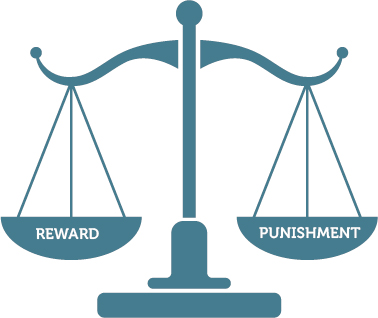
Decide upon your rewards and punishments
Research shows that rewards work better than punishments to manage behaviour. But that doesn’t mean not punishing bad behaviour! If you don’t address something significant, such as hitting a sibling, then your child might feel they can ‘get away with it’.
Pick rewards and sanctions that really motivate your child. For a lot of modern kids, it’s screen time or pocket money. Alternatives include choosing a film you all watch on a Friday night, a game with you or picking the weekend’s takeaway dinner.
If you threaten something, follow through with it or your child won’t take you seriously next time. Don’t use threats you won’t be able to follow through on!
Reward charts work well for younger children – up to around age eight or nine. These should have clear, measurable categories (e.g. ‘play with your brother nicely for an hour’) for which they get a star, points or a marble in a jar and when they get enough of these, they receive a specific reward. With younger children communicate your reward or sanction fairly quickly after the behaviour concerned; otherwise they might struggle to link the two.
For primary school-age children, look at what their school does with rewards and punishments for inspiration. Do they use football-style red and yellow cards, or have a golden time scheme in place perhaps? Find out how it works and consider creating something similar for home. The consistency will be good for your child.
HOW TO DEAL WITH A STROP
Tantrums are by no means the sole territory of toddlers. Older children (and some adults) can get themselves into a proper tizz when things don’t go their way. More often than not, this is a child’s ‘emotional brain’ taking over their rational one – they just can’t handle their feelings about what’s happening. Here’s what you can do when your little one – or not so little teenager – turns into a screaming banshee.

Keep calm
This is undoubtedly stressful for a parent and especially when other people are around – your child having a tantrum can feel embarrassing. Try not to focus on what others think but instead on what will resolve the situation effectively. Take deep breaths or walk away for a little while, if it’s safe to do so, so you can collect your thoughts ready to deal with this.

Don’t shout back – it isn’t going to achieve anything
It will probably just make your child angrier, escalate things and reinforce the idea that it’s OK to shout when we’re upset.
Stick with a firm, authoritative tone of voice and respond minimally