
Copyright © Anthony Knight 2018
www.risboroughbaptist.org.uk
eBook ISBN 978-1-54395-287-2
Contents
Foreword
Acknowledgements
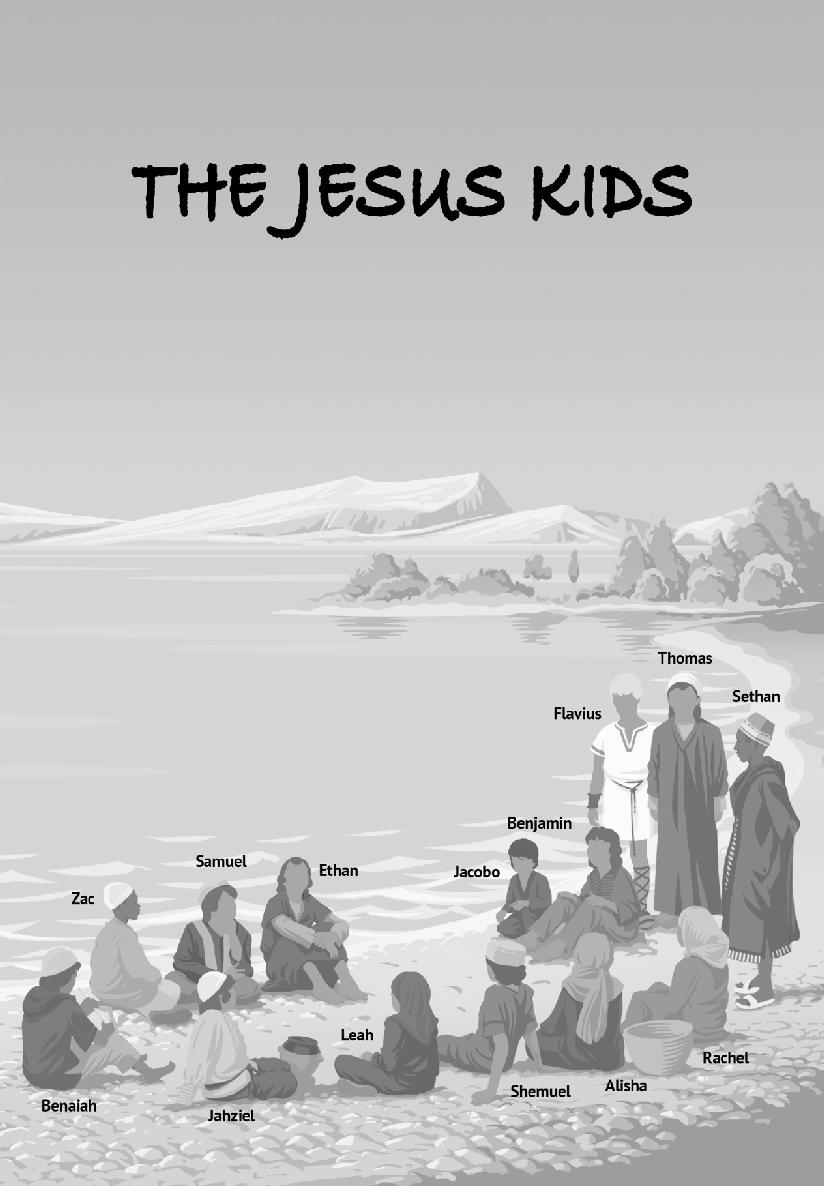
The Characters
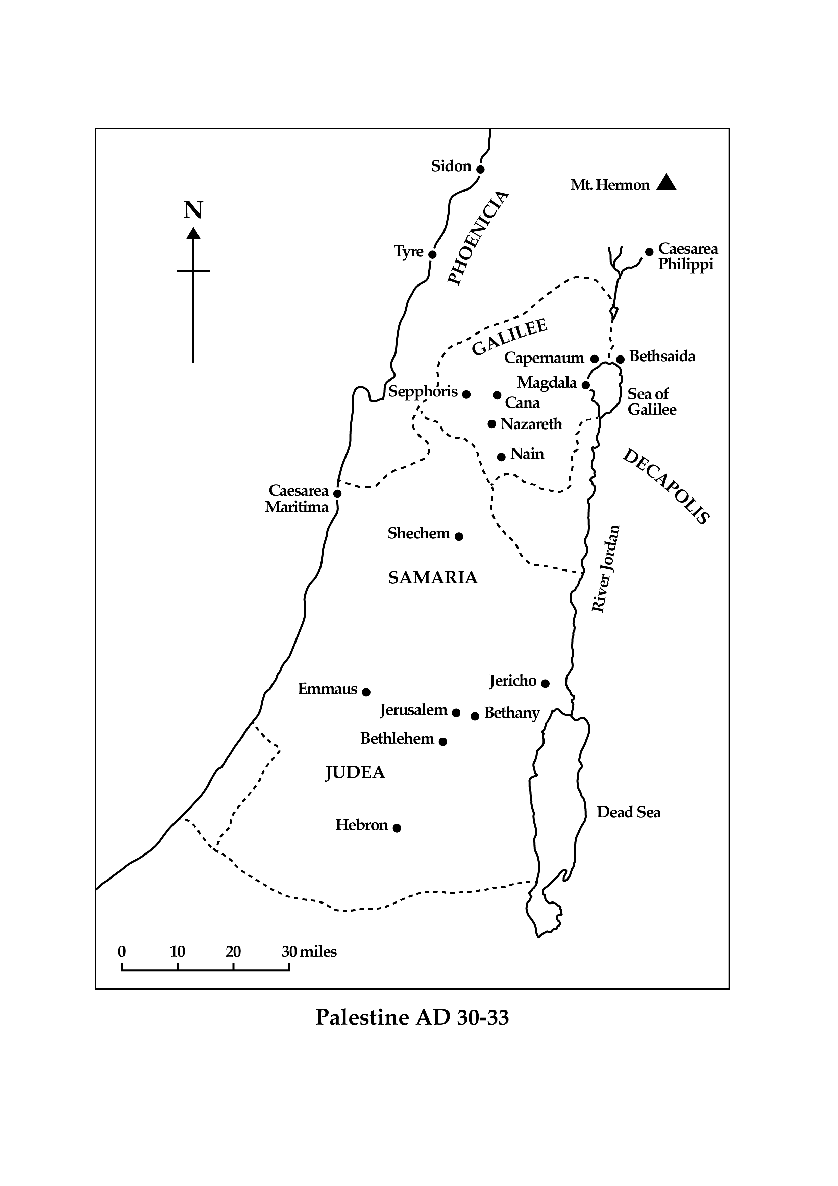
Map of Palestine
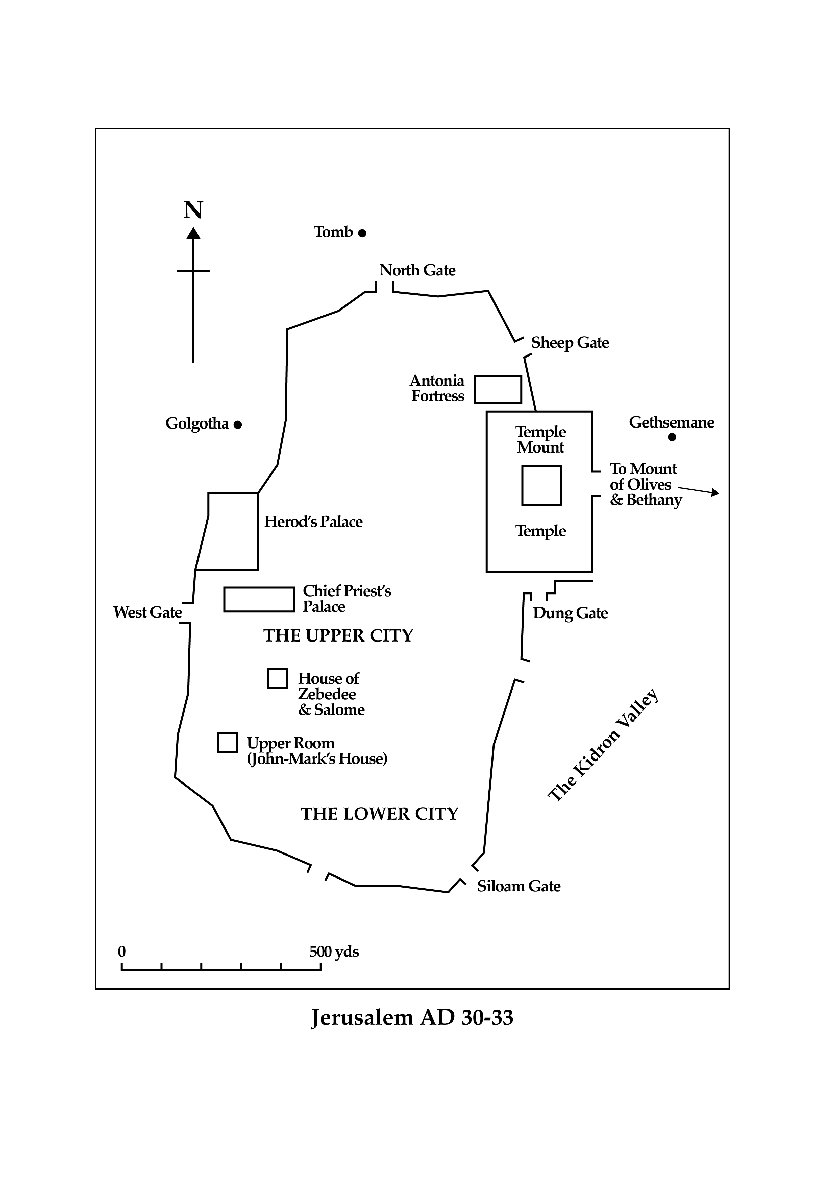
Map of Jerusalem
Part 1: The Voice from the North
Chapter 1: A Baptism in the Jordan
Chapter 2: Family Wedding
Chapter 3: Jacob’s Well
Chapter 4: By Royal Command
Chapter 5: Catch of the Day
Chapter 6: Hanging Around with Friends
Chapter 7: An Eye for an Eye
Chapter 8: But I Say to You…
Chapter 9: So Great a Faith
Chapter 10: Death in Nain
Chapter 11: Works of the Devil
Chapter 12: ‘Don’t be Afraid. Only Believe.’
Chapter 13: The Rough Road Ahead
Chapter 14: Loaves and Fishes
Chapter 15: Beyond all Boundaries
Chapter 16: A Demanding Kind of Demon
Chapter 17: Unless You Become Like Little Children…
Part 2: To Jerusalem
Chapter 18: ‘Let the Little Children Come to Me’
Chapter 19: ‘Do You Hear What These Children are Saying?’
Chapter 20: Betrayal and Arrest
Chapter 21: Trial and Crucifixion
Chapter 22: Sabbath Rest
Chapter 23: But on the Third Day…
Chapter 24: Gone Fishing
Chapter 25: ‘And then…’
Foreword
Jesus said: ‘I praise you, Father, Lord of heaven and earth, because you have hidden these things from the wise and learned and revealed them to little children.’
Luke 10. 21
This is an account of the ministry of Jesus as seen through the eyes of the children he met, healed and befriended: the children who were always there amongst the crowds who followed him.
No less than seven of the miracles of Jesus involved children or young people, yet not one of them is named and none were given speaking parts by the gospel writers. Remarkably they represented all strata and divisions of society: Roman, Greek, Jew and Gentile; religious leaders and royalty; the rich and the poor. In this narrative, we will read how their amazing and life-changing experiences drew them first to want to follow Jesus and then bound them closely to each other in a shared purpose.
I have kept as closely as possible to the words and order of Scripture as recorded in the four gospels and the first few chapters of the Acts of the Apostles. Inevitably we shall meet a large number of individuals throughout this story and, where Scripture does not name them, I have done so in order to help the reader identify them. Some characters are entirely imaginary, created to help the flow of our story. All this is indicated in the character listing that follows. So far as ‘The Jesus Kids’ themselves are concerned, whilst some of its members are individually recorded in Scripture, this little gang as such may never have existed, but it might very well have done so. What is certain is that whilst the adults in the crowds tolerated or just ignored the children who were always hanging around, Jesus himself included them to the extent that they were an integral part of his ministry. He clearly loved them and recognised that their understanding, simple although it was, often surpassed that of their adult counterparts. They followed him with growing conviction of who he was, and their unshakeable loyalty earned them their attribution as ‘The Jesus Kids’. Their voices deserve to be heard.
Anthony Knight
September 2018
Acknowledgements
In 2014, I was privileged to walk the ‘Jesus Trail’ from Capernaum to Nazareth, organised by the Nazareth Trust (formerly the Edinburgh Medical Missionary Society). The sights and experiences of walking through the hills of Galilee provided many insights into the Holy Land that have found their way into this story.
In my researches for this book, I have also drawn on two other works:
The concept of the two simultaneous processions into Jerusalem occurring on Palm Sunday (chapter 19) was developed from the ideas of Marcus J. Borg and John Dominic Crossan, in The Last Week published by SPCK in the UK and Harper Collins in the USA.
For the movements of key biblical characters on Easter Day (chapter 23), I have adapted the sequence described by Peter Walker, in The Weekend that Changed the World, published by Westminster John Knox in the USA and Marshall Pickering in the UK. This sequence of movements of key players is itself compatible with the biblical accounts. I have simply grafted on the movements of additional characters of my own.
I am grateful to Clare Wigg and Antony Miller for design and illustration for the book cover and to Clare for the production of the maps.
I should also like to acknowledge the help of many friends for their helpful suggestions and encouragement following a reading of an initial draft; in particular: Rev. Richard Allwood, Martin Manser, Heather Sheen, Coral Sharpe, Valerie Knight, Cheryl Brownlie and Nicola Hirst.
All proceeds from the publication of The Jesus Kids will go to the Paediatric Department of the Nazareth Trust Hospital in Nazareth.
The Characters
(In order of appearance)
*Denotes a real biblical character (not always named by the gospel writers)
The Jesus Kids
(The ages of the children when first encountered are given)
*BENJAMIN (93/4) The youngest of the group. The owner of the loaves and fishes.
THOMAS (12) Benjamin’s closest friend and original leader of the group.
ETHAN (11)
SAMUEL (11)
BENAIAH (12) The flute player.
ZAC (10)
*FLAVIUS (15) Personal slave to Petronius.
JUDE (16) Brother to Benjamin.
ELI (14) Brother to Benjamin.
*SETHAN (14) Only son of Regemelech and Zinniah.
*JAHZIEL (14) Only son of Adina from Nain.
*ALISHA (12) Only daughter of Jairus and Anna.
RACHEL (12) Her best friend. Daughter of Joanna and Chuza (Steward to King Herod).
*SHEMUEL (11) A sufferer from epilepsy.
*LEAH (13) Daughter of the Syrophoenicean woman.
*JACOBO (5) Youngest brother to Benjamin.
*JOHN-MARK (16) The young man at the arrest of Jesus.
The Adults
*JESUS OF NAZARETH: The Messiah.
The Twelve Disciples:
*SIMON PETER Fisherman.
*ANDREW Fisherman.
*JAMES (the Elder) Fisherman, brother of Jesus, son of Zebedee and Salome.
*JOHN Fisherman, son of Zebedee and Salome.
*PHILIP Fisherman.
*BARTHOLOMEW (NATHANIEL) Fisherman.
*THOMAS (the Twin).
*MATTHEW (LEVI) Tax collector.
*JAMES (the Younger) Son of Mary.
*SIMON (the Zealot).
*JUDAS (son of James).
*JUDAS (Iscariot).
Other characters:
*JOHN THE BAPTIST The herald of the Messiah.
*PETRONIUS A Roman centurion based at Capernaum.
SCARPIO His second-in-command.
SHIMELA Benjamin’s mother.
HANNAH Shimela’s neighbour.
*MIRIAM Benjamin’s cousin. The bride at Cana.
*JEHDIAH The bridegroom at Cana and a kinsman to Thomas (Junior).
*JOSEPH Father of Jesus.
*MARY Mother of Jesus.
AZZAN A servant at Cana.
*SHERABEN Chief Steward at Cana.
*TALIBAH The Samaritan woman from Sychar.
*REGEMELECH Herod’s court official and ambassador.
TABATH His servant.
*HEROD ANTIPAS King, Tetrarch of Galilee.
ZINNIAH Wife of Regemelech and mother of Sethan.
BARACHIAH Keeper of Herod’s stables.
AMALUK His camel boy.
*ZEBEDEE A fisherman. Father of James and John.
JEMUEL A fisherman. Benjamin’s father.
ELZAPHAN A fisherman. Benjamin’s uncle.
*NEDEMIAH A paralysed man.
JEDRINE His mother.
BECHORAH A blind potter.
JOASH Benjamin’s grandfather.
*MACHLIY The cripple by the Pool of Bethesda.
PHILOMENUS The first-aider at the Roman garrison at Capernaum.
*ANNA Wife of Jairus. Rachel’s mother.
*JAIRUS A ruler of the synagogue. Rachel’s father.
*ADINA A widow from Nain, mother of Jahziel.
AHAB A farmer in the Arbel valley.
*SIMON A Pharisee of Capernaum.
*MARY A woman of Magdala.
*JOANNA Wife of Chuza (steward to King Herod).
*SUSANNA Friend of Joanna.
MICHAELA Mother of Shemuel.
*BEZALEL A blind man, demon-possessed.
*LEGION A man possessed by many demons.
*MIRASHAEM A woman who touched the hem of Jesus’ robe.
*AMASAY A man struck dumb by a demon.
*SALOME A friend of Joanna. Wife of Zebedee.
*REPHAEL Father of Shemuel.
*SIMON Brother of Jesus.
*JOSEPH Brother of Jesus.
*RUTH Sister of Jesus.
*SARAH Sister of Jesus.
DONNA A donkey.
*SIMEON Holy man at the temple.
*ANNA Prophetess at the temple.
*HEROD ARCHELAUS Son of Herod the Great; ruler of Judea and Samaria.
*SOPHIA Syrophoenician woman, mother of Leah.
MATLEENA A friend of Shimela.
*REUVEN A man blind from birth.
*ABDIEL A rich young ruler. Cousin and friend of Sethan.
*BARTEMAEUS Blind beggar at Jericho.
*ZACHAEUS Tax collector at Jericho.
*MARY of Bethany.
*MARTHA of Bethany.
*LAZARUS of Bethany.
*RHODA Servant girl to Mary, mother of John-Mark.
*SIMON of Cyrenia, cross carrier.
*NICODEMUS Member of the Sanhedrin.
*CAIAPHUS High priest.
*PONTIUS PILATE Roman governor of Idumea, Samaria and Judea.
*CLEOPAS A follower of Jesus.
*MARY Wife of Cleopas.
Dedication
For all the children of that Holy Land.
May they live to know the Peace of God.
THE JESUS KIDS
PART ONE:
THE VOICE FROM THE NORTH
In those days Jesus came from Nazareth in Galilee
and was baptised in the Jordan by John.
Mark 1. 9
Chapter 1
A Baptism in the Jordan
‘Four… five… six… seven… eight! Yes! That was eight,’ exclaimed Benjamin.
‘It never was,’ cried Thomas.
‘But it so was,’ replied Benjamin defiantly.
‘Well, if it was an eight, you’ll be able to do it again, won’t you,’ retorted Thomas.
‘No problem,’ mumbled Benjamin as he stooped to seek out some more of the smooth, flat, round pebbles from the shallows of the river. They had to be the right sort of pebbles for this contest of skills, a contest that had been played out from the banks of the river since time immemorial.
At this point the River Jordan flowed smoothly and widely through its fertile valley. Smooth enough for the right sort of pebble, thrown with the right sort of spin, to skim and bounce off the surface of the water. Wide enough for a skilled hand to achieve a high number of bounces before the pebble struck the far bank. The crowd of children had been engrossed in the contest for the past twenty minutes, and Benjamin wasn’t finished yet. At nine and three-quarters, Benjamin wasn’t the leader of the group; he was in fact the youngest and by height the smallest, but he was usually one of the most voluble and competitive of them.
‘Right,’ he called as he stood up from his searches of the riverbed, a handful of smooth flat pebbles in his left hand and one more in his right hand. ‘Ready when you are.’
There was now a considerable number of onlookers. Benjamin’s small gaggle of half a dozen from Capernaum included their leader, Thomas, aged twelve, together with Ethan, Samuel, Benaiah and Zac, all of a similar age. Then there was a group of older boys from Sychar in Samaria, who kept themselves apart some thirty yards along the bank; everyone else was avoiding them, too. Finally, a considerable number of the grown-ups had wandered away from where the main crowd that had gathered, a hundred yards or so downstream, to listen to the words of the wild prophet of the desert named John, the latest attraction in the realm of wandering teachers. John had been regaling a huge crowd all morning, but for the moment had sat down to rest. Most of the grown-ups around him had sat down too, whilst some were wandering along the riverbank, watching to see what the children were up to.
It was past noon and in the deep river valley the heat was oppressive. Between the main crowd and Thomas’ little group, other younger children were playing in the shallows or sitting on a long sandbank by the bend of the river. Closer by, a detachment of Roman soldiers stood on the bank, whilst two of their horses had been led into the river to drink and cool their legs in the refreshing waters. Overall it was a pleasing and colourful scene, almost a peaceful one. But this was an occupied land, where racial and religious tensions were never far beneath the surface. Just like the waters of the Jordan, here apparently flowing so peacefully, there were plenty of rocky hazards lurking beneath the surface.
It was for just this reason that Petronius, the Roman centurion, had been ordered from Capernaum with a small detachment to keep his ears and eyes open at this gathering. What exactly was this John the Baptist saying and doing? Was he just another harmless religious crank or might he be a dangerous subversive? What was he really up to? Petronius was here to find out, and he would do just that. He had not, however, expected to find quite such a large crowd. Men, even women and children, had clearly travelled many miles to this remote stretch of river and Petronius rather wished he had brought more than the small detachment of ten soldiers under his second-in-command, Scarpio, together with a mounted messenger and his own slave boy, Flavius. But the gathering looked peaceful enough and Petronius was comfortable in the knowledge that he himself was respected by most of these people, even though as the visible representative of the occupying forces of Rome he was never going to be actually liked. Nevertheless, Petronius was taking nothing for granted and, as Scarpio and the messenger watered their sweating horses in the river and the other soldiers lounged nearby, he himself remained mounted on his fine white stallion, guiding him slowly amongst the now mainly seated crowd.
‘Ready, too,’ called Thomas. ‘You go first.’
Benjamin, standing with his bare feet just inside the shallows, crouched low, aiming across the river but at an angle downstream. Not only would the pebble skim off the surface better than if travelling against the flow, but the angle increased the possible distance and it should bounce more times before reaching the further bank. This time all the children called out the progress of the throw. ‘One… two… three… four… five… six…’
The stone bounced on across the river, but before it had even reached the far bank the cries of the children were drowned out by a bellow from Scarpio.
‘Clear off, you bunch of little bastards! Any more of that and you’ll spook the horses!’
The small group of children began to scramble hastily up the bank. All except for Benjamin, who remained standing in the water, poised with another stone.
‘Judging from the look of those poor nags, it wouldn’t take too much to spook them, mister.’
The centurion’s second-in-command took a menacing step towards Benjamin, who decided it was time to move.
‘Push off, you impudent little pest,’ the soldier ordered.
Benjamin joined his friends a safe distance away and the group moved off into the trees. The Samaritan boys looked on with grinning faces and sensed a possibility. Petronius, hearing the commotion, had wheeled his charge to face his men, but reined in to stay watching from a distance. The incident appeared to be over and it had only been a bunch of kids anyway. The centurion turned his mount about again and moved away, with Flavius as ever following on foot.
But it was not over…
The stone landed in the water a mere two feet from the lowered head of Scarpio’s horse. The sound of its impact and the plume of spray surprised the animal, which did not rear up but stumbled sideways, losing its footing on the riverbed and crashing into the next horse, which staggered in the same direction. It had not been a small flat pebble but a larger rounded stone, perhaps the size of a man’s fist. Scarpio brought his own fist crashing down on the hilt of his sword and yelled at the ten soldiers watching him.
‘Find that young devil and bring him back here to me… now!’ he yelled.
Benjamin, Thomas and the rest of the group had disappeared. Thirty yards upstream, the Samaritan boys melted further into the bushes. But it didn’t take the soldiers long to find their quarry and soon Benjamin found himself held aloft by two burly legionaries, his arms clamped in their vice-like grip. There was little point in his small wiry body trying to wriggle free as he was carried back to the riverbank and held in front of the impatient Scarpio.
‘I warned you to push off, but clearly you didn’t listen too well. My horses were nearly hit by your stupid stone-throwing, so what am I going to do with you now?’
‘It wasn’t me and I didn’t see anything,’ objected Benjamin. ‘What’s more,’ he went on, ‘it couldn’t have been me, ’cos if it had been, I wouldn’t have missed.’ It was a foolish boast and one that Benjamin was about to regret.
‘I think we had better see if you can pick up some more stones,’ was Scarpio’s sarcastic reply. ‘Let’s see if he can manage to do it with his teeth, lads.’
With that, Benjamin found himself up-ended, his arms pinned to his sides. Held fast by the ankles, his head hung a mere inch above the water.
‘What are you waiting for?’ cried Scarpio.
Benjamin’s head plunged beneath the surface, followed by at least half his body, and with no amount of twisting could he bring himself up for air. The seconds he spent writhing below water seemed endless. Then, gasping for breath, he found himself hoisted aloft, yet still held firmly upside down above the river. The Samaritan boys had moved boldly forward to watch the fun.
‘That’s only a small shrimp, I’d throw that one back’, yelled one of them. The others laughed.
Some of the adults began to remonstrate from the bank.
‘Leave the poor kid alone.’
‘Bullies.’
‘Put him down, you brutes. That’s enough.’
‘He doesn’t seem to have picked up many stones yet,’ said Scarpio above the growing clamour. ‘He’d best try again, lads.’
This time Benjamin knew what was coming and managed to take in a full breath of air before the cold water closed over his head once more. Despite this, the seconds dragged by… longer… and… longer… It felt as if his chest would burst or that his head would explode. With rising panic he realised that he was going to die. He had only a few seconds left…
‘Enough!’ Petronius shouted. ‘Get him out of there.’
The centurion had returned the moment the new commotion had started. Benjamin felt himself lifted from the water and dumped none too gently onto the riverbank, spluttering water from his lungs and simultaneously gasping in air once again. He was hardly able to focus on the white legs of the centurion’s horse towering above him.
‘It was never me, I swear it. I never threw that stone,’ he whimpered.
Petronius had serious doubts about that but he also knew that drowning a Jewish boy would serve no useful purpose and would needlessly enrage the crowd. The boy had hopefully learnt his lesson.
‘Scarpio, get your men fell in, we’re not needed here any further.’
The centurion’s servant knelt down beside Benjamin and whispered hastily. ‘You’d best get yourself out of here, if you’ve got any sense.’ And with that Flavius rose and hurried after his master.
The Samaritan boys slunk away back into the bushes and were not seen again that day. Thomas and the other children from Capernaum gathered round the still gasping Benjamin. A number of the grown-ups came forward to help.
‘One day,’ rasped Benjamin, choking back his tears, his fear turning to anger, ‘one day I’ll get even with those rotten Romans.’
The centurion and his detachment moved off, back to where the original attraction of the day was beginning once more to address the main crowd. But now it appeared that another itinerant teacher had turned up. There seemed to be a lot of talking going on but not much else. In the morning, John had been baptising many from the crowd, telling them to mend their ways and make a new start with their lives. That had all seemed harmless enough. He had even exhorted the tax collectors not to demand more than they should do, which had delighted the crowd, although not of course the tax collectors. And when one of the soldiers had asked what he should do, John had encouraged him to be content with his pay, which was hardly the answer he had wanted to hear, for most Roman soldiers felt undervalued.
Petronius himself felt that as a centurion he was rewarded well enough. Yes, it had all seemed harmless enough. Perhaps this somewhat eccentric character might even prove to be a steadying influence on these volatile people. Now it appeared that this John the Baptist was about to baptise the new arrival: name of Jesus. The two of them were heading off towards the river, followed by most of the crowd.
Petronius had seen enough. What was more, the sky had become unusually overcast for this time of the year. It looked as if a storm might be brewing and any rain would be likely to disperse the crowd anyway. Petronius summoned his second-in-command and Scarpio gathered up his men. The military contingent began to march away. Not a moment too soon, it appeared, for as they made their way up out of the valley the heavens opened and a loud sound shattered the oppressive afternoon atmosphere, a sound very much like thunder. Petronius raised his arm to halt his men and turned his gaze back to the river. Was that thunder he had heard or was it something else? A shout perhaps? No, not so much a shout, more like a loud voice speaking. Either way there were no further sounds to be heard. He waved his men forward.
The soldiers resumed their march.
Chapter 2
Family Wedding
‘Do I really have to go?’ whinged Benjamin as he sat playing with the remains of his meal.
‘Yes, of course you do,’ replied his mother in a resigned voice. It wasn’t the first time they had had this debate.
‘But I’ll be bored out of my mind. I know I will,’ implored her youngest son.
‘Miriam’s your cousin, Benjamin. This is a family event. So yes, we’re all going and you will be, too.’
‘What about Jacobo? Will he be going?’ Benjamin was getting desperate.
‘No. Your brother Jacobo’s too young for weddings. He’ll stay with Hanna next door.’
‘Lucky him,’ said Benjamin, scowling. ‘I wish I was five years old.’
Benjamin had at one time been the youngest of Shimela’s three boys. Jude at sixteen and Eli at fourteen were old enough to help with their father’s fishing trade. Benjamin had been the last to arrive, until Jacobo arrived unexpectedly and rather to Benjamin’s disadvantage. Benjamin had not been too enthusiastic at the appearance of a younger brother. He had previously come to rather enjoy the advantages of being the youngest and most indulged of the first three boys. Jacobo, named in recognition of his ‘coming after’, had changed all that.
‘Will there be dancing?’ Benjamin knew he had lost this battle.
‘Yes, of course; it’s a wedding.’
‘And girls all dressed up, I suppose?’ he sulked.
‘Is that the problem then!’ Shimela tried to suppress a knowing smile. ‘You’ll be getting married yourself one day, my son, and then you’ll need a girl at that wedding with you. And you’ll want all your family to attend.’
‘Ma,’ sighed Benjamin, ‘I ain’t going to get married and I don’t hold with no girls neither.’
‘Well, your friend Thomas will be going to Cana, too. He’s a kinsman to Jehdiah, Miriam’s betrothed.
‘That’s one good thing, I suppose,’ conceded Benjamin. ‘If Tom’s there we can both bunk off together when it gets really boring.’
‘You’ll do no such thing, young man. One of the benefits of this wedding will be for your father and me to know where you are for once. No more gallivanting off and getting yourself into trouble like you did down by the Jordan. You needn’t think that we didn’t hear tell all about that, you know.’
Benjamin had guessed as much, although this was the first time anything had been said.
‘That was all a complete mess-up, Ma. I done nothing wrong. I just got all the blame. If you must know, we reckon as though them low crafty blighters from Samaria fixed us up good and proper. It were one of them as hurled that stone, I’m sure as anything it were.’
‘That’s as maybe,’ said Shimela, ‘but you’d do yourself and all the rest of us a favour by keeping yourself out of any further trouble. So that will be an end of it. We leave early tomorrow morning, for there’s a full day’s walk up into the hills to Cana and the feast begins the next day. Do you know where your best tunic is?’
It was evening time before they arrived at Cana. They were all weary with the long walk from Capernaum, but those already gathered welcomed them warmly, with water for tired and dusty feet and cool drinks to quench their thirsts. Many of their more distant kinsmen and kinswomen they had not seen for many a long year, and there were even some they had never met before. There was much to talk about and even the reluctant Benjamin, mixing with his older and younger cousins, soon found his usual energy and voice. The adults talked long into the night and the kids were soon absorbed in games of cube and dice, playing on the dusty floor until the grown-ups finally noticed that their now unusually quiet offspring had not yet gone to bed.
The following day dawned clear and bright and, despite the lateness at which everyone had retired the evening before, the whole village was soon alive with an expectant bustle in every house and home.
The legal contract binding Miriam and Jehdiah in marriage had, in accordance with Jewish custom, already been signed many months before. Jehdiah having now raised the bridal price to be paid to Miriam’s father, could now claim his bride. Then would follow the procession from Miriam’s home to the house of the bridegroom, where Jehdiah had prepared rooms for them to live in and where the wedding feast was to be held. Today was the day for celebration.
Thus, during the previous night, Jehdiah accompanied by his attendants had processed to Miriam’s house where she, surrounded by her own attendants, had welcomed him. Their marriage had been consummated and now the whole company would process to the house of the groom for the third and final part of the wedding, the feast.
By mid-morning, with everyone dressed in their brightest and best, the procession from Miriam’s house began. The whole village turned out, not just to watch but to take part. There would be no work done today, except by any who had animals to look after. The tending of crops and vines would wait. The potter’s wheel would not turn. Nothing would be built or repaired and, to complete the joy for everyone, not even taxes would be collected today! Everything stopped for a wedding, for everyone loved a feast. In the home of the bridegroom, only the servants had duties to perform today and even they were eagerly looking forward to the event.
Friends and relatives had been invited from the surrounding villages and some, like those from Capernaum, had travelled many miles. Amongst those invited was the new teacher, Jesus, together with some of his new followers. Jesus’ father, Joseph, had been a carpenter in Nazareth, less than five miles away, so his family were already well known in Cana. On this day Mary, the mother of Jesus, was also present amongst the guests.
When everyone was assembled, the procession began as a slow walk to the accompaniment of music from flute and timbrel. Miriam looked dazzlingly beautiful adorned in her bridal gown, the hem of which was embroidered with a pattern of flowers. Beneath her veil her hair was woven with garlands of real flowers from the fields: blue cornflowers, white and yellow daisies and pink rock roses, all reflecting the embroidered hem of her dress. Jehdiah, wearing his traditional shawl, took Miriam’s hand. Following closely behind came the companions of the bride and groom and then all the members and friends of both families, now crowded together in one joyous gathering. At the small square in the centre of the village, the procession was joined by the leaders of the synagogue, dressed in their traditional religious regalia. They too would not deny themselves the opportunity of a wedding feast. The children darted to and fro, eagerly clasping branches and flowers and seeking the chance to throw them over the heads and shoulders of the bride and groom. Thus, the procession made its noisy and happy progress through the village streets.
It was less than a quarter of a mile to the house of Jehdiah’s father and mother. Arriving there, Jehdiah led Miriam through the outer door, across the inner courtyard of the house and by way of a low archway onto a large open terrace beyond. The terrace faced to the north-east, commanding wide views over the distant Galilean hills. The walls of the house gave some degree of shade from the heat of the midday sun. Further shade was provided by a wooden lattice over which climbed a prolific cover of oleanda, its fragrant pink blossoms scenting the air from above.
The processional crowd of guests, following on behind, spilt onto the terrace, friends and family alike mixing together, as happy a gathering as you might wish to see. Miriam and Jehdiah wandered together amongst the throng, greeting each and every one in turn and receiving in exchange kisses and congratulations. The musicians gathered together on one side of the terrace, their music at first almost drowned out by the general hubbub. The younger children ran here and there between the adult guests, noisily adding their own contribution to the universal joy.
In due course, Miriam and Jehdiah were seated with their closest family members at one end of the terrace. Here too, in this position of prominence, the rulers of the synagogue had placed themselves. The others settled in groups around the edge, reclining on scattered cushions or seated cross-legged on large woven mats. As with all such gatherings, people clustered together with those they knew best. Thus, there were groups of family, of friends, and those from the various villages, including the group from Nazareth: the teacher with his mother and friends. Seated on the ground at the furthest end of the terrace from the bridal couple, most of the children gathered themselves together. This position pleased them to the extent that they were beyond immediate parental control and closest to the long trestle table on which the servants were busy putting final touches to the spread of food and drink. There were large wooden platters of savouries, fish and meats, bowls overflowing with fruit, baskets of bread and all manner of delicacies arranged in tempting order. The guests talked and laughed, the musicians played and the wine was poured. The time passed without anyone noticing that it did so.
In due course, after much food had been served and more wine poured, the musicians struck up a lively and well-known tune. Everyone began to clap to the rhythm and Miriam and Jehdiah moved into the central space of the terrace and began to lead the dance. In the shortest of time they were joined by others and soon all became a whirl of dresses and a stamping of feet as everyone, young and old alike, danced to the music: tunes and steps that had been passed down the generations from the ancient of times. Girls of all ages and certainly the older boys were all there in the dance, but Benjamin gave a knowing glance to Thomas and with suitable stealth the two of them slipped beneath the food table, off the edge of the terrace and down the grass slope beyond. Here they were out of sight and safe from any dire possibility of being dragged into the dancing. Yet they were still close enough to the servants’ store of food and drink. Here, safely hidden, they would be in no danger of going hungry or thirsty. Like all the other guests, Benjamin and Thomas were more than happy and content with the day.
‘You two okay down there?’ It was Azzan, the most junior of all the servants, whose quick eyes had spotted the boys’ departure.
‘Yes, thanks,’ replied Thomas, ‘we’re just fine.’
‘Just drop us a bit to eat and drink now and then,’ added Benjamin cheekily, lying on his back in the cool grass.
‘Food, no problem,’ said Azzan, ‘but drink may soon be more of an issue. We seem to be running low on wine.’
‘Quickly, quickly now, you lot. More wine for our master.’
Sheraben’s hissed command interrupted the below-table chatter. As chief steward, he had become alert to the slowing of the service to the bridal couple and their important guests. Azzan and his fellow servants jumped to his command and sought to fulfil his wishes with all possible speed. But there was clearly a problem in doing so. They hastened to up-end the wine flagons to find one that still contained wine. One by one each flagon and wineskin was checked. Concern turned to worry. They had checked every container on the table. Now they were searching below the table. They checked the wine store. It was empty, save for discarded and empty flagons. Worry turned to panic. Sheraben, unaware of the servants’ dilemma, had returned to Jehdiah and Miriam, expecting any moment for the wine to be brought. By now every possibility had been checked, every place searched. The unbelievable had happened. The wine had run out. The one thing that should never be allowed to happen at a wedding feast had just done so. The groom and his family would never live this down. They would be forever disgraced. The village would not forget.
Benjamin and Thomas noted the servants scurrying about in great haste, deep concern showing on their faces.
‘If they’re running out of wine,’ whispered Benjamin, ‘this feast won’t last much longer.’
They eased themselves back onto the terrace in case they might be missed. The guests sitting nearest to the servants’ end of the terrace were also becoming aware that something was afoot. Amongst the closest were the teacher and his party from Nazareth, for when Jesus had first arrived he had sat down in this very place, furthest away from the host and nearest to the servants. Mary, his mother, ever alert to the duties of the servants, was the first to realise the precise cause of their concern.
‘They don’t have any more wine,’ she said, turning to her son.
‘What are you telling me for?’ replied Jesus. ‘I’m not ready to begin my work just yet.’
Mary, knowing mother that she was, remained calm and supremely confident in her son. Despite his apparent indifference, she seemed to know that not only did Jesus have the ability and power to solve the problem but that he would also have the will to do so. Making no reply to him, she turned to the servants.
‘Whatever he tells you to do, do it.’
Standing on the floor by the corner of the terrace were six large stone jars. They had held the water for the washing of feet and for other acts of purification. They were no longer full, but each could hold no less than twenty to thirty gallons.
‘Fill all the jars with water,’ said the teacher to the servants.
They did as he commanded, filling each jar to the very brim.
‘Now draw some out and take it to the master of this banquet.’
They did as he said and Azzan hurried to the chief steward with the freshly filled flagon. As he began to pour from the flagon into the cup held out for Sheraben to taste, Azzan could scarcely suppress a gasp of amazement. What had been clear water was now coloured a deep red. Sheraben drank from the cup offered and also showed his surprise, not because he was at all aware that water had become wine but because he had just tasted wine that was clearly of a far higher quality than the wine that had thus far been served. Turning to the bridegroom, he exclaimed, ‘Everyone hosting such a feast as this normally has the best wine served first and then, when all the guests have drunk well, he brings out the cheaper stuff. But you, my lord, have saved the best wine till now!’
The wedding feast continued. The bride and groom and indeed most of the guests were blissfully unaware of what had taken place, but those who had been close enough to see and hear were amazed at the miracle.
Benjamin could only stare open-mouthed and wide-eyed with wonder.
‘That was some trick,’ whispered Thomas. ‘How did that happen?’
‘Haven’t a clue,’ replied Benjamin, recovering his voice. ‘The teacher never even touched the water jars, nor the flagons, nor the cups. Only the servants filled the jars with water. Only they drew out the wine. Yet for sure they themselves could not have made things change. The teacher gave the orders and they just followed, but he himself never even got up. He never left the place where he sat. How on earth did he do it? Let’s ask him.’
‘You ask him yourself,’ replied Thomas, ‘if you’ve got the nerve.’
Benjamin rose quietly from where they had been sitting and sidled slowly between the reclining guests until he had worked his way closer to the teacher. Eventually he placed himself next to the man on Jesus’ left, a big rough-looking character. He waited patiently for a lull in the conversation of those immediately close to him. He wanted to be heard but he didn’t want everyone to hear. The dancing had stopped, but the musicians were still playing, although not with their previous energy. There was still a considerable hubbub of laughter and talking. Benjamin waited for his moment and then quietly spoke up.
‘Please, sir…’ He waited until the teacher turned towards him. ‘Please, sir, we were wondering about the water that became wine. Will you tell us how that was done?’
The teacher’s friends all turned to stare at Benjamin with surprise. This young lad had just shown the temerity to ask the very question that each of them had wanted to ask.
Jesus smiled. ‘Benjamin, my child, you may wonder indeed, but I tell you for sure there will be greater things than this for you to see. And one day you will understand the mystery of the wine that is poured out.’
Benjamin looked into the teacher’s eyes and then self-consciously at the floor. He could think of nothing further to say and slowly returned to his friend.
‘Did he tell you?’ whispered Thomas.
Benjamin just sat down and said nothing.
‘Come on, what did he say?’
‘I don’t really know, Tom,’ replied Benjamin thoughtfully. ‘I think he kind of said, “We ain’t seen nothing yet” but that one day we would understand it all. It wasn’t really an answer, more of a promise really. And he said it with such certainty that I’m sure I believe him. And I’ll tell you something else amazing about him…’
‘What’s that then?’ asked Thomas.
Benjamin looked back at the teacher and simply answered, ‘He knew my name.’
Chapter 3
Jacob’s Well
As the dawn of a new day broke, the city’s gates opened and in no time at all the crowds began to pour out onto the dusty roads beyond. There were large caravans representing whole districts, small family units, groups of friends and individual travellers. There were Jews from every part of the nation and pilgrims even from lands beyond the borders. There were men and women of all ages and there were children, too. All were heading back to their homes, nearby or far away. For the purpose of their visit had now been accomplished, their deepest desires met; they had come to the Holy City and now, for another year, the feast of the Passover was over.
‘I rejoiced with those who said to me, “Let us go to the house of the Lord”. Our feet are standing in your gates, O Jerusalem.’
That had been the song they had sung as they climbed up to its heights only a week before. Now, having fulfilled their duties, they were returning home, glad indeed to have been amongst the many thousands who had made the journey. They travelled with burdens as light as possible. Some rode or led donkeys carrying their provisions and tents. Some had camels, but most were on foot, their sandaled feet sending up a cloud of dust that marked the progress of the leading parties. Those pouring through the Northern Gate were heading towards homes in Galilee and other parts of the north. Once beyond the city walls, the way soon divided. Some took the road to the north-east, through the Judean hills and down to Jericho and the Jordan valley. This route led down through a barren mountainous wilderness of rock and sand. The road was notorious for ambush by robbers. Although there would be some safety in numbers, the danger for the straggler or the solitary traveller was another matter. However, once in the Jordan valley there would be fresh water for the journey northwards and this way avoided travelling through the unfriendly territory of the Samaritans. Others preferred the more direct route and headed due north from Jerusalem, towards Bethel and Samaria. Jesus, the new teacher from Nazareth, together with his party of followers, took this direct route.
Benjamin, together with his parents and older brothers and sisters, left Jerusalem early in the morning. They walked in the company of several other families from Capernaum, including the families of Benjamin’s friend Thomas and others, among them Ethan, Benaiah, Samuel and Zac. They too intended to take the direct route through Samaria. It was a long journey of some ninety miles. Even so, it was a road that they knew well and had walked many times. The Jews and Samaritans had been hostile towards each other for hundreds of years. The Jews regarded the Samaritans as an impure race, intermarrying and in other ways compromising the purity of their religious worship. The Jews returning from Babylonian exile had refused to allow the Samaritans to help with the rebuilding of Solomon’s temple in Jerusalem. Ever since, the Samaritans had worshipped on Mount Gerizem in Samaria. If, on this journey home, the Samaritans were to prove inhospitable the Jews would, so far as possible, fend for themselves and were well provisioned for the days ahead. If the Samaritans should become hostile, the Jews were also prepared to defend themselves.
As often happens with any large party travelling on foot, the Capernaum contingent soon became spread out. At first they remained within sight of each other, but as time passed the gaps between the scattered groups grew ever greater until eventually they were spread over several miles and were no longer in touch. The young children walked with their parents, but the older ones formed their own group and they too became separated from their elders. Thomas and his friends sometimes ran on ahead, leading the Capernaum travellers. When they tired of that, they lagged behind, finding other distractions. Such straggling was usually of no great importance: the way was clear enough and familiar to all. They would all meet up again when they halted at the end of each day.
By the second day they were well inside the territory of the Samaritans and Thomas and Benjamin were beginning to hatch plans for causing mischief to the people whose land they were passing through. To assist them in their purpose, Thomas had by now recruited several somewhat older boys from their home town and Benjamin had persuaded his two elder brothers, Jude and Eli, to join them. The gang, for that was now what it could be reasonably described as, numbered fifteen, all of them boys. Together they hung back, giving space for the grown-ups to get further ahead and out of sight of their activities. No one had come up with a precise idea of what they might do, but they hoped that an opportunity of some kind would present itself and that there would be enough of them to produce a result.
The road now passed through the narrow valley of Shechem, which separates Mount Ebal and Mount Gerizim, the holy mountain of the Samaritans. The way led to the north, skirting the Samaritan village of Sychar to the west. Most Jewish travellers chose to give this village a wide berth rather than confront the sullen inhospitality of its inhabitants, and that was just what the grown-ups of the Capernaum party did. The boys, however, seeking a chance for action, and in Benjamin’s case for revenge, took a more westerly path towards the village. Half a mile to the south of Sychar lies Jacob’s Well. This ancient well, standing on land once given by Jacob to his son Joseph had provided the village with a reliable water supply for many hundreds of years.
As Thomas and his gang came within sight of the well they saw immediately that there were people standing nearby. The boys ducked out of sight behind the cover of scrub and boulders and watched closely. From their hiding place the gang quickly assessed that there were seven girls at the well, each with a jar with which to draw water. They looked like teenagers and it was equally clear that the approach of the boys had gone unnoticed. The eldest girl had already lowered her jar into the well and was raising it to the surface.
In Palestine, no rebel group had to carry ammunition on its travels. The land generously provided stones and rocks of every shape and size in great profusion.
‘No doubt we can scare this lot off without much trouble,’ whispered Benjamin as he began to gather a number of useful-looking stones from the dust around his feet.
‘But they’re only a bunch of girls,’ whispered Thomas. ‘We can’t.’
‘They’re still Samaritans, ain’t they?’ replied Zac. He too was busily gathering rocks.
‘They certainly are,’ enjoined Benjamin. ‘And if they’re girls, so much the better.’
Thomas was still doubtful. ‘Well, listen, all of you,’ he commanded. ‘Don’t try to hit any of them. We only want to scare ’em off. We don’t want to kill anyone!’
But Benjamin had already picked out his target. ‘You see that nice water jar standing on the edge of the well? Who wants to bet that I can’t hit it?’
No one took up the challenge; they were all too busy arming themselves.
The well and the Samaritan girls were less than a hundred yards away from the Jewish ambush. A second jar was about to be lowered down the well when Benjamin’s stone curled through the air and, with commendable accuracy, clipped the rim of the already fully-laden jar, cracking it from top to bottom and spilling the water across the ground. The girls all jumped and turned to face the fuselage of stones now hurtling towards them. Leaving the second jar suspended on the rope, they grabbed all the other empty jars and together took flight in the direction of the village. The other stones fell short. No one had been hit. The whole business had lasted less than half a minute.
The boys emerged from their hiding places and walked across to the well. Although it had been a brief and satisfactory engagement, it had been dusty and thirsty work. It was nearly midday and very hot. Ethan lowered the empty jar and hauled it back up filled with cool and refreshing water. Each of the boys in turn quenched their thirst and sat around the well, feeling confidently content with their success. But Thomas, still fulfilling his role as their responsible leader, had been keeping an eye on the track to the village. It was less than fifteen minutes later that he first saw a cloud of dust rising in the near distance.
‘Look out,’ he said, ‘I think we’ve got company.’
The boys watched intently until it was obvious to all that a crowd was approaching, and doing so with some speed. They waited only for as long as it took to judge the size and nature of the oncoming party. The counter-attack was made up of boys and young men; they looked older than the Capernaum gang and there were clearly many more of them.
‘Time to go!’ cried Thomas. ‘Let’s get out of here.’
His gang, already on their feet, began a hasty retreat towards their former hiding places and beyond. All except for Benjamin. The advancing Samaritans were still just beyond easy throwing range. ‘Join you in a moment,’ said Benjamin as he began to untie the still suspended water jar. Bending over the parapet of the well, he heaved the jar into its depths and waited the few seconds that it took before he heard the satisfactory splash and crash of the jar hitting the bottom of the shaft more than a hundred feet below.
Benjamin had been unwise to waste those precious seconds, for at that precise moment the first stone struck his lower ribs. He fell behind the parapet of the well and tried to struggle to his feet and run. But his legs wouldn’t let him take more than a step or two. Mores stones were now falling all around. Benjamin dived for the only cover available, the stone trough alongside the well used for watering animals. He lowered himself painfully into the deep trough, which was fortunately dry, if rather muddy. The Samaritans’ advance had slowed as they stooped to gather up more stones and as they realised that the Jewish gang had by then already retreated. Benjamin did not know if he had been spotted slipping into the trough. What he did know was that if the Samaritans came right up to the well they would surely find him anyway. The pain in his chest had prevented him from running and there had been no time to think. All he could do now was to lie flat and hope.
The Samaritans hurled a further crop of stones at the bushes beyond and then they halted, some twenty yards short of the well. It was hot and further pursuit seemed unnecessary. Territory, and most importantly the well itself, had been reclaimed. Honour had been done. They loitered for a further few minutes, but there was no new attack from the Jews and the Samaritan party turned slowly back to Sychar.