CAUTION: Professionals and amateurs are hereby warned that all materials in this book, being fully protected under the copyright laws of the United States, the British Empire including the Dominion of Canada, and all other countries of the Copyright Union, are subject to royalty. All rights, including professional, amateur, motion picture, recitation, lecturing, public reading, radio and television broadcasting, and the rights of translation into foreign languages, are strictly reserved. The stock and amateur performance rights in the English language throughout the United States, and its territories and possessions, Canada, and the Open Market are controlled by the Gersh Agency, 41 Madison Avenue, 33rd Floor, New York, New York, 10010. No professional or nonprofessional performances of the plays herein (excluding first-class professional performance) maybe given without obtaining in advance the written permission of the Gersh Agency and paying the requisite fee. Inquiries concerning all other rights should be addressed to the Gersh Agency.
First published in paperback in the United States in 2013 by
The Overlook Press, Peter Mayer Publishers, Inc.
141 Wooster Street
New York, NY 10012
www.overlookpress.com
For bulk and special sales, please contact sales@overlookny.com,
or write us at the above address.
Copyright © 2013 by Neil LaBute
All rights reserved. No part of this publication may be reproduced or transmitted in any form or by any means, electronic or mechanical, including photocopy, recording, or any information storage and retrieval system now known or to be invented, without permission in writing from the publisher, except by a reviewer who wishes to quote brief passages in connection with a review written for inclusion in a magazine, newspaper, or broadcast.
ISBN: 978-1-4683-0848-8
Praise for the plays of Neil LaBute
About the Author
Also by Neil LaBute
Copyright
Dedication
Epigraph
Preface
Reasons to be Happy
“Mr. LaBute is writing some of the freshest and most illuminating American dialogue to be heard anywhere these days … Reasons flows with the compelling naturalness of overheard conversation…. It’s never easy to say what you mean, or to know what you mean to begin with. With a delicacy that belies its crude vocabulary, Reasons to be Pretty celebrates the everyday heroism in the struggle to find out.”
—Ben Brantley, The New York Times
“[T]here is no doubt that LaBute knows how to hold an audience…. LaBute proves just as interesting writing about human decency as when he is writing about the darker urgings of the human heart.”
—Charles Spencer, Telegraph
“[F]unny, daring, thought-provoking …”
—Sarah Hemming, Financial Times
“Refreshingly reminds us … that [LaBute’s] talents go beyond glibly vicious storytelling and extend into thoughtful analyses of a world rotten with original sin.”
—Ben Brantley, The New York Times
“LaBute takes us to shadowy places we don’t like to talk about, sometimes even to think about …”
—Erin McClam, Newsday
“Superb and subversive … A masterly attempt to shed light on the ways in which we manufacture our own darkness. It offers us the kind of illumination that Tom Stoppard has called ‘what’s left of God’s purpose when you take away God.’”
—John Lahr, The New Yorker
“[Wrecks is a] tasty morsel of a play … The profound empathy that has always informed LaBute’s work, even at its most stringent, is expressed more directly and urgently than ever here.”
—Elysa Gardner, USA Today
“Wrecks is bound to be identified by its shock value. But it must also be cherished for the moment-by-moment pleasure of its masterly portraiture. There is not an extraneous syllable in LaBute’s enormously moving love story.”
—Linda Winer, Newsday
“The most emotionally engaging and unsettling of Mr. LaBute’s plays since bash … A serious step forward for a playwright who has always been most comfortable with judgmental distance.”
—Ben Brantley, The New York Times
“One of Neil LaBute’s subtler efforts … Demonstrates a warmth and compassion for its characters missing in many of LaBute’s previous works [and] balances black humor and social commentary in a … beautifully written, hilarious … dissection of how societal pressures affect relationships [that] is astute and up-to-the-minute relevant.”
—Frank Scheck, New York Post
“Though set in the cold, gray light of morning in a downtown loft with inescapable views of the vacuum left by the twin towers, The Mercy Seat really occurs in one of those feverish nights of the soul in which men and women lock in vicious sexual combat, as in Strindberg’s Dance of Death and Edward Albee’s Who’s Afraid of Virginia Woolf.”
—Ben Brantley, The New York Times
“[A] powerful drama … LaBute shows a true master’s hand in gliding us amid the shoals and reefs of a mined relationship.”
—Donald Lyons, New York Post
“LaBute … continues to probe the fascinating dark side of individualism … [His] great gift is to live in and to chronicle that murky area of not-knowing, which mankind spends much of its waking life denying.”
—John Lahr, The New Yorker
“LaBute is the first dramatist since David Mamet and Sam Shepard—since Edward Albee, actually—to mix sympathy and savagery, pathos and power.”
—Donald Lyons, New York Post
“Shape … is LaBute’s thesis on extreme feminine wiles, as well as a disquisition on how far an artist … can go in the name of art … Like a chiropractor of the soul, LaBute is looking for realignment, listening for a crack.”
—John Istel, Elle
“The three stories in bash are correspondingly all, in different ways, about the power instinct, about the animalistic urge for control. In rendering these narratives, Mr. LaBute shows not only a merciless ear for contemporary speech but also a poet’s sense of recurring, slyly graduated imagery … darkly engrossing.”
—Ben Brantley, The New York Times
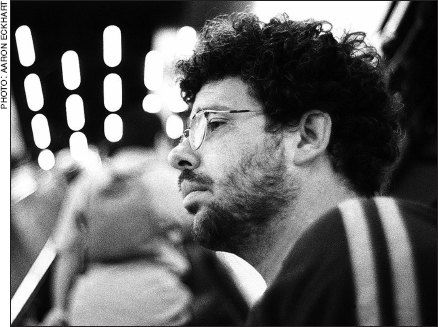
NEIL LABUTE is an award-winning playwright, filmmaker, and screenwriter. His plays include: bash, The Shape of Things, The Distance From Here, The Mercy Seat, Fat Pig (Olivier Award nominated for Best Comedy), Some Girl(s), Reasons to be Pretty (Tony Award nominated for Best Play), In A Forest, Dark and Deep, and a new adaptation of Miss Julie. He is also the author of Seconds of Pleasure, a collection of short fiction, and a 2013 recipient of a Literature Award from the American Academy of Arts and Letters.
Neil LaBute’s films include In the Company of Men (New York Critics’ Circle Award for Best First Feature and the Filmmaker Trophy at the Sundance Film Festival), Your Friends and Neighbors, Nurse Betty, Possession, The Shape of Things, Lakeview Terrace, Death at a Funeral, and Some Velvet Morning.
FICTION
Seconds of Pleasure: Stories
SCREENPLAYS
In the Company of Men
Your Friends and Neighbors
PLAYS
bash: three plays
The Mercy Seat
The Distance From Here
The Shape of Things
Fat Pig
Autobahn
This Is How It Goes
Some Girl(s)
Wrecks and Other Plays
In a Dark Dark House
Reasons to be Pretty
Filthy Talk for Troubled Times and Other Plays
The Break of Noon
Lovely Head and Other Plays
Miss Julie: A New Adaptation
for john lahr
“just do what must be done.”
—G.B. SHAW
“if you want to be happy, be.”
—LEO TOLSTOY
“i once had a girl, or should i say, she once had me.”
—LENNON/MCCARTNEY
You can’t go home again.
Somebody said that—certainly once or twice before Thomas Wolfe made it famous—and while it’s obviously not true in the literal sense, it certainly should be a rule to live by (unless you left something at home that’s really important in which case I’d suggest hurrying there, getting it without talking to anyone and then leaving again very quickly, preferably by the back door). Life goes on and so it should and we all learn the hard way that we outgrow our childhood bedrooms and our school halls and even our families themselves. It’s wonderful to look back on our individual and collective pasts, sometimes with fondness and sometimes with regret, but to live in that place is the equivalent of being stuck. It’s healthy to keep moving forward and trying new things. That’s not to say forget about Mom and Dad and Sis and Uncle ———— (fill in the blank) but all of us, especially those who make a living by turning the page and exploring new worlds each night on the stage, need to keep moving toward the horizon and pushing ourselves to conquer the next audition, the next role or the next production. Theater doesn’t allow us to rest on our laurels for long; the life of a play is short (unless you’re Andrew Lloyd Webber) and suddenly the curtain comes down for a final time and we have nothing but a program and some photos to show our friends and family who didn’t make it out to see the play and we’re out of a job. By its very nature, there is a magical quality to a play on stage—now you see it, now you don’t.
As a writer, I am someone who keeps trying to create new characters in new stories and pushing myself to surprise my audience with something that feels both new and familiar. I’m not complaining—I love my work. I’m at my best sitting in a darkened auditorium, working with actors and technicians to create an evening of theatrical entertainment. In life I can be indecisive or distant or cowardly or secretive or just plain human. I come to life in the artificial surroundings of the playhouse. I don’t know why that is—I only know and believe it to be true. This isn’t always the case, of course, nothing is always true, but often enough to call it a “truth.” Ironically, I am getting better at living as I get closer to dying but that’s enough of that. Who wants to be so damn honest at a time like this? The publication of a new play is always a time of celebration for me; the chance to leave a record of my very ephemeral life in the theater behind is a pleasure indeed.
And after all of that preamble, the truth is I’m doing the very thing I warn the reader against: going home again. As an author I have now gone back to check in on a group of characters whom I wanted to see again and find out what has happened to them in the last few years. I’ve often envied television writers who get the opportunity to revisit the fictional lives of their characters week after week, year after year, and so I decided to do the same but on the stage. It’s certainly been done before but it’s a first for me and it was a pleasure to do so. I thought for a long while about what group of characters I might want to spend some time with again—the characters in Fat Pig came close and I was certainly curious to see where the people in The Shape of Things might be a decade later—but in the end I wanted to head back to the small Midwestern town that Greg and Steph and Carly and Kent called home. It’s in the middle of nowhere (or what some folks might call “anywhere, USA”) and it’s a place that I don’t want to live but I also feel like I’ve spent half of my life there. It could be a college town or the kind of rural industrial landscape of my youth or one of those suburban backwaters that exists from Florida to Maine and from the tip of California to the border towns of Washington state (and virtually any spot in between). These days, to be a person struggling to get by at work and in love is to say you’re an “American.” People live from paycheck to paycheck, they work late and at several jobs just trying to make ends meet and everybody has a dream, whether it’s getting through trade school or running their own company or falling in love or taking one more breath. Life is hard and I get to write about that—little tragedies and victories that play out in an hour and a half—and I feel lucky when anybody says to me that what they’ve just seen rings even partially true.
Nothing we do on stage matters as much as life—nothing I write means as much as somebody else’s birth or first communion or marriage or retirement or death—but if writers and actors and audiences can band together and play out a few stories that feel honestly created and genuinely inhabited then maybe we can find some kind of solace together for a few hours, reminding ourselves that we are all in this together and that maybe, just maybe, an imagined version of life can lead us toward how and why we should go about living the real thing. I might be full of shit, but it’s meant to be inspirational shit and even now it doesn’t sound completely crazy to me.